
Image: Step-by-Step Visual Guide to Cleaning and Preparing Bok Choy
Published: July 12, 2026 at 8:32:54 PM UTC
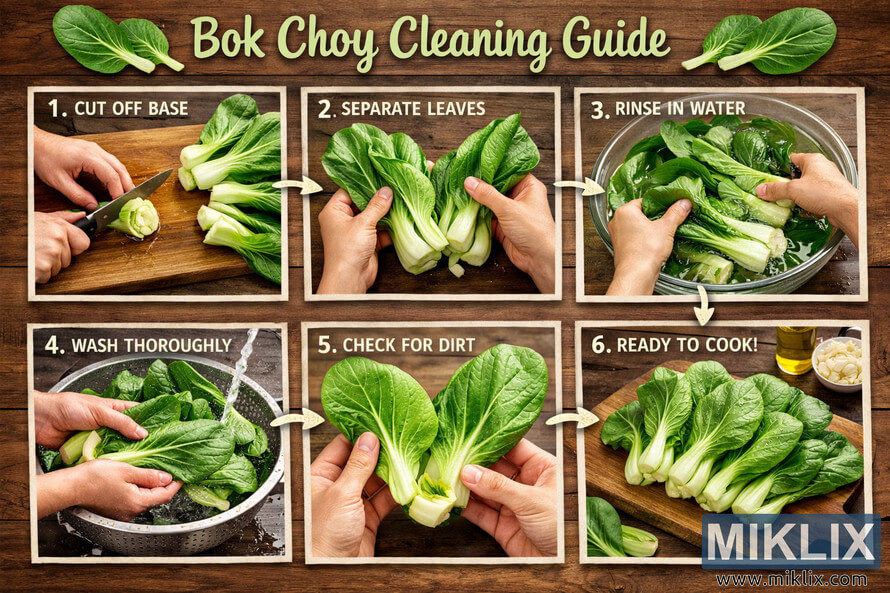
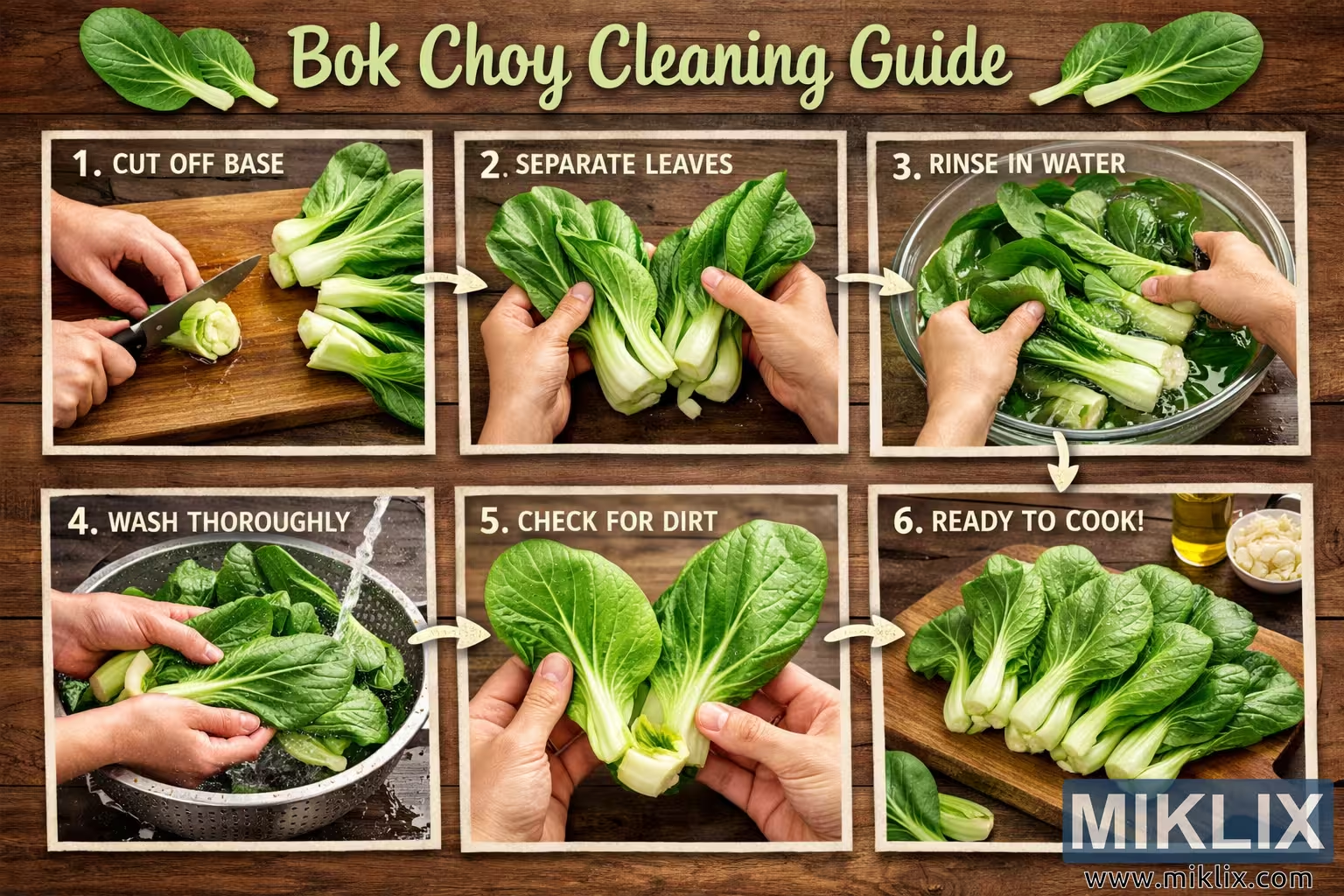
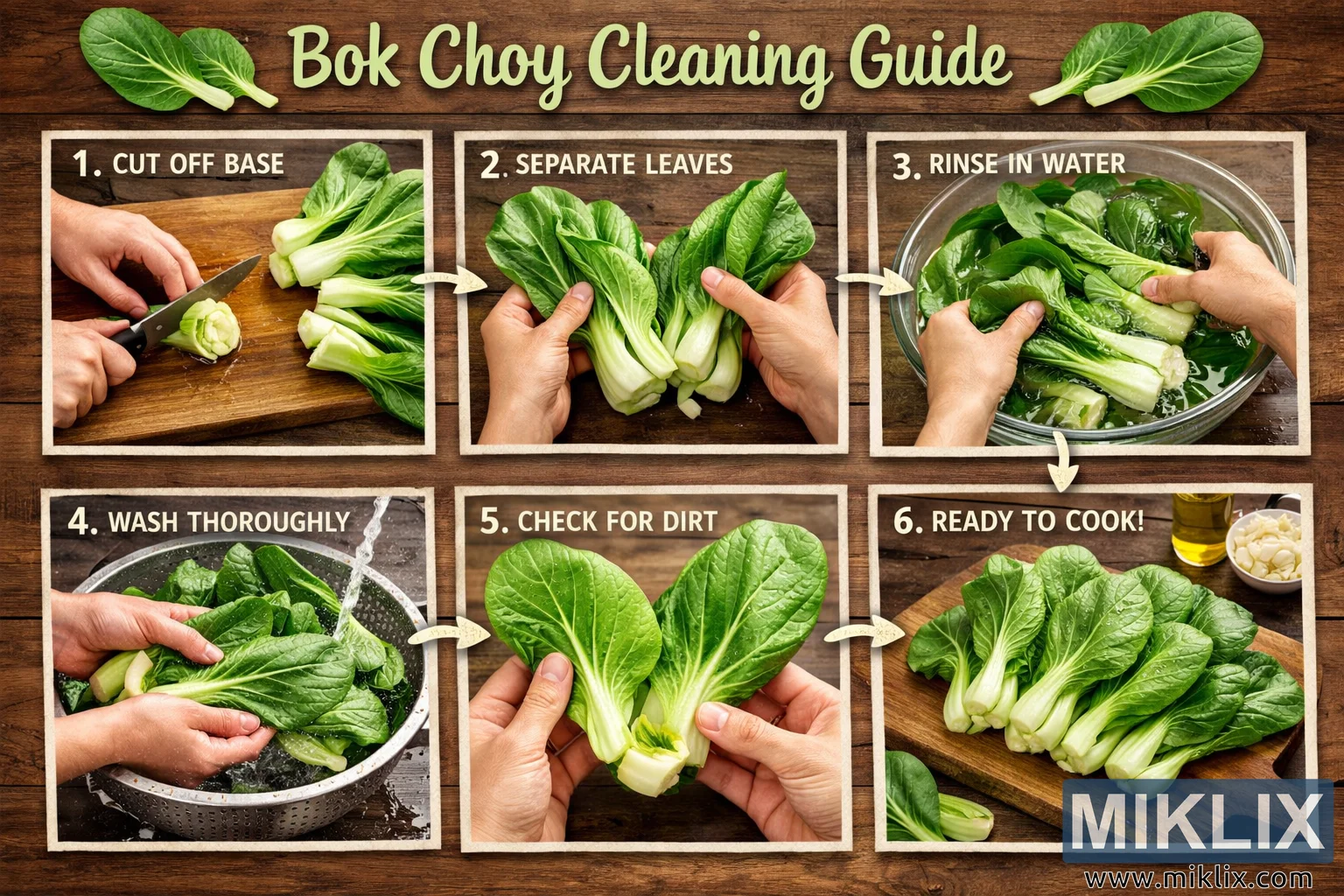
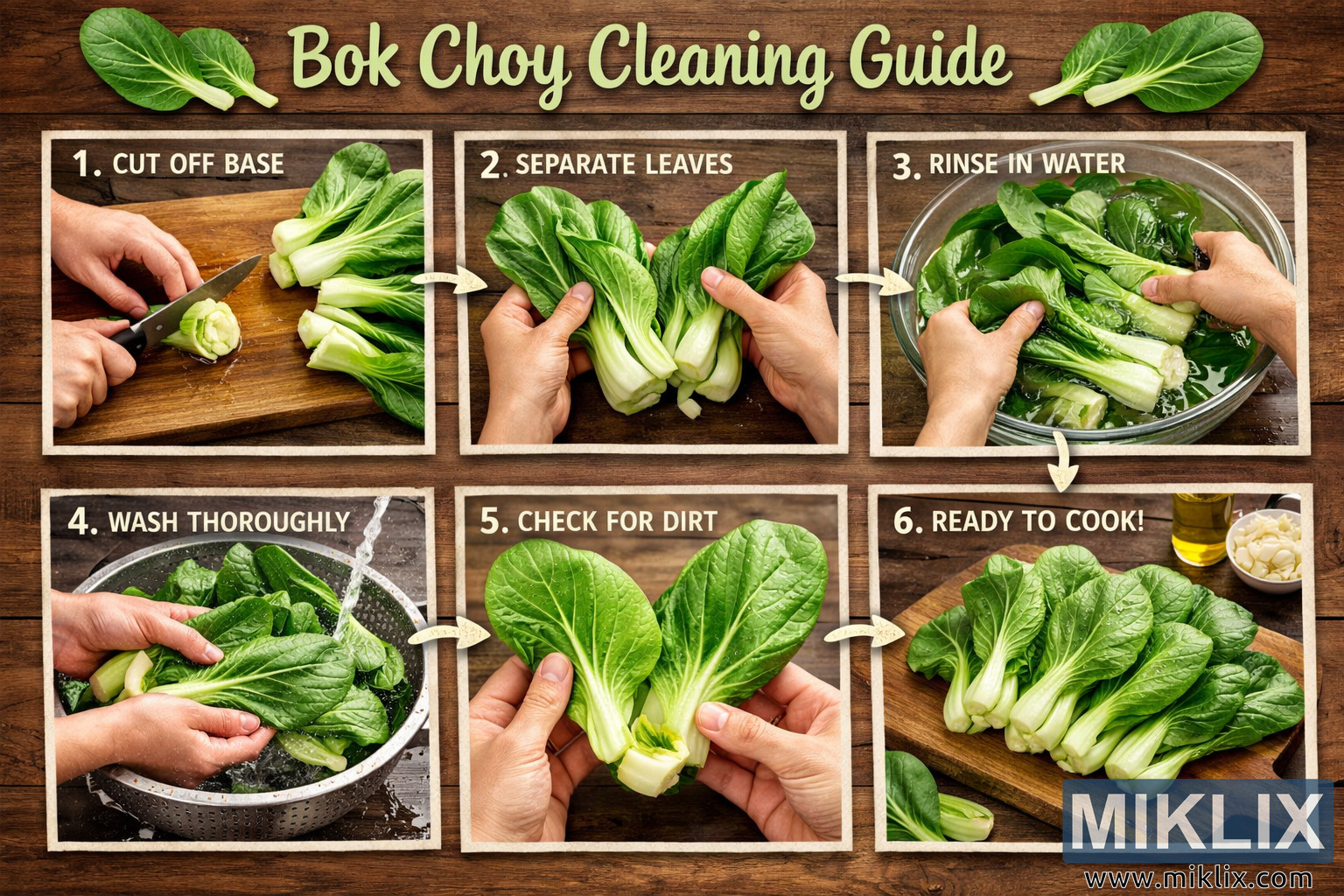
Discover a comprehensive visual guide to cleaning and preparing bok choy. This step-by-step infographic shows each stage—from trimming and rinsing to inspecting and cooking—illustrated with clear, high-resolution photos on a rustic wooden background.
Available versions of this image
The image files available for download below are less compressed and higher resolution - and as a result of that, higher quality - than the images embedded in articles and pages on this website, which are more optimized for file size in order to reduce bandwidth consumption.
Regular size (1,536 x 1,024)
Large size (3,072 x 2,048)
Very large size (4,608 x 3,072)
Extra large size (6,144 x 4,096)
Comically large size (1,048,576 x 699,051)
- Still uploading... ;-)
Image description
The image titled 'Step-by-Step Visual Guide to Cleaning and Preparing Bok Choy' presents a detailed photographic composition designed to teach viewers how to properly clean and prepare bok choy before cooking. The layout is horizontal, arranged in a landscape orientation, and divided into six distinct panels, each representing a sequential step in the cleaning process. The background is a warm, rustic wooden surface that evokes a kitchen countertop or cutting board, providing a natural and homely atmosphere.
At the top center of the image, the title 'Bok Choy Cleaning Guide' appears in large, friendly green lettering, accompanied by small illustrations of bok choy leaves on either side. The typography is playful yet clear, immediately signaling the educational purpose of the guide. Arrows between the panels guide the viewer’s eye from left to right and then downward, forming a logical flow from Step 1 through Step 6.
In the first panel, labeled '1. CUT OFF BASE,' a pair of hands is shown slicing off the root end of a bok choy head with a kitchen knife on a wooden cutting board. The cut base is visible to the left, while the separated stalks rest neatly to the right. The lighting is bright and natural, highlighting the crisp texture of the vegetable and the clean cut. This step emphasizes the importance of removing the tough, fibrous base to allow the leaves to separate easily.
The second panel, '2. SEPARATE LEAVES,' depicts hands gently pulling apart the stalks and leaves of bok choy. The composition captures the motion of separation, with the leaves fanning out gracefully. The green hues of the bok choy contrast beautifully against the neutral wooden background, creating a visually appealing balance between organic freshness and rustic simplicity.
In the third panel, '3. RINSE IN WATER,' the bok choy leaves are submerged in a large bowl filled with clear water. Hands are shown swishing the leaves around to loosen any dirt or debris. The water surface reflects light softly, adding a sense of cleanliness and freshness. Tiny droplets and ripples convey movement, reinforcing the idea of thorough rinsing.
The fourth panel, '4. WASH THOROUGHLY,' shows bok choy leaves placed in a metal colander under running water. The hands are actively scrubbing and shaking the leaves to ensure all soil and grit are removed. The water droplets sparkle under the light, and the colander’s texture adds a tactile element to the scene. This step visually communicates the importance of washing each leaf carefully to achieve a pristine result.
The fifth panel, '5. CHECK FOR DIRT,' focuses on a close-up view of a hand holding an open bok choy leaf. The viewer can see the inner base of the leaf, where dirt often hides. A small caption within the frame points toward the base, emphasizing the inspection process. The lighting here is slightly softer, drawing attention to the delicate veins and natural patterns of the leaf. This step encourages mindfulness and attention to detail in food preparation.
Finally, the sixth panel, '6. READY TO COOK!' presents the cleaned bok choy leaves neatly arranged on a wooden cutting board. The composition includes a small dish of sliced garlic, a bowl of sesame seeds, and a bottle of oil in the background, suggesting the next stage of cooking. The colors are vibrant—deep greens of the bok choy, golden tones of the oil, and creamy whites of the garlic—creating a harmonious palette that evokes freshness and culinary readiness.
Throughout the image, the lighting remains consistent and natural, simulating daylight streaming into a kitchen. The textures of wood, water, and leafy greens are rendered with high clarity, emphasizing the tactile realism of the process. The overall aesthetic is clean, instructional, and inviting, making it suitable for use in cooking tutorials, educational materials, or food blogs.
The composition successfully balances visual clarity with aesthetic appeal. Each step is distinct yet cohesive, forming a narrative that guides the viewer through the entire cleaning process. The arrows connecting the panels serve as visual cues, ensuring that the sequence is easy to follow. The rustic wooden background ties all elements together, providing warmth and continuity.
This image not only instructs but also celebrates the beauty of fresh produce and the care involved in preparing it. The detailed photography, thoughtful layout, and harmonious color scheme combine to create a visually engaging and educational piece that captures the essence of mindful cooking. It invites viewers to appreciate the simple yet satisfying ritual of cleaning bok choy—a process that transforms raw greens into ready-to-cook ingredients full of vitality and flavor.
The image is related to: Bok Choy Health Benefits: Transform Your Diet with This Nutritional Powerhouse