
Image: Cilantro Nutrient Composition Infographic
Published: July 15, 2026 at 2:46:01 PM UTC
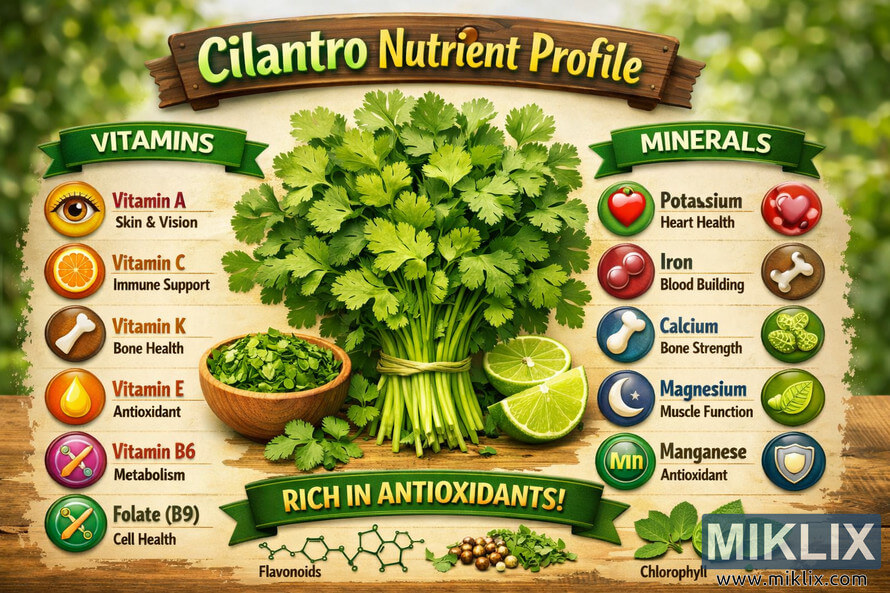
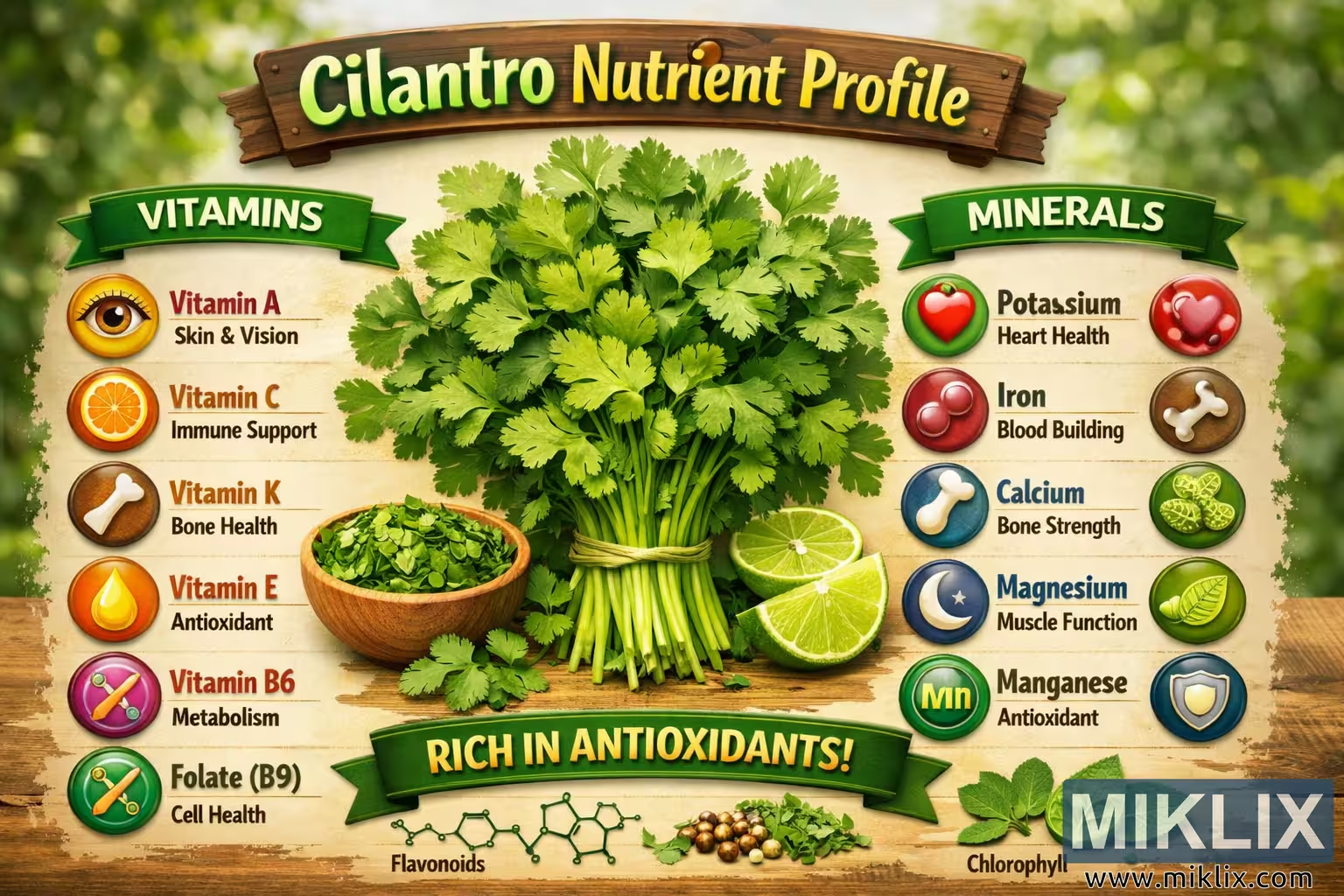
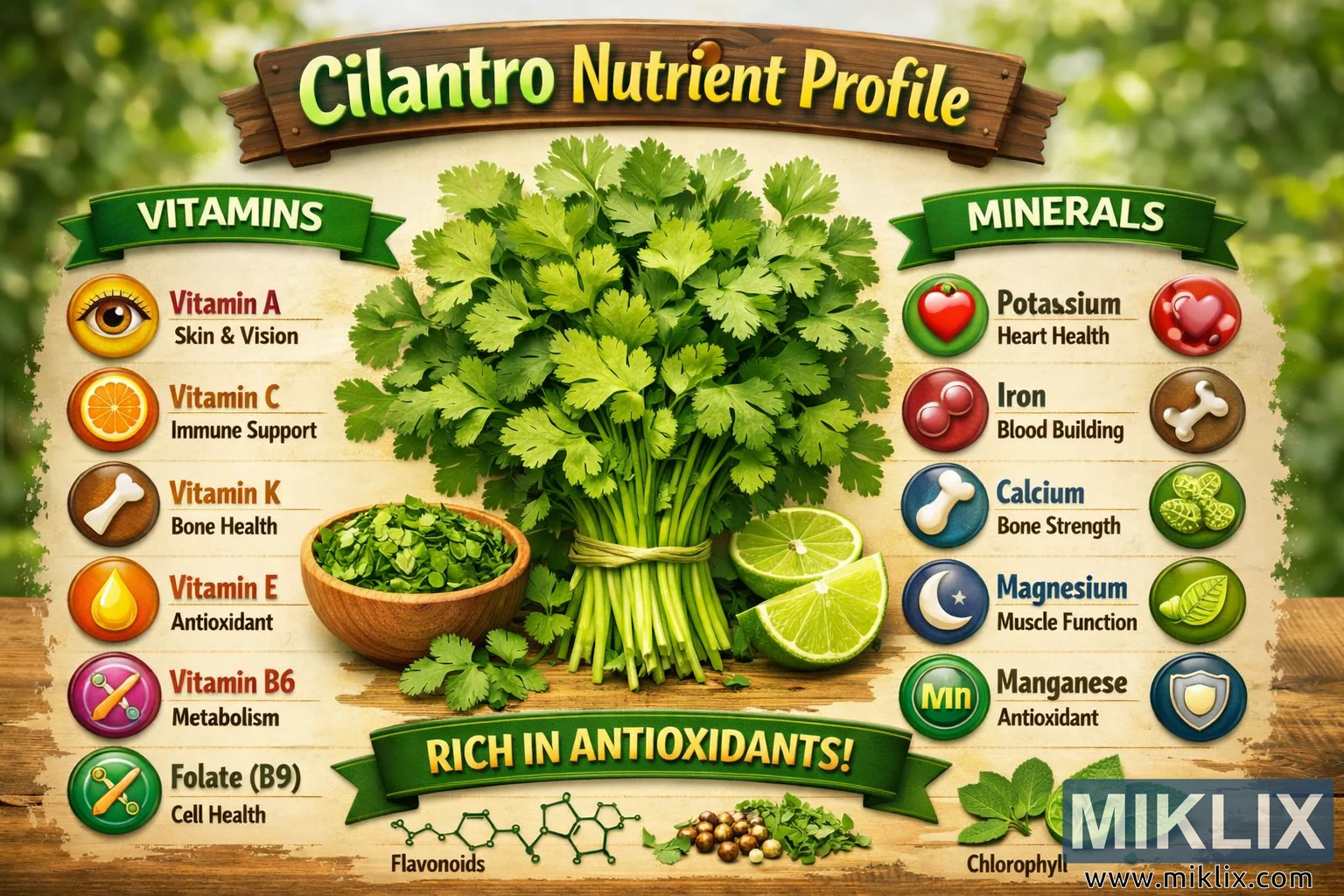
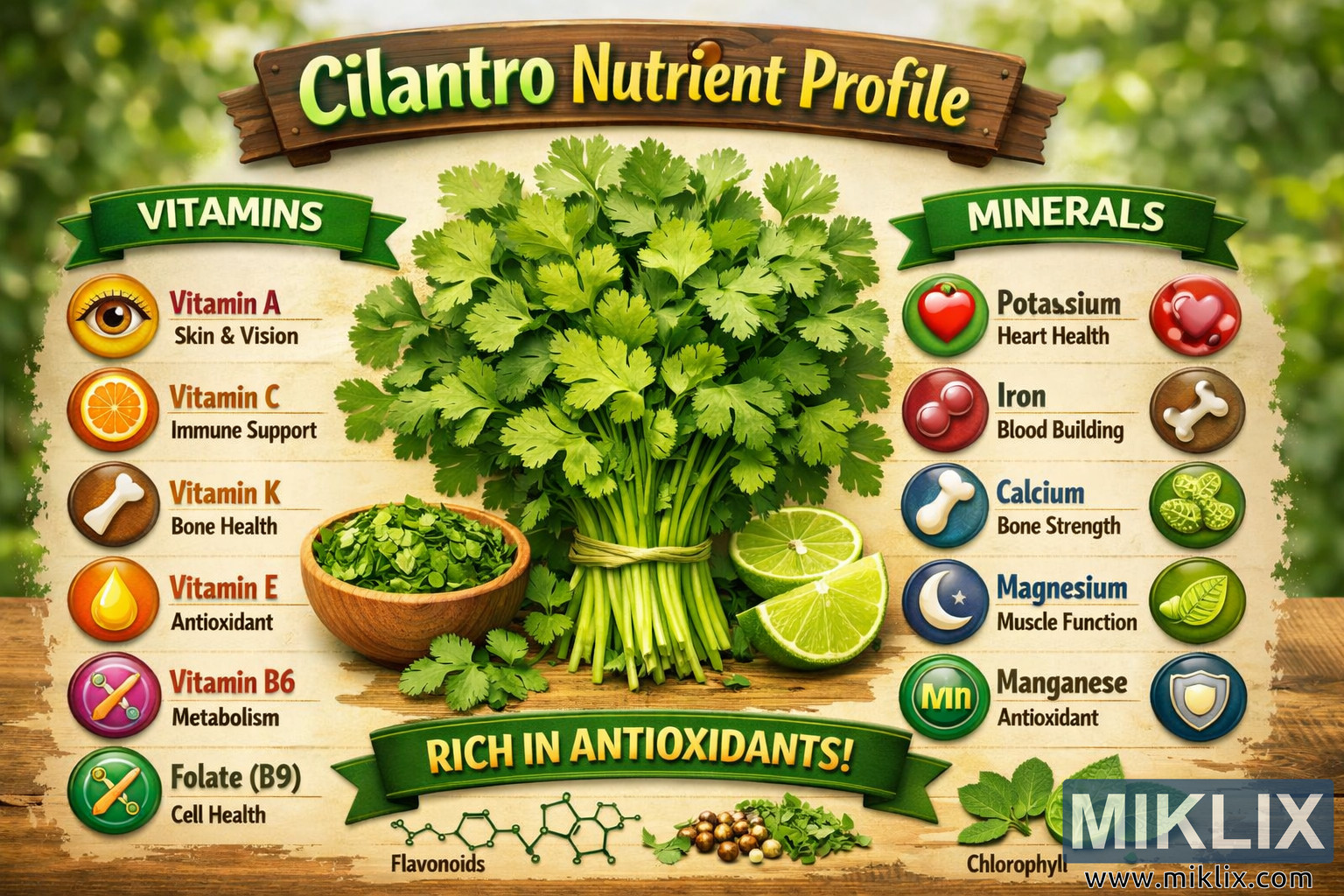
Explore the detailed nutritional composition of cilantro in this vibrant infographic, highlighting essential vitamins and minerals such as Vitamin A, C, K, E, and B-complex, along with minerals like potassium, calcium, iron, magnesium, manganese, and zinc. The image presents a fresh bunch of cilantro surrounded by colorful icons and banners illustrating its health benefits and antioxidant properties.
Available versions of this image
The image files available for download below are less compressed and higher resolution - and as a result of that, higher quality - than the images embedded in articles and pages on this website, which are more optimized for file size in order to reduce bandwidth consumption.
Regular size (1,536 x 1,024)
Large size (3,072 x 2,048)
Very large size (4,608 x 3,072)
Extra large size (6,144 x 4,096)
Comically large size (1,048,576 x 699,051)
- Still uploading... ;-)
Image description
This image is a high-resolution, landscape-oriented infographic that visually represents the nutritional composition of cilantro, also known as coriander leaves. The design centers around a lush, vibrant bunch of cilantro placed on a rustic wooden surface, its green leaves and delicate stems rendered with remarkable detail and realism. The background evokes a natural, earthy atmosphere, complemented by soft lighting that enhances the freshness and vitality of the herb.
At the top of the image, the title 'Cilantro Nutrient Profile' appears in bold, stylized lettering, combining shades of green and yellow to reflect the plant’s natural hues. The typography is clean yet organic, set against a wooden sign-like banner that harmonizes with the overall rustic theme. Below the title, the composition divides into two distinct sections: vitamins on the left and minerals on the right, each clearly labeled with green banners that read 'VITAMINS' and 'MINERALS' respectively.
On the left side, the infographic showcases six circular icons representing key vitamins found in cilantro. Each icon is color-coded and accompanied by a small symbolic illustration and descriptive text. The first icon, in orange, highlights Vitamin A with an eye symbol and the phrase 'Skin & Vision,' emphasizing its role in maintaining healthy eyesight and skin. The second, in red-orange, represents Vitamin C with an orange slice icon and the phrase 'Immune Support,' underscoring its antioxidant and immune-boosting properties. The third, in yellow, features Vitamin K with a bone icon and the phrase 'Bone Health,' pointing to its importance in blood clotting and bone strength. The fourth, in purple, depicts Vitamin E with a droplet symbol and the word 'Antioxidant,' reflecting its role in protecting cells from oxidative stress. The fifth, in blue, presents Vitamin B6 with a molecular structure icon and the phrase 'Metabolism,' indicating its contribution to energy production and enzyme function. Finally, the sixth icon, in green, highlights Folate (Vitamin B9) with a DNA helix symbol and the phrase 'Cell Health,' emphasizing its role in cell growth and repair.
On the right side, the 'MINERALS' section mirrors the layout and design of the vitamins area, featuring six circular icons that represent essential minerals found in cilantro. The first icon, in red, denotes Iron with a red blood cell symbol and the phrase 'Blood Building,' illustrating its importance in oxygen transport and hemoglobin formation. The second, in blue, shows Potassium with a heart symbol and the phrase 'Heart Health,' emphasizing its role in maintaining blood pressure and cardiovascular function. The third, in gray, represents Calcium with a bone icon and the phrase 'Bone Strength,' highlighting its contribution to skeletal health. The fourth, in deep blue, depicts Magnesium with a crescent moon symbol and the phrase 'Muscle Function,' referring to its role in muscle relaxation and nerve signaling. The fifth, in orange-brown, features Manganese with a leaf icon and the word 'Antioxidant,' pointing to its involvement in metabolism and antioxidant defense. The sixth, in light blue, displays Zinc with a shield icon and the phrase 'Immune Support,' underscoring its role in immune system regulation and wound healing.
At the bottom of the infographic, a bright green banner stretches across the width of the image, bearing the phrase 'RICH IN ANTIOXIDANTS!' in bold, yellow capital letters. Beneath this banner, two smaller sections provide additional context: on the left, molecular diagrams labeled 'Flavonoids' represent the antioxidant compounds found in cilantro, while on the right, illustrations of seeds and leaves labeled 'Chlorophyll' highlight the plant’s detoxifying and oxygenating properties.
The overall composition is balanced and visually engaging, with the central cilantro bunch serving as the focal point. The surrounding icons and banners create a circular flow that guides the viewer’s eye naturally from one nutrient group to another. The color palette is dominated by greens, browns, and warm accent tones, evoking freshness and health. The wooden background adds depth and texture, while subtle shadows and highlights lend a sense of realism and dimensionality.
This infographic not only conveys scientific information about cilantro’s nutritional value but also celebrates its aesthetic appeal as a natural, wholesome ingredient. The design effectively combines educational clarity with artistic elegance, making it suitable for use in health publications, culinary guides, or educational materials about herbs and nutrition. Every element—from the typography to the iconography—has been carefully crafted to reinforce the message of vitality, balance, and nourishment that cilantro embodies.
The image is related to: Cilantro Health Benefits: Complete Evidence-Based Guide