
Image: Digestive Benefits of Fiber from Collard Greens
Published: July 21, 2026 at 8:39:51 PM UTC
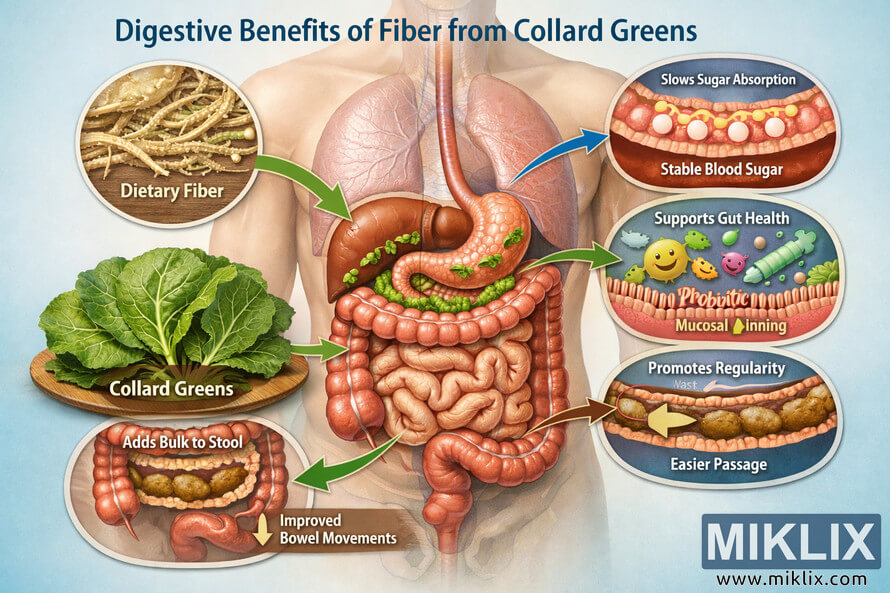
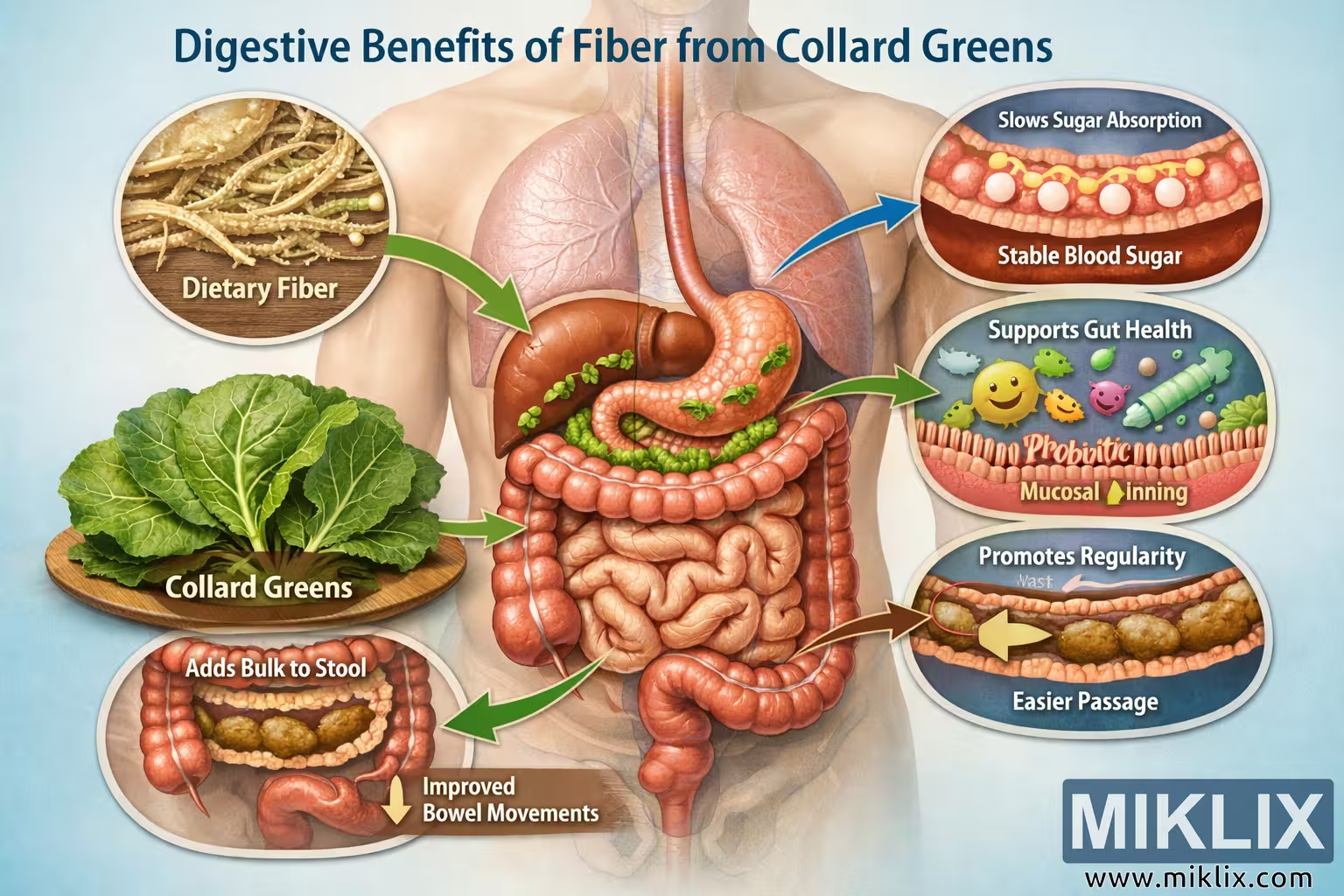
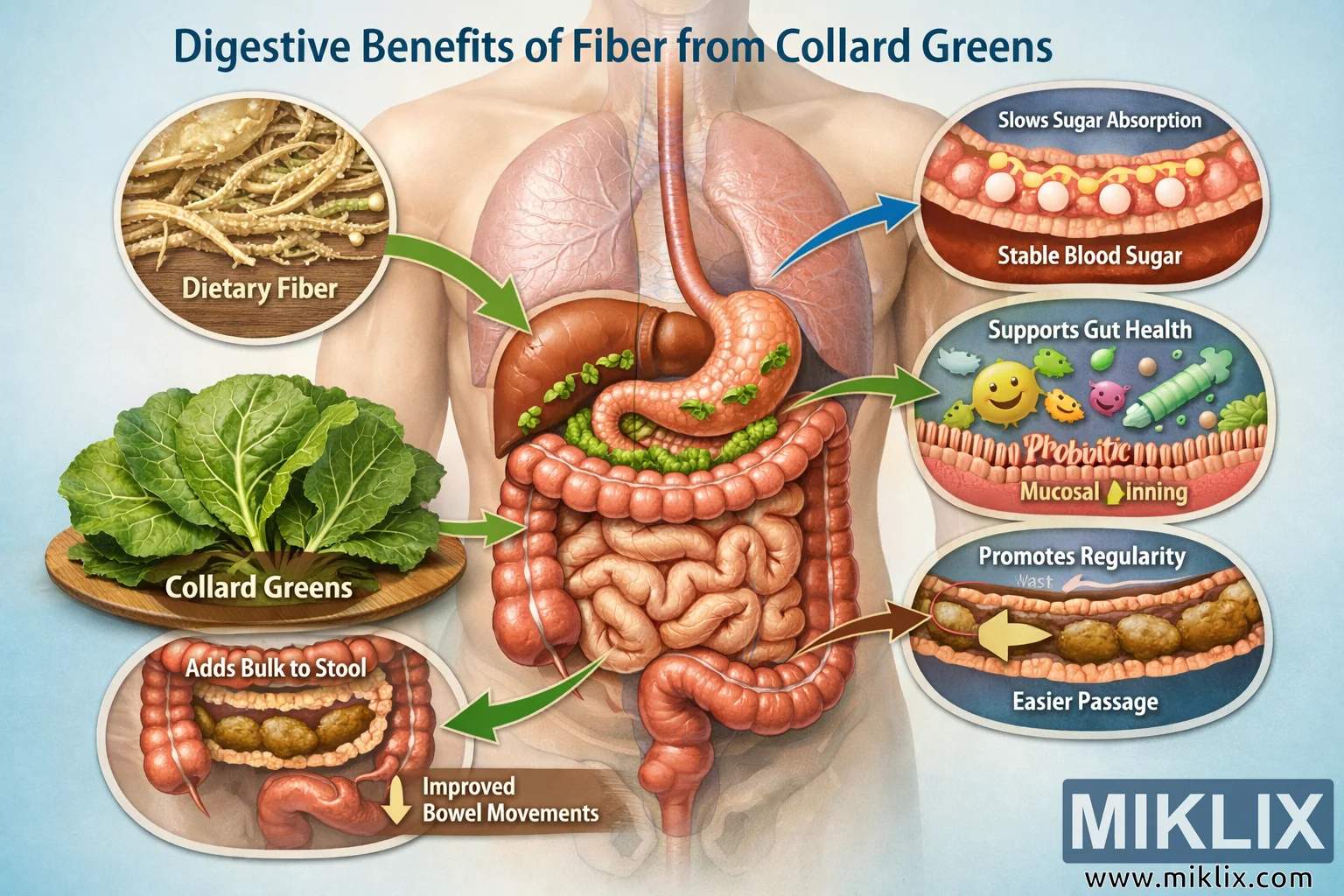
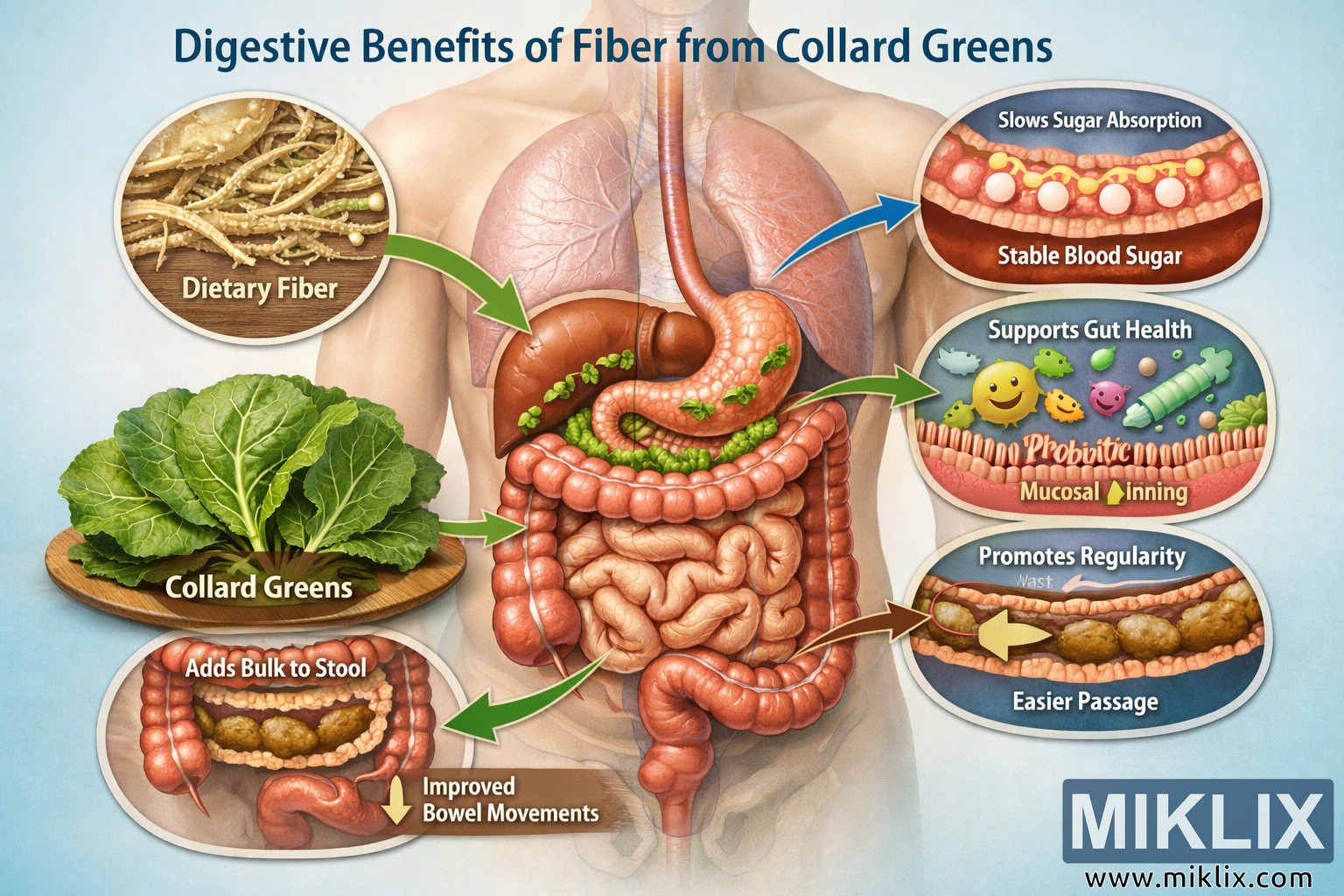
Informative landscape medical illustration showing how dietary fiber from collard greens benefits the digestive system by slowing sugar absorption, supporting gut bacteria and gut lining health, adding bulk to stool, and promoting regular, comfortable bowel movements.
Available versions of this image
The image files available for download below are less compressed and higher resolution - and as a result of that, higher quality - than the images embedded in articles and pages on this website, which are more optimized for file size in order to reduce bandwidth consumption.
Regular size (1,536 x 1,024)
Large size (3,072 x 2,048)
Very large size (4,608 x 3,072)
Extra large size (6,144 x 4,096)
Comically large size (1,048,576 x 699,051)
- Still uploading... ;-)
Image description
This landscape-oriented medical illustration presents a detailed, educational view of how dietary fiber from collard greens supports and enhances the human digestive system. The composition is organized like an infographic, combining anatomical accuracy with clear labels, arrows, and explanatory callouts so that a viewer can easily follow the journey of fiber from the plate to the intestines and understand its multiple benefits.
At the center of the image, a semi-transparent human torso is shown from the shoulders down to the hips, facing forward. The torso reveals the major components of the digestive tract: the esophagus descending from the throat, the stomach positioned slightly to the left, the coiled loops of the small intestine occupying the central abdominal area, and the thicker, frame-like structure of the large intestine surrounding the small intestine. Each organ is rendered in warm, natural tones—soft pinks, muted reds, and gentle browns—giving the illustration a realistic yet approachable medical feel. The transparency of the torso allows the viewer to see the digestive organs clearly while still recognizing the outline of the human body.
On the left side of the illustration, a wooden plate is placed prominently in the foreground, holding a generous serving of collard greens. The leaves are large, deep green, and richly textured, with visible veins and subtle variations in color that suggest freshness and nutrient density. The plate is labeled with the text "Collard Greens" in a clean, legible font, making it immediately clear what food is being highlighted. The collard greens are slightly angled toward the center of the image, visually directing attention toward the digestive tract.
Near the collard greens, a circular inset labeled "Dietary Fiber" magnifies the concept of fiber itself. Inside this inset, fibrous strands are depicted as intertwined, thread-like structures in shades of green and beige, symbolizing the indigestible plant components that travel through the digestive system. Arrows extend from the collard greens to this fiber inset and then onward toward the intestines, visually narrating the path that fiber takes after consumption. These arrows are colored in a vibrant green, reinforcing the connection between plant-based foods and digestive health.
In the upper right portion of the illustration, another inset is labeled "Slows Sugar Absorption." This section focuses on the small intestine. The inset shows a stylized segment of the small intestine with a textured inner lining, along which small, rounded shapes represent sugar molecules. Some of these sugar molecules are accompanied by arrows that move more slowly, indicating that fiber helps moderate the rate at which sugar enters the bloodstream. Beneath this inset, the phrase "Stable Blood Sugar" is displayed, emphasizing one of the systemic benefits of fiber: it can help prevent rapid spikes and crashes in blood sugar levels. The colors in this inset blend soft blues and warm neutrals, creating a calm, balanced visual tone that matches the idea of stability.
Further down on the right side, a second inset is labeled "Supports Gut Health." This section highlights the relationship between fiber and beneficial gut bacteria. Inside the inset, friendly, cartoon-like bacterial shapes are shown in shades of green and teal, some with simple smiling faces to convey the idea of "Good Bacteria." The word "Prebiotics" appears near these bacteria, explaining that fiber from collard greens acts as a food source for these helpful microorganisms. Alongside the bacteria, a smooth, intact mucosal lining is depicted and labeled "Healthy Gut Lining," suggesting that a fiber-rich diet contributes to maintaining the integrity of the intestinal barrier. The overall effect of this inset is to show that fiber does not just pass through the body; it actively nurtures the gut ecosystem.
On the lower left side of the illustration, an inset labeled "Adds Bulk to Stool" focuses on the large intestine. The inset shows a simplified cross-section of the colon, with the interior filled by bulkier, well-formed stool. The stool is depicted in a neutral brown tone, and an arrow labeled "Improved Bowel Movements" points downward, indicating that increased bulk helps move waste more efficiently through the colon. This visual reinforces the idea that fiber from collard greens can help prevent constipation and promote more comfortable, regular elimination.
In the lower right corner, another inset is labeled "Promotes Regularity." This section continues the story of waste moving through the intestines. The illustration shows a sequence of waste material progressing along the intestinal tract, guided by a directional arrow. The label "Easier Passage" appears beneath the arrow, summarizing the benefit: fiber helps keep things moving smoothly, reducing strain and discomfort. The arrows in this area are colored in earthy browns and warm oranges, visually tying the concept of regularity to the natural rhythm of digestion.
Throughout the illustration, arrows of different colors—green, blue, and brown—connect the various elements. Green arrows link the collard greens to the "Dietary Fiber" inset and then to the digestive tract, symbolizing the origin of fiber in plant foods. Blue arrows connect the "Slows Sugar Absorption" inset to the "Stable Blood Sugar" label, emphasizing metabolic balance. Brown arrows connect the "Adds Bulk to Stool" inset to "Improved Bowel Movements" and then to "Promotes Regularity" and "Easier Passage," highlighting the mechanical benefits of fiber in waste elimination. These arrows create a visual flow that guides the viewer’s eye across the image, making the complex information easier to understand at a glance.
At the top of the illustration, a bold, central title reads "Digestive Benefits of Fiber from Collard Greens." The typography is clear and professional, suitable for use in educational materials, health presentations, or patient handouts. The background of the entire image is a soft, neutral gradient—light beige transitioning into pale blue—providing enough contrast for all labels and anatomical details to stand out without overwhelming the viewer.
The overall color palette balances warm and cool tones: greens dominate the collard greens and beneficial bacteria, while warmer hues define the intestines and digestive organs. This contrast helps distinguish plant-based elements from anatomical structures while maintaining a cohesive visual style. The lighting is even and well-balanced, with subtle shading that adds depth to the organs, insets, and arrows without creating harsh shadows. Every element is rendered with high clarity and sharpness, ensuring that the illustration remains legible even at large sizes or high resolutions.
Taken together, the image functions as a comprehensive visual explanation of how fiber from collard greens interacts with the digestive system. It shows that fiber slows sugar absorption, supports gut health by feeding good bacteria and protecting the gut lining, adds bulk to stool, and promotes regular, comfortable bowel movements. By combining realistic anatomy with simplified diagrams and friendly visual metaphors, the illustration makes complex nutritional science accessible to a wide audience, including students, patients, and health-conscious viewers.
The image is related to: Collard Greens: The Leafy Green Your Diet Is Missing