
Image: Variety of Leafy Green Vegetables Comparison
Published: July 21, 2026 at 8:39:51 PM UTC
Explore a detailed visual comparison of leafy green vegetables including kale, spinach, romaine, Swiss chard, cabbage, mustard greens, collard greens, lettuce, watercress, bok choy, and microgreens. This high-resolution landscape image highlights textures, colors, and leaf structures for educational and culinary insight.
Available versions of this image
The image files available for download below are less compressed and higher resolution - and as a result of that, higher quality - than the images embedded in articles and pages on this website, which are more optimized for file size in order to reduce bandwidth consumption.
Regular size (1,536 x 1,024)
Large size (3,072 x 2,048)
Very large size (4,608 x 3,072)
Extra large size (6,144 x 4,096)
Comically large size (1,048,576 x 699,051)
- Still uploading... ;-)
Image description
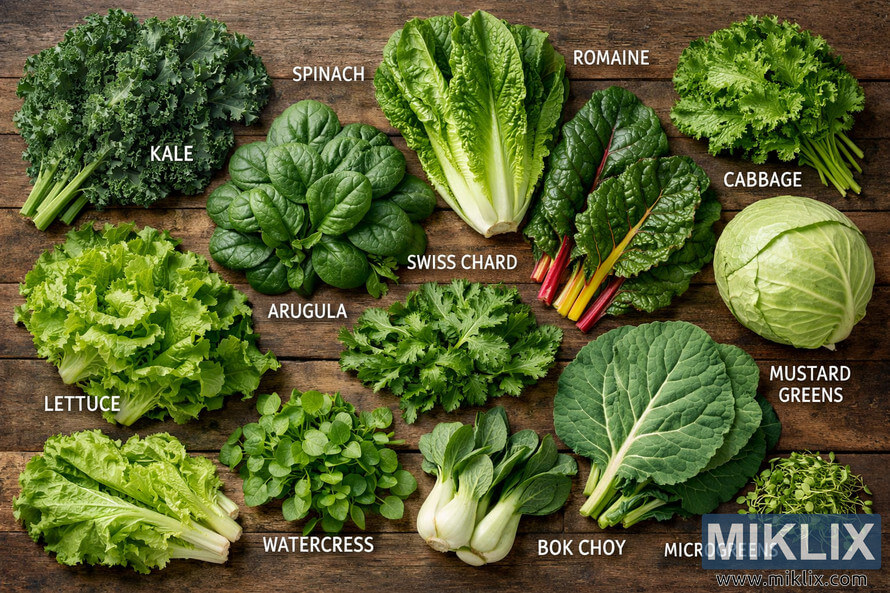
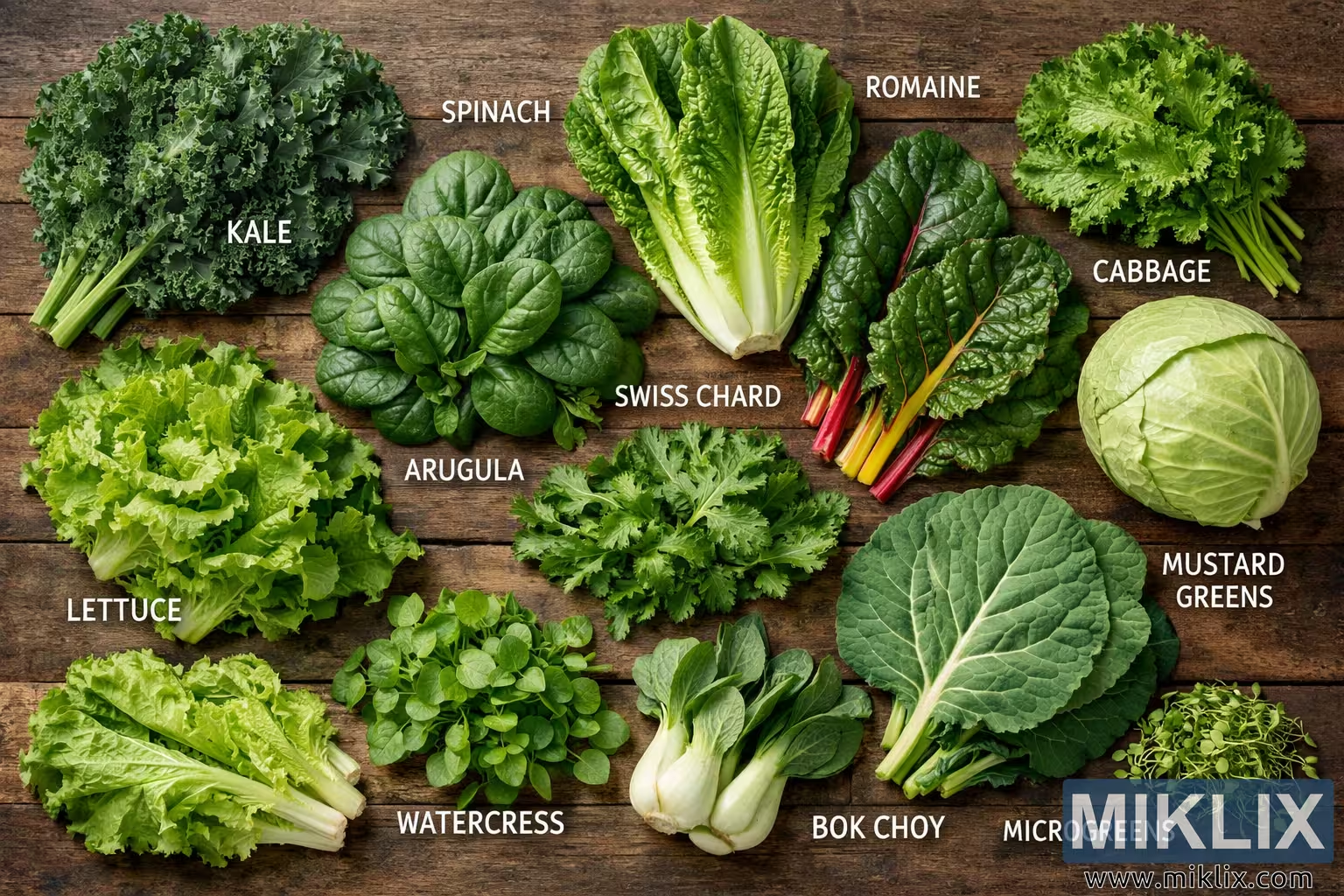
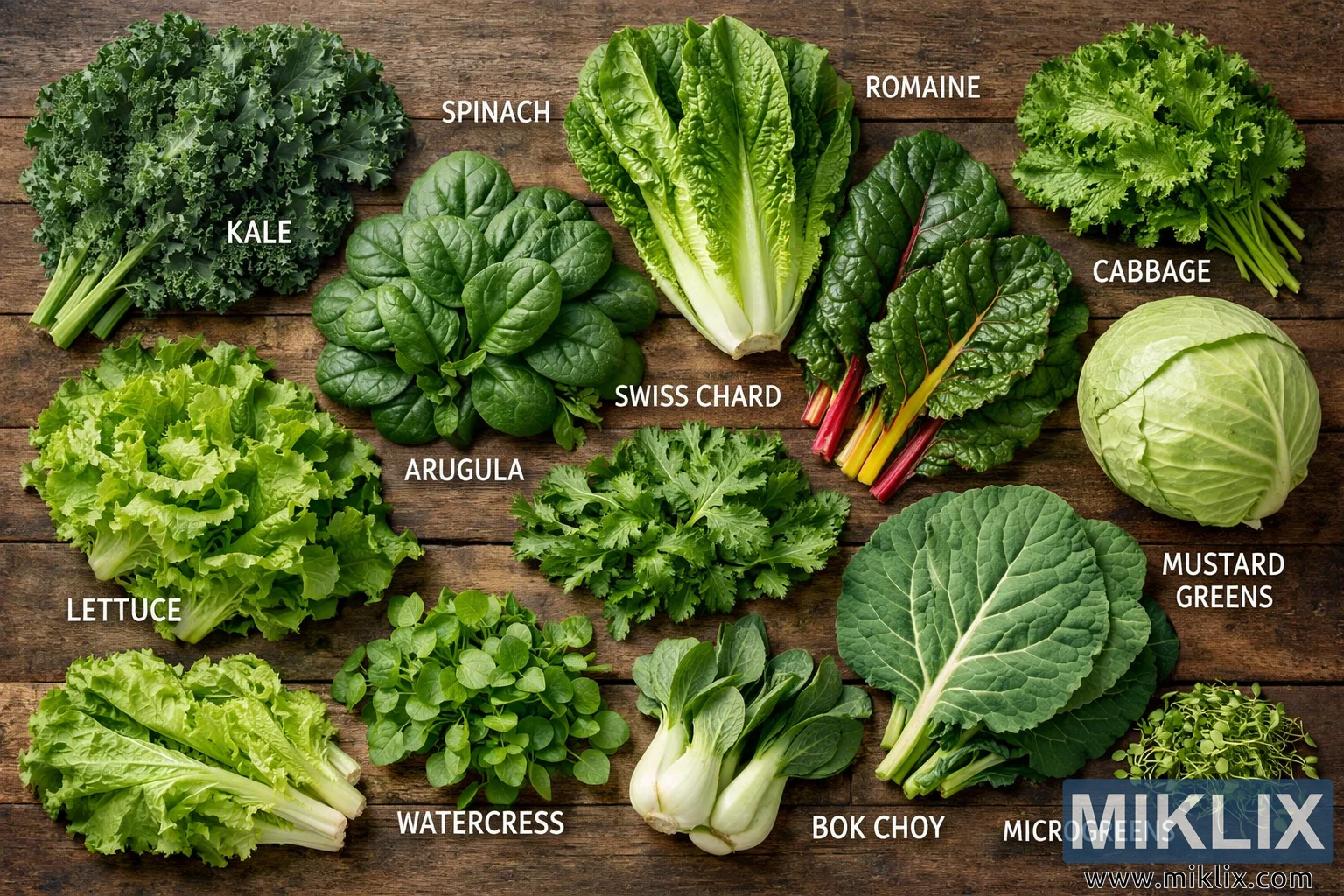
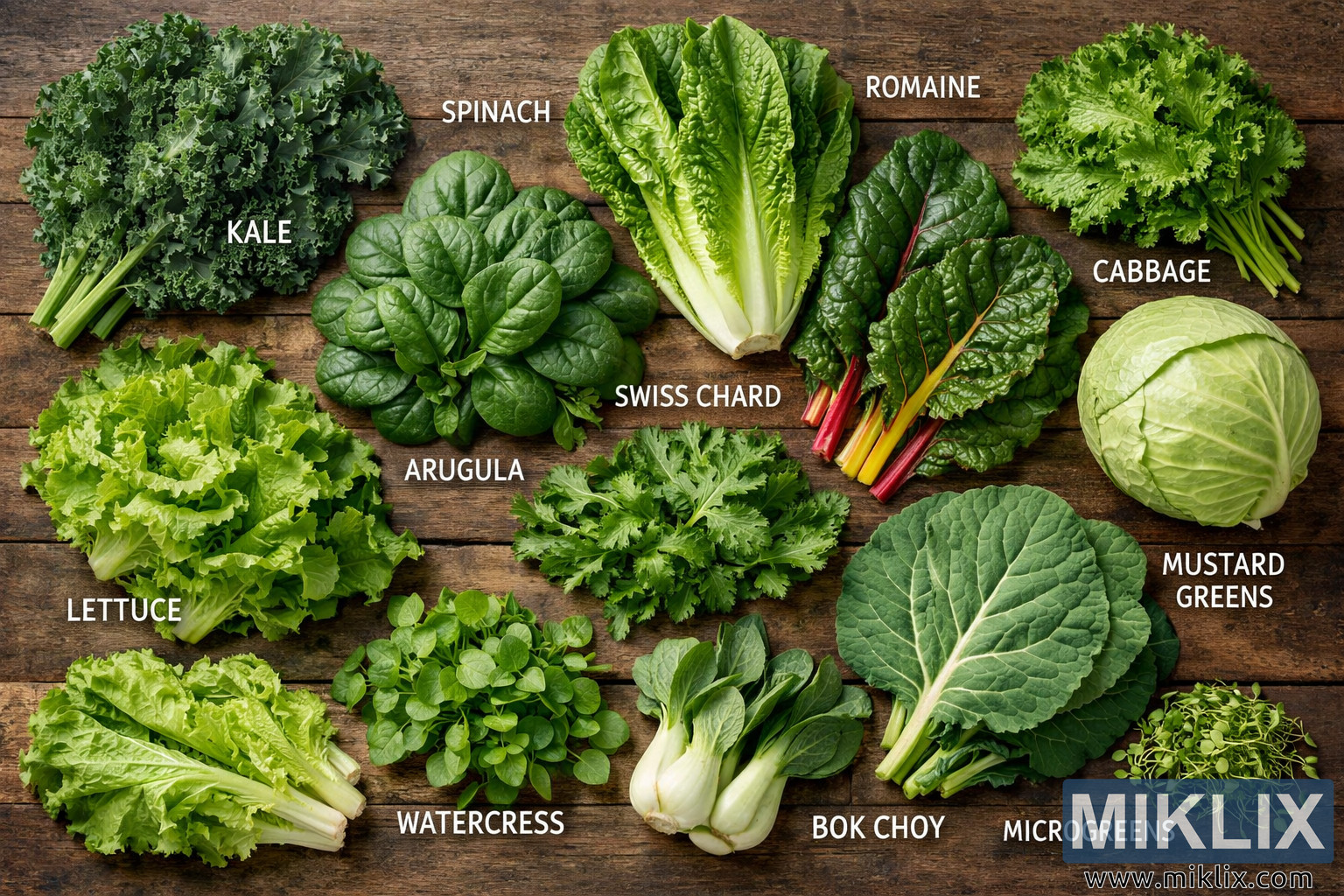
The image presents a meticulously arranged collection of leafy green vegetables displayed on a rustic wooden surface, forming a visually rich comparison of textures, colors, and shapes. Each vegetable is labeled in clean white text, ensuring clarity and educational value. The composition is balanced across the frame, with darker greens concentrated toward the upper left and lighter, more delicate greens toward the lower right, creating a natural gradient that guides the viewer’s eye across the entire scene.
In the upper left corner, kale dominates with its deep green, curly leaves that exhibit a crinkled texture and robust appearance. The leaves are thick and slightly ruffled, suggesting their fibrous nature and nutrient density. Adjacent to kale, spinach appears smoother and glossier, with rounded leaves that reflect light subtly, emphasizing their tender quality. Below spinach, arugula introduces a lively contrast with its jagged, deeply lobed leaves, bright green hue, and slightly wild arrangement, evoking its peppery flavor and delicate structure.
Moving toward the upper right, romaine lettuce stands tall with elongated, crisp leaves featuring thick, pale ribs that provide structural integrity. The romaine’s vertical orientation adds a sense of height and freshness to the composition. Next to romaine, Swiss chard contributes a burst of color through its vibrant red and yellow stems, which contrast beautifully against its large, dark green leaves. The veins of Swiss chard are pronounced, creating a striking interplay of color and form. Below Swiss chard, collard greens occupy a substantial portion of the frame with their broad, flat leaves and prominent light-colored veins, symbolizing their hearty texture and versatility in cooking.
In the upper far right, cabbage forms a rounded, compact head with tightly packed pale green leaves. Its spherical shape contrasts with the more open and leafy structures surrounding it, adding geometric diversity to the arrangement. To the left of the cabbage, mustard greens display frilly, dark green leaves with a slightly rugged texture, hinting at their bold, spicy flavor.
The lower section of the image transitions to lighter greens and smaller leaves. In the bottom left corner, lettuce showcases light green, ruffled leaves that appear airy and delicate, representing the tender varieties often used in salads. At the center bottom, watercress introduces a cluster of small, round, bright green leaves attached to thin stems, conveying a sense of freshness and vitality. To the right of watercress, bok choy presents a unique contrast with its white, bulbous stems and smooth, dark green leaves that curve gracefully outward, illustrating its crisp and juicy texture. Finally, in the bottom right corner, microgreens form a small pile of tiny sprouts with delicate stems and miniature leaves, symbolizing youthful growth and concentrated flavor.
The overall lighting is even and natural, enhancing the vibrancy of each green without overwhelming the viewer. Subtle shadows add depth and dimension, while the rustic wooden background provides warmth and organic context. The image’s high resolution captures fine details such as leaf veins, moisture droplets, and subtle color variations, making it both aesthetically pleasing and scientifically informative.
This composition serves as an educational visual guide to the diversity of leafy greens, highlighting their unique characteristics, nutritional richness, and culinary potential. It invites viewers to appreciate the beauty of natural produce and the intricate differences among species that share the same verdant palette. The arrangement is not only a feast for the eyes but also a celebration of plant variety, sustainability, and the artistry inherent in nature’s design.
The image is related to: Collard Greens: The Leafy Green Your Diet Is Missing