
Image: Comprehensive Corn Nutrition Facts and Vitamins Infographic
Published: July 22, 2026 at 1:32:22 PM UTC
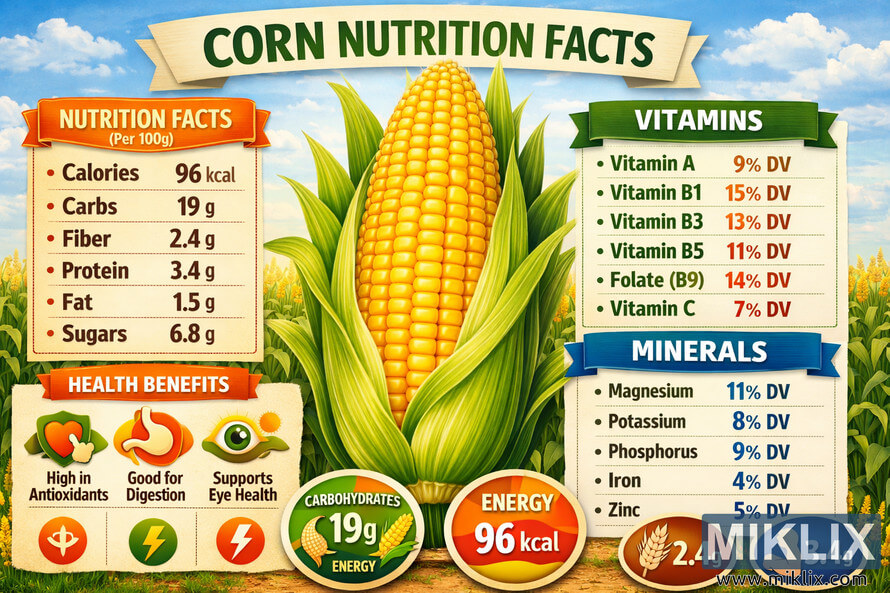
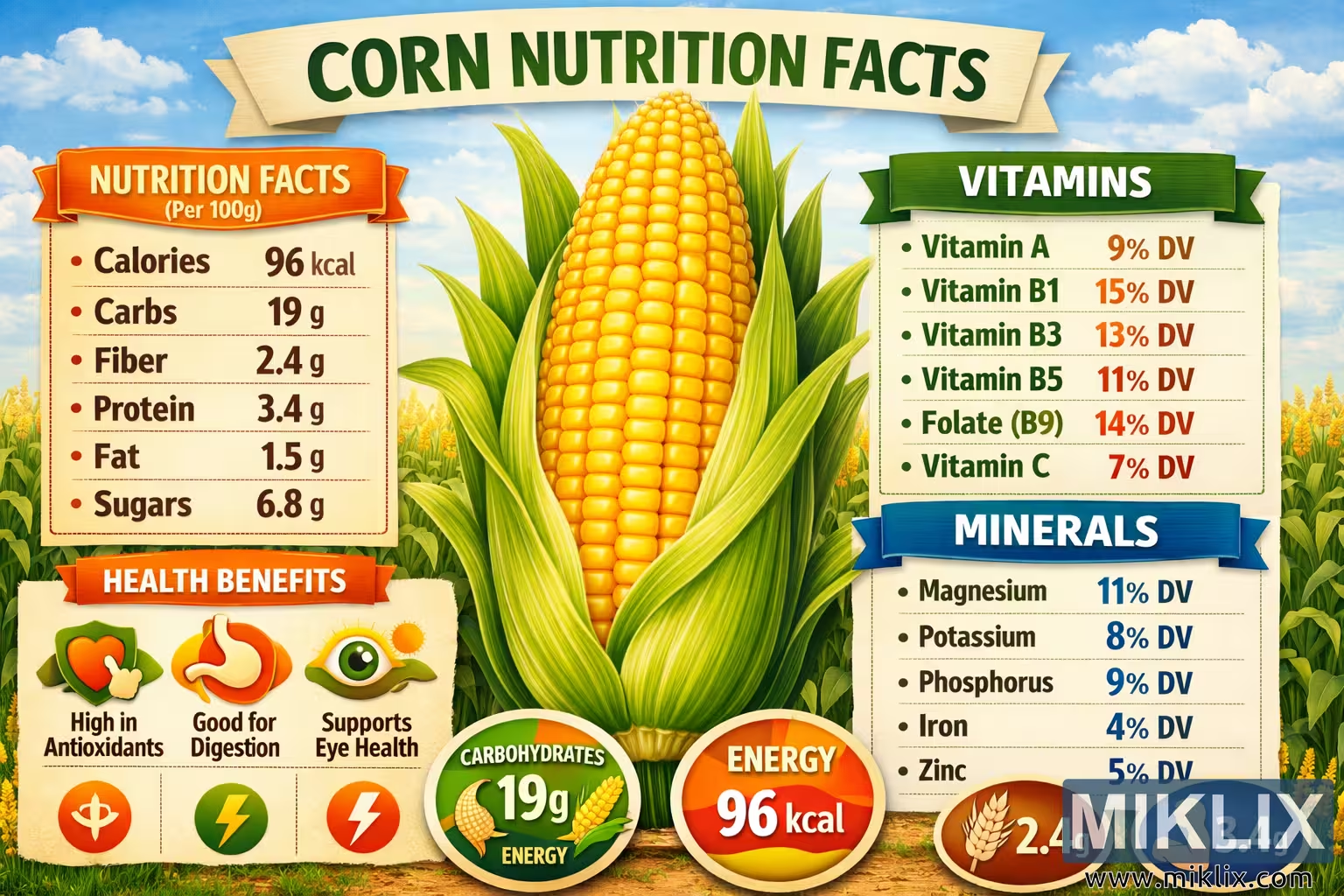
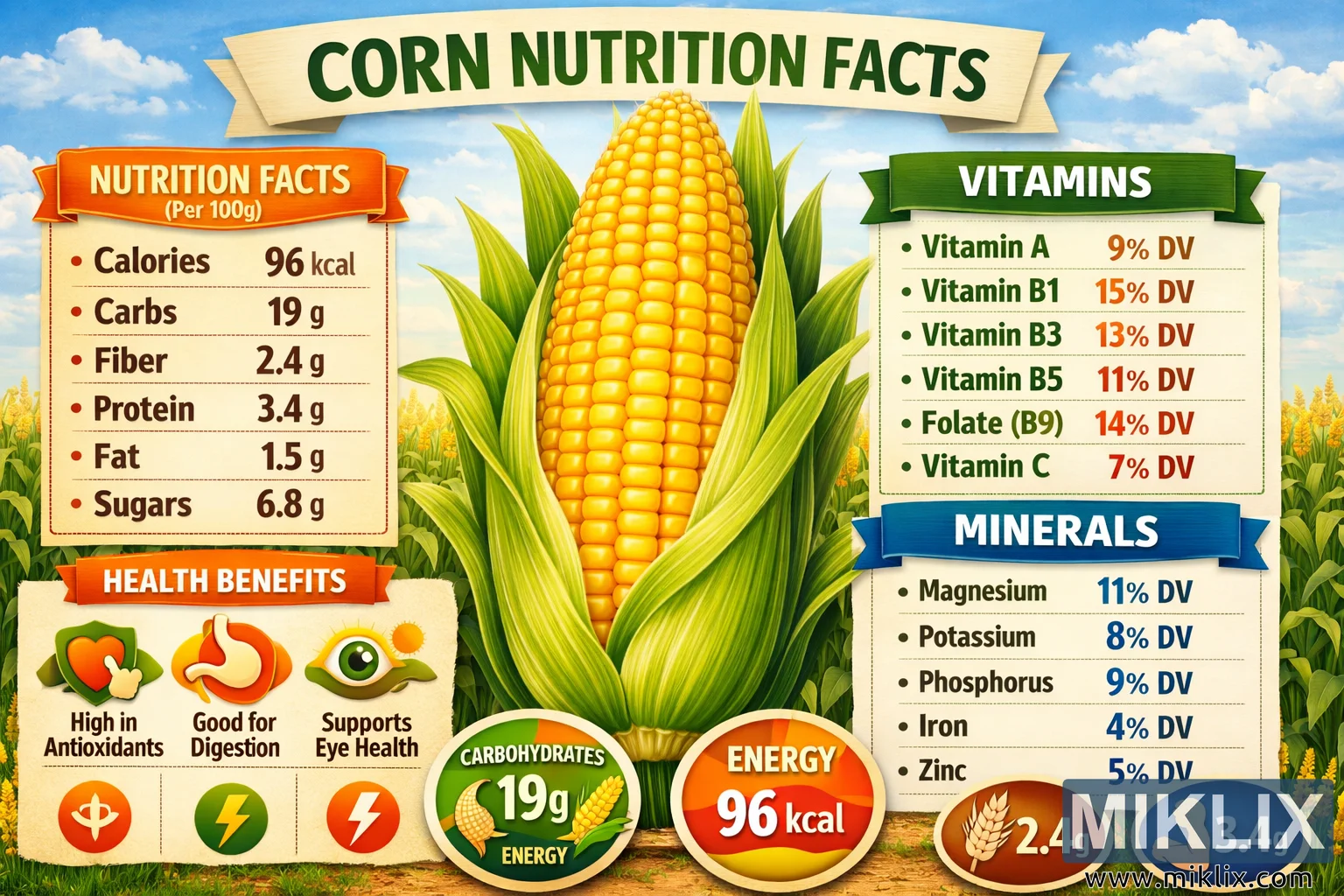
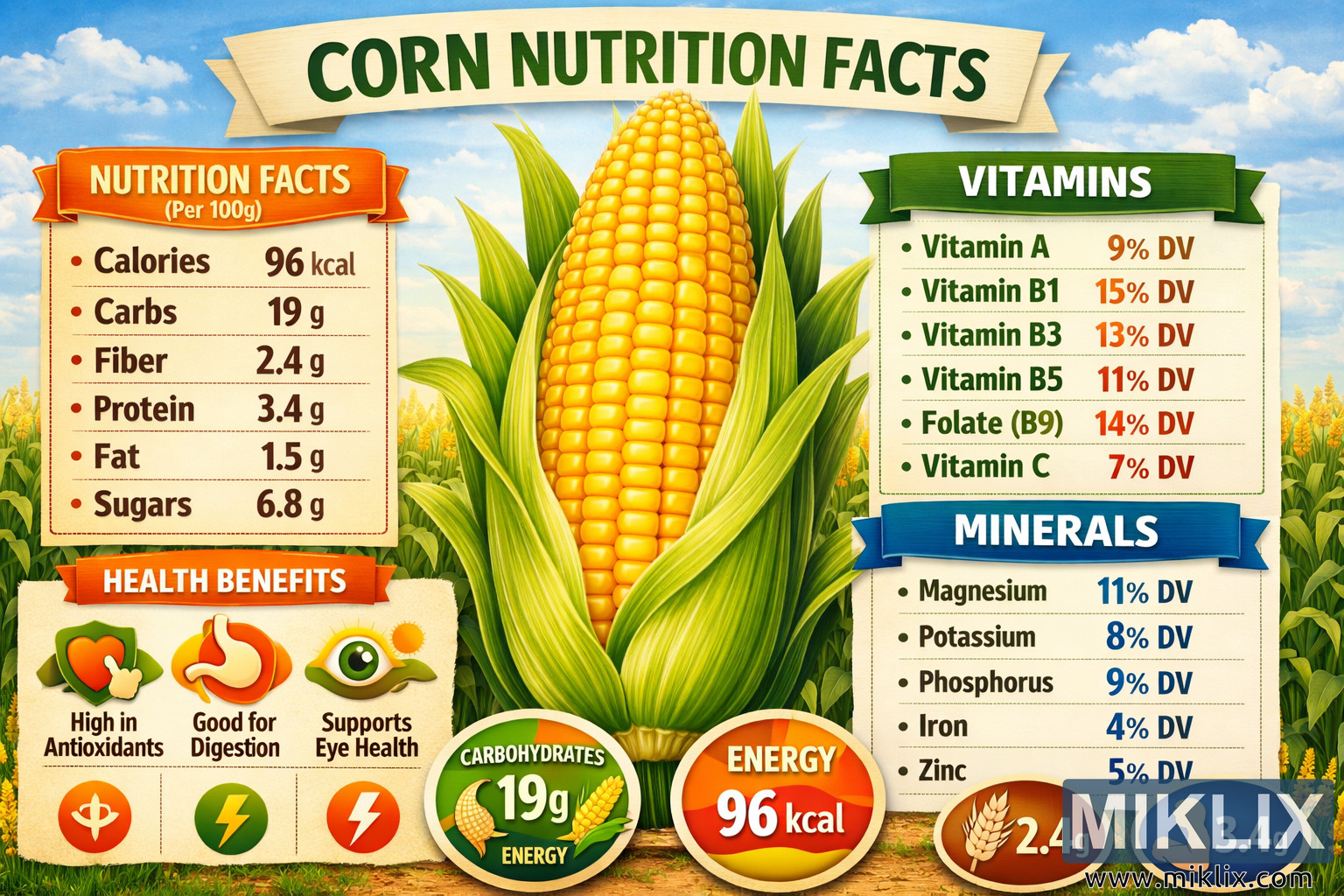
A vibrant landscape infographic presenting detailed corn nutrition facts per 100g, including calories, macronutrients, vitamins, minerals, and health benefits. The design features a central ear of corn, labeled sections for nutrition facts, vitamins, minerals, and circular charts for carbohydrates, energy, fiber, and protein, set over a sky and cornfield background.
Available versions of this image
The image files available for download below are less compressed and higher resolution - and as a result of that, higher quality - than the images embedded in articles and pages on this website, which are more optimized for file size in order to reduce bandwidth consumption.
Regular size (1,536 x 1,024)
Large size (3,072 x 2,048)
Very large size (4,608 x 3,072)
Extra large size (6,144 x 4,096)
Comically large size (1,048,576 x 699,051)
- Still uploading... ;-)
Image description
The image is a colorful, high-resolution landscape infographic titled "CORN NUTRITION FACTS" displayed prominently at the top in bold, eye-catching typography. The title immediately sets the theme of the visual: a detailed and engaging overview of the nutritional profile of corn. The layout is carefully structured so that each section of information is easy to locate and visually distinct, while still feeling cohesive and integrated into a single, unified design.
At the center of the infographic, there is a large, realistic illustration of an ear of corn. The corn is partially husked, revealing rows of bright yellow kernels that stand out against the green husk leaves. This central image acts as the focal point of the composition, drawing the viewer’s attention and visually anchoring the surrounding data. Behind and beneath the corn, the background transitions from a soft blue sky with scattered white clouds at the top to a lush field of corn plants at the bottom, reinforcing the agricultural and natural context of the food being described.
On the left side of the infographic, there is a rectangular section titled "NUTRITION FACTS (Per 100g)" enclosed within an orange-bordered box. Inside this box, the key macronutrient values for a 100-gram serving of corn are listed in a clear, vertical format. The entries include: "Calories 96 kcal," "Carbs 19 g," "Fiber 2.4 g," "Protein 3.4 g," "Fat 1.5 g," and "Sugars 6.8 g." Each line is separated and aligned for easy reading, with the nutrient name followed by its quantity and unit. The use of orange for the border and headings gives this section a warm, energetic feel, emphasizing the role of corn as a source of energy and sustenance.
Directly below the nutrition facts box on the left, there is another section labeled "HEALTH BENEFITS." This area uses a series of icons paired with short descriptive phrases to summarize the key positive effects associated with consuming corn. Four main benefits are highlighted. The first benefit, "High in Antioxidants," is represented by a shield icon combined with a heart, suggesting protection and cardiovascular support. The second benefit, "Good for Digestion," is illustrated with a stylized stomach icon, indicating that the fiber content in corn can support digestive health. The third benefit, "Supports Eye Health," uses an eye icon with a sun motif, hinting at the role of certain nutrients in maintaining vision and protecting the eyes. The fourth benefit, "Energy Source," is symbolized by a lightning bolt, reinforcing the idea that corn provides calories and carbohydrates that can fuel the body. These icons are colorful and simple, making the health messages easy to grasp at a glance.
To the right of the central ear of corn, two major sections are arranged vertically: one for vitamins and one for minerals. The "VITAMINS" section is positioned above and is distinguished by a green banner or header that spans the top of the box. Within this section, several vitamins found in corn are listed along with their approximate percentage of the daily value (DV). The entries include: "Vitamin A 9% DV," "Vitamin B1 15% DV," "Vitamin B3 13% DV," "Vitamin B5 11% DV," "Folate (B9) 14% DV," and "Vitamin C 7% DV." Each vitamin is presented on its own line, with the name followed by the percentage, making it easy for viewers to understand how corn contributes to their daily micronutrient intake. The green color theme suggests freshness and vitality, often associated with plant-based nutrients.
Below the vitamins section is the "MINERALS" section, which uses a blue banner or header to differentiate it from the vitamins above. This section lists key minerals present in corn, again with their approximate daily value percentages. The minerals shown are: "Magnesium 11% DV," "Potassium 8% DV," "Phosphorus 9% DV," "Iron 4% DV," and "Zinc 5% DV." As with the vitamins, each mineral is clearly labeled and paired with its DV percentage. The blue color palette conveys a sense of stability and structure, aligning with the role of minerals in supporting various bodily functions such as bone health, muscle function, and enzyme activity.
At the bottom of the infographic, spanning the width of the design, there are four circular mini-infographics that further break down key aspects of corn’s nutritional profile. On the left side, one circle is dedicated to "CARBOHYDRATES" and prominently displays the value "19g" inside or near the circle. Adjacent to it is another circle labeled "ENERGY" with the value "96 kcal." These two circles are visually linked, emphasizing the relationship between carbohydrate content and energy provision. The design elements within these circles include icons such as a corn cob and a lightning bolt, reinforcing the idea that corn is a significant source of fuel for the body.
On the right side of the bottom section, two additional circular graphics focus on "DIETARY FIBER" and "PROTEIN." The fiber circle highlights the value "2.4g," while the protein circle shows "3.4g." The fiber circle may incorporate imagery like a wheat stalk or similar plant-based symbol to suggest roughage and digestive support, while the protein circle uses a muscle icon to represent strength and muscle maintenance. These circles help viewers quickly identify how corn contributes to fiber and protein intake, complementing the more detailed nutrition facts listed above.
Throughout the infographic, the color balance is carefully managed, combining warm tones such as yellows and oranges with cooler greens and blues. This mix creates visual contrast between different sections while maintaining harmony across the entire design. Bold headings, clear labels, and simple icons ensure that the information is accessible and visually appealing. Arrows and subtle design elements guide the viewer’s eye from one section to another, making the flow of information intuitive.
The overall impression of the image is that of a modern, educational, and engaging nutritional infographic. It successfully communicates both quantitative data—like grams, calories, and percentage daily values—and qualitative messages about health benefits. The central ear of corn, the sky and cornfield background, and the vibrant color scheme all work together to celebrate corn as a wholesome, natural food while providing viewers with a detailed understanding of its nutritional composition.
The image is related to: Health Benefits of Corn: Your Complete Guide to This Nutritious Whole Grain