
Image: Dill Plant in Garden Showing Leaves and Seeds
Published: July 23, 2026 at 6:43:02 PM UTC
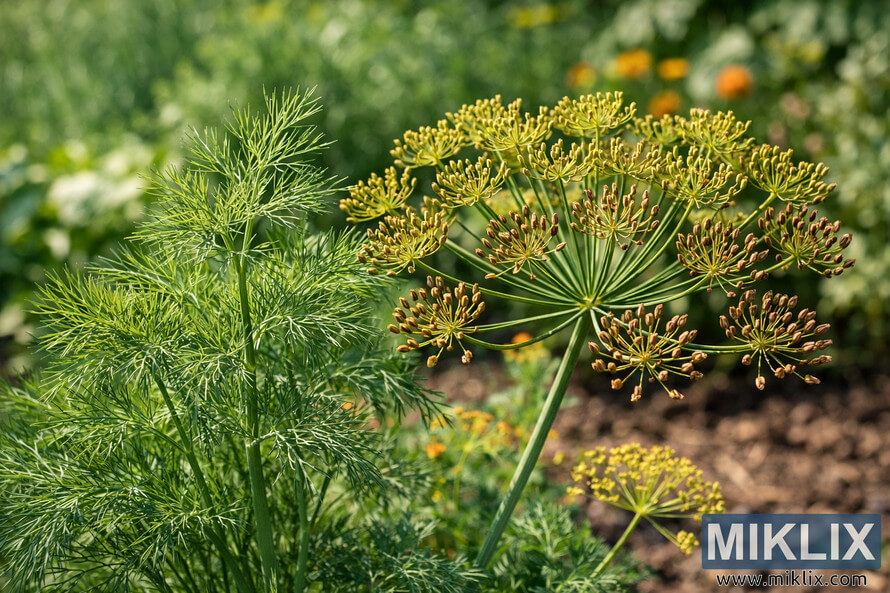
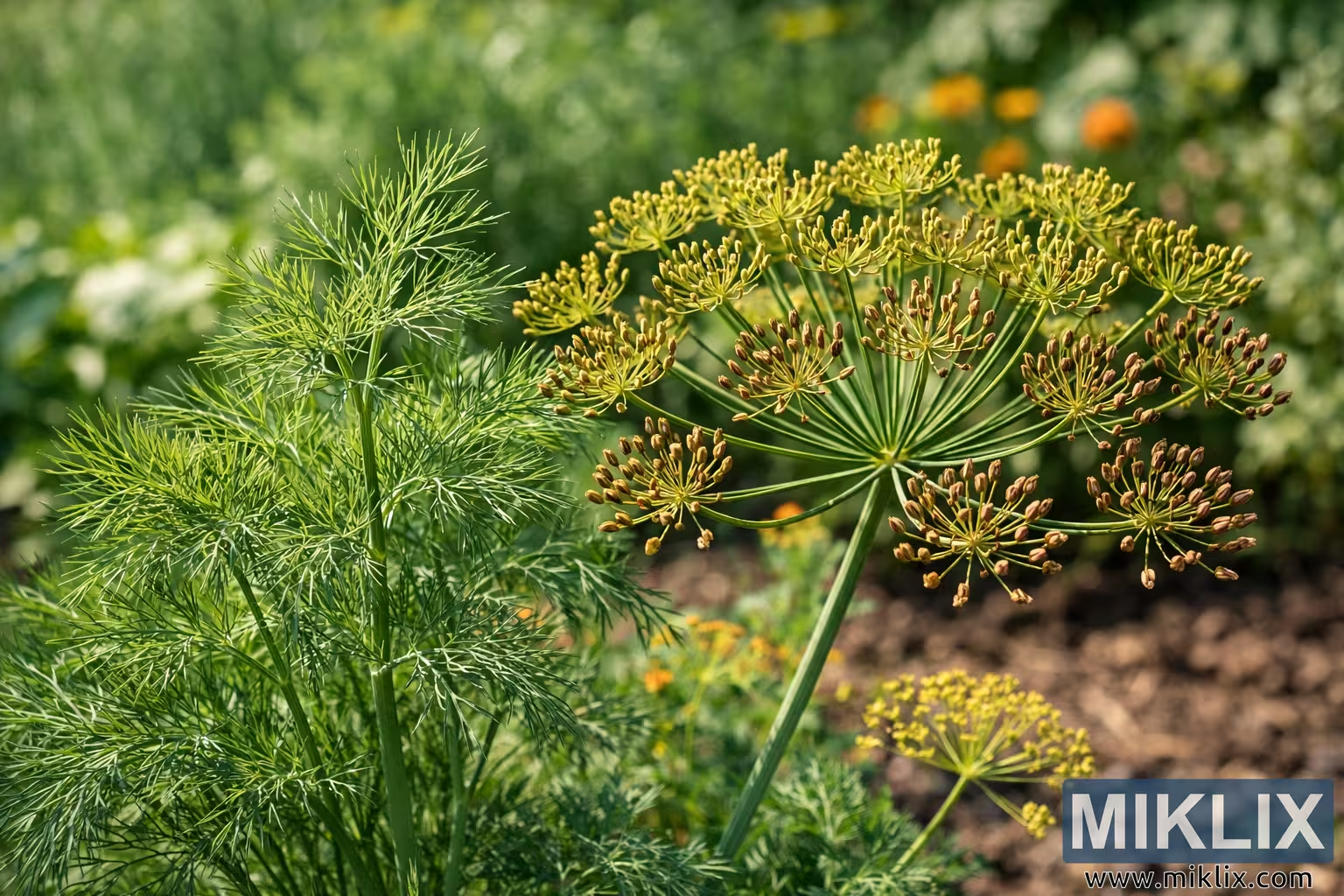
A detailed photograph of a dill plant (Anethum graveolens) growing in a garden, highlighting its delicate green leaves and mature seed heads under natural sunlight.
Available versions of this image
The image files available for download below are less compressed and higher resolution - and as a result of that, higher quality - than the images embedded in articles and pages on this website, which are more optimized for file size in order to reduce bandwidth consumption.
Regular size (1,536 x 1,024)
Large size (3,072 x 2,048)
Very large size (4,608 x 3,072)
Extra large size (6,144 x 4,096)
Comically large size (1,048,576 x 699,051)
- Still uploading... ;-)
Image description
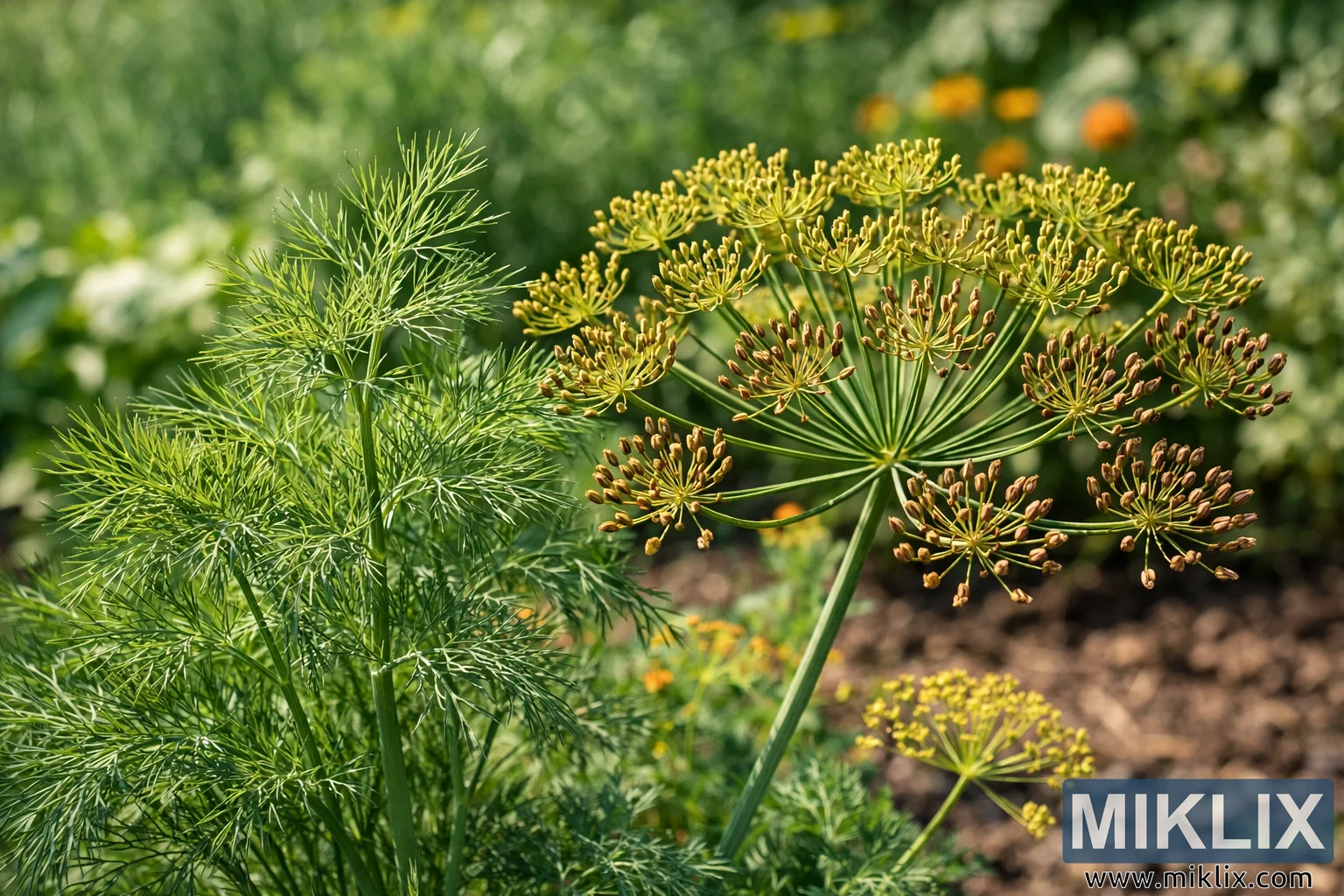
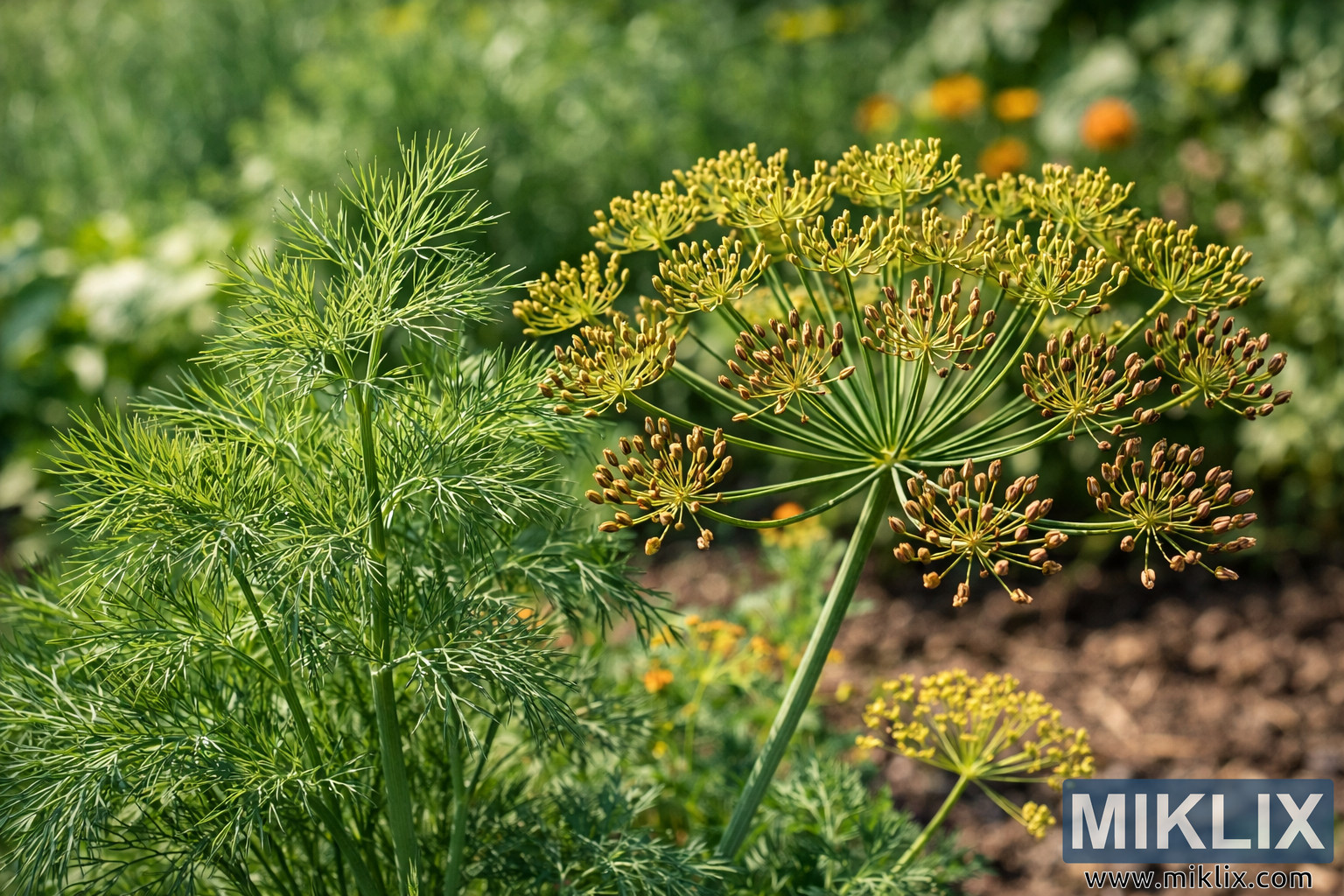
The image presents a vivid and detailed depiction of a dill plant (Anethum graveolens) thriving in a sunlit garden. The composition captures both the plant’s feathery leaves and its umbrella-shaped seed heads, offering a comprehensive view of the herb’s life cycle. The dill occupies the foreground, slightly off-center, with its lush green foliage on the left and its intricate seed structures on the right. The leaves are fine and delicate, resembling soft green feathers that branch out from slender stems. Each leaf segment is thin and needle-like, creating a lace-like texture that glows under the sunlight. The light filtering through the leaves enhances their translucency, revealing subtle variations in green tones—from deep emerald to bright lime.
To the right, the seed heads rise above the foliage, forming large, umbrella-like clusters known as umbels. These structures consist of numerous thin spokes radiating outward from a central point, each tipped with small, oval seeds. The seeds vary in color, with some still green and others turning brown as they ripen. The contrast between the fresh green leaves and the maturing brown seeds symbolizes the plant’s transition from growth to reproduction. The seed heads are slightly tilted toward the light, their fine stems catching the sun and casting delicate shadows on the leaves below.
The background is softly blurred, emphasizing the dill plant as the focal point. Behind it, the garden reveals hints of other vegetation—patches of green foliage, orange flowers, and earthy brown soil. The bokeh effect creates a sense of depth and tranquility, suggesting a thriving, natural environment. The interplay of colors—green, yellow, brown, and orange—adds warmth and harmony to the scene. The soil beneath the dill is dark and rich, indicating a healthy growing medium. Tiny specks of moisture and organic matter glisten faintly, contributing to the realism of the image.
The lighting is natural and balanced, with sunlight streaming from the upper left corner. It highlights the textures of the dill leaves and seed heads, creating a dynamic interplay of light and shadow. The photograph’s resolution is exceptionally high, allowing viewers to discern minute details such as the fine hairs on the stems, the subtle veins in the leaves, and the delicate curvature of each seed. The overall atmosphere is serene and organic, evoking the freshness of a summer garden.
The composition follows a gentle diagonal line from the bottom left to the upper right, guiding the viewer’s eye from the dense foliage toward the airy seed heads. This visual flow mirrors the plant’s natural growth pattern—rooted in the earth yet reaching upward toward the sky. The image conveys both botanical precision and aesthetic beauty, making it suitable for educational, culinary, or horticultural contexts. It celebrates the dill plant’s dual nature as both a fragrant herb and a seed-bearing species, encapsulating the essence of garden life in a single, harmonious frame.
The image is related to: Health Benefits of Dill: Your Complete Guide to This Powerful Herb