
Image: Ripe and Unripe Loquats: A Detailed Visual Comparison
Published: September 3, 2026 at 8:24:51 PM UTC
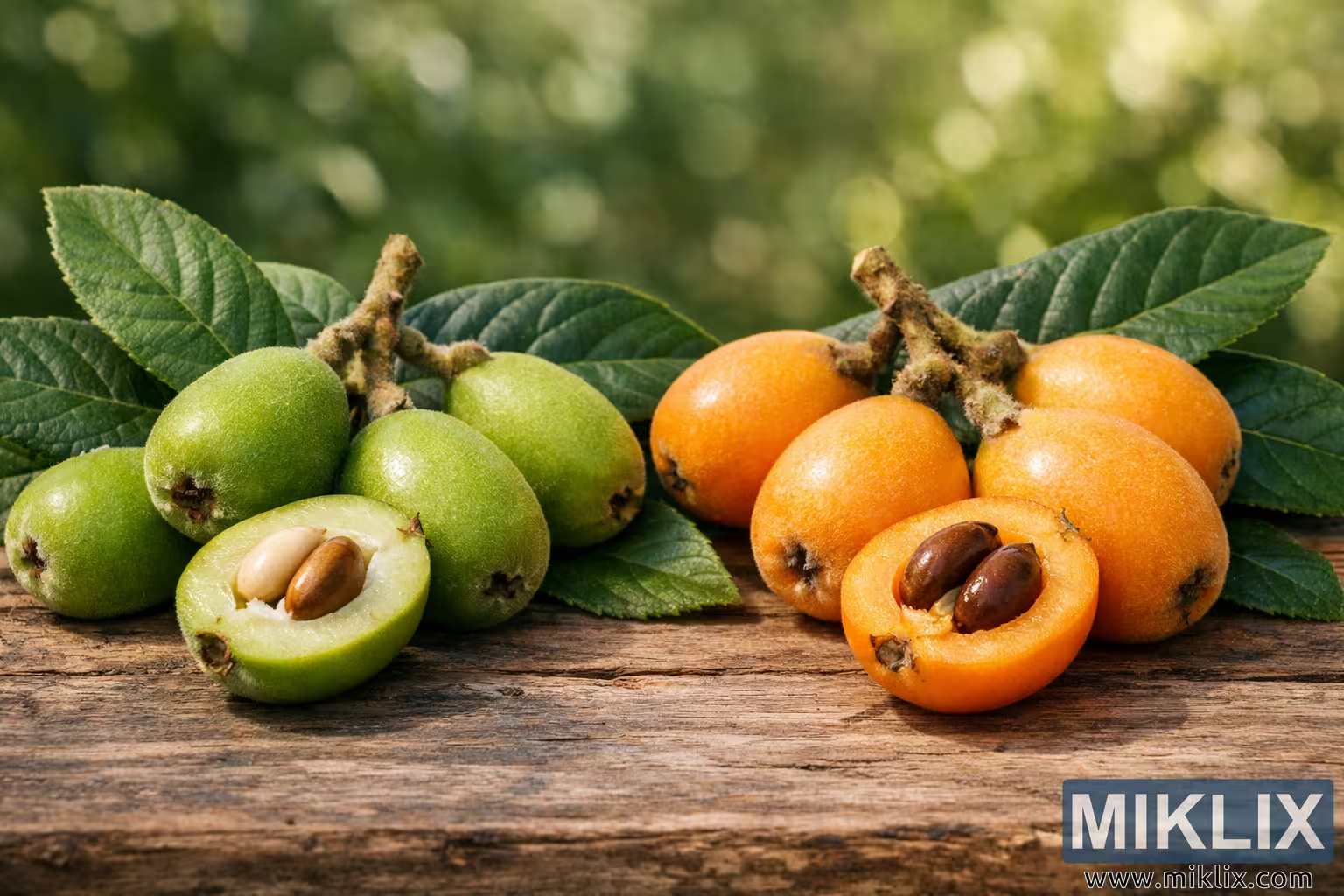
Explore a vivid comparison between ripe and unripe loquats in a high-resolution landscape photograph. The image captures the contrast in color, texture, and maturity of the fruits, highlighting their natural beauty and botanical details.
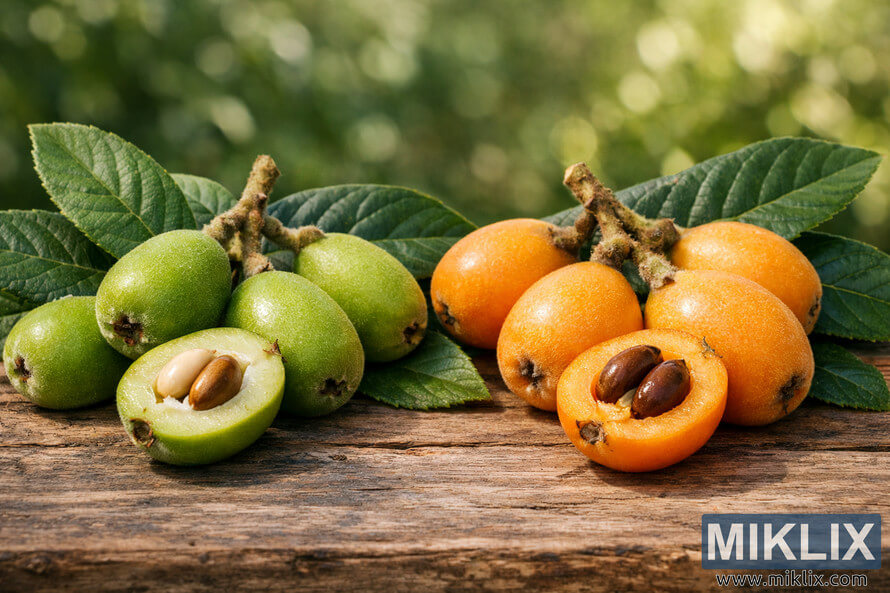
Available versions of this image
The image files available for download below are less compressed and higher resolution - and as a result of that, higher quality - than the images embedded in articles and pages on this website, which are more optimized for file size in order to reduce bandwidth consumption.
Regular size (1,536 x 1,024)
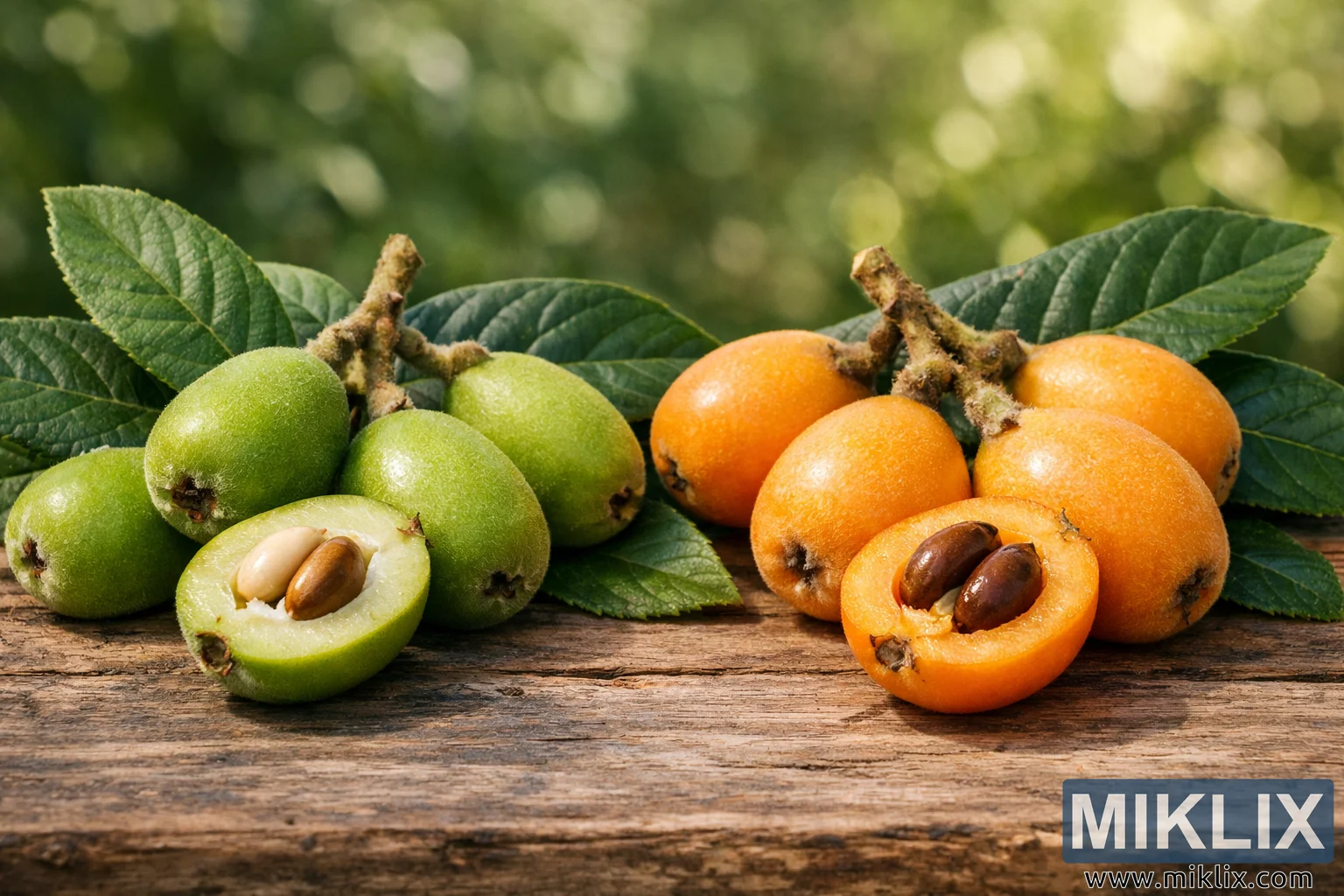
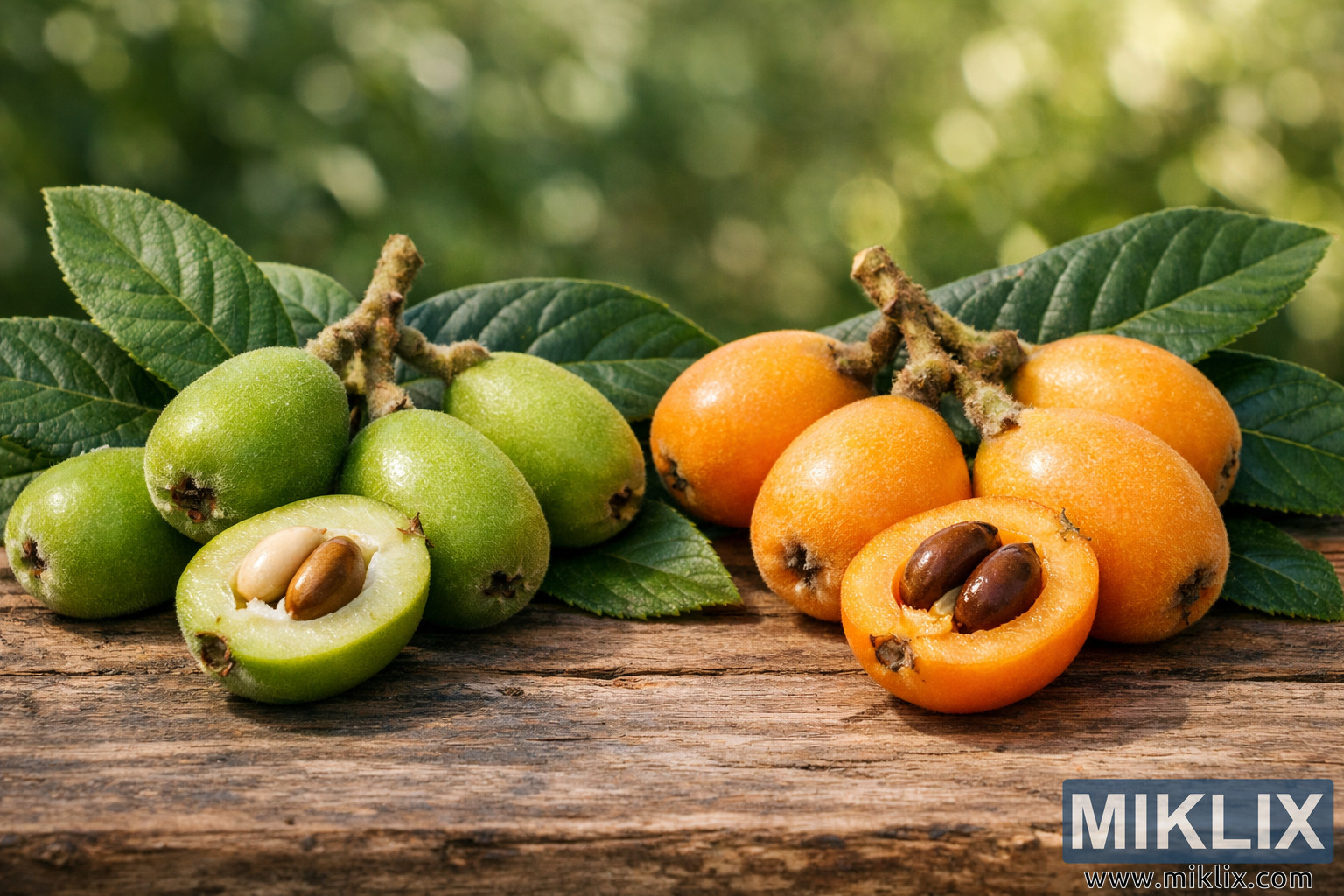
Large size (3,072 x 2,048)
Very large size (4,608 x 3,072)
Extra large size (6,144 x 4,096)
Comically large size (1,048,576 x 699,051)
- Still uploading... ;-)
Image description
The image presents a meticulously composed, high-resolution landscape photograph that captures the natural contrast between ripe and unripe loquats. The scene is set outdoors on a rustic wooden surface, bathed in soft, diffused sunlight that filters through a lush garden backdrop. The lighting is natural and balanced, creating gentle highlights and shadows that emphasize the fruits’ textures and colors without overpowering the composition.
On the left side of the frame, a cluster of unripe loquats rests on the wooden surface. Their skin is smooth yet slightly fuzzy, displaying a range of hues from bright green to yellowish-green. The fruits are attached to a brown, slightly fuzzy stem, which connects to several large, deep green leaves. These leaves are textured with prominent veins and serrated edges, adding a sense of botanical authenticity to the composition. Two of the unripe loquats are sliced open, revealing pale, firm flesh that appears dense and crisp. Inside, two glossy, light brown seeds are visible, nestled within the fruit’s interior. The unripe loquats convey a sense of freshness and potential, their color and firmness suggesting that they are not yet ready for consumption.
On the right side of the image, the ripe loquats form a vivid contrast. Their skin glows with a rich, golden-orange hue, smooth and slightly fuzzy, reflecting the sunlight with a gentle sheen. The ripe fruits are attached to a similar brown stem and accompanied by dark green leaves that mirror those of the unripe cluster. Two of the ripe loquats are sliced open, exposing juicy, deep orange flesh that appears tender and succulent. Within the halved fruit, two glossy, dark brown seeds rest in the center, their polished surfaces catching the light. The ripe loquats exude warmth and vitality, their color and texture suggesting sweetness and readiness for harvest.
The juxtaposition between the two clusters—the green unripe loquats on the left and the orange ripe loquats on the right—forms the central visual narrative of the photograph. The composition is symmetrical yet dynamic, guiding the viewer’s eye naturally from one side to the other. The halved fruits in the center act as focal points, providing a direct comparison of internal structure and coloration. The unripe loquat’s pale, firm flesh contrasts sharply with the ripe loquat’s juicy, orange interior, illustrating the transformation that occurs during the ripening process.
The wooden surface beneath the fruits adds a rustic charm, its weathered texture and visible grain complementing the organic subject matter. The background is softly blurred, composed of green foliage and dappled sunlight, which enhances the sense of depth and natural setting. The overall tone of the image is warm and inviting, evoking the tranquility of a garden in early summer.
Every element in the photograph contributes to a harmonious balance between color, texture, and light. The green and orange hues create a pleasing visual contrast, while the interplay of shadows and highlights adds dimensionality. The composition not only showcases the aesthetic beauty of the loquats but also serves as an educational visual reference for understanding fruit ripeness. The image captures the essence of growth and transformation in nature, celebrating the subtle yet profound differences between maturity and youth in the plant world.
In its entirety, the photograph stands as both an artistic and botanical study, offering viewers a detailed look at the loquat’s lifecycle through color, form, and texture. It invites contemplation of the natural processes that bring fruit from unripe potential to ripe fulfillment, encapsulating the delicate balance between time, sunlight, and organic development.
The image is related to: Loquat: The Sweet Fruit Packed with Real Health Benefits