
Image: Fiber Molecules Moving Through the Digestive Tract
Published: September 7, 2026 at 6:29:58 AM UTC
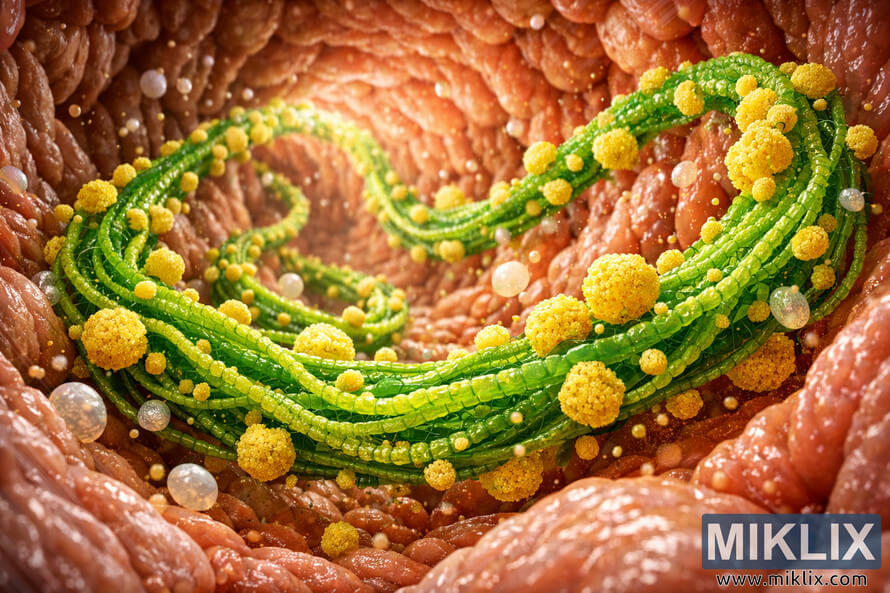
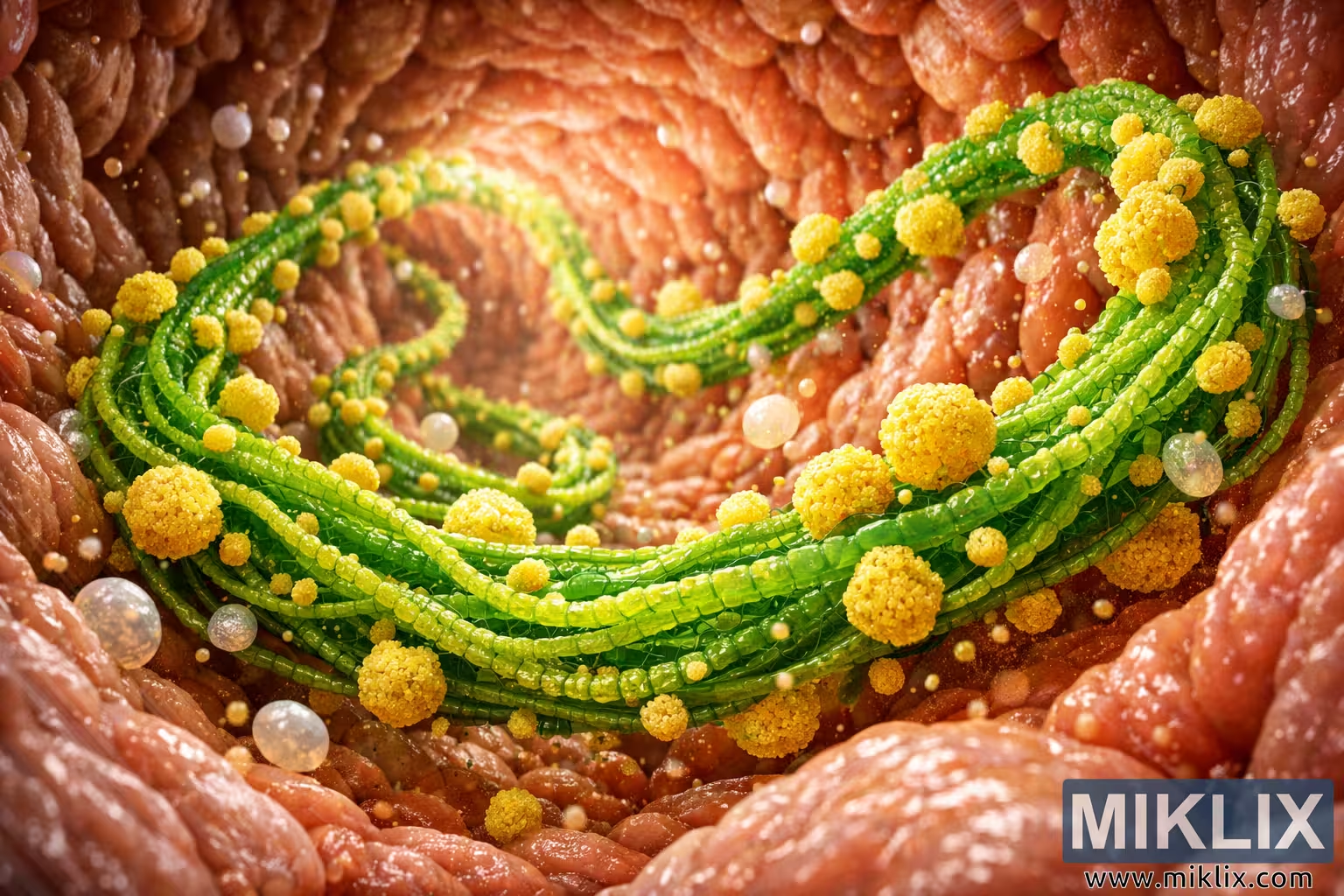
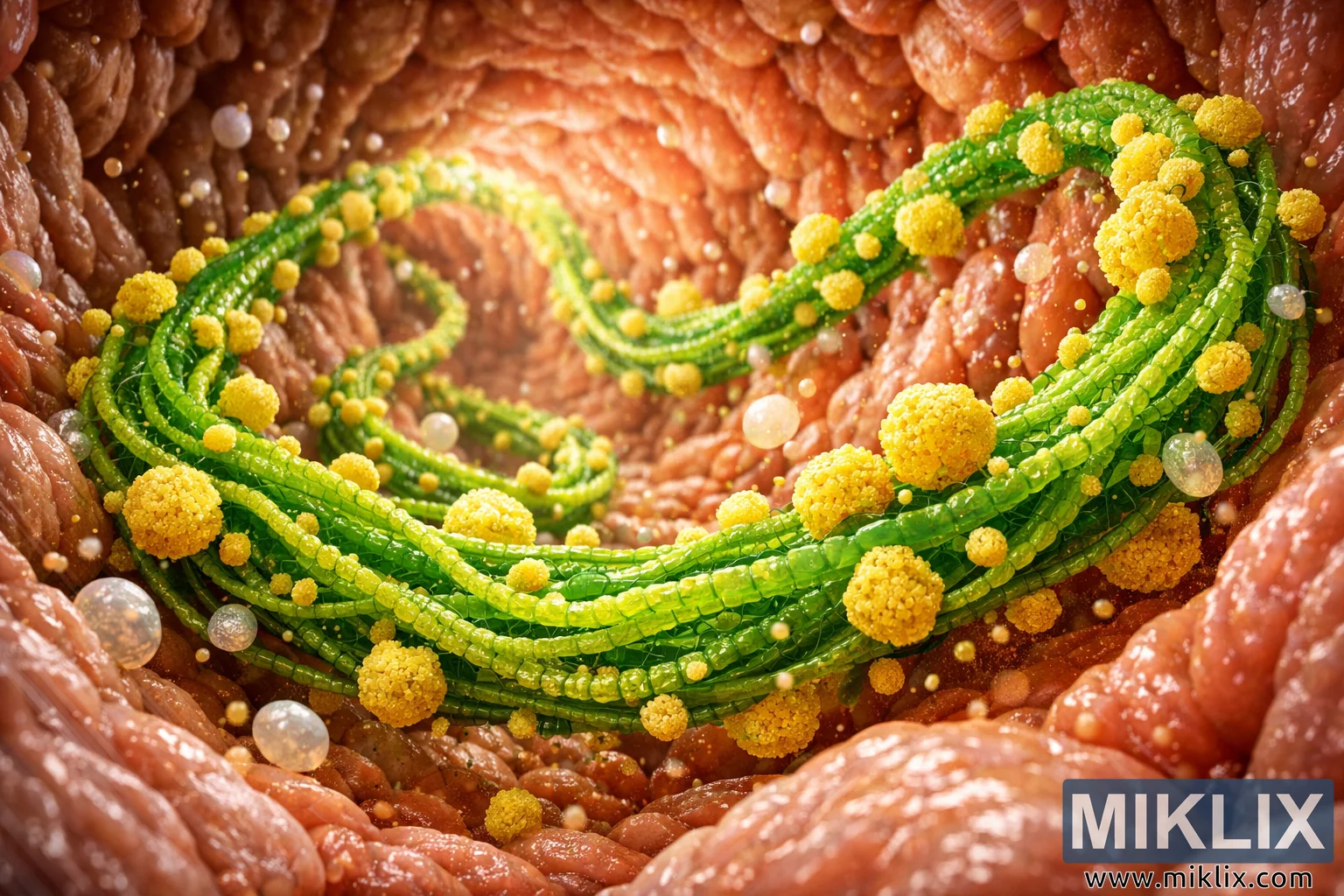
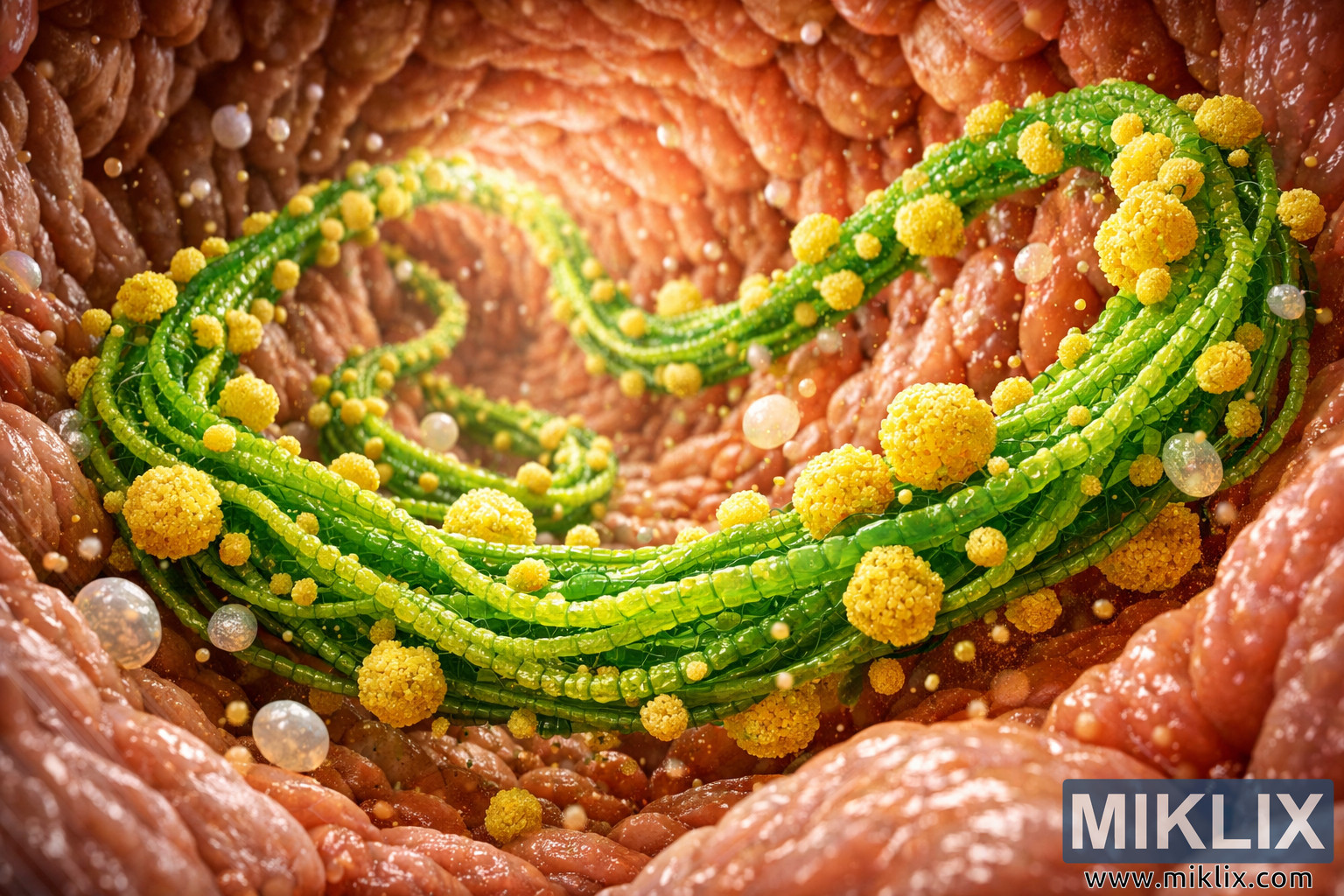
A detailed 3D-rendered visualization of fiber molecules moving through the human digestive tract, depicting green strands and yellow particles interacting with intestinal villi in a dynamic, tunnel-like environment.
Available versions of this image
The image files available for download below are less compressed and higher resolution - and as a result of that, higher quality - than the images embedded in articles and pages on this website, which are more optimized for file size in order to reduce bandwidth consumption.
Regular size (1,536 x 1,024)
Large size (3,072 x 2,048)
Very large size (4,608 x 3,072)
Extra large size (6,144 x 4,096)
Comically large size (1,048,576 x 699,051)
- Still uploading... ;-)
Image description
This image presents a highly detailed, scientifically inspired visualization of fiber molecules traveling through the human digestive tract. The composition is rendered in a landscape orientation, emphasizing the depth and curvature of the intestinal tunnel. The walls of the intestine are portrayed in warm reddish-pink hues, with a moist, organic texture that evokes the biological complexity of the human body. Tiny finger-like projections known as villi line the interior surface, each one glistening under soft, diffused lighting that highlights their role in nutrient absorption.
The central focus of the image is a series of vibrant green fiber molecules represented as long, twisting chains composed of translucent, bead-like particles. These fibers weave sinuously through the intestinal space, creating a sense of motion and fluidity. Their semi-transparent surfaces catch the light, producing subtle reflections that enhance the perception of depth and realism. The fibers are accompanied by numerous yellow, porous spheres of varying sizes, which appear to interact with the green strands as they move. Some of these yellow particles cluster around the fibers, suggesting a biochemical process such as binding or absorption.
Scattered throughout the environment are smaller white, gel-like spheres that contribute to the overall sense of microscopic activity. These elements float freely, adding complexity and dynamism to the scene. Tiny glowing particles of light are suspended in the air, giving the impression of energy or molecular exchange occurring within the digestive system. The interplay between these different components—green fibers, yellow spheres, white gels, and glowing motes—creates a visually rich depiction of the digestive process at a molecular level.
The lighting design is carefully balanced to evoke both scientific clarity and artistic beauty. A soft, ambient glow illuminates the intestinal walls, while directional highlights accentuate the contours of the fiber strands. The foreground is rendered with sharp detail, allowing viewers to appreciate the intricate textures of the fibers and surrounding particles. As the perspective recedes into the background, the focus gradually softens, drawing the eye toward a distant, glowing area that suggests the continuation of the digestive pathway. This depth-of-field effect enhances the sense of immersion, making the viewer feel as though they are traveling alongside the fibers through the intestinal tunnel.
The color palette combines warm organic tones with cool, vibrant greens and yellows, symbolizing the interaction between biological tissue and dietary fiber. The reddish-pink of the intestinal walls contrasts with the bright green of the fiber molecules, creating visual tension that underscores the dynamic nature of digestion. The yellow particles add warmth and complexity, while the white and glowing elements introduce a sense of purity and energy.
Overall, the image captures the invisible yet vital process of fiber movement within the digestive tract. It transforms a microscopic phenomenon into a visually compelling narrative of motion, interaction, and life. The composition balances scientific accuracy with artistic imagination, offering a glimpse into the unseen world of human biology. The viewer is invited to appreciate not only the aesthetic beauty of the scene but also the underlying message about the importance of fiber in maintaining digestive health. The result is a striking fusion of art and science—a moment frozen in time that celebrates the elegance of molecular motion within the living body.
The image is related to: Pumpkins: The Nutrient-Packed Superfood You Should Eat Year-Round