
Image: Pumpkin Seed Nutrition Comparison Infographic
Published: September 7, 2026 at 6:29:58 AM UTC
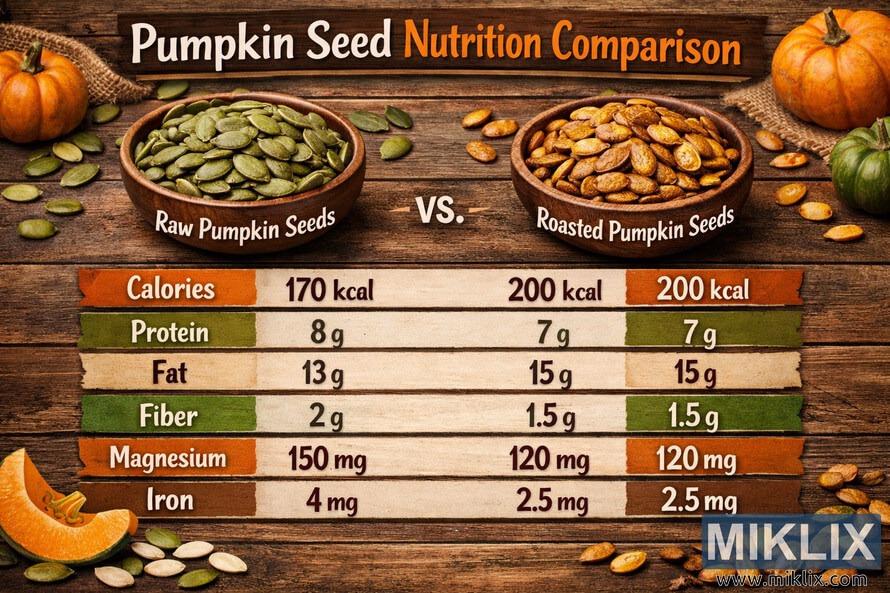
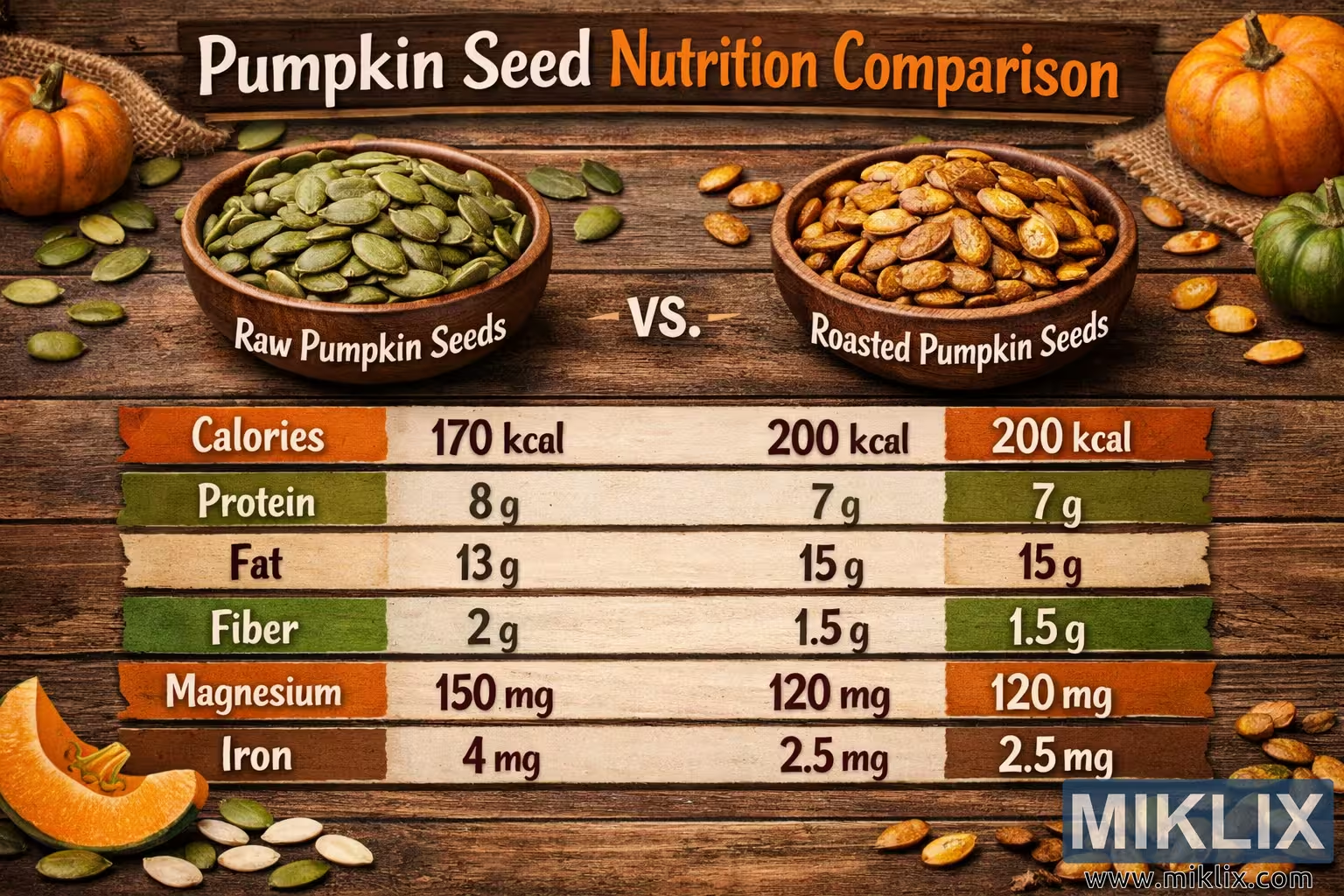
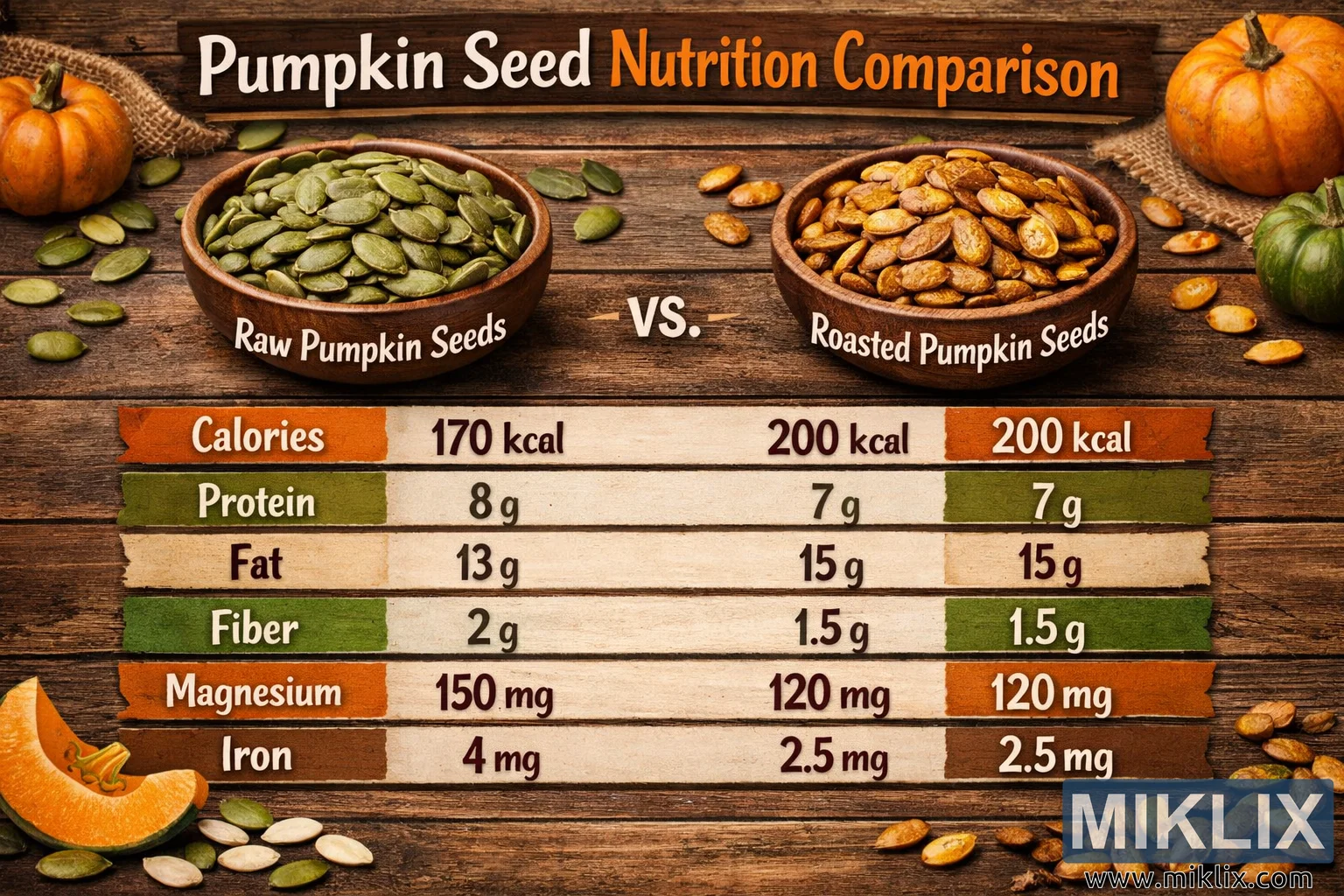
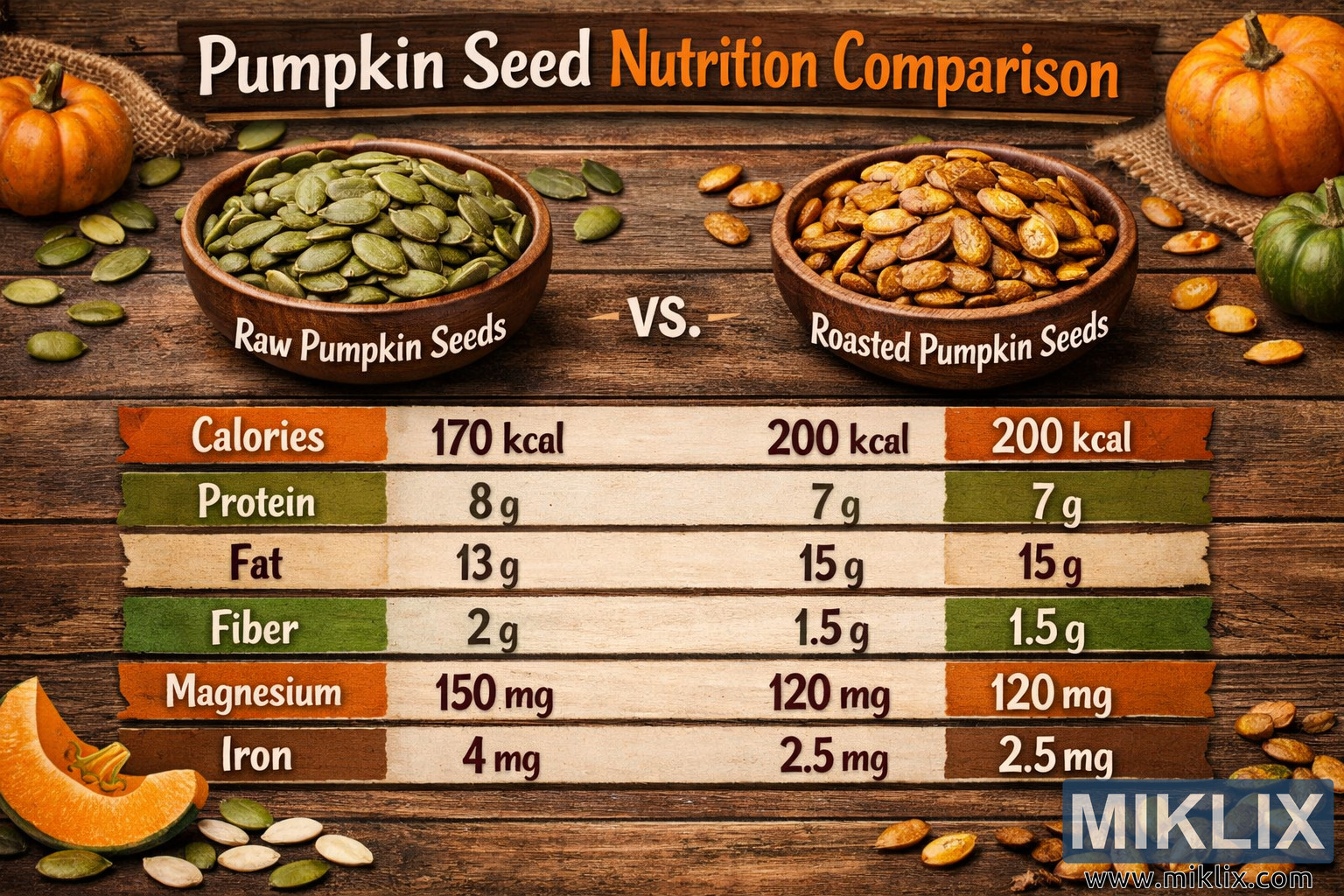
Explore a detailed visual comparison of raw vs. roasted pumpkin seeds, highlighting differences in calories, protein, fat, fiber, magnesium, and iron. This infographic provides a clear nutritional breakdown for health-conscious readers.
Available versions of this image
The image files available for download below are less compressed and higher resolution - and as a result of that, higher quality - than the images embedded in articles and pages on this website, which are more optimized for file size in order to reduce bandwidth consumption.
Regular size (1,536 x 1,024)
Large size (3,072 x 2,048)
Very large size (4,608 x 3,072)
Extra large size (6,144 x 4,096)
Comically large size (1,048,576 x 699,051)
- Still uploading... ;-)
Image description
The image titled "Pumpkin Seed Nutrition Comparison" presents a visually rich and informative infographic designed to compare the nutritional profiles of raw and roasted pumpkin seeds. The composition is horizontally oriented, emphasizing clarity and balance across the two halves of the frame. The background features a rustic wooden texture, evoking a natural and wholesome atmosphere that complements the subject matter. At the top, the title is displayed in large, bold lettering—white and orange tones contrasting against the wood grain—to immediately draw attention to the theme of nutrition and food comparison. Decorative pumpkins, a burlap cloth, and scattered seeds frame the title area, adding warmth and organic charm.
On the left side of the infographic, a wooden bowl brimming with green, raw pumpkin seeds sits beneath the heading "Raw Pumpkin Seeds." The seeds are depicted with realistic texture and subtle highlights, emphasizing their fresh, unprocessed nature. On the right side, a similar bowl holds golden-brown roasted pumpkin seeds under the heading "Roasted Pumpkin Seeds." The roasted seeds appear slightly darker and glossier, suggesting the effects of heat and oil absorption. Between the two bowls, a centered "vs." symbol acts as a visual divider, reinforcing the comparative structure of the infographic.
Below the bowls, the infographic is organized into six horizontal rows, each representing a key nutritional metric. Each row begins with a colored label bar on the left side, containing the nutrient name in bold text. The alternating colors—orange, olive green, beige, and brown—create visual rhythm and help distinguish each category. The first row, labeled "Calories," shows that raw pumpkin seeds contain 170 kcal per serving, while roasted seeds contain 200 kcal. This difference is highlighted through subtle shading and font emphasis, guiding the viewer’s eye to the numerical contrast.
The second row, labeled "Protein," indicates that raw seeds provide 8 grams of protein compared to 7 grams in roasted seeds. The third row, "Fat," shows 13 grams for raw and 15 grams for roasted, illustrating how roasting slightly increases fat content. The fourth row, "Fiber," lists 2 grams for raw and 1.5 grams for roasted, suggesting a minor reduction during roasting. The fifth row, "Magnesium," displays 150 milligrams for raw and 120 milligrams for roasted, emphasizing the mineral loss that can occur with heat exposure. The final row, "Iron," compares 4 milligrams in raw seeds to 2.5 milligrams in roasted ones, completing the nutritional overview.
Each numeric value is neatly aligned under its respective column, ensuring readability and symmetry. The typography is clean and modern, with a mix of sans-serif fonts for clarity and rustic serif accents for aesthetic harmony. The color palette—earthy greens, warm browns, and pumpkin oranges—reinforces the natural theme and evokes the autumn harvest season. The lighting across the image is soft and even, with gentle highlights on the bowls and seeds to create depth without overpowering the text.
At the bottom of the infographic, small illustrations of pumpkin slices, a whole green pumpkin, and scattered roasted seeds provide decorative closure. These elements are arranged organically, maintaining the visual flow while adding a touch of playfulness. The overall design achieves a balance between educational clarity and visual appeal, making it suitable for use in health blogs, nutrition guides, or educational materials.
The image communicates more than just data—it conveys the sensory qualities of the seeds themselves. The raw seeds appear vibrant and nutrient-dense, while the roasted ones evoke warmth and flavor. The juxtaposition of textures and colors subtly suggests the trade-off between taste and nutritional value. The wooden background and natural props reinforce the idea of wholesome eating and sustainability, aligning with contemporary trends in food presentation.
From a compositional standpoint, the infographic employs symmetry and contrast effectively. The left and right halves mirror each other in layout but differ in tone and hue, symbolizing the transformation that occurs through roasting. The use of horizontal alignment ensures that the viewer’s gaze moves smoothly from one side to the other, facilitating comparison. The inclusion of clear numerical data makes the image not only aesthetically pleasing but also functionally informative.
In summary, this landscape-oriented infographic serves as a comprehensive visual guide to understanding how roasting affects the nutritional composition of pumpkin seeds. It combines factual precision with artistic design, offering a clear, engaging, and educational representation of food science. The image’s high resolution ensures that every detail—from the grain of the wooden table to the sheen on individual seeds—is crisp and lifelike, enhancing both its visual impact and its utility as a teaching or reference tool.
The image is related to: Pumpkins: The Nutrient-Packed Superfood You Should Eat Year-Round