
Image: Heart Health and Shallot Consumption: A Visual Exploration of Cardiovascular Benefits
Published: August 5, 2026 at 10:49:07 PM UTC
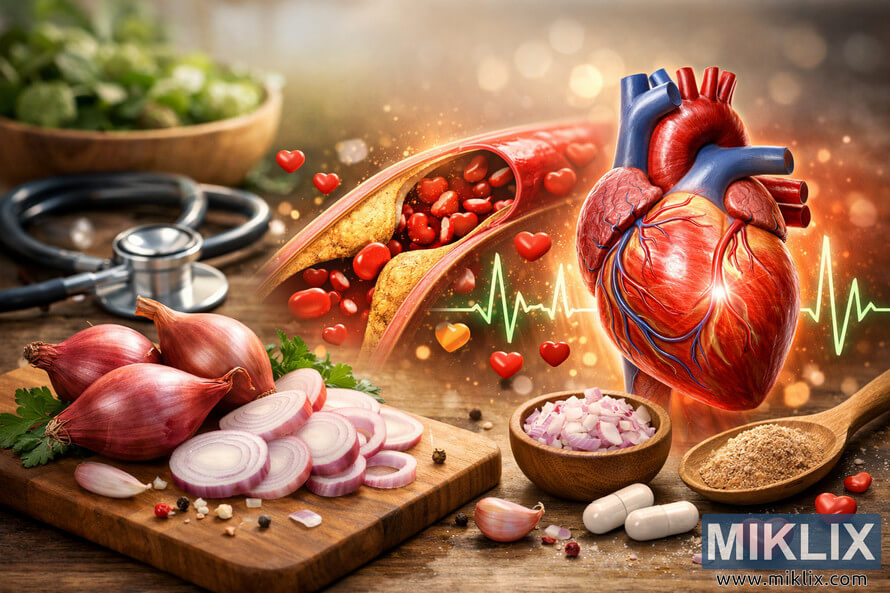
A detailed visual representation of the heart health benefits associated with shallot consumption, combining culinary elements with medical imagery to highlight improved cardiovascular function and reduced arterial plaque.
Available versions of this image
The image files available for download below are less compressed and higher resolution - and as a result of that, higher quality - than the images embedded in articles and pages on this website, which are more optimized for file size in order to reduce bandwidth consumption.
Regular size (1,536 x 1,024)
Large size (3,072 x 2,048)
Very large size (4,608 x 3,072)
Extra large size (6,144 x 4,096)
Comically large size (1,048,576 x 699,051)
- Still uploading... ;-)
Image description
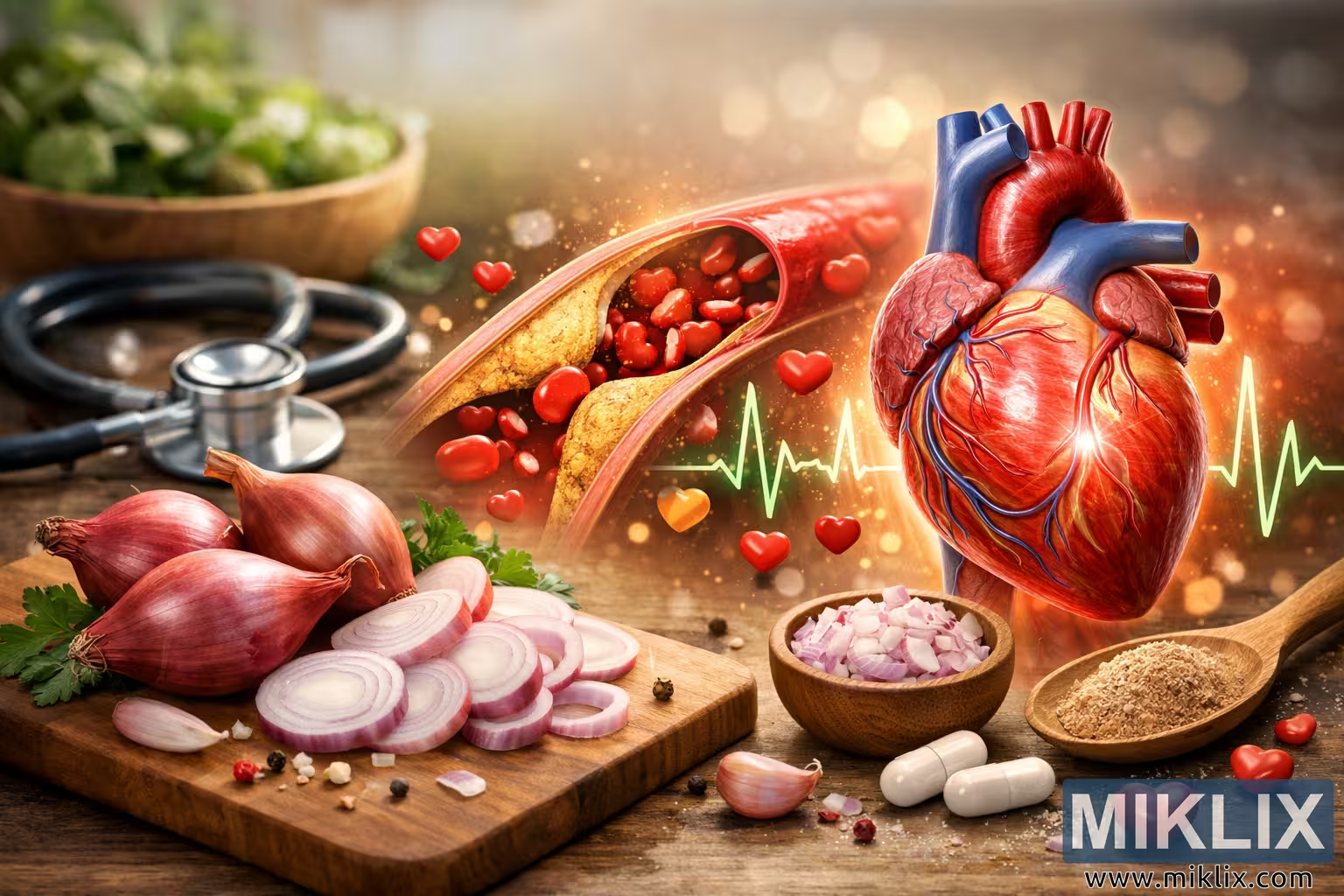
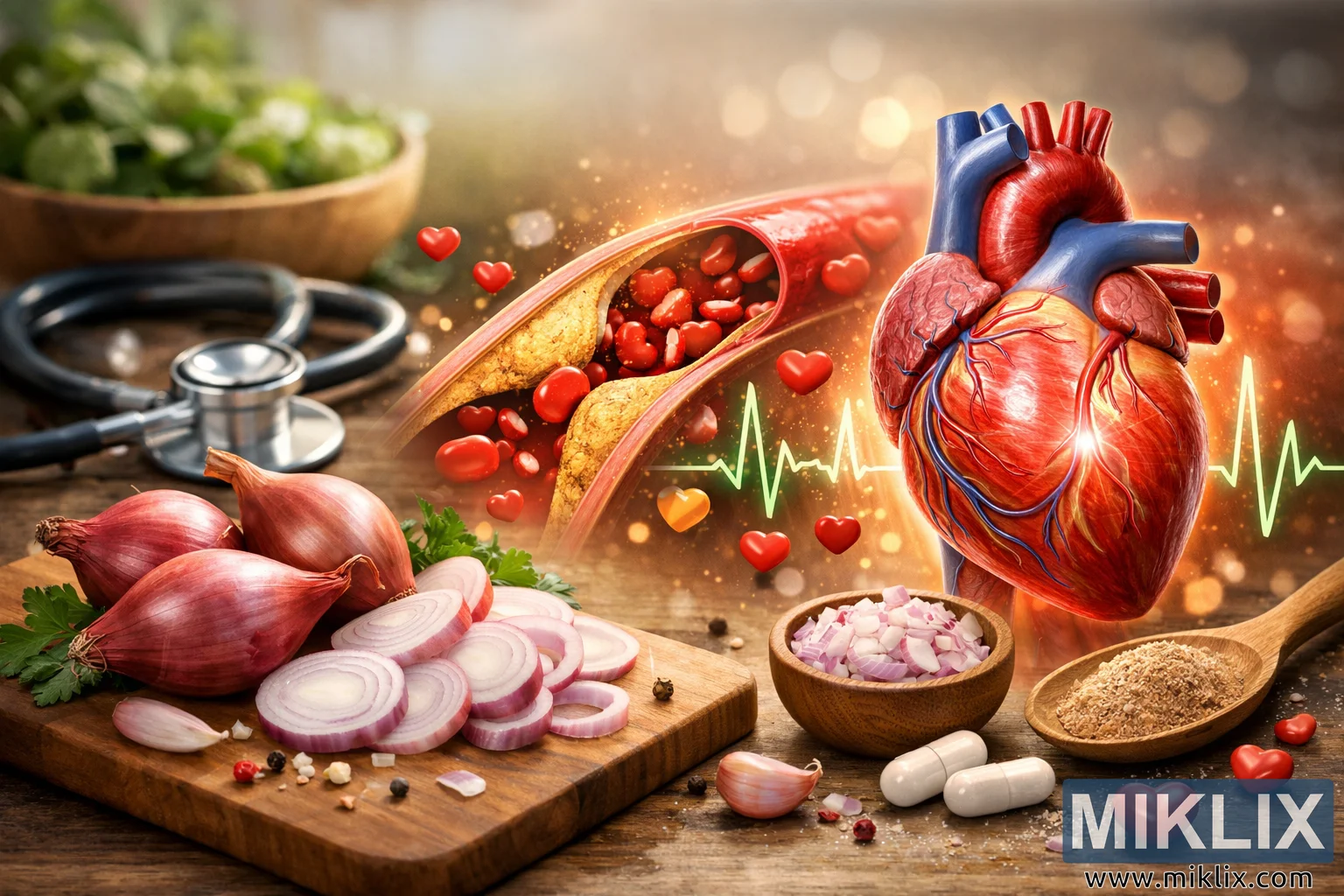
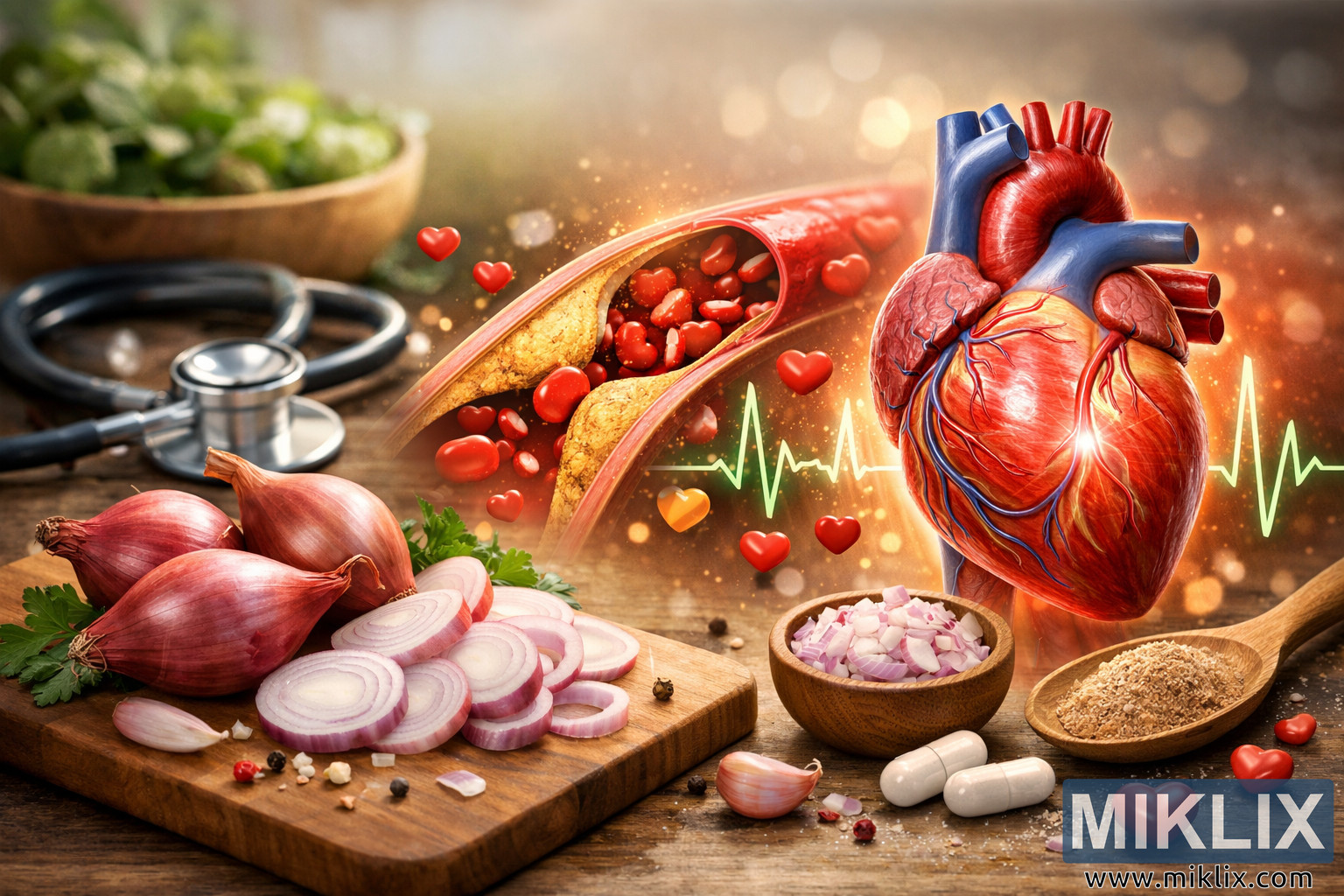
The image presents a meticulously composed, high-resolution landscape scene that visually communicates the concept of heart health and the cardiovascular benefits derived from shallot consumption. On the left side of the composition, a rustic wooden cutting board serves as the foundation for several fresh shallots. Their reddish-purple skins glisten under soft, natural light, evoking freshness and vitality. Some shallots are sliced open, revealing their delicate white and lavender interiors, while thin rings are scattered across the board, suggesting culinary preparation. A small wooden bowl filled with finely chopped shallots sits nearby, surrounded by complementary ingredients such as garlic cloves, sprigs of parsley, and multicolored peppercorns. These elements collectively symbolize the wholesome, natural origins of dietary health.
The right side of the image transitions from the culinary to the anatomical, featuring a detailed 3D rendering of a human heart. The heart is anatomically accurate, with visible arteries and veins in red and blue tones, and it emits a subtle glow that conveys vitality and energy. Behind the heart, a luminous green electrocardiogram (ECG) line runs horizontally, its rhythmic peaks and valleys representing a steady, healthy heartbeat. This juxtaposition of organic food and medical imagery creates a powerful metaphor for the connection between nutrition and cardiovascular wellness.
In the center of the composition, a transparent artery illustration bridges the two worlds. The artery is shown in cross-section, revealing smooth blood flow and a reduction in arterial plaque. Red blood cells move freely through the vessel, while a faint yellowish section of plaque appears to recede, symbolizing improved vascular health. Small red heart icons and cholesterol particles float around the artery, visually reinforcing the theme of heart protection and cholesterol management. The glowing light surrounding the artery adds a sense of scientific clarity and optimism, suggesting that dietary choices can directly influence physiological outcomes.
The background enhances the narrative with subtle details. On the left, a stethoscope rests on the wooden surface, its silver chest piece catching the light, representing medical observation and validation. Behind it, a bowl of fresh leafy greens and blurred natural foliage evoke a sense of holistic well-being and balance. On the right, a wooden spoon filled with ground shallot powder and two white capsules lie beside small red heart-shaped icons, symbolizing the integration of natural and supplemental approaches to health maintenance.
The lighting throughout the image is warm and balanced, with soft highlights emphasizing the textures of the shallots and the sheen of the anatomical heart. The depth of field is carefully controlled: the foreground elements are sharply detailed, while the background fades into a gentle blur, drawing the viewer’s focus toward the central artery and heart. The color palette harmonizes earthy browns and greens with vibrant reds and purples, creating a visual equilibrium between nature and science.
Overall, the image conveys a narrative of vitality, prevention, and harmony. It suggests that the simple act of incorporating shallots into one’s diet can contribute to improved cardiovascular health, reduced cholesterol, and enhanced blood circulation. The composition balances aesthetic appeal with educational intent, making it suitable for use in health campaigns, nutritional studies, or wellness publications. Every element—from the sliced shallots to the glowing heart—works together to illustrate the profound connection between natural foods and the human body’s resilience. The result is a visually compelling and scientifically inspired portrayal of how everyday dietary choices can nurture the heart and sustain life.
The image is related to: Shallots: The Small Vegetable with Big Nutritional Benefits