
Image: Home Garden Shallot Cultivation Process
Published: August 5, 2026 at 10:49:07 PM UTC
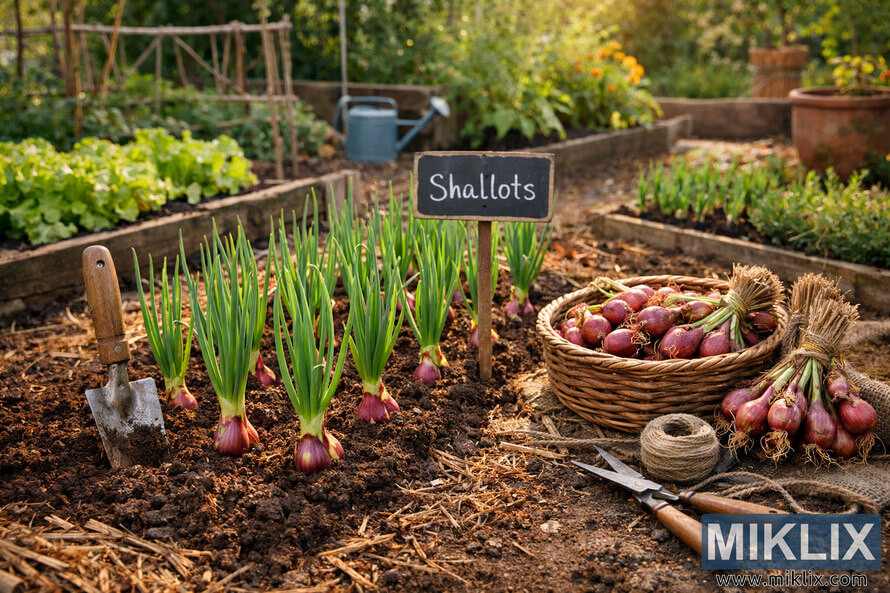
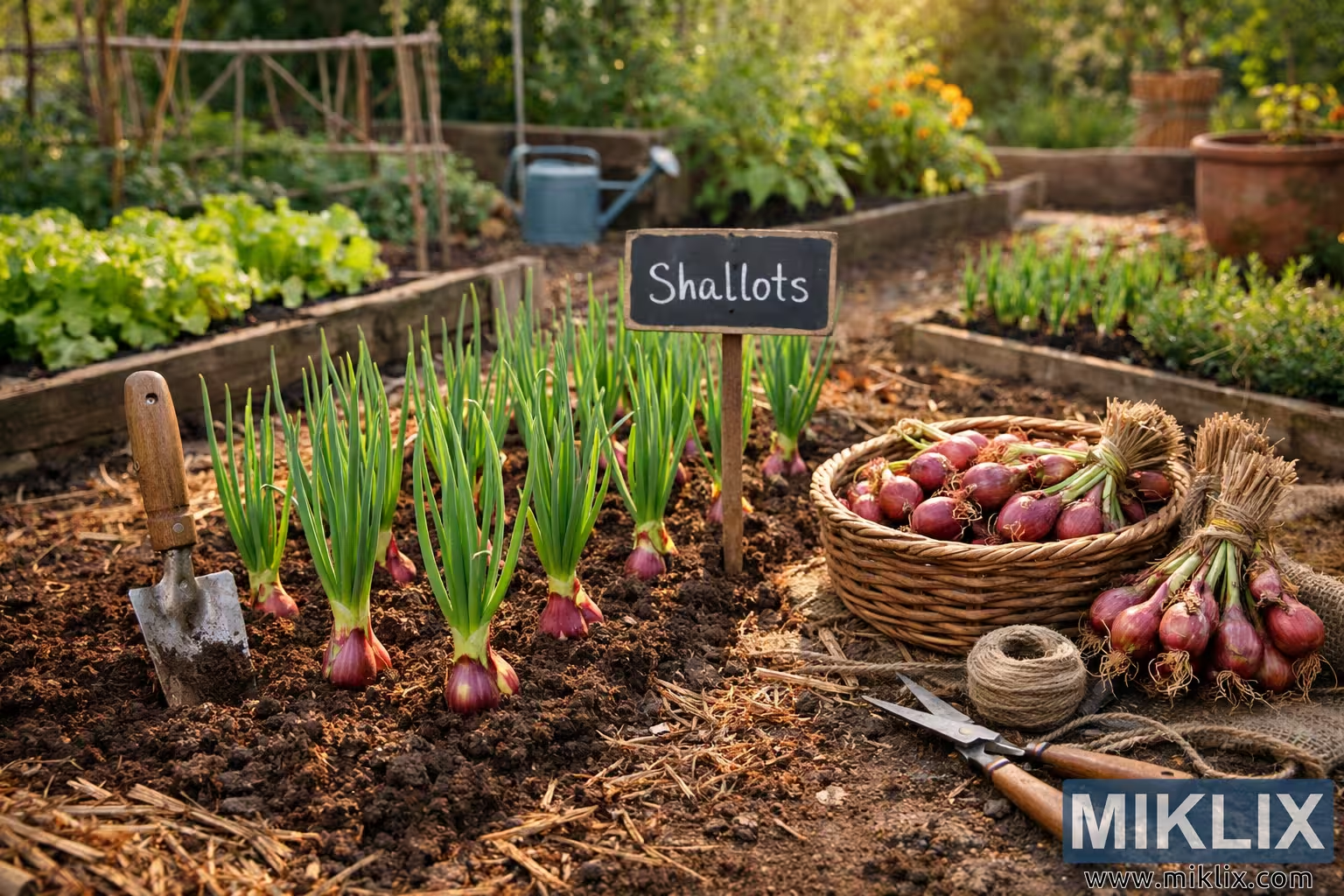
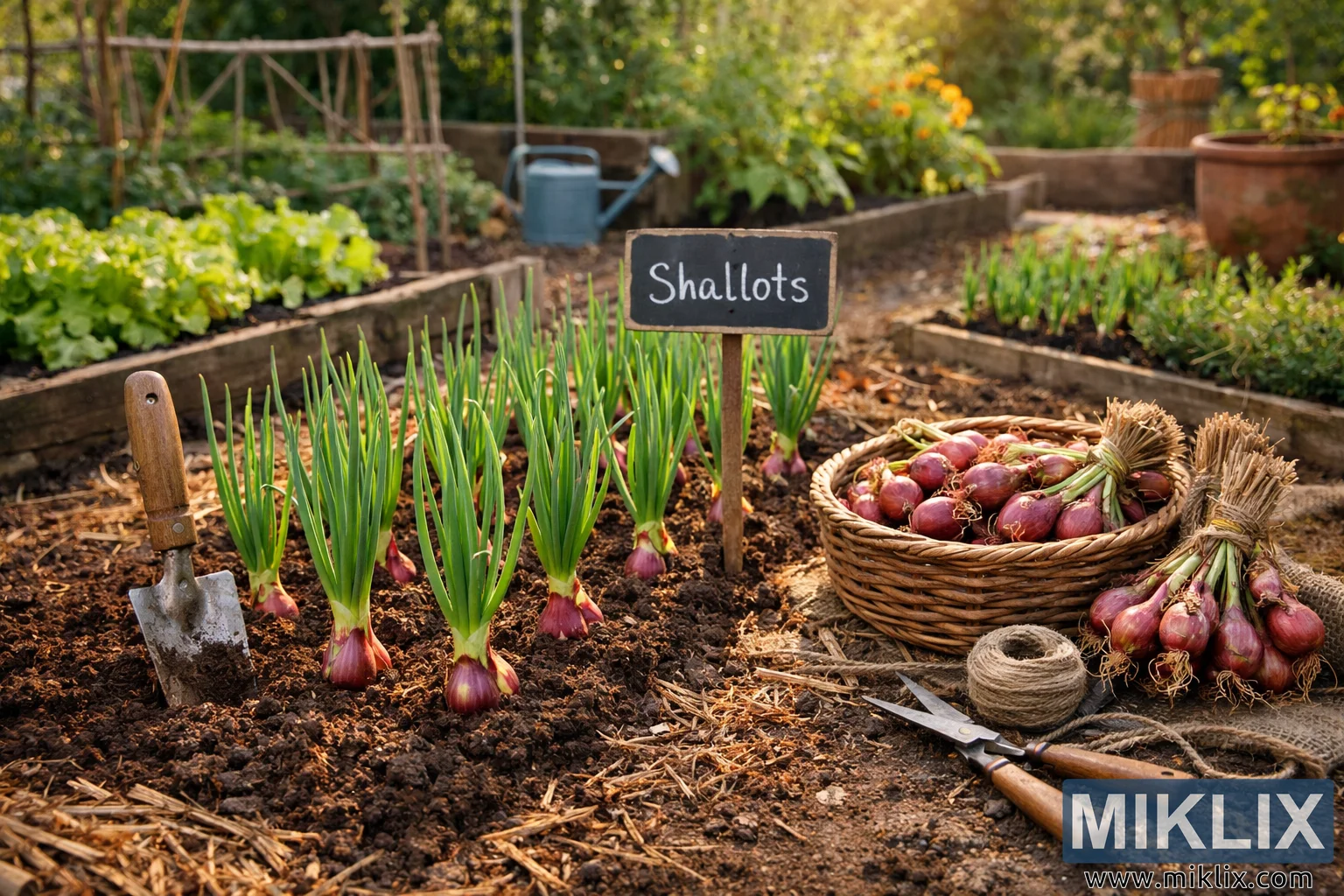
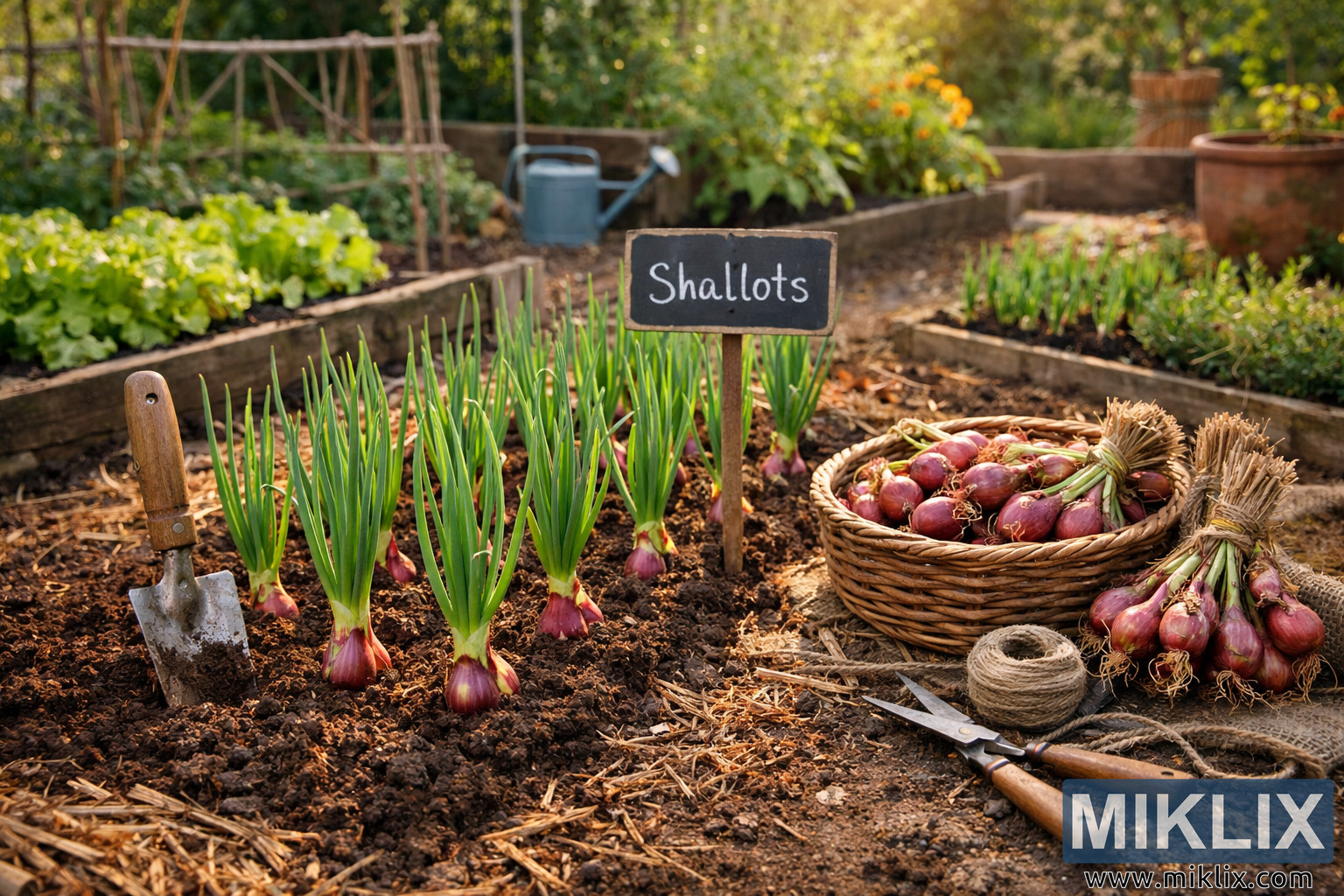
Explore the serene beauty of a home garden where shallots thrive in rich soil, surrounded by tools, baskets, and sunlight that highlights the cultivation process from planting to harvest.
Available versions of this image
The image files available for download below are less compressed and higher resolution - and as a result of that, higher quality - than the images embedded in articles and pages on this website, which are more optimized for file size in order to reduce bandwidth consumption.
Regular size (1,536 x 1,024)
Large size (3,072 x 2,048)
Very large size (4,608 x 3,072)
Extra large size (6,144 x 4,096)
Comically large size (1,048,576 x 699,051)
- Still uploading... ;-)
Image description
The image depicts a tranquil home garden scene centered around the cultivation of shallots, capturing the essence of sustainable gardening and the harmony between human care and nature’s rhythm. In the foreground, rows of shallots stretch across the soil in precise alignment, their slender green leaves reaching upward toward the morning light. The bulbs, tinged with hues of reddish-purple, peek slightly above the surface of the dark, moist earth, suggesting a healthy and thriving crop. The soil itself appears rich and fertile, textured with organic matter and lightly covered with straw mulch that helps retain moisture and suppress weeds. Each row is carefully spaced, reflecting the gardener’s attention to detail and understanding of proper plant spacing for optimal growth.
To the left, a small gardening trowel rests partially embedded in the soil, its wooden handle worn smooth from use and its metal blade dusted with earth. This simple tool symbolizes the hands-on labor and dedication that define home gardening. Nearby, a coil of natural twine and a pair of pruning shears lie on the ground, ready for use in bundling or trimming the shallots once harvested. The shears’ wooden handles and slightly tarnished blades add a touch of authenticity, evoking the tactile experience of tending plants.
A woven wicker basket sits prominently to the right, filled with freshly harvested shallots whose bulbs glisten with a subtle sheen under the sunlight. Their papery skins range from deep violet to soft rose, and the attached roots and dried stalks reveal the recent harvest. Next to the basket, several bundles of shallots are tied neatly with twine, showcasing the transition from cultivation to collection. This arrangement conveys the cyclical nature of gardening—planting, nurturing, harvesting, and preparing for the next season.
In the center of the composition stands a small chalkboard sign with the word 'Shallots' handwritten in white chalk. The sign, slightly weathered and mounted on a wooden stake, adds a personal touch and helps identify the crop. Behind the shallot rows, a patch of leafy green lettuce provides contrast in color and texture, its broad leaves shimmering with dew. Further in the background, raised wooden garden beds host a variety of plants, suggesting a diverse and well-managed garden ecosystem. A rustic trellis made of wooden poles and twine supports climbing plants, adding vertical interest and depth to the scene.
A blue watering can rests near the trellis, hinting at the gardener’s ongoing care and routine maintenance. To the right, a large terracotta pot stands partially shaded, possibly containing herbs or flowers that complement the vegetable beds. The sunlight filters through the foliage, casting dappled shadows across the soil and illuminating the scene with a warm, golden glow. This interplay of light and shadow enhances the natural textures—the roughness of the soil, the smoothness of the bulbs, and the delicate veins of the leaves.
In the blurred background, flowering plants with orange blossoms add a splash of color, contributing to the garden’s vibrant atmosphere. The overall composition balances productivity and beauty, illustrating how a home garden can be both functional and aesthetically pleasing. The image evokes a sense of peace, patience, and fulfillment, celebrating the simple yet profound act of growing food at home. It captures not only the physical process of shallot cultivation but also the emotional connection between the gardener and the land—a relationship built on care, observation, and respect for nature’s cycles.
Every element in the image—from the tools and baskets to the plants and sunlight—works together to tell a story of growth and renewal. It is a portrait of sustainable living, where manual effort and natural processes coexist harmoniously. The viewer can almost feel the cool morning air, smell the earthy scent of freshly turned soil, and sense the quiet satisfaction of a gardener witnessing the fruits of their labor. This detailed depiction of a home garden with shallots growing stands as a testament to the timeless art of cultivation and the enduring beauty of life nurtured by human hands.
The image is related to: Shallots: The Small Vegetable with Big Nutritional Benefits