
Image: Immune System Cells and Swiss Chard Illustration
Published: September 12, 2026 at 2:49:41 PM UTC
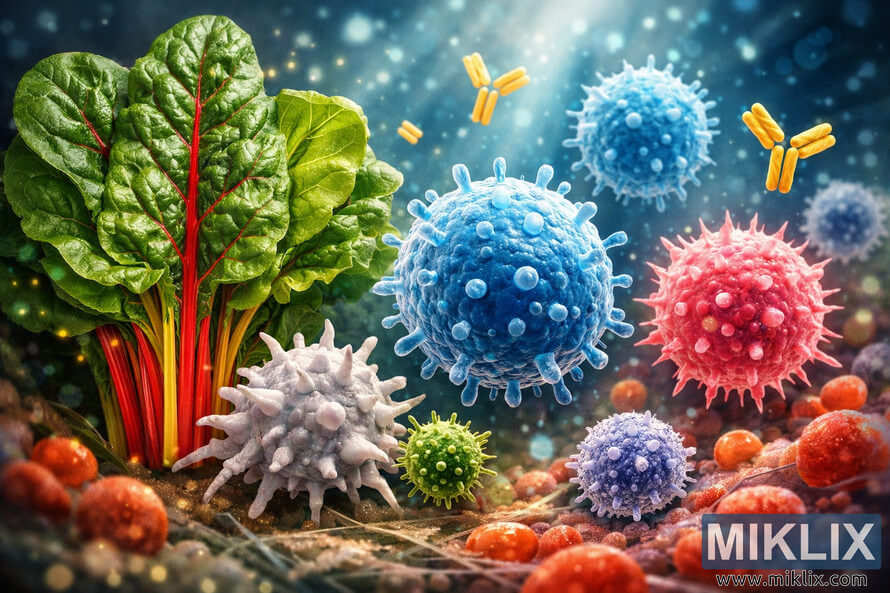
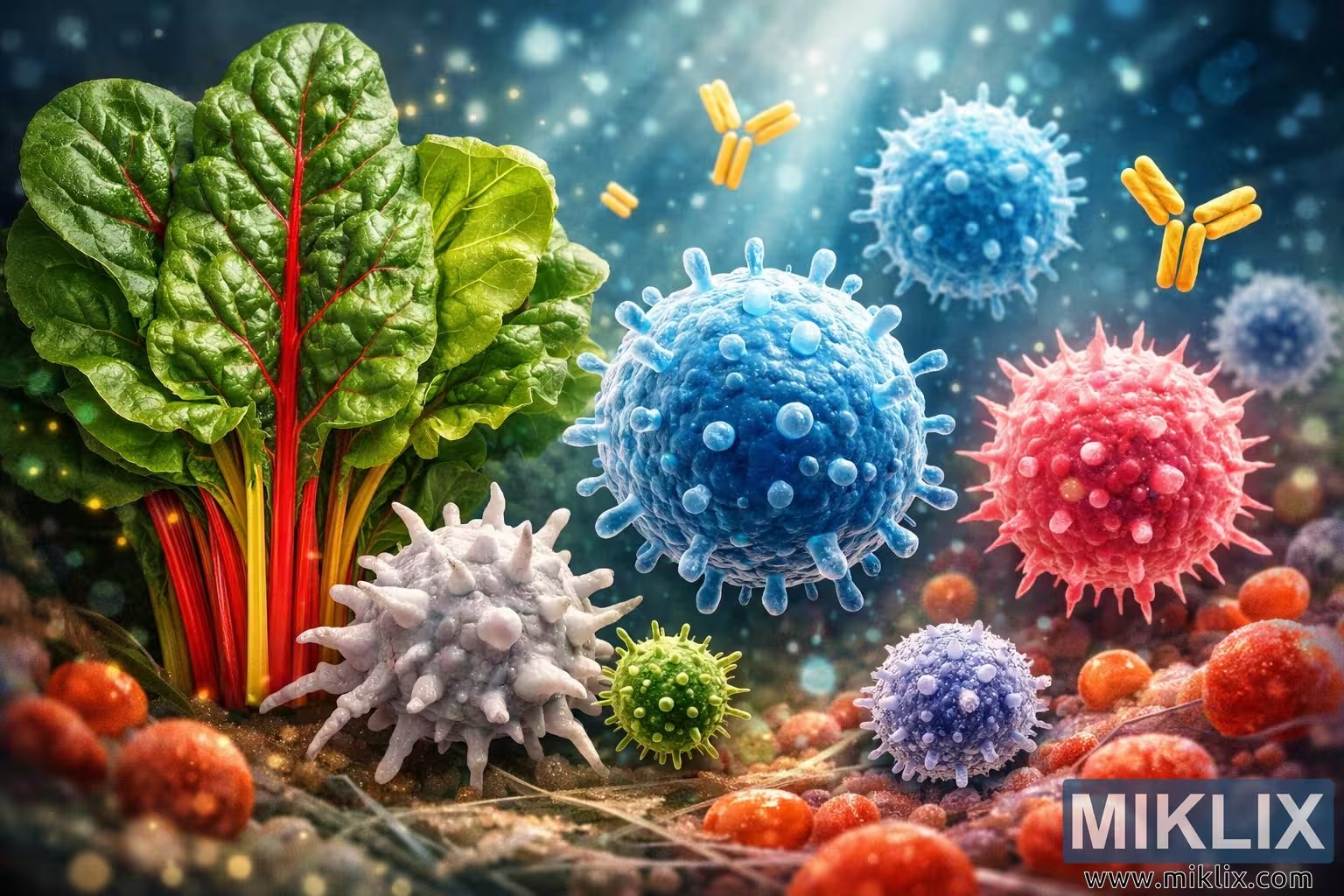
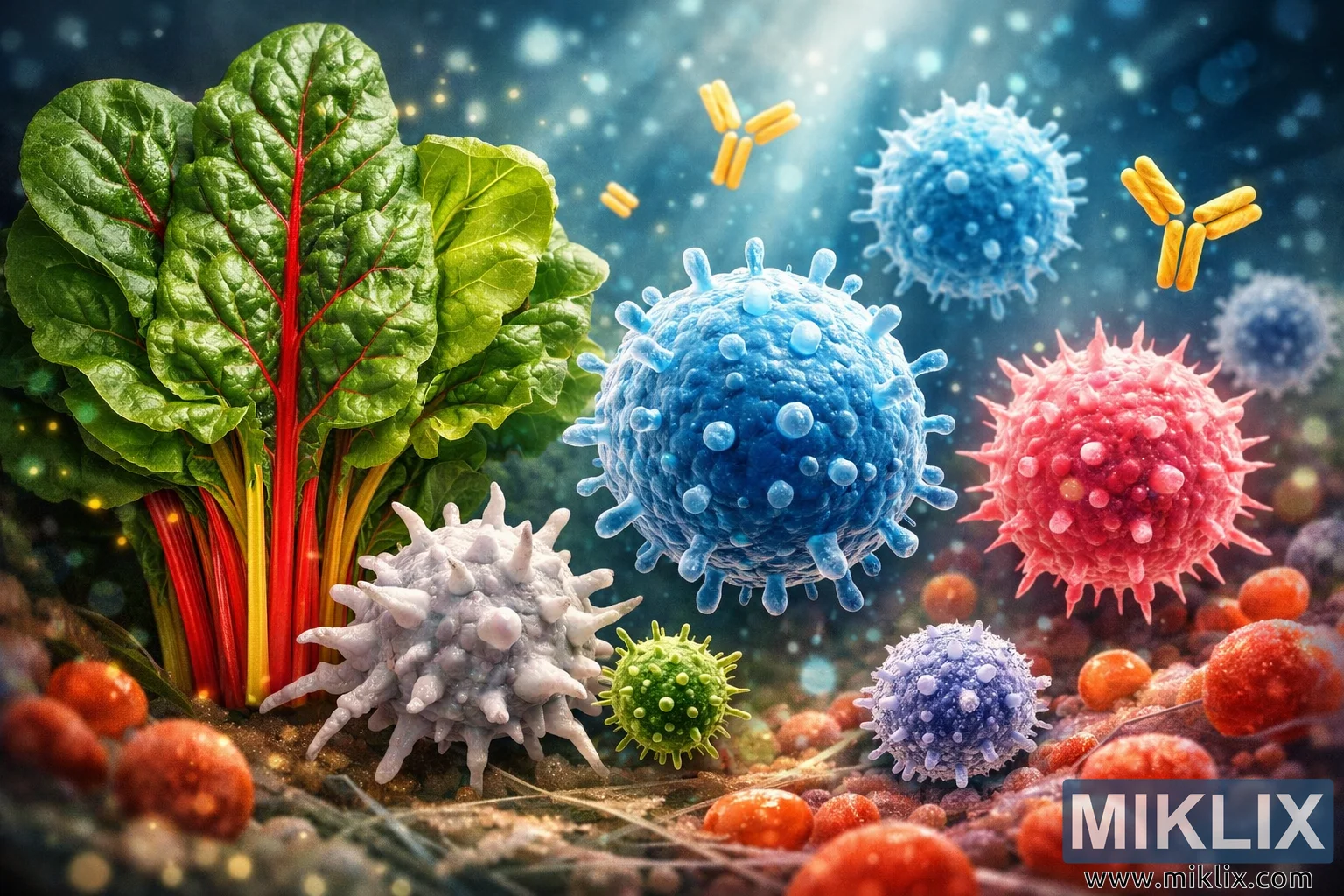
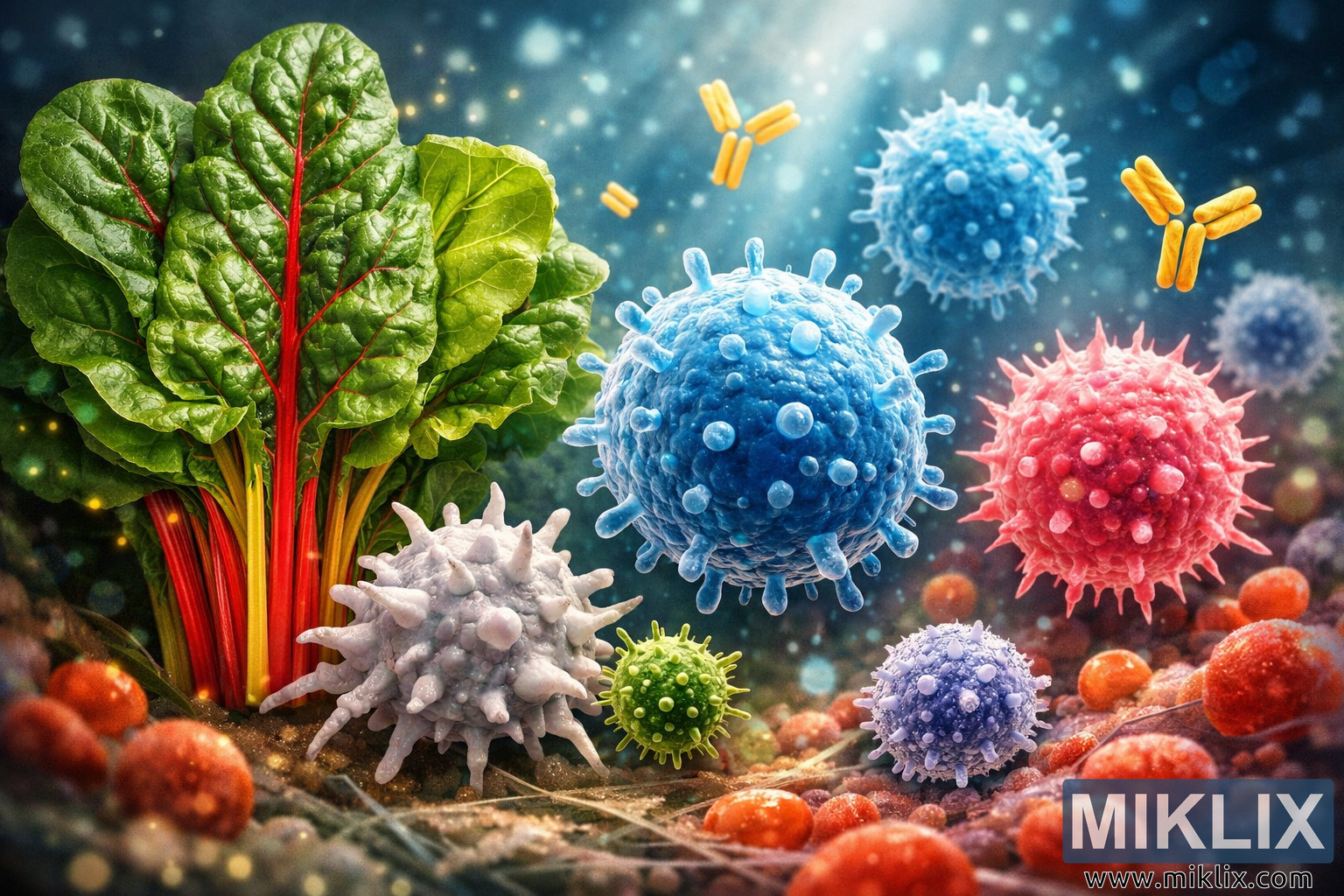
A vibrant scientific illustration depicting immune system cells alongside Swiss chard, representing the connection between nutrition and immunity through detailed cellular imagery and glowing microscopic elements.
Available versions of this image
The image files available for download below are less compressed and higher resolution - and as a result of that, higher quality - than the images embedded in articles and pages on this website, which are more optimized for file size in order to reduce bandwidth consumption.
Regular size (1,536 x 1,024)
Large size (3,072 x 2,048)
Very large size (4,608 x 3,072)
Extra large size (6,144 x 4,096)
Comically large size (1,048,576 x 699,051)
- Still uploading... ;-)
Image description
This digital illustration presents a vivid and scientifically inspired visualization of the immune system, seamlessly integrated with the concept of nutrition and natural health. The composition is set in a landscape orientation, balancing organic and microscopic worlds to highlight the relationship between immune-boosting foods and cellular defense mechanisms. On the left side of the image, a lush bundle of Swiss chard dominates the scene. The chard’s leaves are large, glossy, and deeply veined, rendered in rich shades of green with subtle gradients that convey texture and vitality. The stems are strikingly colored in red and yellow, their hues glowing under soft, diffused light that enhances the sense of freshness and life. Tiny luminescent particles float around the chard, symbolizing nutrients and antioxidants emanating from the plant.
Transitioning to the right side, the image shifts into a microscopic environment where immune cells are depicted in dynamic interaction. The background is a soft blur of blue-green tones, filled with glowing particles and light beams that evoke the energetic atmosphere of cellular activity. At the center stands a large blue T-cell, spherical and covered with surface receptors that protrude like delicate antennae. The T-cell emits a faint glow, suggesting its active role in immune defense. To its left, a white macrophage with a spiky, irregular surface extends pseudopodia toward a green virus particle. The macrophage’s texture is rough and fibrous, emphasizing its role as a scavenger cell engulfing pathogens. The virus particle itself is spherical and covered in spike-like protrusions, rendered in bright green with subtle transparency to convey its vulnerability under attack.
To the right of the T-cell, a pink natural killer cell radiates intensity. Its spiky surface and vivid coloration contrast sharply with the cooler tones of the surrounding environment, symbolizing its aggressive function in targeting infected cells. Floating nearby are several Y-shaped antibodies, colored in warm yellow tones, drifting through the scene like sentinels of the immune system. Smaller blue B-cells populate the background, their surfaces dotted with tiny protrusions, contributing to the sense of depth and complexity within the cellular landscape.
The foreground features red and orange spheres resembling red blood cells, scattered among wispy strands that resemble connective tissue fibers. These elements ground the composition in biological realism while maintaining the artistic flow between the plant and cellular domains. The Swiss chard on the left serves as a visual metaphor for the nutritional foundation of immunity, while the immune cells on the right represent the body’s microscopic defense network. The interplay of light and color throughout the image creates a sense of harmony between nature and science, emphasizing how dietary choices can influence physiological resilience.
Overall, the illustration captures the essence of immune health through a fusion of botanical and biological imagery. The glowing particles, vibrant hues, and detailed textures evoke both the beauty of natural foods and the complexity of the immune system. The scene is not merely decorative but educational, inviting viewers to appreciate the interconnectedness of nutrition and cellular defense. The Swiss chard stands as a symbol of vitality, its radiant leaves and stems echoing the energy and strength of the immune cells that protect the body. The result is a visually compelling and conceptually rich portrayal of how nature’s bounty supports human health at the microscopic level.
The image is related to: Swiss Chard: Why It Is One of the Healthiest Leafy Greens