
Image: Step-by-Step Preparation of Endive: Washing, Cutting, and Serving Techniques
Published: May 24, 2026 at 3:46:04 PM UTC
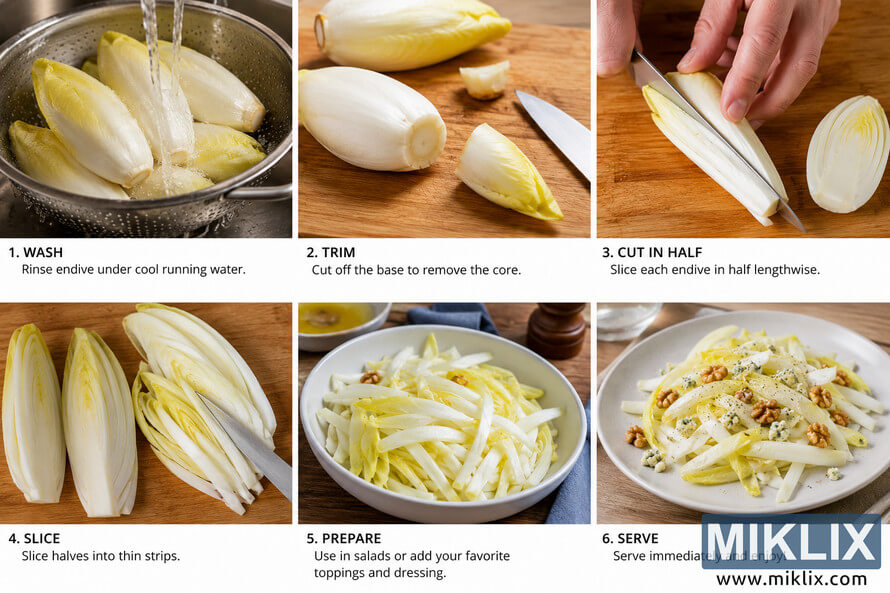
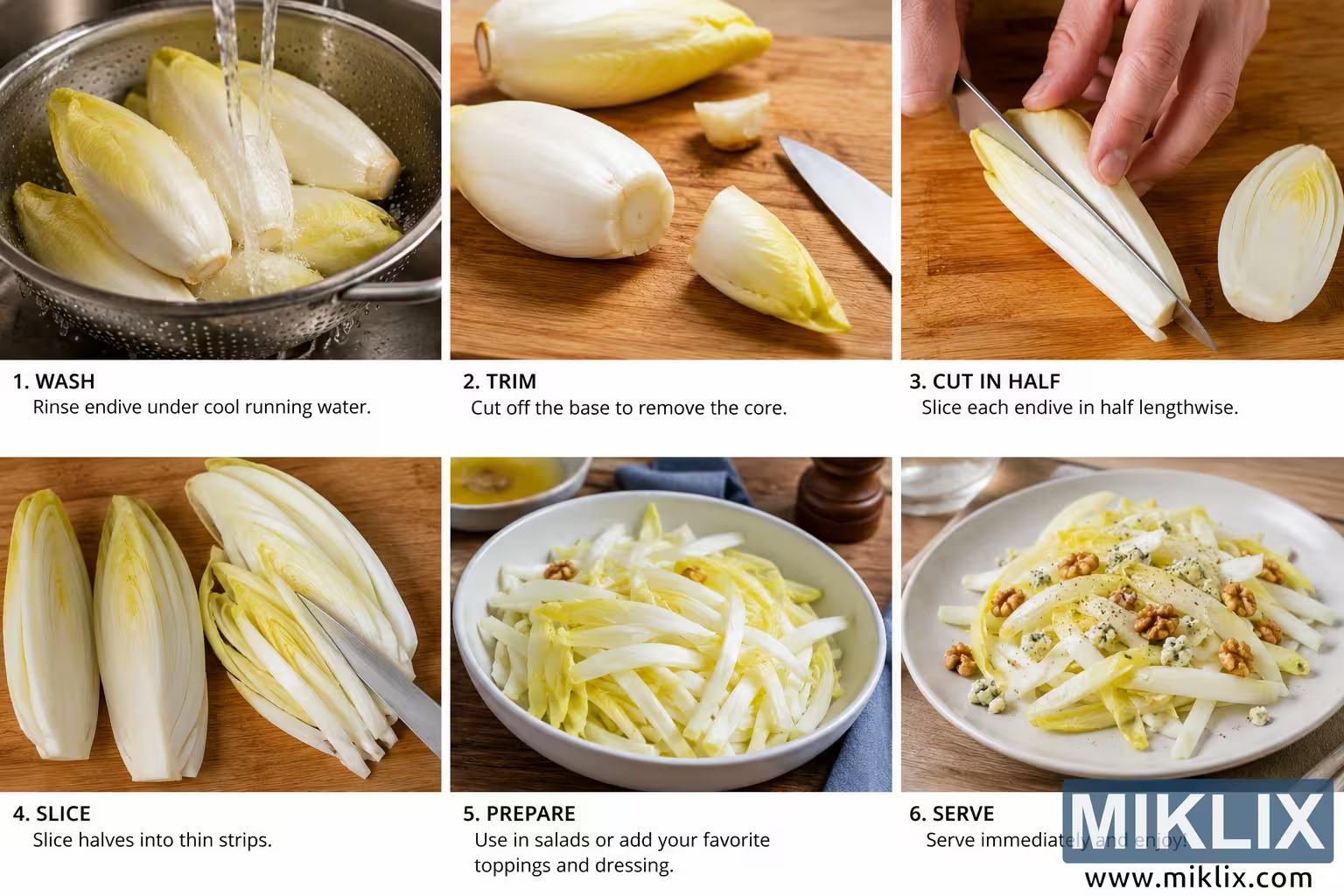
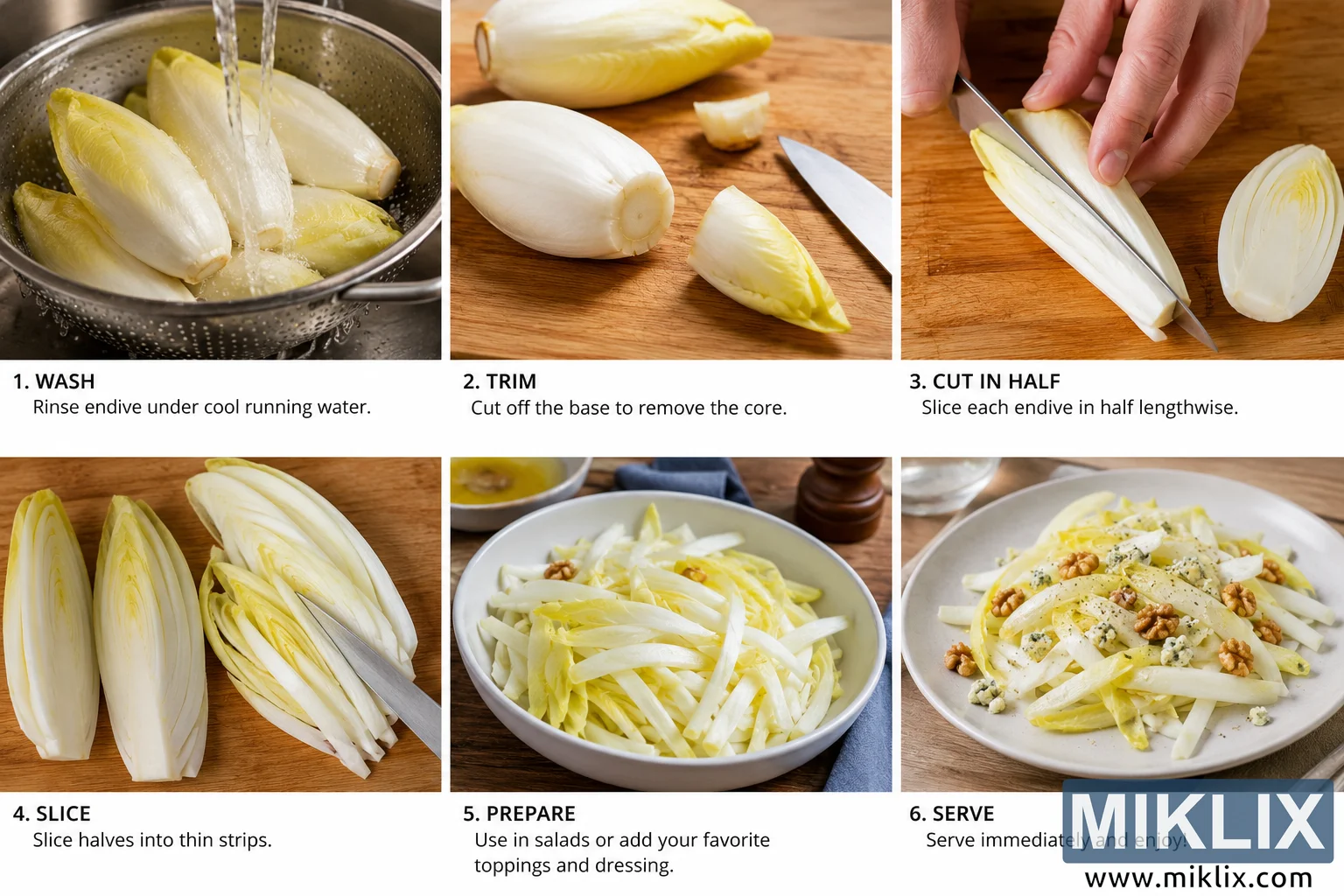
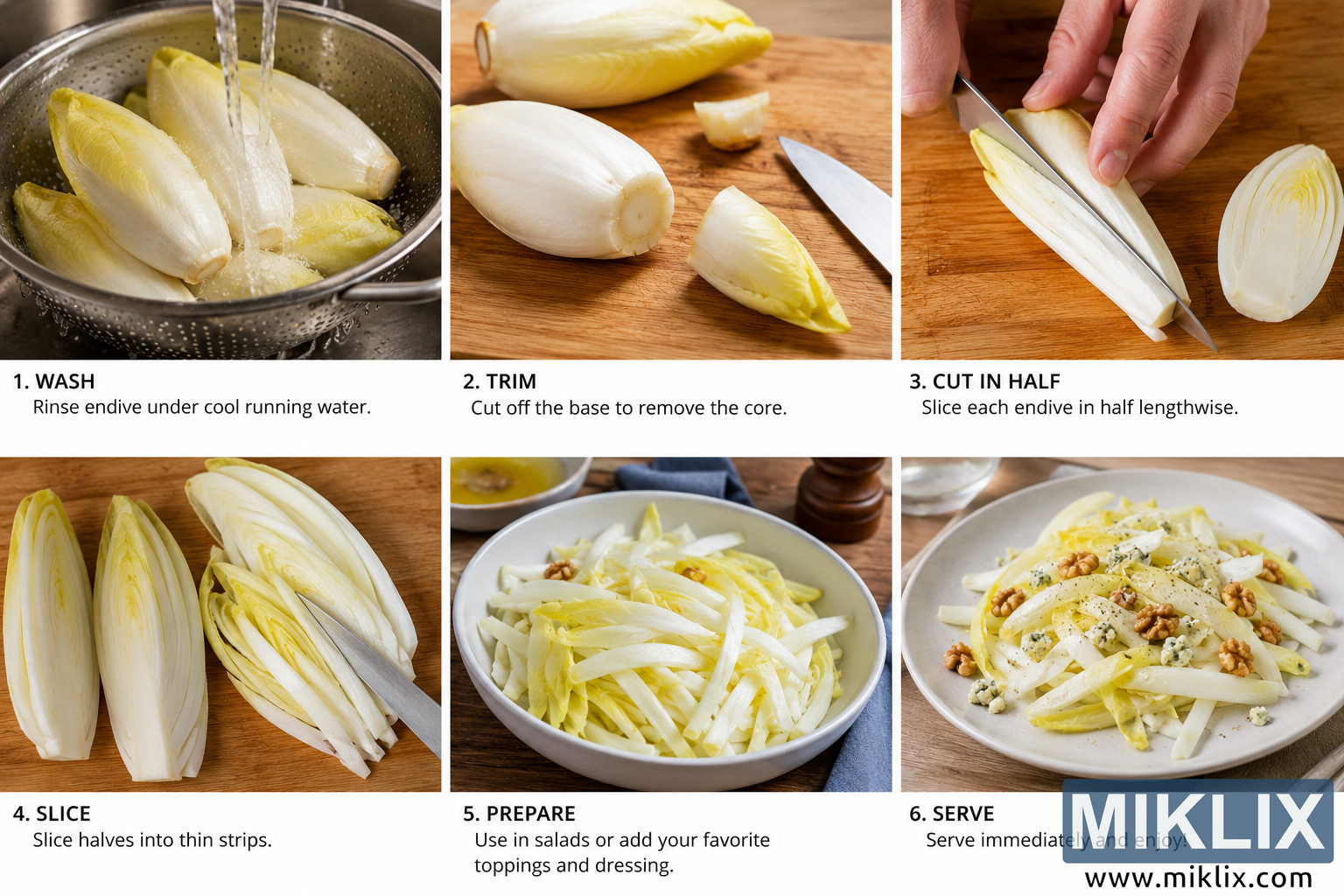
Learn how to prepare Belgian endive with this detailed step-by-step instructional image guide featuring washing, trimming, slicing, and serving techniques. The visual collage demonstrates proper kitchen preparation methods for fresh endive salad presentation in a clean and modern culinary setting.
Available versions of this image
The image files available for download below are less compressed and higher resolution - and as a result of that, higher quality - than the images embedded in articles and pages on this website, which are more optimized for file size in order to reduce bandwidth consumption.
Regular size (1,536 x 1,024)
Large size (3,072 x 2,048)
Very large size (4,608 x 3,072)
Extra large size (6,144 x 4,096)
Comically large size (1,048,576 x 699,051)
- Still uploading... ;-)
Image description
This image is a high-resolution instructional food photography collage presented in a clean six-panel layout that demonstrates the complete preparation process for Belgian endive. The composition is arranged in two horizontal rows with three evenly sized rectangular panels per row. Each panel contains a photographic close-up of a specific preparation step accompanied by a bold numbered heading and a concise explanatory caption. The overall visual style is bright, modern, and educational, resembling a premium cookbook tutorial or culinary magazine guide. The lighting is soft and natural with warm tones emphasizing freshness, cleanliness, and appetizing presentation.
In the first panel, labeled "1. WASH," several whole Belgian endives are shown resting inside a stainless-steel colander positioned in a kitchen sink. Cool running water pours over the pale cream and light yellow leaves, creating droplets and splashes that enhance the sense of freshness. The endives have tightly layered leaves with subtle gradients of white, pale green, and buttery yellow. The metal texture of the colander contrasts with the delicate vegetable leaves. Beneath the image, black sans-serif typography explains that the endive should be rinsed under cool running water.
The second panel, labeled "2. TRIM," shows a wooden cutting board with a whole endive placed horizontally next to a chef’s knife. The root end has been partially removed to illustrate trimming the bitter core. Additional trimmed pieces are visible nearby, helping communicate the preparation technique. The wooden cutting surface adds warmth and a rustic kitchen atmosphere. The image is sharply focused, highlighting the layered structure of the vegetable and the clean cut edges. The accompanying caption explains that the base should be removed to eliminate the core.
The third panel, labeled "3. CUT IN HALF," presents a close-up action shot of a person slicing an endive lengthwise using a large kitchen knife. Only the hands are visible, positioned carefully for safe knife handling. The endive is centered on a wooden board while one completed half sits nearby to display the interior leaf pattern. The pale yellow center contrasts softly against the darker wood grain background. The caption instructs viewers to slice each endive in half lengthwise.
The fourth panel, labeled "4. SLICE," demonstrates the next preparation stage. Multiple endive halves are arranged vertically while one half is actively being sliced into thin strips with a knife. The narrow strips reveal the layered texture and crisp structure of the vegetable. The arrangement emphasizes precision and uniformity in slicing. The image maintains consistent lighting and color balance with the earlier panels, reinforcing the continuity of the tutorial. The caption explains that the halves should be cut into thin strips.
The fifth panel, labeled "5. PREPARE," shows the sliced endive collected in a shallow bowl. Thin white and pale yellow strips are piled loosely to create volume and visual texture. In the softly blurred background, a small bowl of dressing and a dark pepper grinder suggest seasoning and salad preparation. The composition implies versatility and readiness for additional ingredients. The caption encourages the use of endive in salads or with favorite toppings and dressing.
The sixth and final panel, labeled "6. SERVE," presents the finished dish plated elegantly on a light-colored ceramic plate. The sliced endive is garnished with walnuts and crumbled cheese, lightly dressed to create a refined salad presentation. The composition appears clean, minimalist, and restaurant-inspired. Soft natural lighting enhances the glossy dressing and crisp vegetable texture while maintaining an inviting appearance. The final caption encourages immediate serving and enjoyment.
Across the entire collage, the typography is modern and highly legible, using bold black headings for each numbered step and smaller descriptive text beneath. The design is structured and instructional, making the process easy to follow for beginner cooks while remaining visually polished enough for editorial or commercial culinary use. The color palette is dominated by warm wood tones, creamy whites, pale yellows, and neutral kitchen textures that support the fresh and healthy theme of the preparation guide. No commercial branding, logos, or packaged products appear anywhere in the image, keeping the focus entirely on the food preparation process and the natural ingredients.
The image is related to: The Complete Guide to the Health Benefits of Endive