
Image: Cabbage nutrition infographic with key health benefits
Published: January 4, 2026 at 8:32:38 PM UTC
Last updated: January 4, 2026 at 8:33:21 PM UTC
High-resolution infographic illustrating the nutritional properties and health benefits of cabbage, including vitamins, minerals, antioxidants, digestion support, anti-inflammatory effects, and potential blood pressure benefits. Ideal for educational, wellness, and healthy eating content.
Available versions of this image
The image files available for download below are less compressed and higher resolution - and as a result of that, higher quality - than the images embedded in articles and pages on this website, which are more optimized for file size in order to reduce bandwidth consumption.
Regular size (1,536 x 1,024)
Large size (3,072 x 2,048)
Very large size (4,608 x 3,072)
Extra large size (6,144 x 4,096)
Comically large size (1,048,576 x 699,051)
- Still uploading... ;-)
Image description
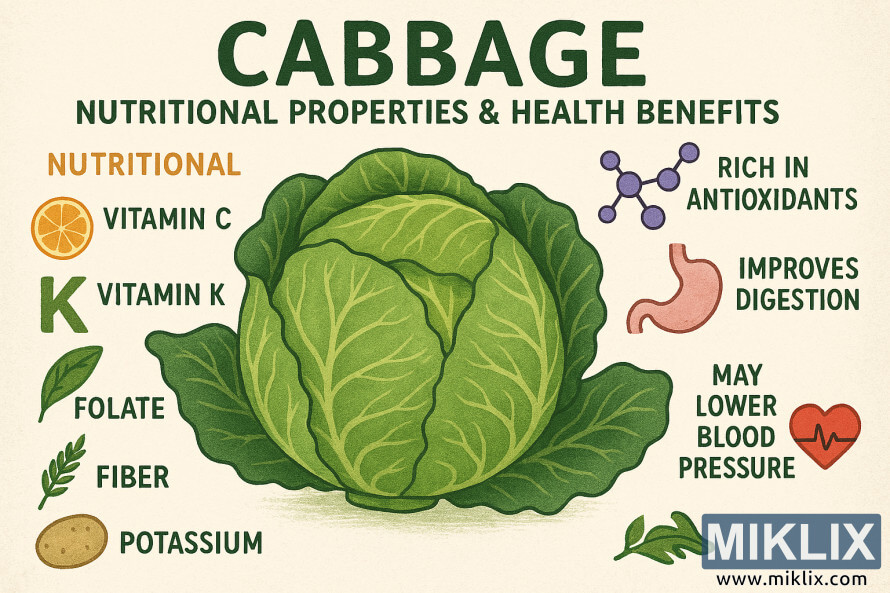
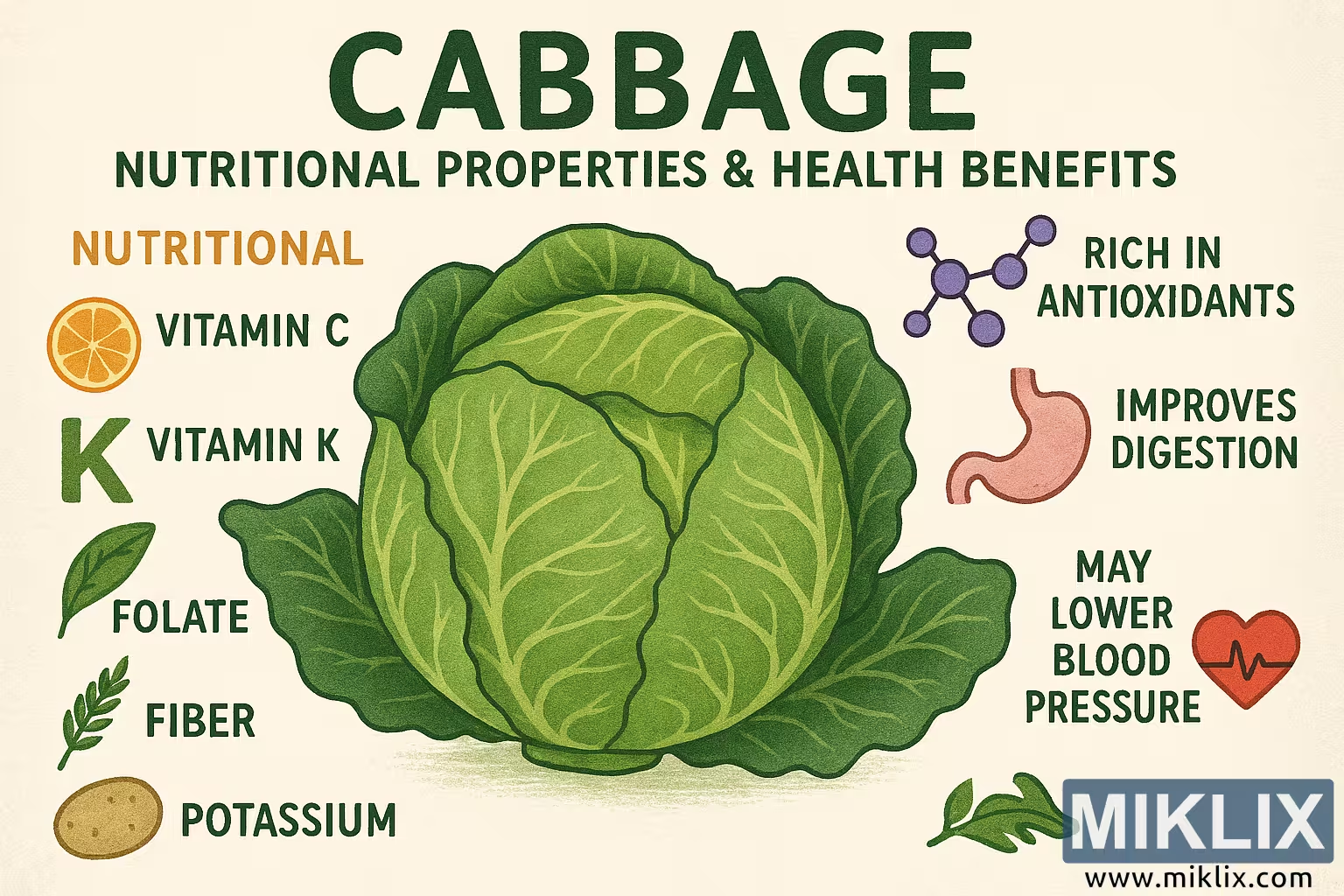
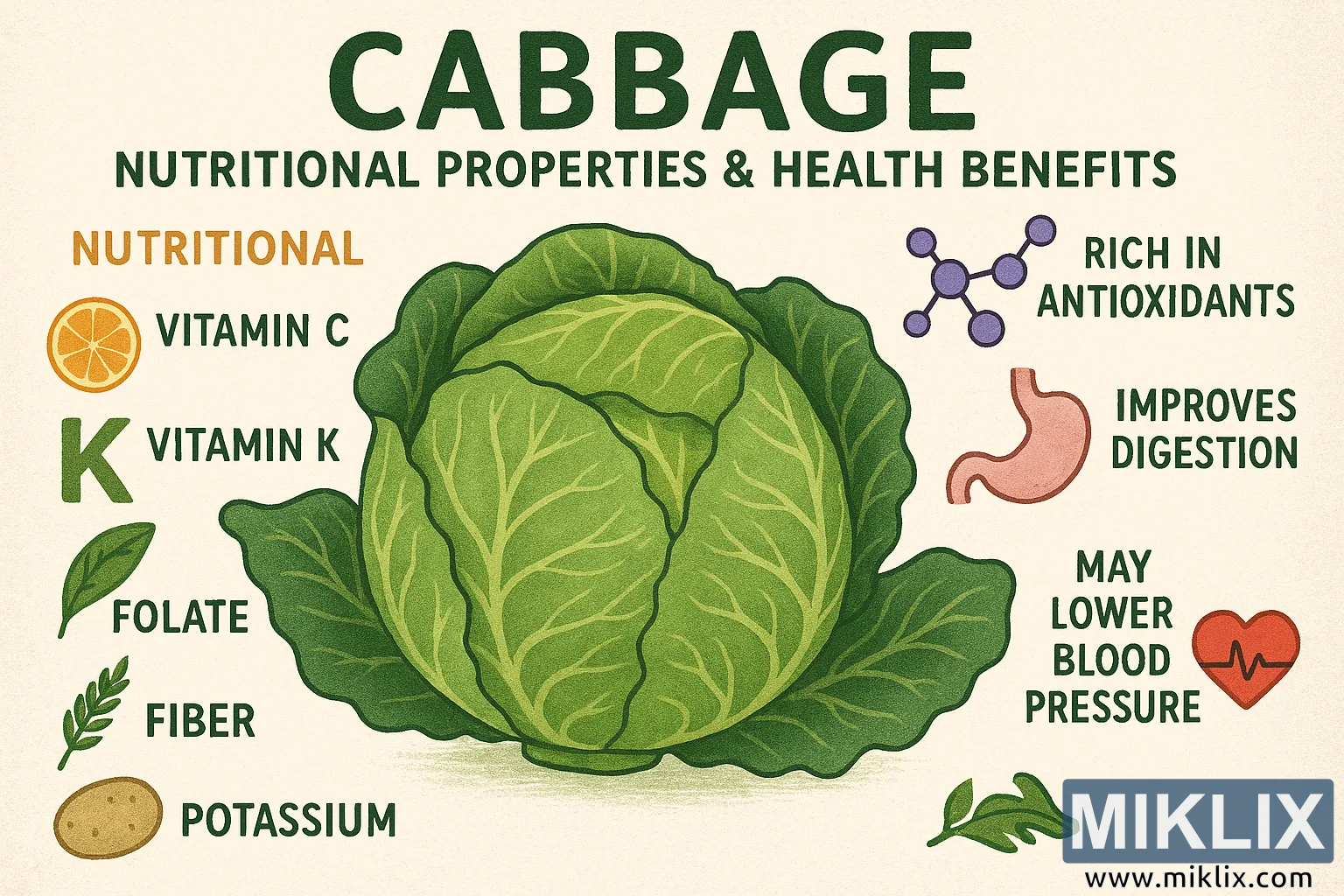
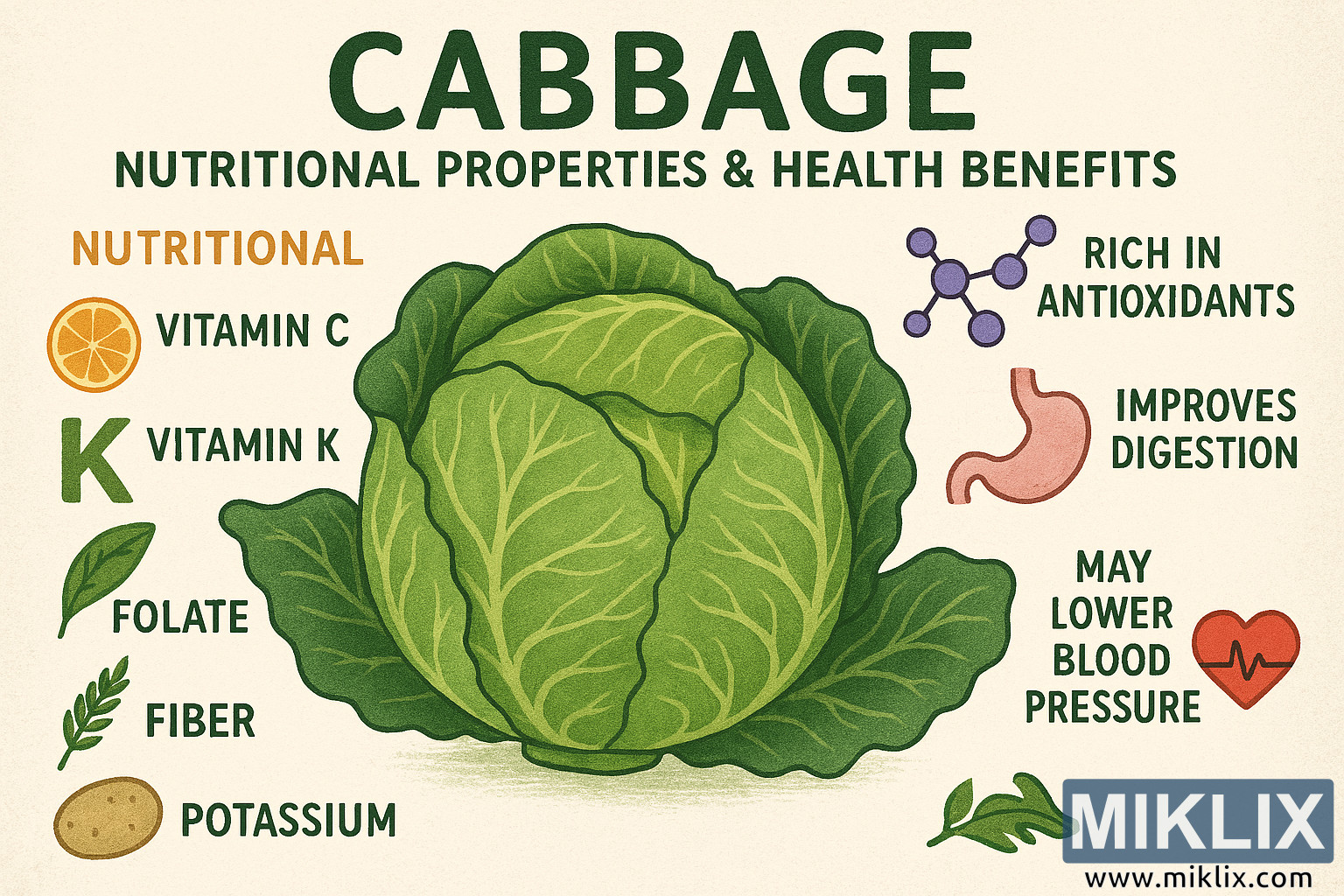
This high-resolution, landscape-oriented infographic visually explains the nutritional properties and health benefits of eating cabbage. At the center of the composition is a large, detailed illustration of a whole green cabbage, shown from a three-quarter angle so that its layered, tightly packed leaves are clearly visible. The outer leaves are a deeper, richer green with subtle shadows, while the inner leaves transition to a lighter, almost yellow-green tone, suggesting freshness and crisp texture. Fine vein lines and soft shading give the cabbage a semi-realistic, hand-drawn appearance that feels both educational and approachable.
The background is an off-white, slightly textured surface that resembles recycled paper, helping the colorful illustrations and text stand out while evoking a natural, healthy theme. At the top of the image, in the center, the word "CABBAGE" is written in large, bold, dark green capital letters. Directly below it, a slightly smaller subtitle reads "NUTRITIONAL PROPERTIES & HEALTH BENEFITS" in the same dark green, reinforcing the informative purpose of the graphic. Both title and subtitle are clean and modern, making the infographic easy to read at a glance.
On the left side of the cabbage, a column of key nutrients is presented, each with a small icon and label. At the top of this column, an orange section heading such as "NUTRITION" or "KEY NUTRIENTS" is implied by the design style. Individual nutrients are listed vertically: Vitamin C, Vitamin K, Folate, Fiber, and Potassium. Each nutrient name appears in uppercase letters, with a small, simple illustration to its side. Vitamin C is represented by a slice of orange or citrus, echoing its association with immune support. Vitamin K is paired with a stylized green "K" symbol. Folate is shown with a small green leaf icon. Fiber is represented by a green wheat stalk or grain symbol, and Potassium is illustrated with a small beige potato. The icons are flat, colorful, and slightly outlined, balancing clarity with a friendly, playful style.
On the right side of the cabbage, another column highlights major health benefits of eating cabbage, each paired with a distinct icon. The heading aligns visually with the nutrient section on the left, maintaining symmetry. The first benefit is labeled "RICH IN ANTIOXIDANTS" and uses a purple molecular structure composed of circles connected by thin lines, symbolizing antioxidant compounds. Below it, "IMPROVES DIGESTION" is illustrated with a simplified pink stomach icon with gentle curves, suggesting digestive comfort. The next benefit, "ANTI-INFLAMMATORY," is represented by a red circle containing a medical-style cross, referencing reduced inflammation and potential immune support. The final benefit, "MAY LOWER BLOOD PRESSURE," is shown with a red heart icon outlined in black and crossed by a black heartbeat line, visually linking cabbage consumption to cardiovascular health.
Throughout the infographic, the color palette centers on natural greens and warm oranges, accented with red and purple to distinguish different benefit categories. The layout is clean and horizontally balanced, making it ideal for use in educational materials, health blogs, nutrition courses, wellness presentations, or social media posts about healthy eating. The overall feel is modern, informative, and optimistic, encouraging viewers to include cabbage as a nutrient-dense vegetable in their diet.
The image is related to: The Power of the Leaf: Why Cabbage Deserves a Spot on Your Plate