
Image: Cruciferous Vegetables and Radishes Illustrating Cancer Prevention Benefits
Published: July 10, 2026 at 4:29:45 PM UTC
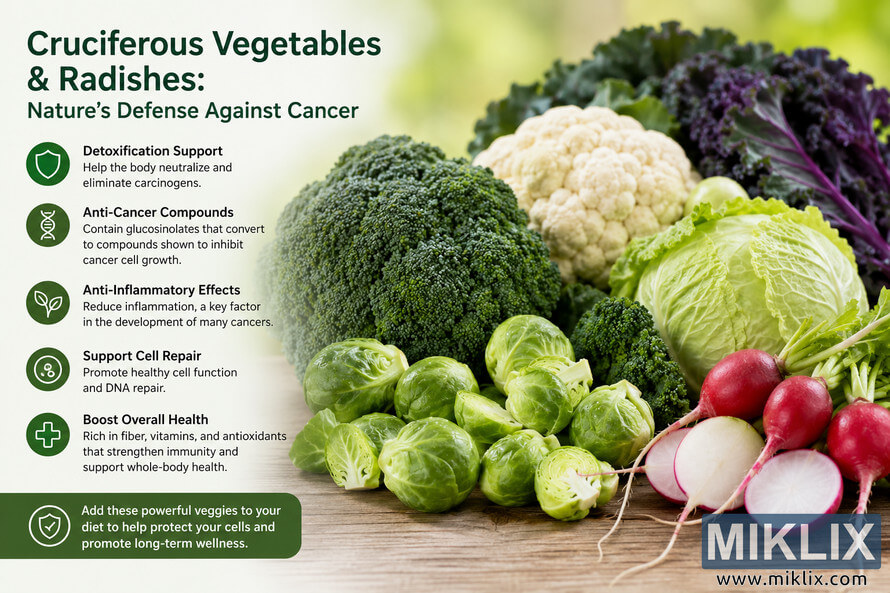
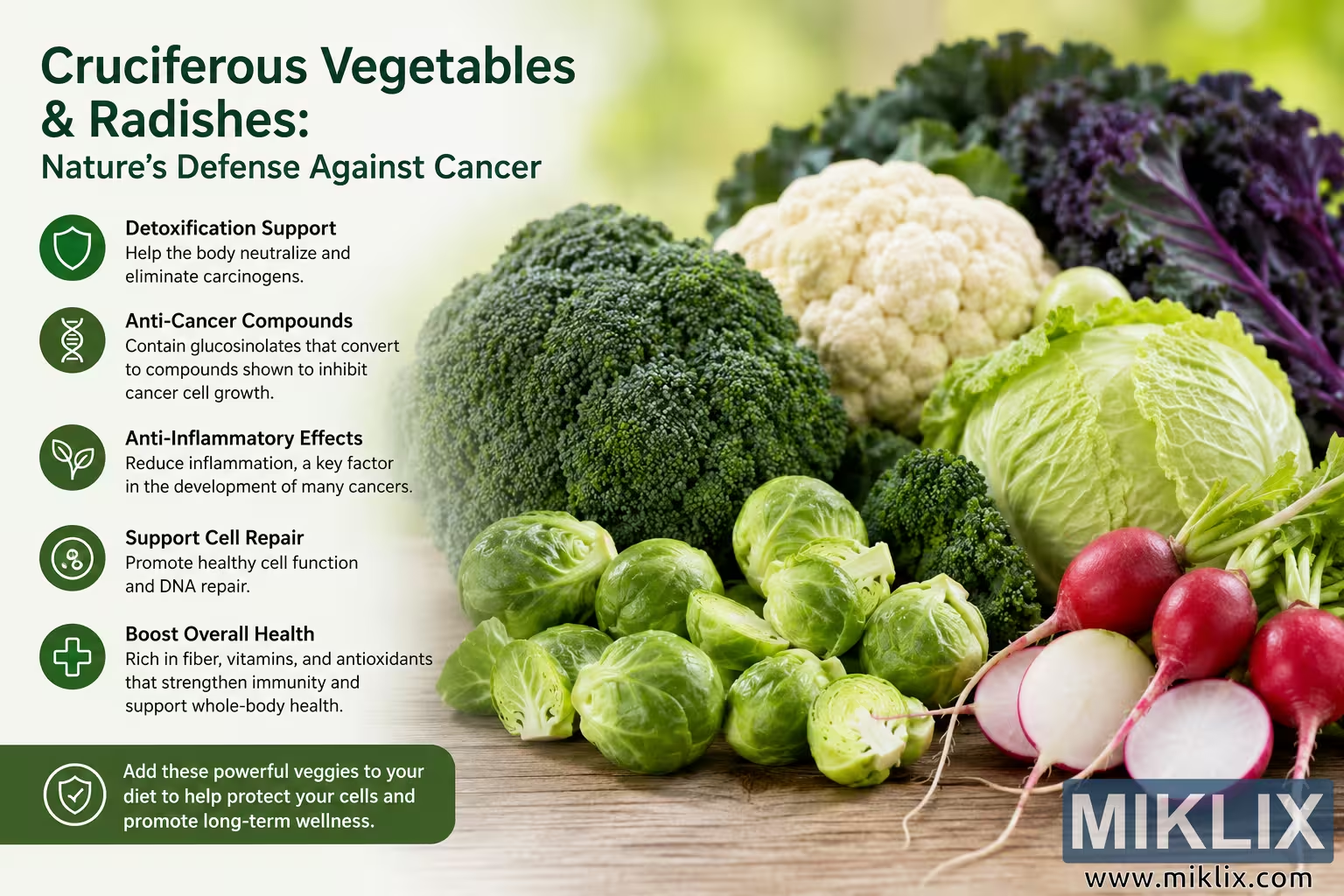
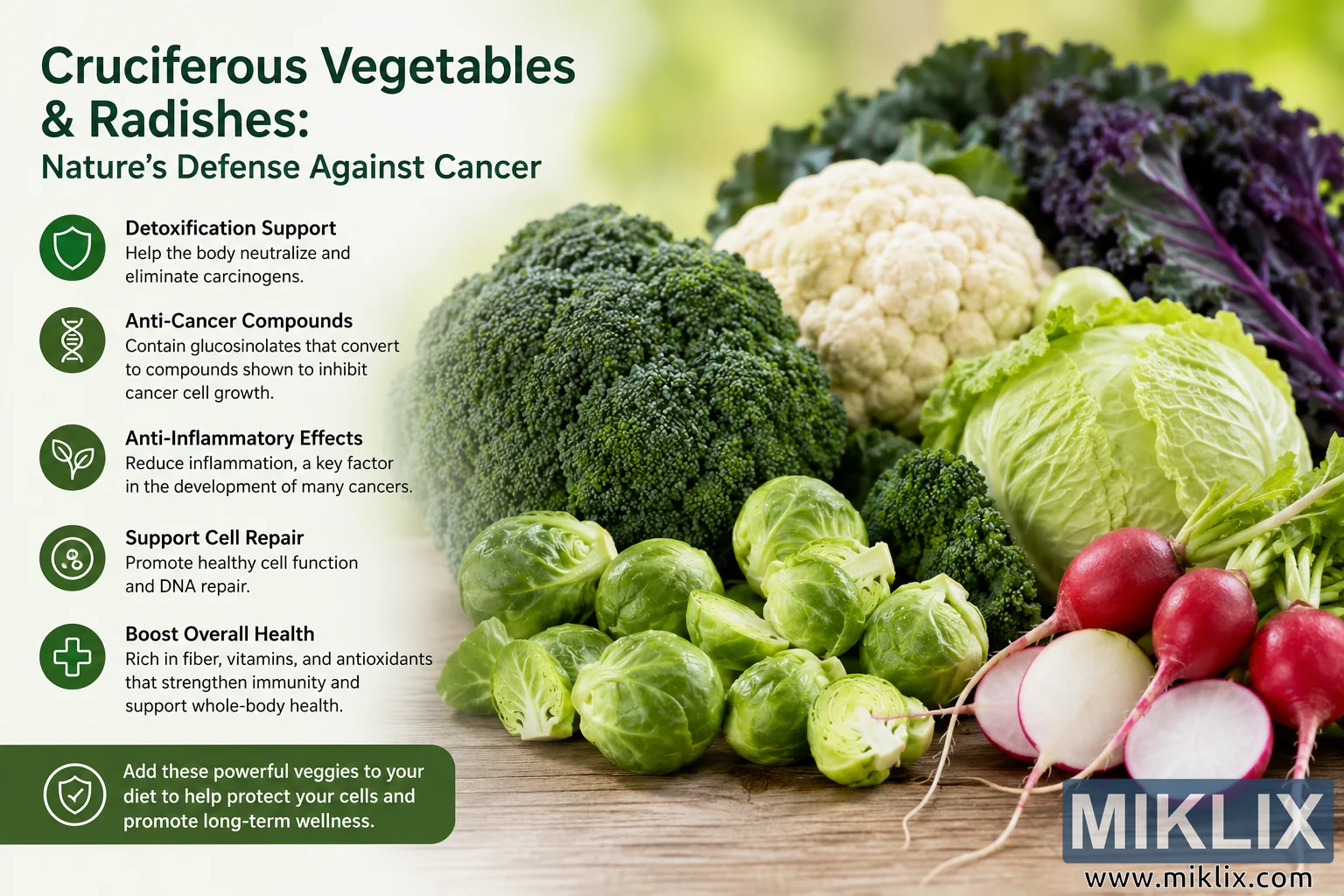
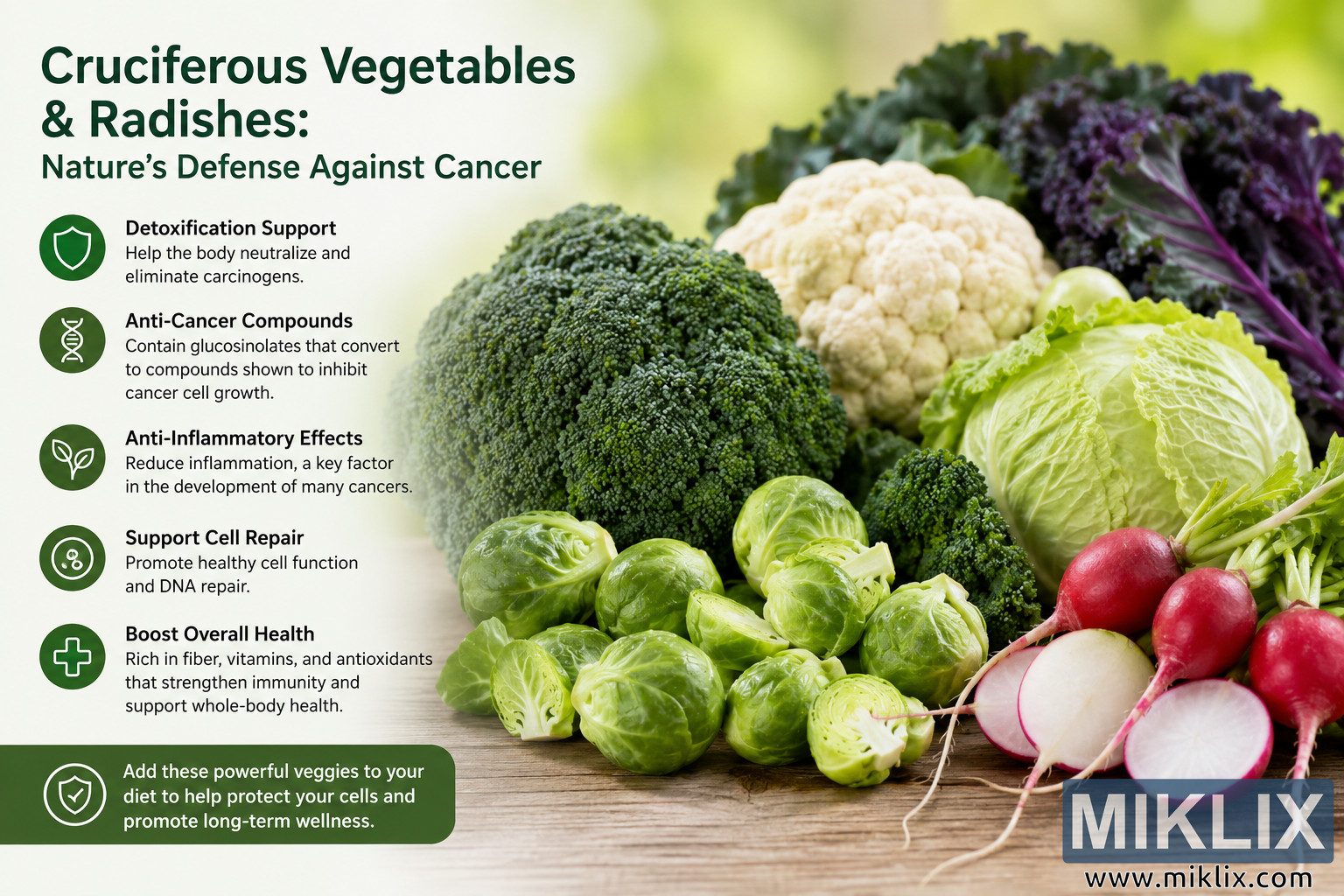
High-resolution landscape infographic showing cruciferous vegetables including broccoli, cabbage, cauliflower, kale, Brussels sprouts, and radishes alongside educational content about their potential role in supporting cancer prevention through a healthy diet.
Available versions of this image
The image files available for download below are less compressed and higher resolution - and as a result of that, higher quality - than the images embedded in articles and pages on this website, which are more optimized for file size in order to reduce bandwidth consumption.
Regular size (1,536 x 1,024)
Large size (3,072 x 2,048)
Very large size (4,608 x 3,072)
Extra large size (6,144 x 4,096)
Comically large size (1,048,576 x 699,051)
- Still uploading... ;-)
Image description
This landscape-oriented infographic presents a clean, modern educational composition centered on the topic of cruciferous vegetables and their potential role in supporting cancer prevention. The overall visual style combines an informative layout with a vibrant food photograph, using a fresh green and white color palette that reinforces themes of health, nutrition, and natural wellness. The design contains no visible commercial branding, logos, or product packaging, allowing full attention to remain on the vegetables and educational messaging. The background transitions softly between bright white and out-of-focus green tones, creating the impression of natural daylight and a healthy outdoor environment while maintaining excellent readability.
The left side of the image is dedicated to informational content. At the top appears a large, bold headline reading "Cruciferous Vegetables & Radishes: Nature's Defense Against Cancer." The typography is modern, sans-serif, and dark green, providing strong contrast against the pale background. Beneath the heading, several vertically stacked information sections are arranged with generous spacing. Each section is accompanied by a simple circular green icon containing a white symbol that visually reinforces the associated health concept. The icons include imagery representing protection, genetics or DNA, plant growth, cellular health, and general wellness.
Each informational block contains a concise heading followed by supporting explanatory text. The content discusses detoxification support, compounds naturally present in cruciferous vegetables, anti-inflammatory effects, support for healthy cell repair, and overall nutritional benefits. The statements are presented in an educational style suitable for a health awareness poster. The layout uses consistent alignment and spacing, producing a balanced appearance that is easy to scan visually.
At the lower left corner, a rounded rectangular green callout box reinforces the educational theme with an encouraging statement inviting viewers to include these vegetables as part of a healthy diet. The callout includes a shield-style icon emphasizing wellness and protective health. The overall design language remains friendly, informative, and accessible without appearing overly clinical.
Occupying the entire right half of the composition is a vivid, professionally lit arrangement of fresh cruciferous vegetables displayed on a rustic wooden tabletop. The vegetables appear recently harvested, exhibiting crisp textures, natural coloration, and small water droplets that communicate freshness. The foreground contains multiple bright red radishes with leafy green stems still attached. Several radishes are sliced in half, revealing their clean white interiors outlined by thin red skins, adding visual variety and highlighting freshness.
Adjacent to the radishes are numerous Brussels sprouts scattered naturally across the wooden surface. Some sprouts remain whole while others are cut in half, exposing their tightly layered pale-green leaves. Their spherical shapes create repeating patterns that contrast with the elongated radishes and larger vegetables behind them.
A large head of broccoli dominates the center-right portion of the image. Its densely packed florets display intricate texture with rich green coloration that becomes darker toward the outer edges. Nearby stands a creamy white cauliflower head whose compact florets provide visual contrast against the darker greens surrounding it.
Behind these vegetables are additional leafy cruciferous varieties including dark green kale and richly colored purple kale or purple cabbage leaves. Their ruffled textures create depth while introducing darker tones that enhance the overall composition. A large pale-green cabbage occupies the middle-right area, with tightly layered leaves catching soft highlights from the overhead lighting. Smaller broccoli florets are positioned around the cabbage to complete the balanced arrangement.
The wooden tabletop contributes warmth through its visible grain patterns and natural brown coloration. Soft shadows beneath each vegetable create a realistic sense of depth without distracting from the educational focus. The lighting appears diffused and even, eliminating harsh reflections while enhancing the natural colors of the produce.
The overall composition effectively balances informational content with appetizing food photography. The left side remains spacious and uncluttered for readability, while the right side showcases abundant vegetables in a visually appealing arrangement. Green serves as the dominant accent color throughout the design, reinforcing associations with nutrition, freshness, and plant-based foods. White space is used strategically to separate sections and improve visual clarity.
Although the infographic discusses potential cancer prevention benefits, the visual presentation remains educational rather than sensational. The emphasis is placed on healthy dietary choices, nutrient-rich vegetables, and general wellness. The absence of branding, commercial products, or promotional elements allows the image to function as an informational resource suitable for educational websites, nutrition articles, healthcare communications, public health campaigns, presentations, blogs, and wellness publications. Overall, the design combines high-quality food photography with structured educational content to communicate the importance of incorporating cruciferous vegetables—including broccoli, cauliflower, Brussels sprouts, cabbage, kale, and radishes—into a balanced diet as part of an overall healthy lifestyle.
The image is related to: The Powerful Health Benefits of Radishes: Your Complete Nutrition Guide