
Image: Quince Benefits for Digestive Health – Illustrated Healthy Digestive System Infographic
Published: June 6, 2026 at 2:30:11 PM UTC
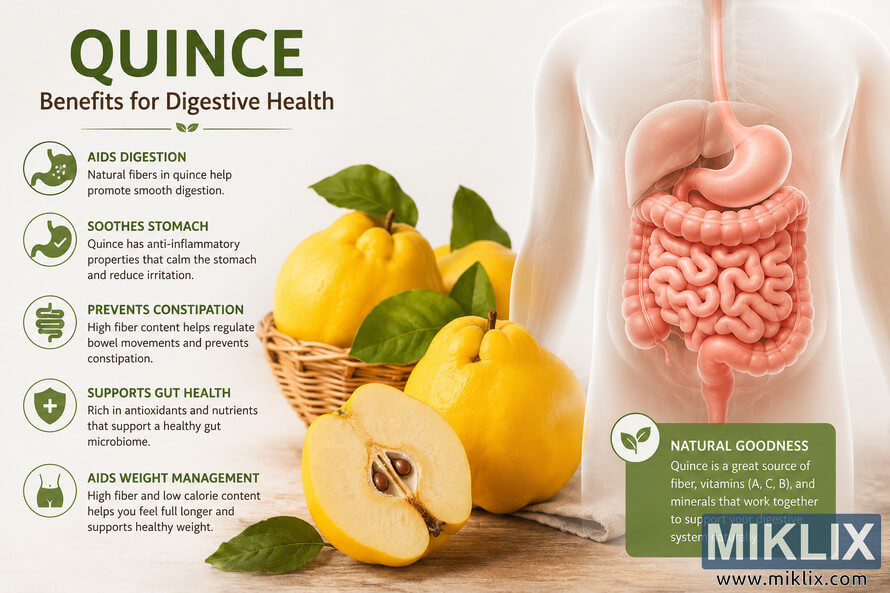
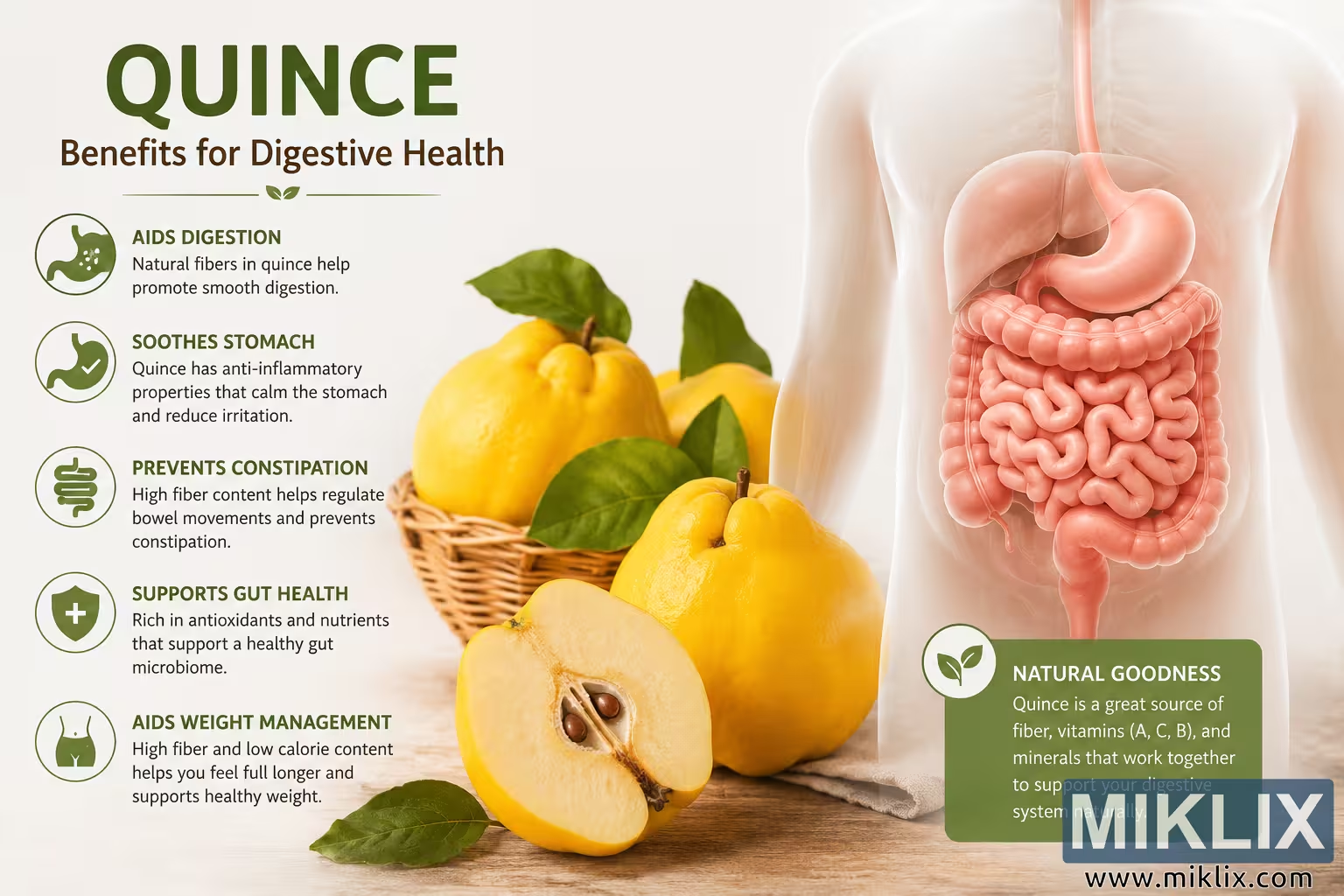
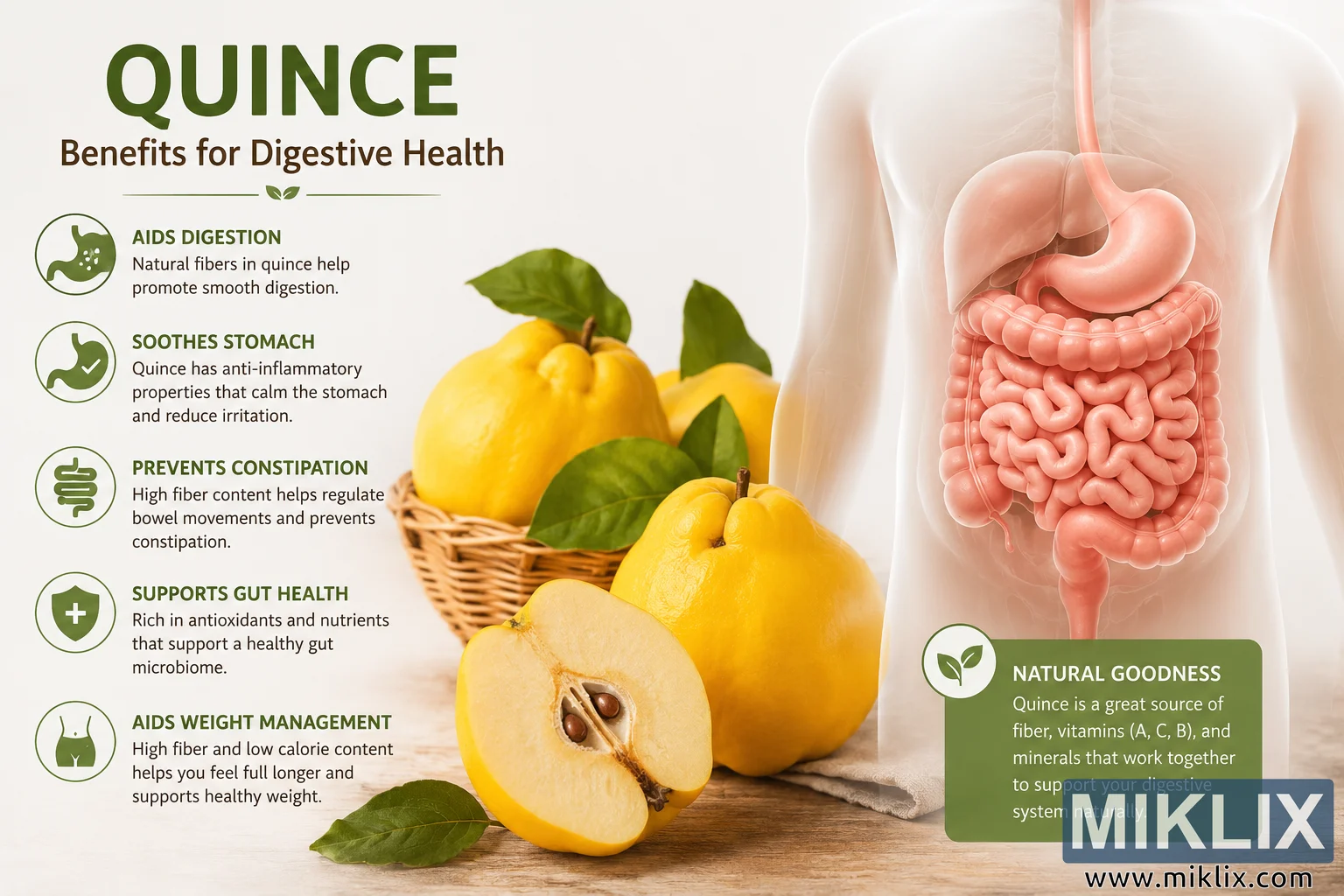
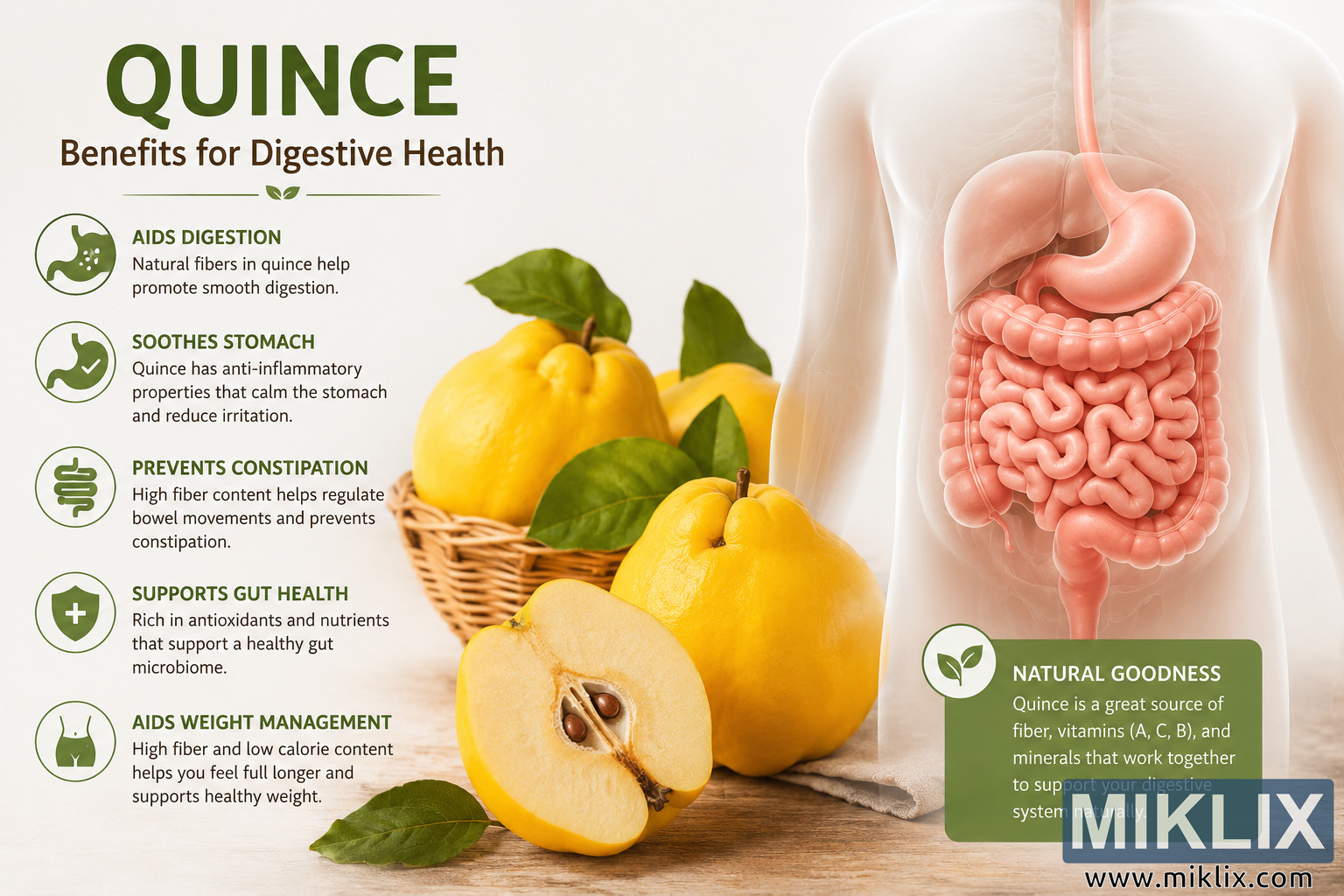
Educational infographic featuring quince fruit and a healthy digestive system illustration. The image highlights digestive health benefits of quince, including fiber support, stomach soothing properties, gut health improvement, constipation prevention, and natural wellness nutrition in a clean medical-style landscape design.
Available versions of this image
The image files available for download below are less compressed and higher resolution - and as a result of that, higher quality - than the images embedded in articles and pages on this website, which are more optimized for file size in order to reduce bandwidth consumption.
Regular size (1,536 x 1,024)
Large size (3,072 x 2,048)
Very large size (4,608 x 3,072)
Extra large size (6,144 x 4,096)
Comically large size (1,048,576 x 699,051)
- Still uploading... ;-)
Image description
This landscape-oriented educational infographic presents a visually appealing combination of nutritional wellness imagery and medical-style anatomical illustration focused on the digestive health benefits of quince fruit. The composition uses a clean, modern healthcare-inspired design with warm natural tones, soft lighting, and highly detailed visual elements arranged harmoniously across the horizontal canvas. The image is designed to communicate natural digestive wellness in a professional yet approachable manner.
On the left side of the infographic, a large bold heading displays the word “QUINCE” in dark green uppercase lettering. Directly beneath the title appears the subtitle “Benefits for Digestive Health,” written in a softer but still prominent font. The typography is clean and modern, contributing to the educational and trustworthy aesthetic of the graphic. Decorative green leaf accents and subtle divider lines help organize the visual hierarchy while reinforcing the natural health theme.
Below the heading is a vertically aligned series of informational health benefit sections. Each section contains a circular green icon accompanied by concise explanatory text describing the digestive advantages associated with quince consumption. The first icon depicts a stylized stomach and introduces the benefit “Aids Digestion.” The supporting text explains that natural fibers found in quince help promote smoother digestion and support regular digestive processes. The second section uses another stomach-related icon with a checkmark symbol to illustrate the claim “Soothes Stomach.” The accompanying text references anti-inflammatory properties associated with quince that may help calm the stomach and reduce irritation.
The third informational segment presents a simplified intestinal icon and discusses how the fruit may help prevent constipation due to its high fiber content. The fourth section uses a shield-like medical icon to symbolize gut protection and microbiome support. The accompanying text highlights antioxidants, vitamins, and nutrients that contribute to overall digestive wellness and gut balance. The fifth and final health callout uses a waistline or body-shape icon to represent weight management support. The text explains that the fiber-rich and relatively low-calorie nature of quince may help people feel fuller for longer periods and support healthy eating habits.
Occupying the central lower portion of the composition is a realistic arrangement of fresh quince fruits. Several ripe yellow quinces with natural imperfections and glossy surfaces are displayed on a wooden tabletop. Some fruits are grouped together in a small woven basket while others rest freely in the foreground. Rich green leaves attached to stems provide contrast against the bright yellow fruit skin. One quince has been sliced in half and positioned prominently near the center front of the image. The interior of the sliced fruit reveals pale cream-colored flesh and several brown seeds in the core, adding realism and visual texture to the composition.
The background remains soft and minimalistic, using warm beige and off-white tones that prevent distraction while helping the primary subjects stand out. Gentle shadows and diffuse lighting create depth without overpowering the infographic’s clean educational style.
On the right side of the image is a semi-transparent anatomical illustration of the upper human torso focused on the digestive system. The body outline is softly faded and translucent, allowing the digestive organs to become the central focal point. Visible organs include the esophagus, stomach, liver, small intestine, and large intestine. The organs are rendered in smooth pink and peach tones with realistic anatomical proportions but simplified enough to remain accessible and visually pleasing in a healthcare infographic context.
The digestive tract is centrally emphasized, symbolizing the connection between quince consumption and digestive wellness. The intestines are highly detailed with curved folds and layered structures that create dimensional realism. The stomach appears enlarged and clearly visible beneath the esophagus, while the liver sits above it in a natural anatomical position. The transparent body silhouette gives the impression of an educational medical illustration integrated seamlessly into a lifestyle nutrition poster.
Near the lower-right corner is an additional green information box labeled “Natural Goodness.” This section reinforces the overall wellness message by explaining that quince contains fiber, vitamins, and minerals that work together to support digestive function naturally. A small botanical leaf icon appears beside the heading, visually tying this callout to the broader natural nutrition theme.
Overall, the infographic combines elements of food photography, medical illustration, nutritional education, and wellness branding into a polished healthcare-style composition. The image communicates digestive health, natural nutrition, and holistic wellness through balanced typography, realistic fruit imagery, soft earthy colors, and detailed anatomical visualization. The design remains highly readable and visually engaging while maintaining a calm, professional, and health-focused atmosphere suitable for educational articles, nutrition blogs, healthcare presentations, wellness campaigns, or dietary informational content.
The image is related to: The Remarkable Health Benefits of Quince: Nature's Forgotten Superfruit