
Image: Scientific Visualization of Antioxidants Neutralizing Free Radicals at the Cellular Level
Published: June 6, 2026 at 2:30:11 PM UTC
High-resolution scientific visualization of antioxidants fighting free radicals at the cellular level, featuring oxidative stress, electron donation, and cellular protection in a detailed microscopic biological environment.
Available versions of this image
The image files available for download below are less compressed and higher resolution - and as a result of that, higher quality - than the images embedded in articles and pages on this website, which are more optimized for file size in order to reduce bandwidth consumption.
Regular size (1,536 x 1,024)
Large size (3,072 x 2,048)
Very large size (4,608 x 3,072)
Extra large size (6,144 x 4,096)
Comically large size (1,048,576 x 699,051)
- Still uploading... ;-)
Image description
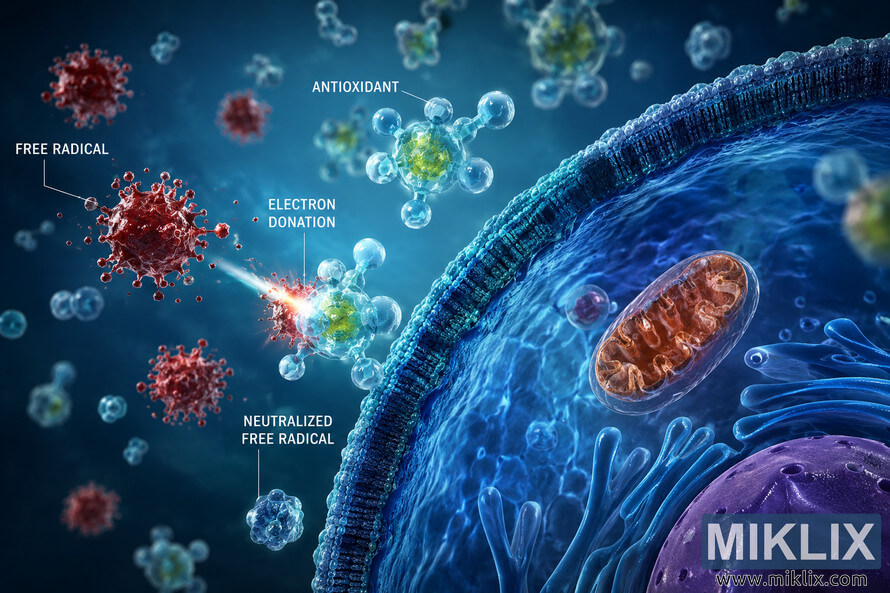
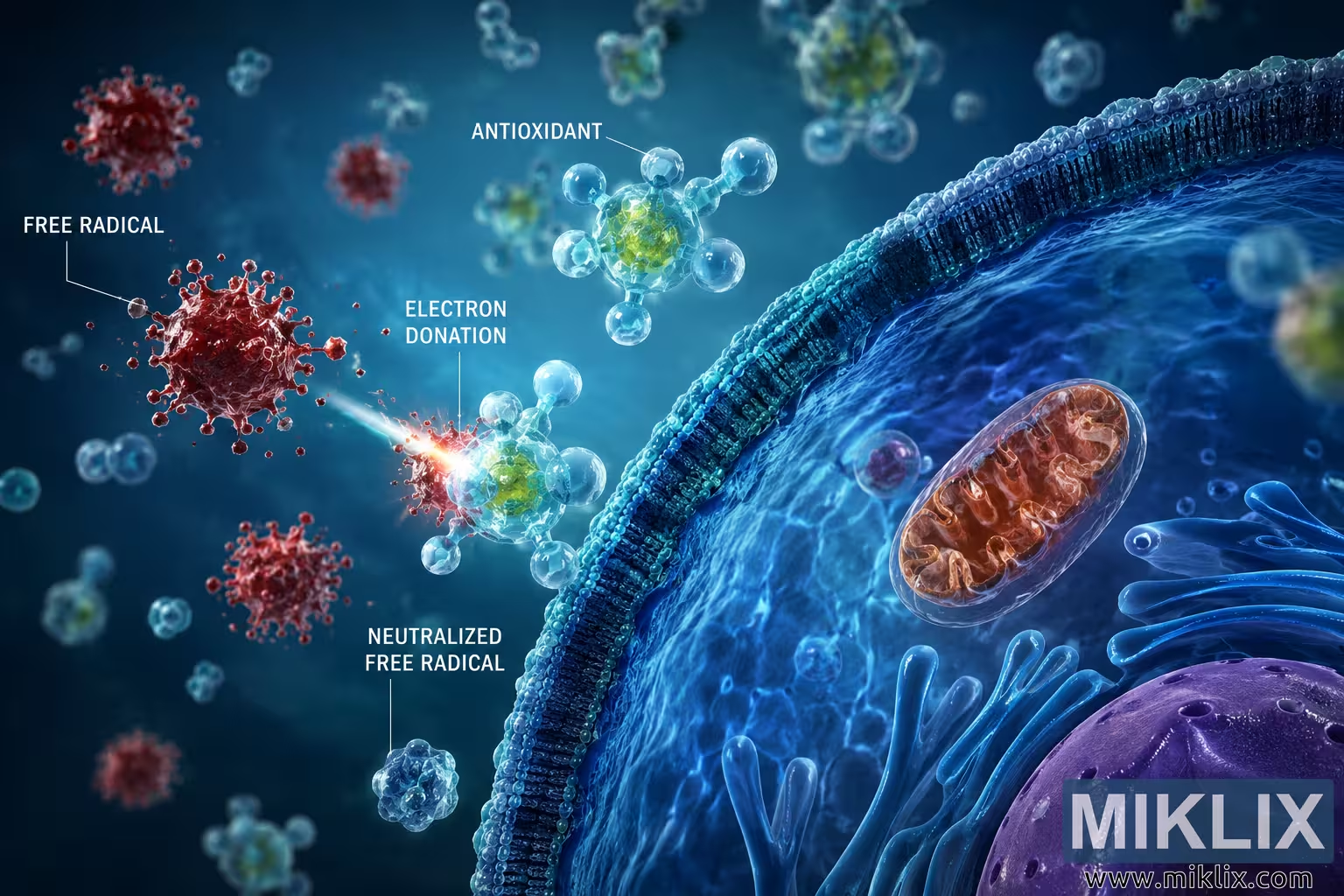
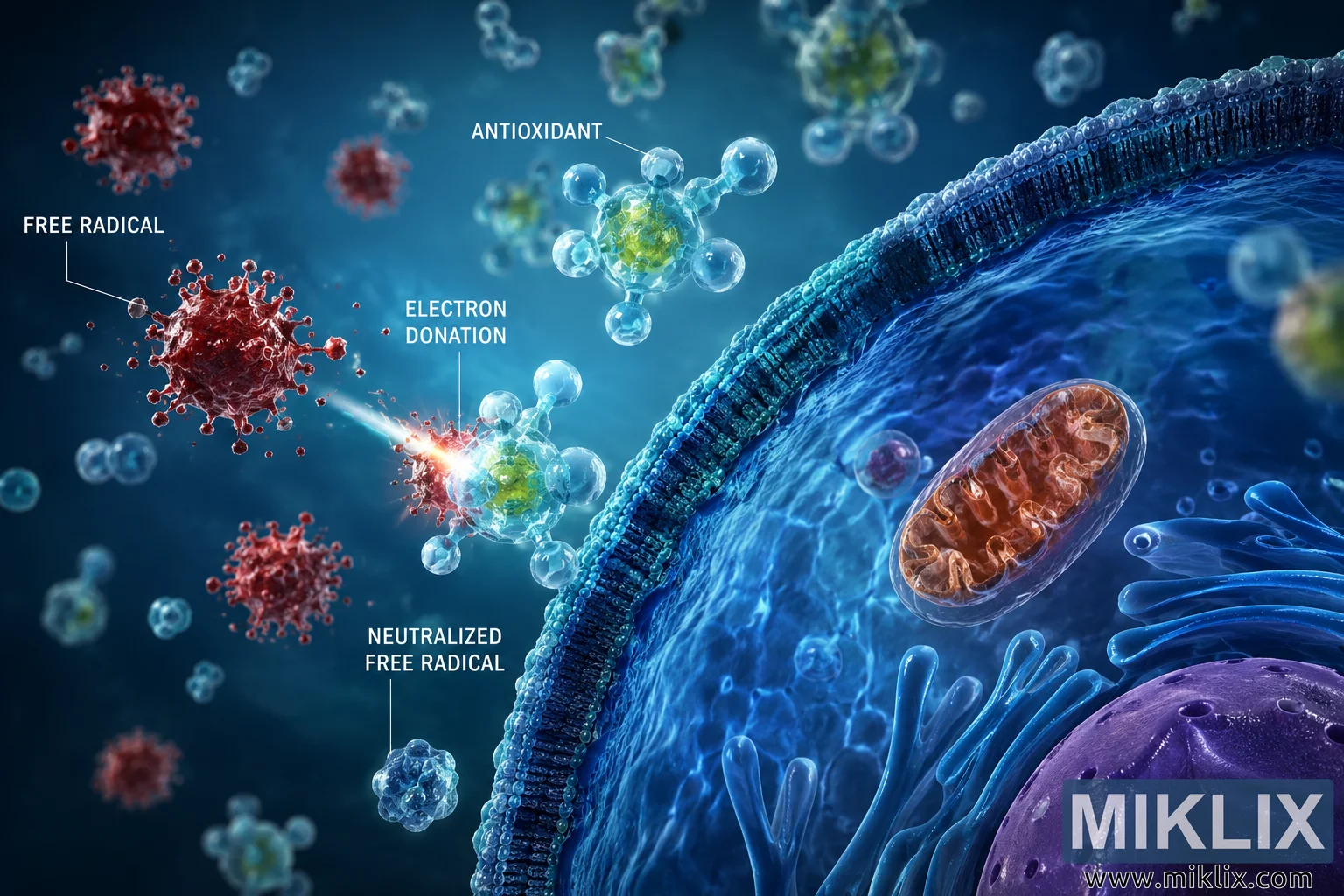
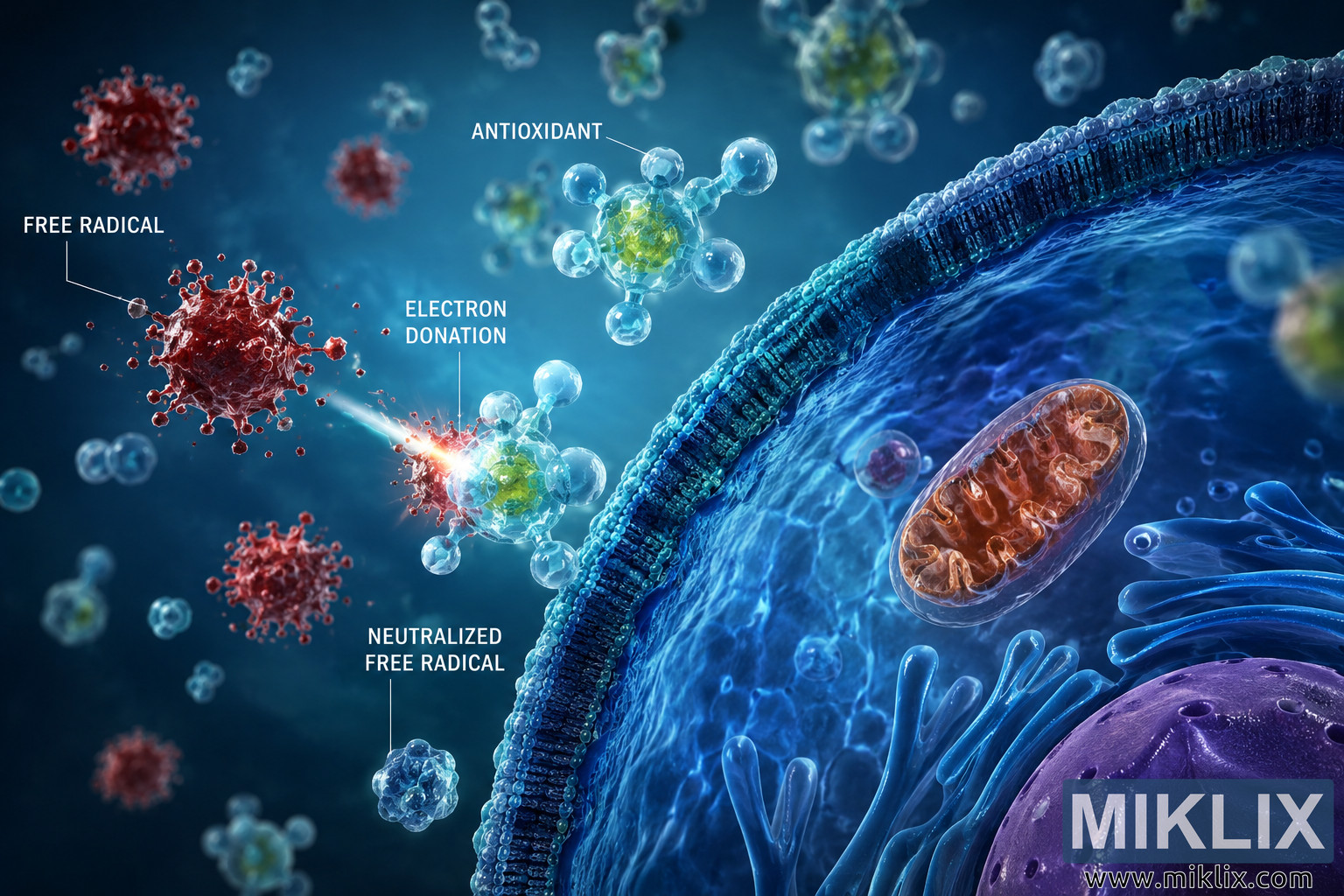
This high-resolution scientific visualization presents a dramatic and highly detailed microscopic scene illustrating the interaction between antioxidants and free radicals within a cellular environment. The composition is rendered in a cinematic landscape orientation and immerses the viewer deep inside a biological system where oxidative stress and molecular defense mechanisms are visually represented through glowing molecular structures, vibrant color contrasts, and realistic cellular textures.
The background of the image is dominated by rich shades of deep blue and cyan, creating the impression of a fluid-filled intracellular environment illuminated by microscopic light sources. Suspended throughout the scene are numerous semi-transparent molecular structures and floating particles that evoke the complexity of biochemical activity occurring within living tissue. The visual atmosphere combines scientific realism with artistic enhancement, producing a futuristic medical illustration style commonly used in advanced educational and pharmaceutical visualizations.
On the left side of the image, several free radicals are prominently depicted as unstable, spiky red molecular bodies. Their irregular surfaces, jagged protrusions, and intense crimson coloration symbolize their highly reactive nature. One particularly large free radical appears near the center-left foreground, drawing immediate attention due to its aggressive texture and dynamic lighting. The free radicals are labeled clearly in white scientific annotation text, reinforcing the educational purpose of the visualization.
Near the center of the image, a glowing antioxidant molecule is shown interacting directly with one of the unstable free radicals. The antioxidant is rendered as a smooth, translucent molecular cluster composed of interconnected spherical forms with soft blue and pale turquoise tones. At its core is a luminous green-yellow nucleus-like structure that radiates energy. The antioxidant appears stable, balanced, and clean in contrast to the chaotic appearance of the free radicals.
The key moment of interaction is visualized through a bright burst of light labeled as electron donation. A concentrated beam of glowing energy extends between the antioxidant and the free radical, representing the transfer of an electron that stabilizes the reactive molecule. The light flare at the point of contact emphasizes the importance of this biochemical reaction and symbolizes the neutralization of oxidative stress. This central interaction acts as the focal point of the composition and visually communicates the protective role antioxidants play within biological systems.
Below the interaction point, a smaller bluish particle labeled as a neutralized free radical demonstrates the result of the antioxidant defense process. Unlike the original red free radicals, this neutralized structure appears calmer, smoother, and significantly less reactive in appearance. The visual transition from unstable red to stabilized blue reinforces the concept of molecular balance and cellular protection.
The right side of the image showcases part of a large cell membrane rendered in extraordinary detail. The membrane curves across the frame with realistic lipid bilayer textures composed of tightly packed microscopic structures. The surface glows subtly with reflected blue light, giving it a lifelike semi-translucent quality. Inside the cellular region, organelles are visible, including a detailed mitochondrion with warm orange and amber internal folds floating within the cytoplasmic environment. Additional abstract cellular structures extend through the lower right corner, adding depth and anatomical realism.
Soft depth-of-field effects blur distant molecular elements in the background, enhancing the three-dimensional quality of the scene. Numerous translucent bubbles and molecular fragments float throughout the composition, suggesting continuous biochemical movement and activity inside the living cell. The lighting is highly dynamic, with cool environmental illumination contrasted against warm reactive highlights at the center interaction point.
The entire illustration is designed to communicate the scientific concept of antioxidants protecting cells from oxidative damage caused by free radicals. The image visually explains how antioxidants stabilize reactive oxygen species through electron donation, thereby reducing cellular stress and potentially preventing molecular damage associated with aging, inflammation, and disease. The combination of scientific annotation, realistic biological structures, and dramatic lighting transforms the illustration into both an educational medical graphic and a visually compelling piece of scientific art.
Overall, the image conveys themes of cellular defense, molecular balance, oxidative stress reduction, and biological resilience. Its polished rendering quality, intricate microscopic details, and advanced medical visualization style make it suitable for use in scientific presentations, educational materials, health publications, biotechnology media, pharmaceutical marketing, and medical research communication.
The image is related to: The Remarkable Health Benefits of Quince: Nature's Forgotten Superfruit