
Image: Cooked and Cooled Potatoes in a Glass Bowl Illustrating Resistant Starch Formation
Published: August 4, 2026 at 1:57:05 PM UTC
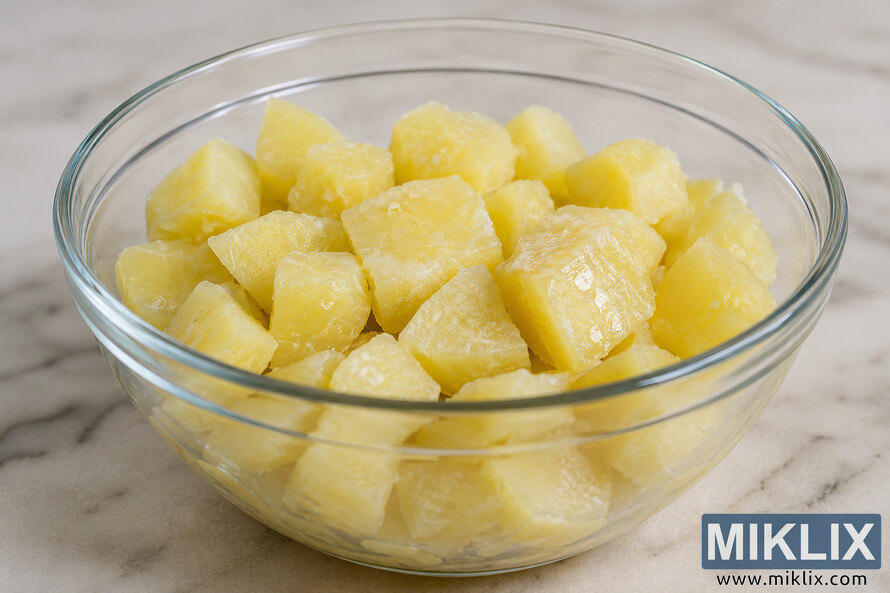
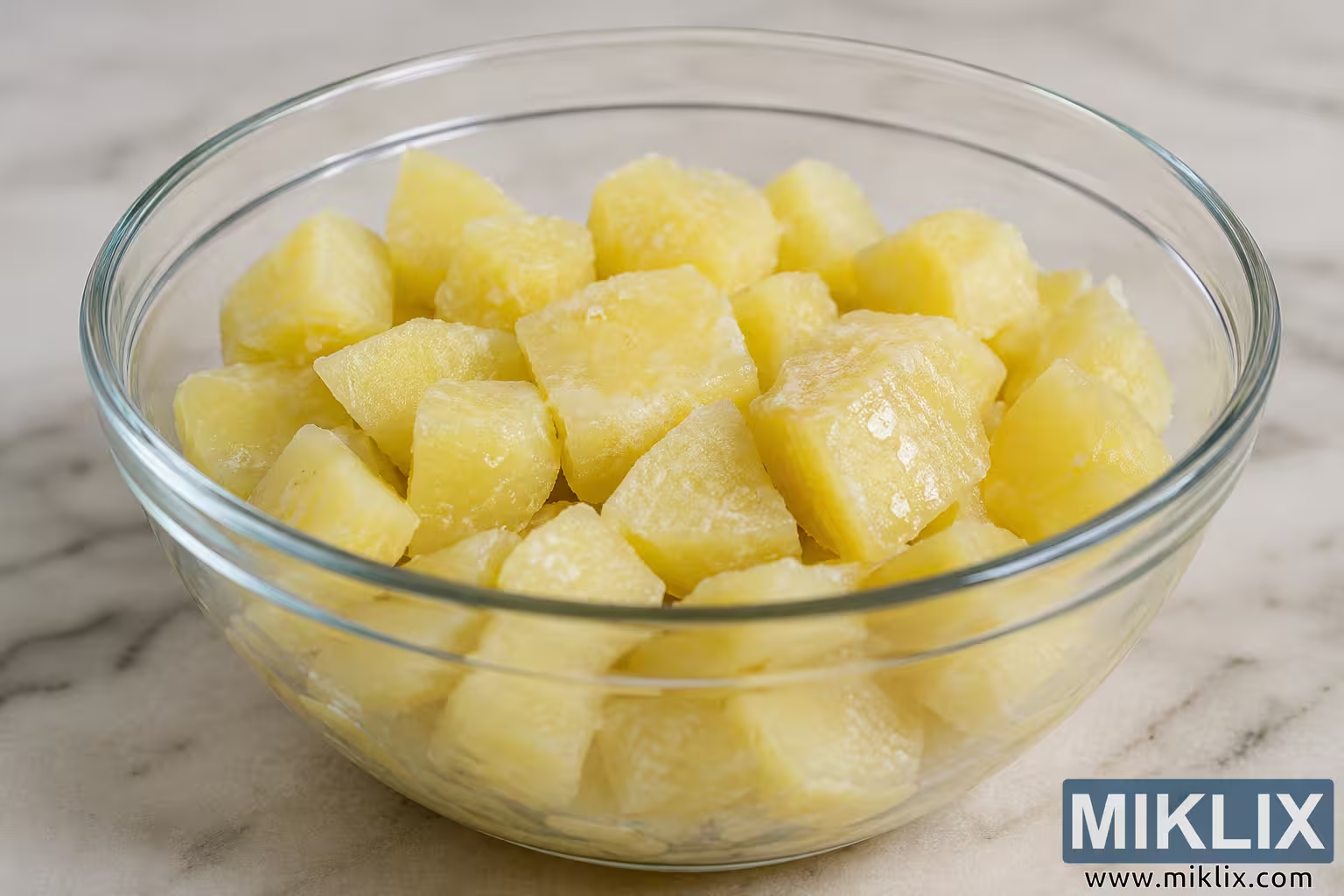
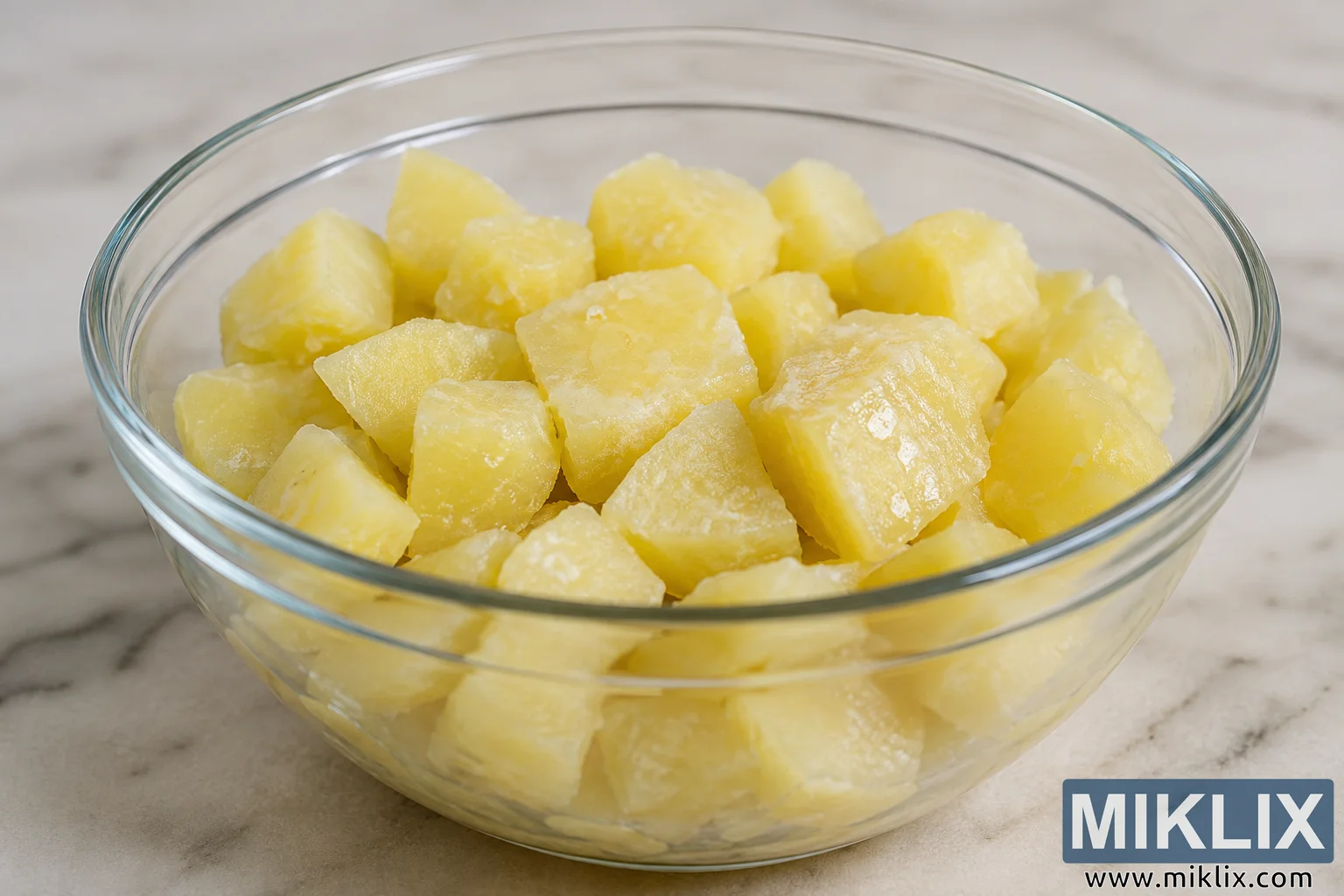
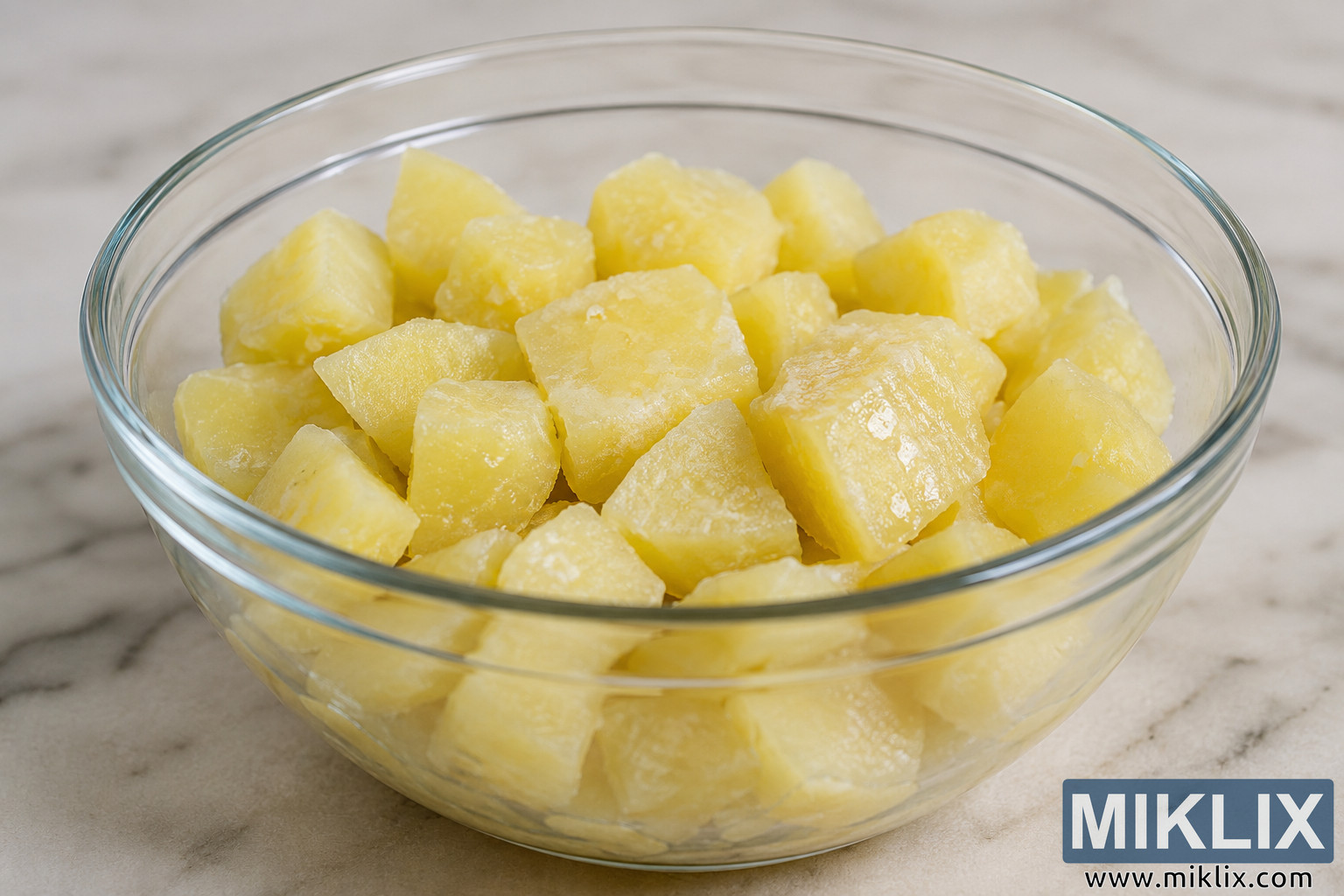
High-quality food photograph showing cooked and cooled potatoes in a transparent glass bowl. The image visually represents resistant starch formation through the cooling process in a clean, minimal kitchen setting.
Available versions of this image
The image files available for download below are less compressed and higher resolution - and as a result of that, higher quality - than the images embedded in articles and pages on this website, which are more optimized for file size in order to reduce bandwidth consumption.
Regular size (1,536 x 1,024)
Large size (3,072 x 2,048)
Very large size (4,608 x 3,072)
Extra large size (6,144 x 4,096)
Comically large size (1,048,576 x 699,051)
- Still uploading... ;-)
Image description
This landscape-oriented food photograph presents a clear glass bowl filled with cooked and cooled potato pieces, carefully arranged to emphasize their simple, natural appearance. The bowl sits on a light-colored marble or stone countertop featuring subtle gray veining, creating a clean and uncluttered environment that keeps the viewer's attention focused on the potatoes themselves. The overall composition is minimalistic and balanced, making the image suitable for educational, editorial, nutritional, or scientific content discussing resistant starch formation in cooked and cooled potatoes.
The potatoes have been peeled, cooked until tender, and cut into irregular cubes and chunks of varying sizes. Their pale yellow color suggests that they have been boiled rather than roasted or fried. The surfaces of the potato pieces appear smooth with a faint glossy sheen that catches the soft natural light. Some pieces display gently rounded edges resulting from cooking, while others retain more defined corners where they were cut. The subtle surface texture indicates that the potatoes have cooled after cooking, giving them a slightly firmer appearance than freshly boiled potatoes. There is no visible steam rising from the bowl, reinforcing the impression that the potatoes have reached room temperature or have been refrigerated before being photographed.
The transparent glass bowl is clean and highly reflective without decorative patterns or coloring. Its smooth curved sides allow the viewer to see the potato pieces from multiple angles, including those resting near the bottom of the bowl. The rim of the bowl catches highlights from the ambient lighting, producing delicate reflections that enhance the realism of the image. Because the bowl is made of clear glass, it does not distract from the subject and instead frames the potatoes in a simple, elegant manner.
The lighting appears to come primarily from one side, resembling diffuse daylight entering through a nearby window. Shadows are soft and gradual rather than harsh, creating a pleasant, natural atmosphere. The highlights on both the potatoes and the glass remain controlled, preserving detail without overexposure. This lighting style is commonly used in professional food photography because it accurately represents texture while maintaining an inviting appearance.
The background is intentionally blurred with a shallow depth of field, drawing the viewer's attention directly toward the bowl. Although the kitchen environment is not sharply defined, the soft blur suggests a clean indoor culinary space with neutral tones. The absence of distracting objects, utensils, packaging, labels, or branded products contributes to the educational focus of the image. The neutral color palette consisting of whites, light grays, transparent glass, and pale yellow potatoes creates a calm and informative visual presentation.
From a nutritional perspective, the photograph visually supports the concept of resistant starch formation that occurs when cooked potatoes are cooled. While resistant starch itself is not directly visible, the cooled appearance of the potatoes serves as an appropriate visual representation for discussions about starch retrogradation. This process changes part of the digestible starch into resistant starch during cooling, making cooked and cooled potatoes a commonly cited example in nutrition education. The image therefore functions as an illustrative photograph rather than a microscopic or scientific visualization of the molecular process.
The composition positions the bowl prominently in the foreground, occupying much of the frame while leaving enough surrounding negative space to create visual balance. The camera angle is slightly elevated, allowing viewers to observe both the top layer of potato pieces and the curved profile of the bowl. Focus remains crisp on the front and center portions of the potatoes, while areas nearer the back gradually soften due to the shallow depth of field. This selective focus increases the sense of depth and realism.
Overall, the photograph communicates cleanliness, freshness, simplicity, and nutritional relevance. It is well suited for articles about healthy eating, dietary fiber, resistant starch, meal preparation, food science, diabetes-friendly meal planning, digestive health, recipe blogs, educational presentations, healthcare publications, or nutrition websites. The absence of branding, text overlays, logos, utensils, or decorative elements ensures the image remains versatile and universally applicable across many forms of educational and commercial content while maintaining a realistic, high-quality food photography aesthetic.
The image is related to: The Surprising Health Benefits of Potatoes: A Complete Nutrition Guide