
Image: Yellow Potatoes Illustrating Natural Carotenoid Content
Published: August 4, 2026 at 1:57:05 PM UTC
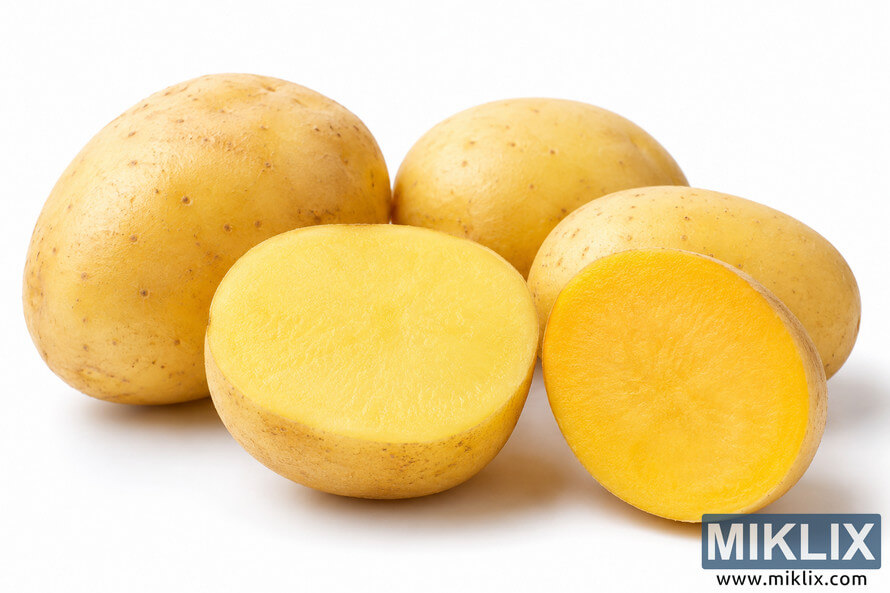
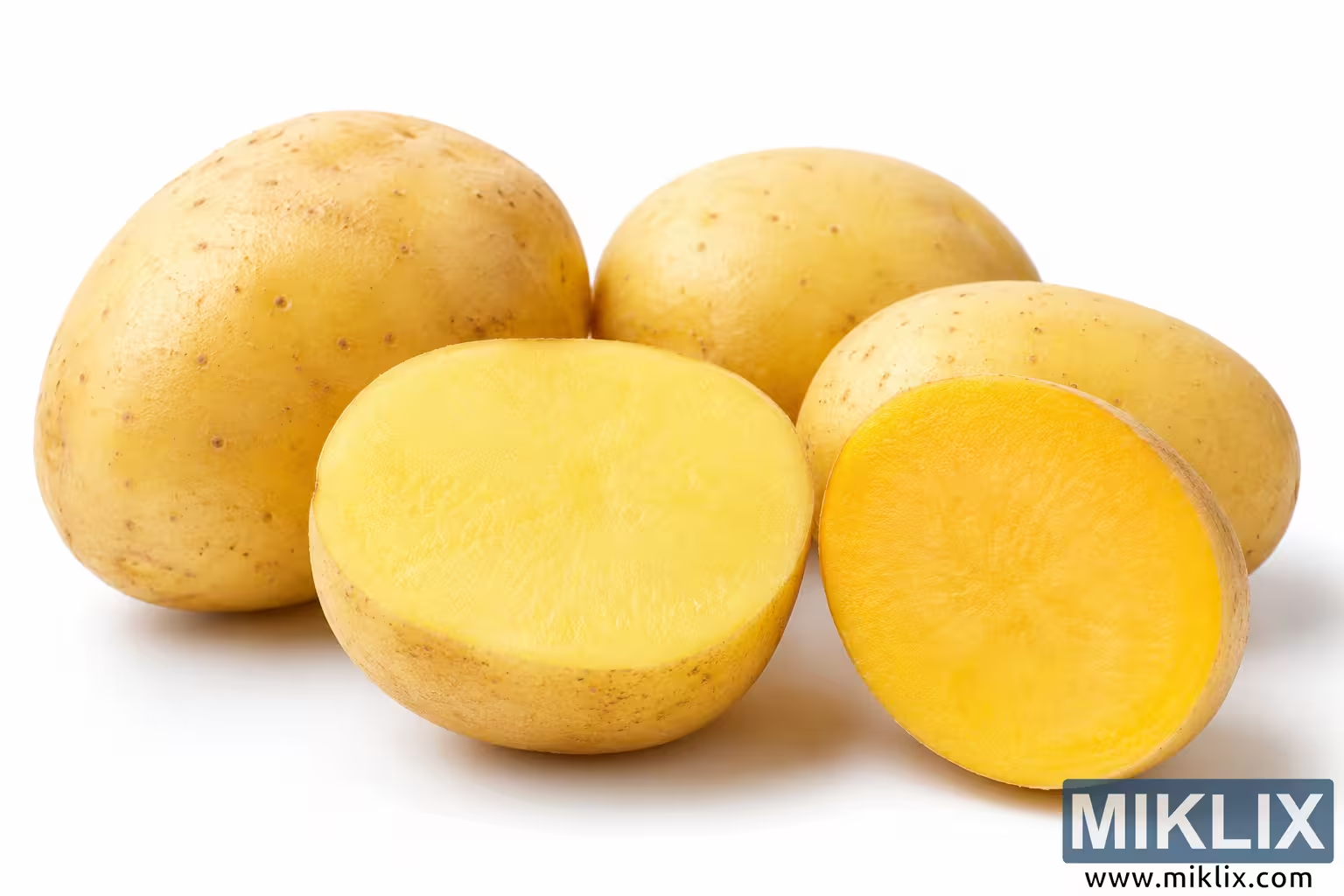
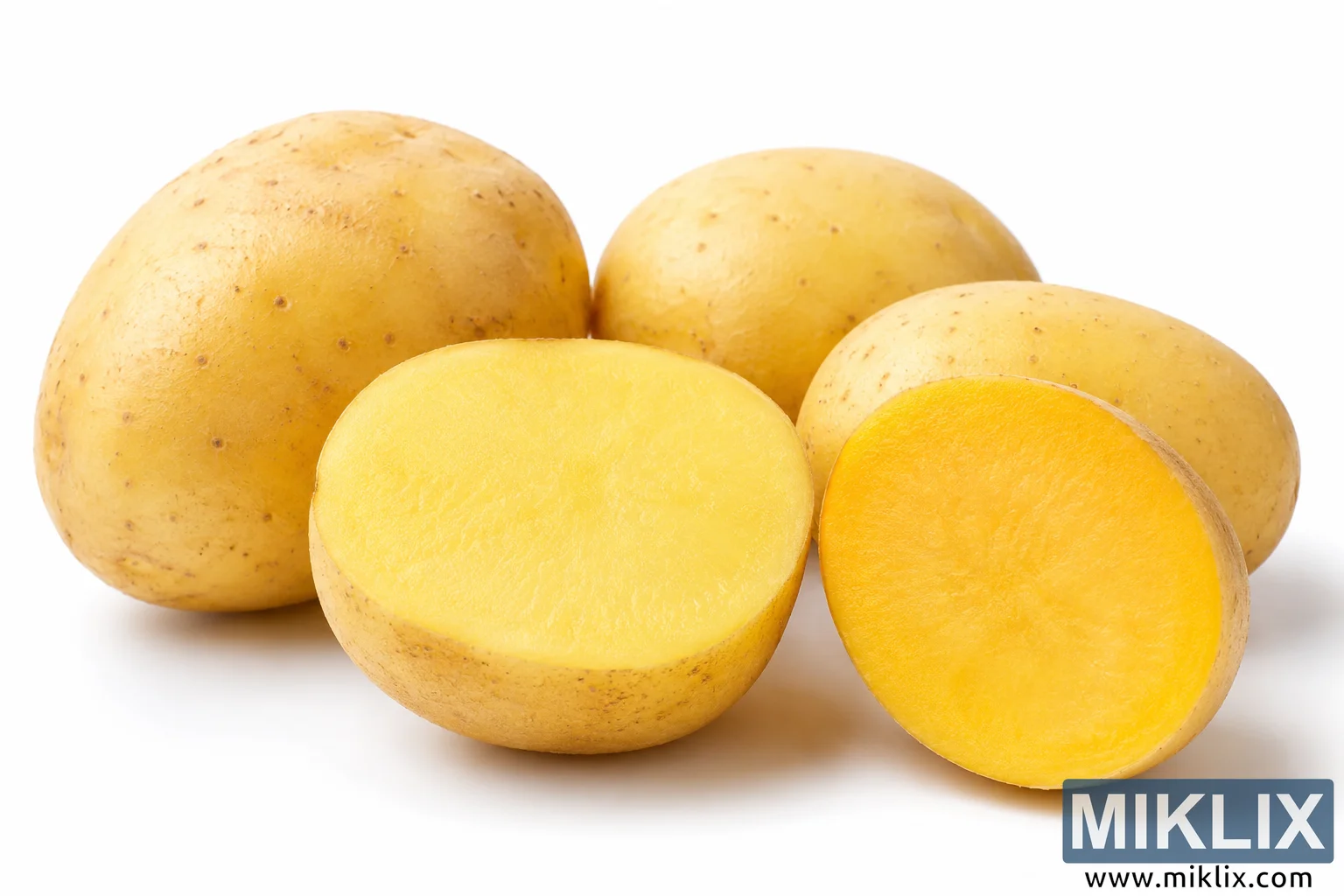
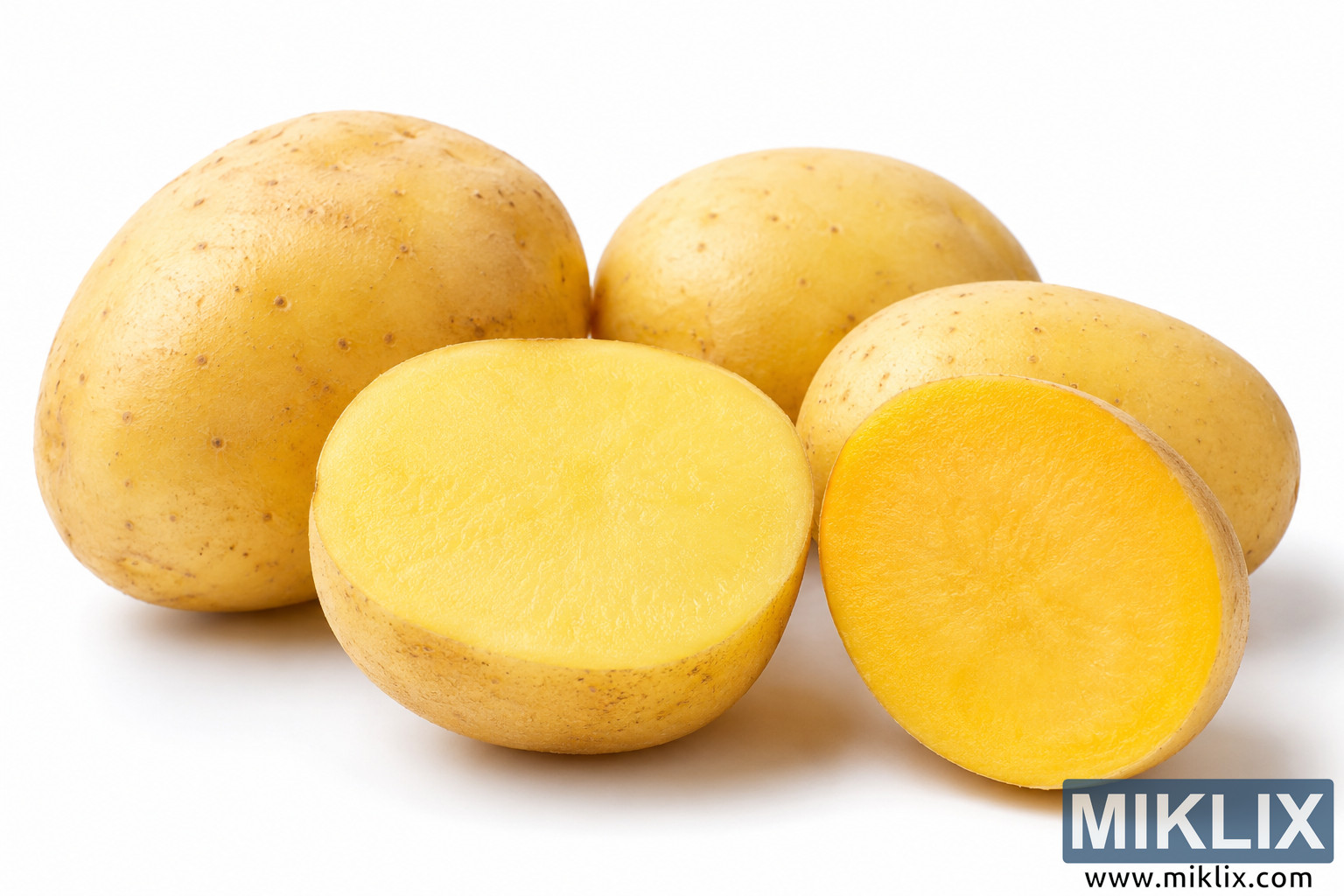
High-resolution landscape photograph of yellow potatoes with whole and sliced specimens displayed on a white background. The image highlights the natural variation in yellow flesh associated with carotenoid content using soft studio lighting and a clean, scientific presentation.
Available versions of this image
The image files available for download below are less compressed and higher resolution - and as a result of that, higher quality - than the images embedded in articles and pages on this website, which are more optimized for file size in order to reduce bandwidth consumption.
Regular size (1,536 x 1,024)
Large size (3,072 x 2,048)
Very large size (4,608 x 3,072)
Extra large size (6,144 x 4,096)
Comically large size (1,048,576 x 699,051)
- Still uploading... ;-)
Image description
This high-resolution landscape-oriented studio photograph presents a carefully arranged composition of yellow potatoes on a seamless white background. The image is designed to emphasize the naturally occurring yellow pigmentation found in certain potato varieties, which is commonly associated with the presence of carotenoids. The overall aesthetic is clean, minimalistic, and suitable for scientific communication, educational materials, agricultural publications, nutrition articles, food science resources, and presentations discussing plant pigments or crop quality. The scene contains no visible branding, packaging, labels, logos, watermarks, or distracting decorative elements, allowing the viewer to focus entirely on the potatoes and their visual characteristics.
Several whole yellow potatoes are positioned in the background of the composition, creating a balanced arrangement with gentle depth and natural spacing. Their skins display a warm golden-yellow to light tan coloration with subtle variations in tone. Small, shallow eyes and delicate brown speckles are visible across the smooth surface of the skins, contributing to an authentic appearance while maintaining an overall clean and fresh presentation. The potatoes appear firm, recently harvested or carefully washed, with only minor natural imperfections that enhance realism without distracting from the subject.
In the foreground, two cut potato halves serve as the visual focal point. Their freshly exposed flesh reveals distinct differences in yellow intensity. One cut surface appears pale buttery yellow, while the second exhibits a noticeably deeper golden-yellow coloration. This variation effectively illustrates differing concentrations of naturally occurring yellow pigments, visually suggesting differences in carotenoid content without requiring additional labels or annotations. The cut surfaces appear moist, smooth, and freshly sliced, displaying a fine, even texture with subtle cellular detail that enhances the realism of the photograph.
Soft, diffused studio lighting evenly illuminates every element in the composition. Highlights are gentle rather than harsh, preserving surface texture while avoiding glare. Delicate shadows beneath each potato provide dimensionality and depth without overpowering the clean white background. The lighting produces accurate color rendering, ensuring that the subtle differences between the lighter and darker yellow flesh remain clearly visible. The balanced illumination also enhances the scientific utility of the image by minimizing unwanted color casts or excessive contrast.
The composition is intentionally uncluttered, with generous negative space surrounding the potatoes. This allows the image to be easily incorporated into educational layouts, websites, brochures, research posters, presentations, or printed publications. The landscape orientation provides flexibility for banners, article headers, slide backgrounds, and responsive web layouts while preserving the prominence of the central subjects. The white background creates strong visual separation between the potatoes and the surrounding space, making the image suitable for extraction, annotation, or graphic overlays if needed.
From a nutritional perspective, the image visually communicates that yellow-fleshed potatoes can vary in pigment intensity. Carotenoids, including compounds such as lutein and zeaxanthin, contribute to these yellow hues in many potato varieties. While the photograph illustrates this natural variation through color differences, it should not be interpreted as a quantitative measurement of carotenoid concentration. Instead, it serves as an effective visual representation for educational discussions about plant pigments, crop breeding, nutritional quality, food composition, and the relationship between color and naturally occurring phytochemicals.
The overall photographic style is consistent with professional food photography and scientific stock imagery. Sharp focus captures fine surface textures on both the potato skins and the freshly cut flesh, while a shallow yet sufficient depth of field maintains clarity across the primary subjects. Colors remain natural and realistic, avoiding excessive saturation or artificial enhancement. The visual balance between whole potatoes and sliced specimens provides context for both external appearance and internal flesh coloration.
The image conveys freshness, natural agricultural quality, and nutritional relevance while remaining neutral and objective. It contains no people, utensils, cutting boards, kitchen environments, text overlays, measurement scales, decorative props, or commercial references. The absence of these elements ensures that the potatoes remain the sole focus, making the photograph broadly applicable across scientific, educational, agricultural, culinary, and health-related contexts where an accurate visual representation of yellow potatoes and their naturally varying carotenoid-associated coloration is desired.
The image is related to: The Surprising Health Benefits of Potatoes: A Complete Nutrition Guide