
Image: A Comprehensive Guide to Major Potato Varieties
Published: August 4, 2026 at 1:57:05 PM UTC
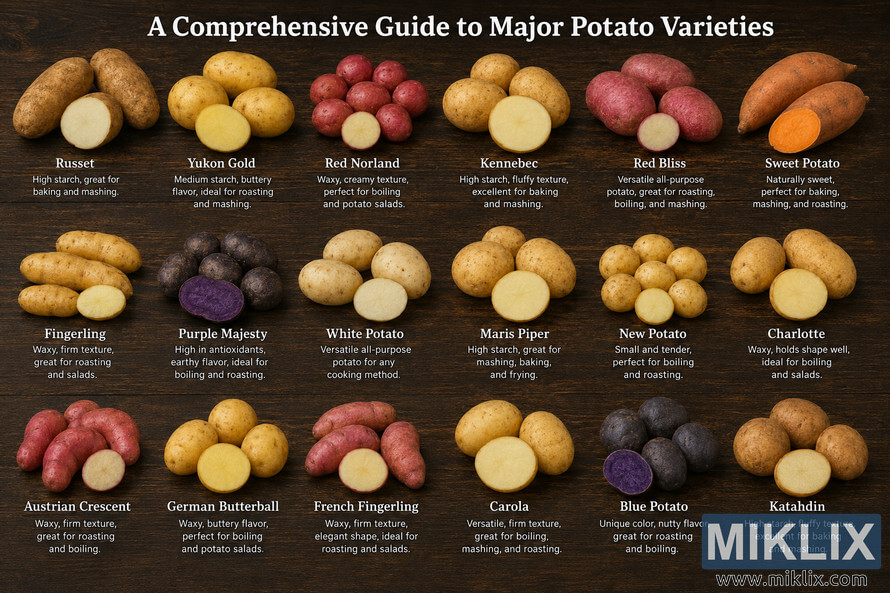
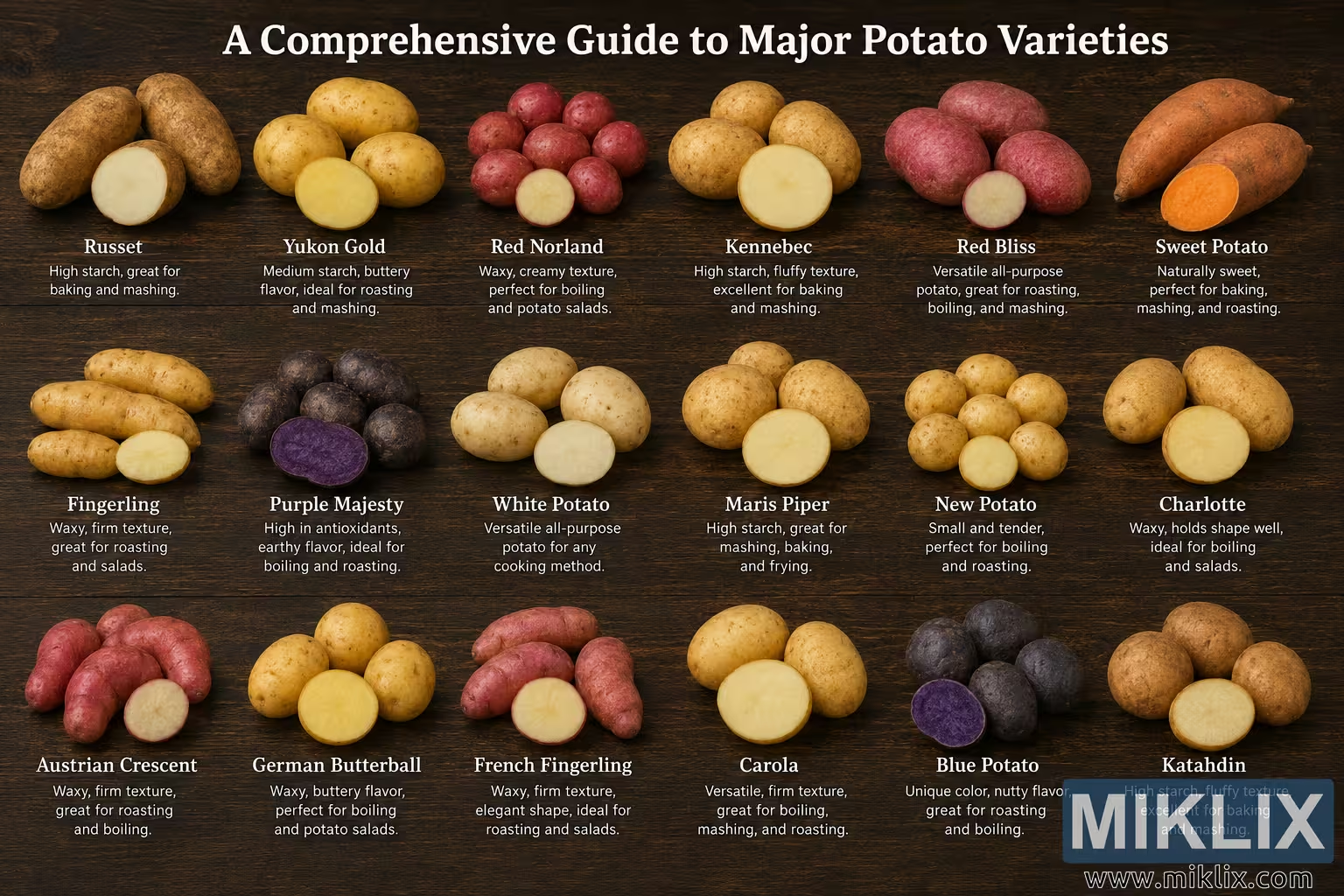
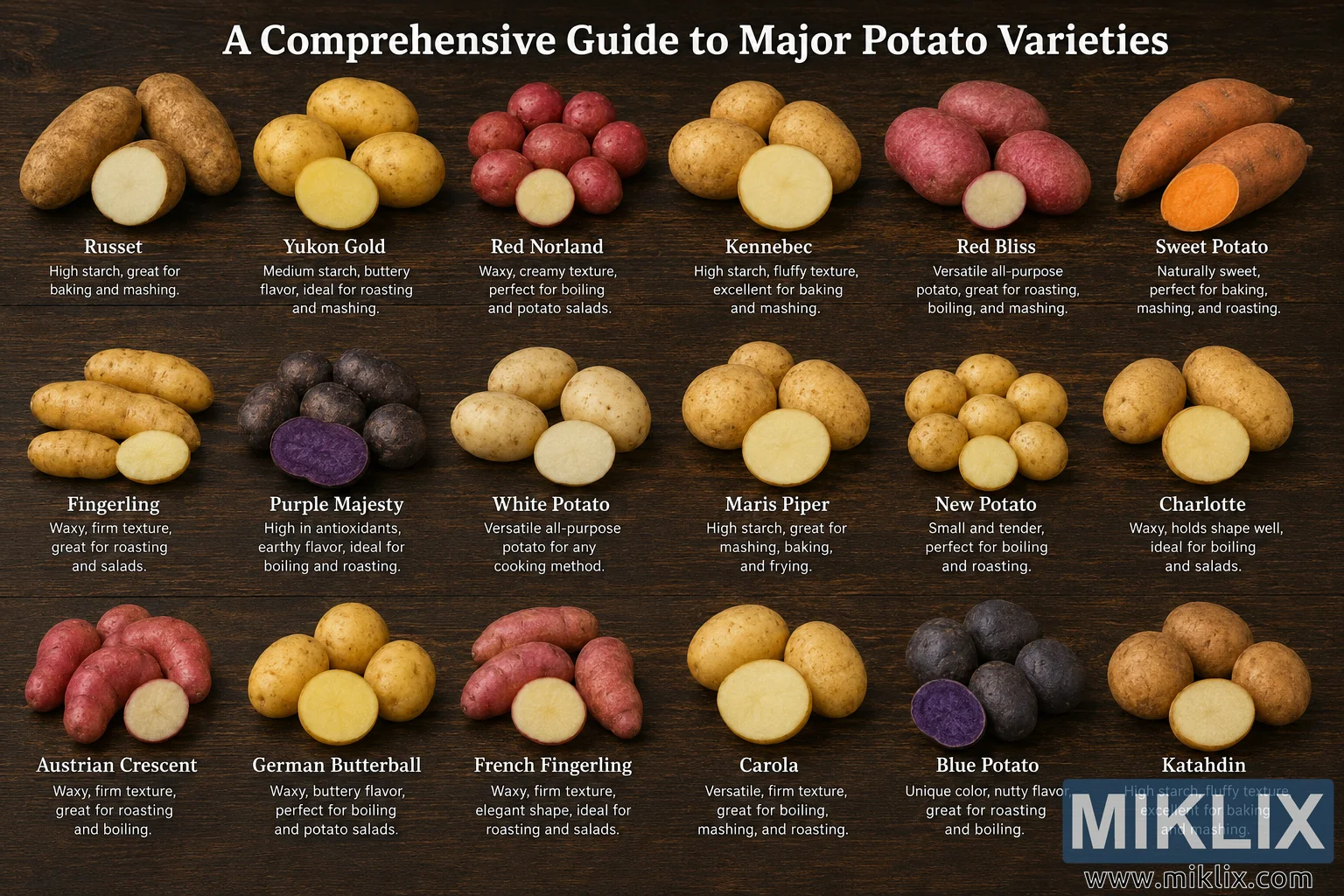
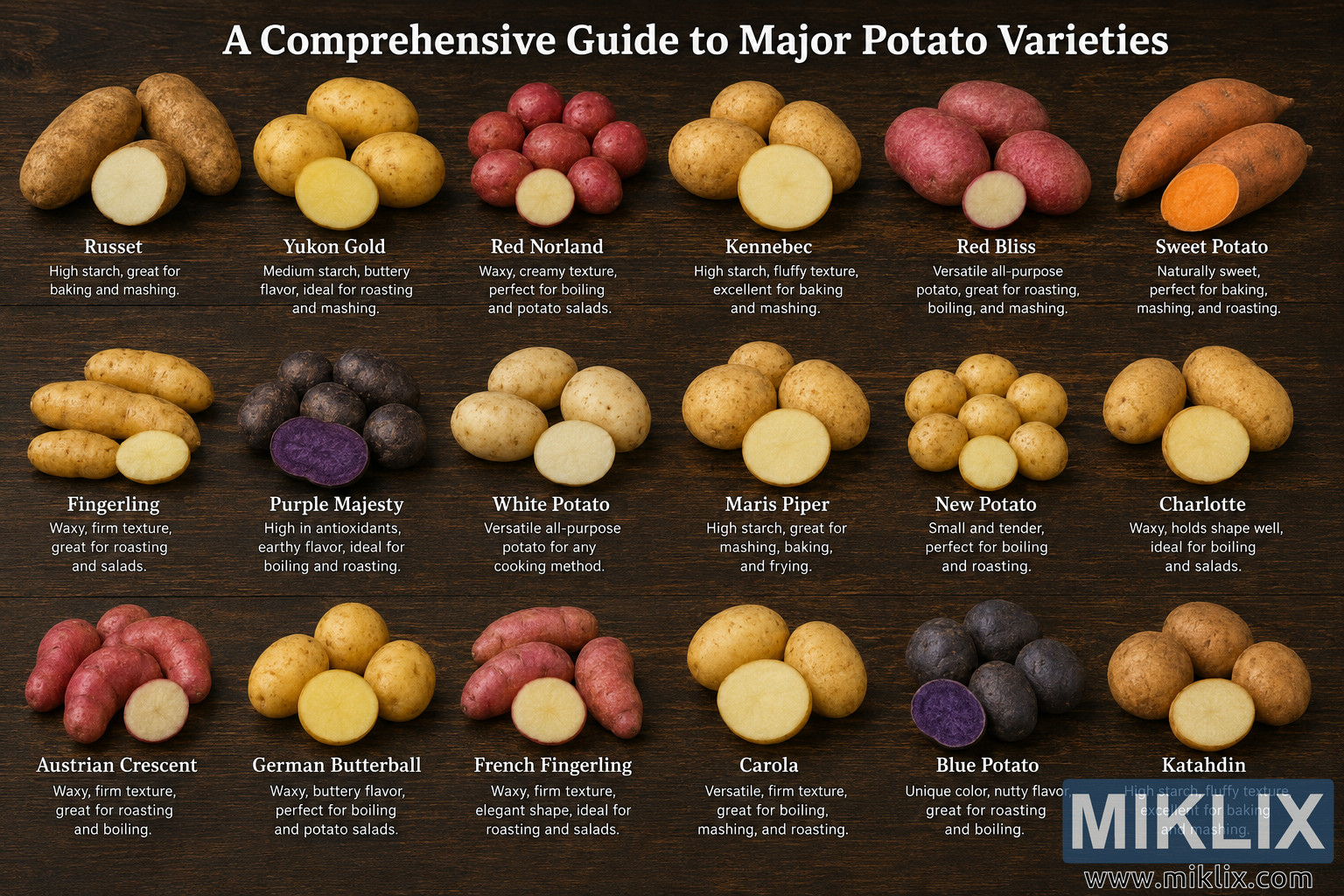
Explore a detailed visual guide to major potato varieties featuring labeled examples, cut-away views, and concise descriptions of texture and ideal cooking methods. This landscape infographic presents a broad comparison of common potatoes in an organized, easy-to-read format.
Available versions of this image
The image files available for download below are less compressed and higher resolution - and as a result of that, higher quality - than the images embedded in articles and pages on this website, which are more optimized for file size in order to reduce bandwidth consumption.
Regular size (1,536 x 1,024)
Large size (3,072 x 2,048)
Very large size (4,608 x 3,072)
Extra large size (6,144 x 4,096)
Comically large size (1,048,576 x 699,051)
- Still uploading... ;-)
Image description
This image is a landscape-oriented educational infographic designed as a visual reference for a broad selection of potato varieties. The composition uses an overhead flat-lay perspective, presenting numerous groups of potatoes arranged in evenly spaced rows and columns across a dark rustic wooden tabletop. The rich brown wood grain creates a warm, natural backdrop that contrasts well with the light, red, purple, tan, and orange tones of the potatoes. At the very top of the composition, a large centered headline identifies the display as a comprehensive guide to major potato varieties, establishing the educational purpose of the graphic.
Each potato variety occupies its own clearly defined section within the grid. The sections follow a consistent visual structure that improves readability. Every group includes several whole potatoes accompanied by one potato sliced open to reveal the interior flesh. The cut surfaces allow viewers to compare differences in flesh color, ranging from pale white and creamy yellow to deep purple and vivid orange. Beneath each collection appears a prominent variety name followed by a short descriptive paragraph summarizing characteristics such as starch level, texture, flavor profile, or preferred cooking applications. The typography is white and highly legible against the dark background, producing strong visual contrast throughout the layout.
The first row includes several familiar potato types with noticeably different appearances. Brown russet potatoes display rough, textured skins and pale interiors. Yellow potatoes have smooth golden skins and buttery yellow flesh. Small red potatoes introduce richer reddish skin tones. Another light tan variety emphasizes a fluffy interior, while additional red-skinned potatoes demonstrate subtle differences in shape and size. One section presents elongated orange-fleshed sweet potatoes, visually distinguished from the other varieties by their copper-colored skin and bright orange interior.
The second row expands the diversity further. Slender fingerling potatoes appear elongated and narrow, contrasting with the rounder varieties elsewhere in the display. A dramatic purple variety features nearly black-purple skins and vividly purple flesh revealed by the sliced specimen. Several pale white and cream-colored potato varieties occupy neighboring sections, demonstrating subtle differences in shape, skin smoothness, and coloration. Small new potatoes are grouped together to emphasize their compact size, while another waxy variety presents a balanced oval form with creamy flesh visible in cross section.
The bottom row continues the comparison with additional red-skinned, yellow-skinned, fingerling-style, cream-colored, purple, and brown-skinned potatoes. The repetition of the consistent layout makes it easy to compare each variety side by side while maintaining a visually harmonious presentation. Differences in size, oval versus round shape, skin texture, and flesh color become immediately apparent when scanning across the grid.
Lighting is soft, diffuse, and evenly distributed across the entire image. Gentle shadows beneath each potato add depth without distracting from the informational purpose. The overhead viewpoint minimizes perspective distortion and reinforces the appearance of a carefully organized catalog or museum-style display. The potatoes themselves appear clean, fresh, and naturally textured, with realistic skin imperfections that contribute authenticity.
Color plays an important role throughout the infographic. Neutral tans and browns dominate many varieties, while saturated reds, deep purples, bright yellows, and vivid orange provide visual accents that help distinguish different potato types. The sliced examples serve as important visual cues, revealing interior colors that may not be obvious from the exterior alone.
Overall, the image functions as both an attractive food-themed illustration and an educational comparison chart. Its structured layout, consistent labeling, realistic photography, and concise descriptive text make it suitable for culinary education, food reference materials, gardening resources, classroom presentations, or cooking guides. The infographic balances aesthetic appeal with practical information by presenting a broad survey of recognizable potato varieties in a clean, organized, and accessible landscape format that encourages visual comparison while remaining easy to read from top to bottom.
The image is related to: The Surprising Health Benefits of Potatoes: A Complete Nutrition Guide