
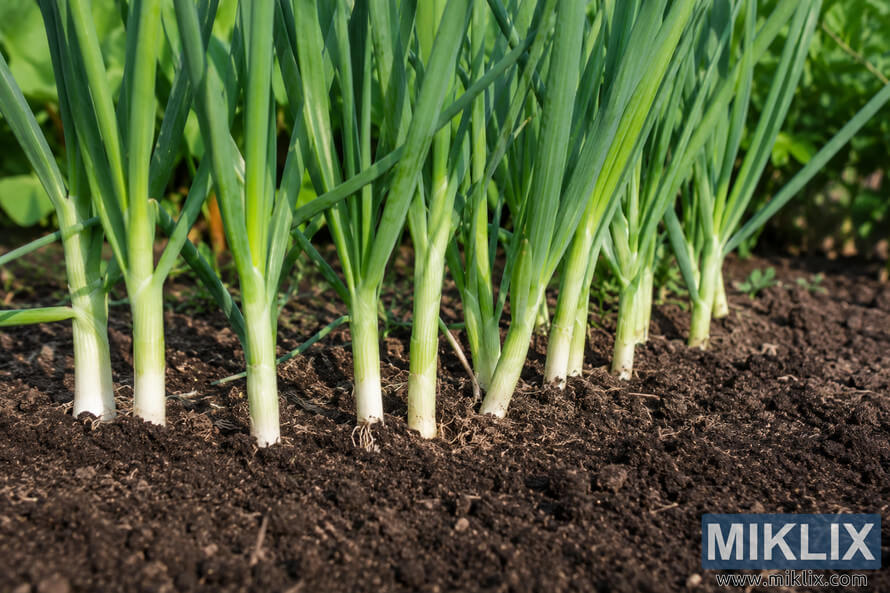
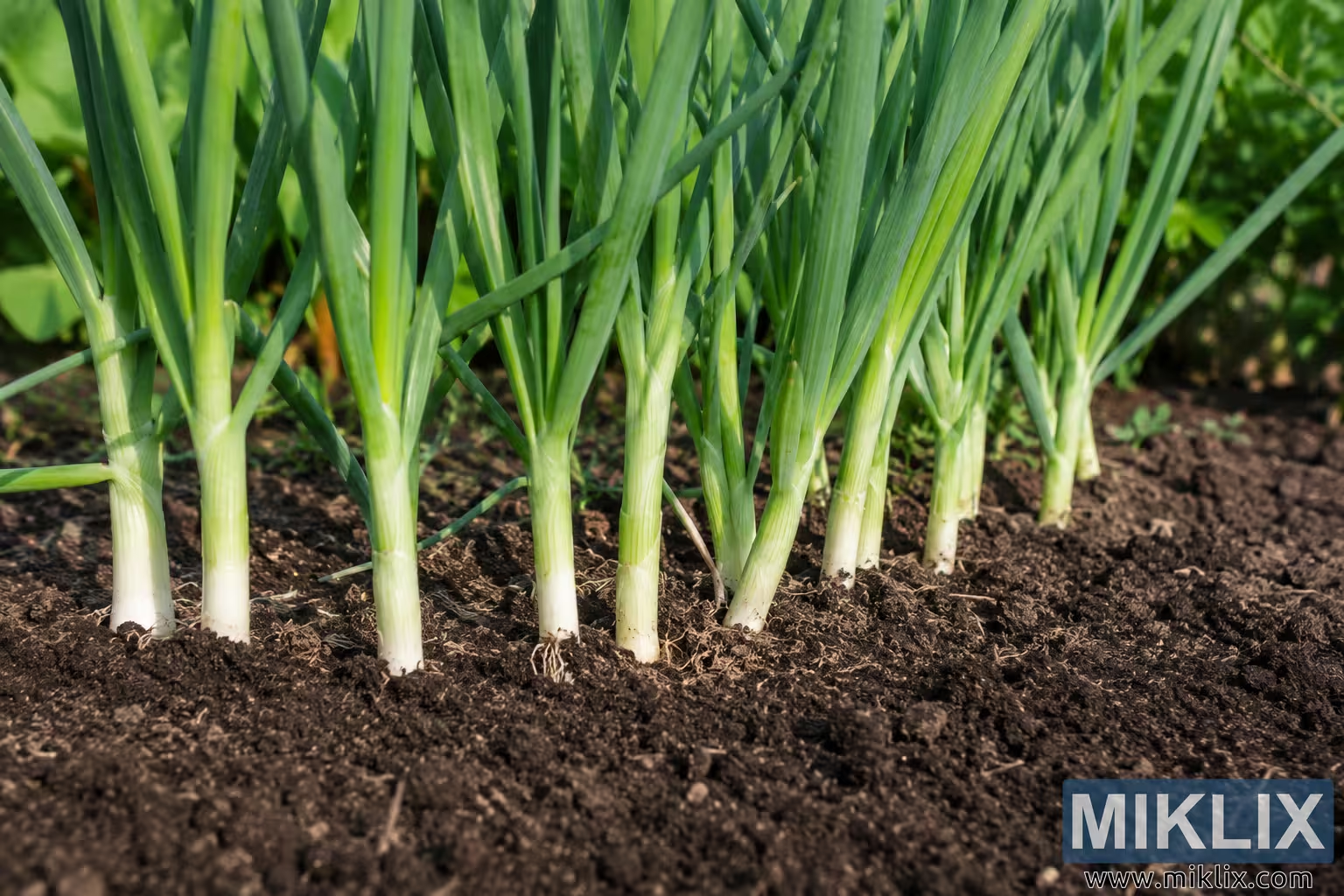
Image: Scallions Growing in a Garden Bed with White Bases and Vibrant Green Tops
Published: June 12, 2026 at 8:57:32 PM UTC
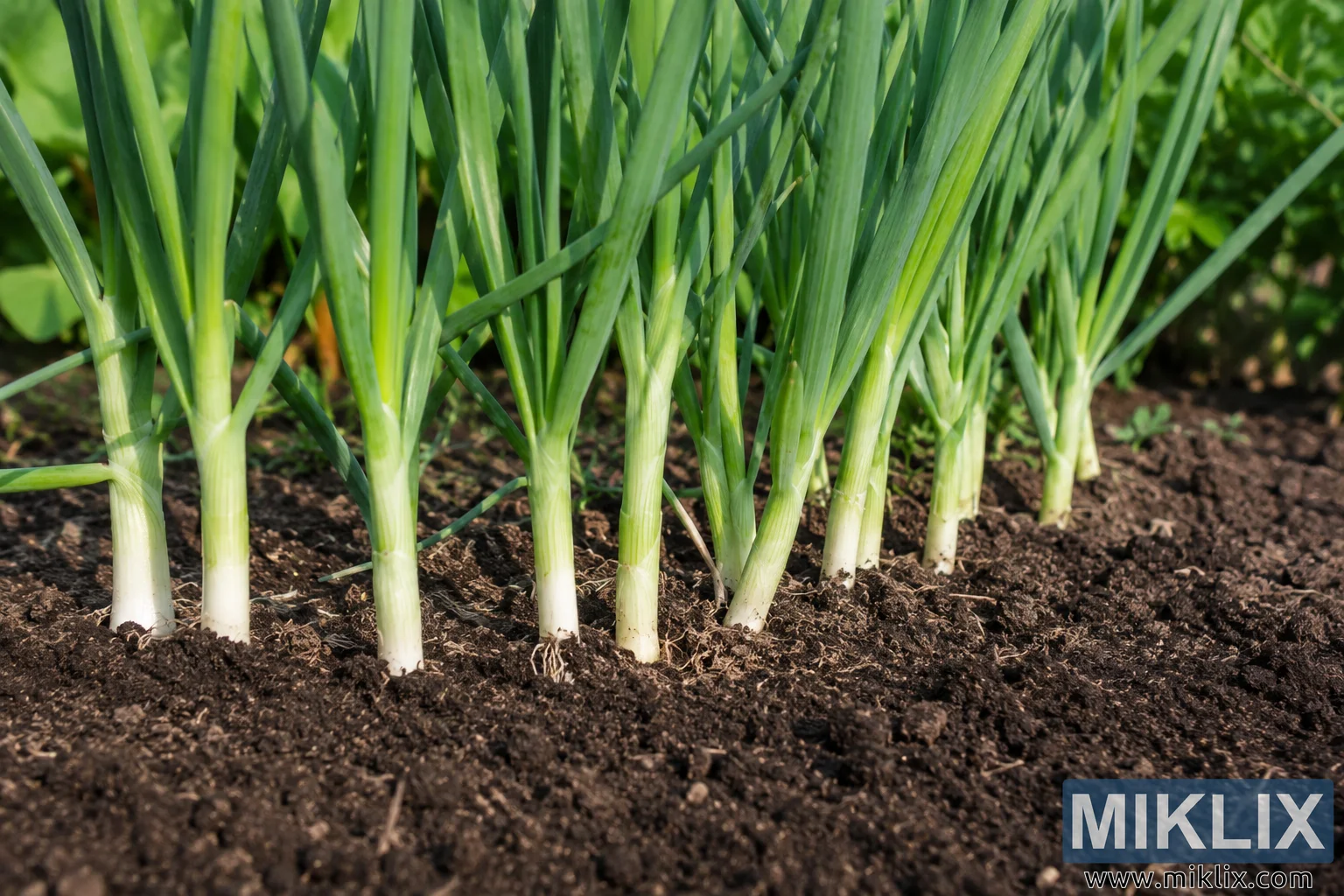
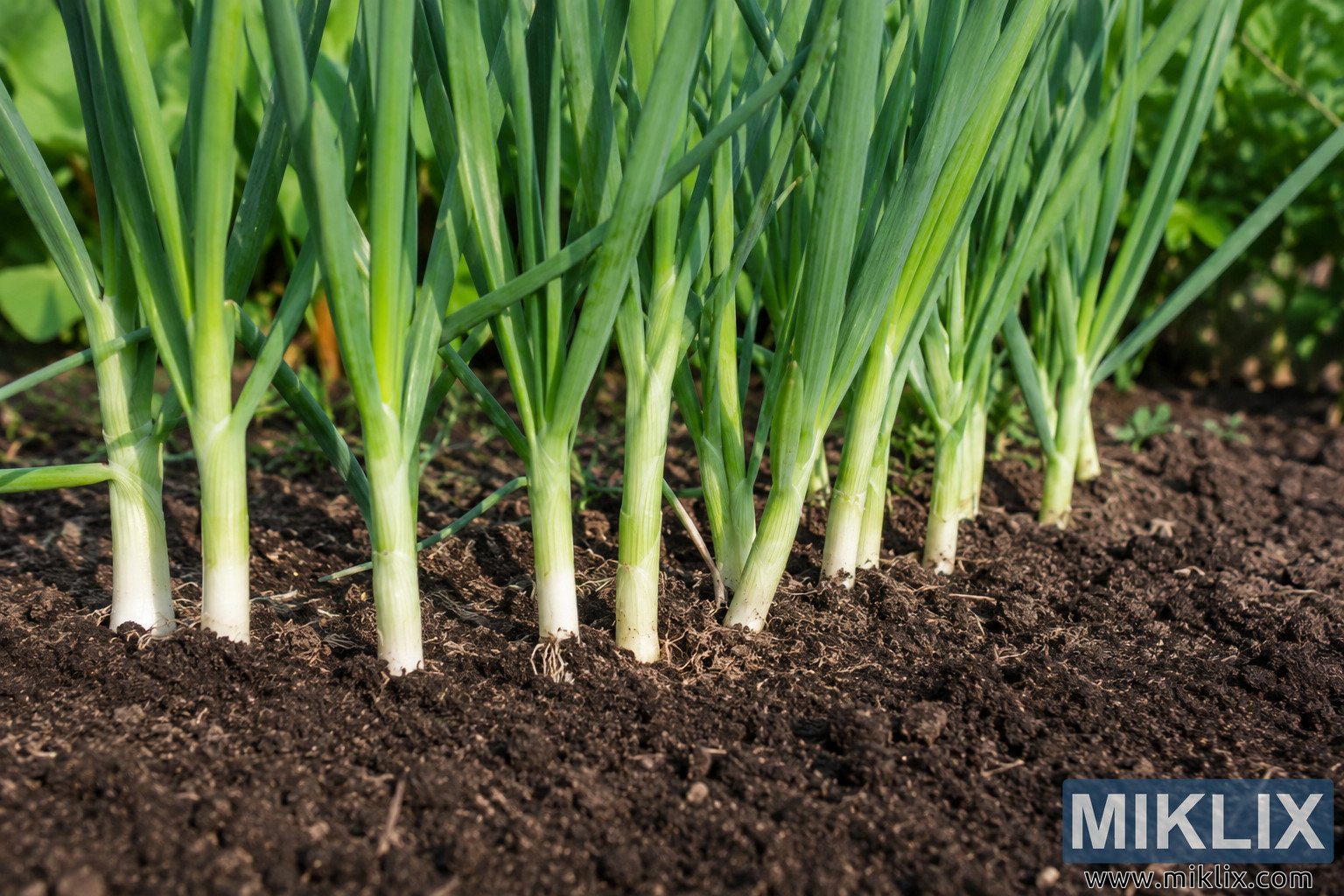
High-resolution landscape image of fresh scallions growing in a garden bed with visible white bases, lush green tops, and rich dark soil illuminated by natural outdoor sunlight.
Available versions of this image
The image files available for download below are less compressed and higher resolution - and as a result of that, higher quality - than the images embedded in articles and pages on this website, which are more optimized for file size in order to reduce bandwidth consumption.
Regular size (1,536 x 1,024)
Large size (3,072 x 2,048)
Very large size (4,608 x 3,072)
Extra large size (6,144 x 4,096)
Comically large size (1,048,576 x 699,051)
- Still uploading... ;-)
Image description
This high-resolution landscape photograph captures a thriving row of scallions growing in a well-maintained outdoor garden bed under natural sunlight. The composition focuses closely on the lower and middle portions of the plants, emphasizing the striking contrast between the smooth white bases of the scallions and their long, vivid green tops extending upward through the frame. The scallions are planted in rich, dark brown soil that appears freshly watered and slightly loose in texture, with small clumps and fine organic material visible across the surface. Subtle details in the soil provide a realistic agricultural atmosphere and reinforce the freshness of the garden setting.
The scallions are arranged in a natural row, spaced evenly enough to suggest intentional cultivation while still preserving the organic appearance of a home or market garden. Each stalk displays delicate color transitions beginning with bright white stems near the soil line, gradually blending into pale green and then deeper emerald green leaves toward the upper sections of the plants. The tubular leaves rise vertically and slightly curve in different directions, creating a layered texture throughout the image. Sunlight filters across the foliage, producing soft highlights and gentle shadows that add depth and dimensionality to the scene.
The perspective is positioned at a low angle near ground level, allowing the viewer to experience the garden from an immersive close-up viewpoint. This angle accentuates the healthy thickness of the scallion bases and showcases the sturdy structure of the plants. Fine details such as faint vertical striations on the stems, thin leaf edges, and subtle variations in green coloration contribute to the realism of the photograph. Some leaves overlap naturally, creating a dense yet visually balanced arrangement that conveys healthy growth during the peak gardening season.
In the softly blurred background, additional greenery and hints of surrounding garden vegetation provide environmental context without distracting from the primary subject. The shallow depth of field keeps the foreground scallions crisp and highly detailed while the distant elements remain smooth and unobtrusive. This photographic technique draws attention directly to the textures, colors, and shapes of the scallions themselves. The natural lighting suggests a calm morning or late afternoon setting, with warm sunlight enhancing the freshness and vitality of the plants.
The overall mood of the image is fresh, organic, and earthy, making it ideal for themes related to gardening, sustainable agriculture, healthy eating, farm-to-table cooking, vegetable cultivation, or seasonal produce. The clean visual presentation and absence of artificial objects or branding create an authentic agricultural aesthetic suitable for editorial use, educational materials, recipe websites, gardening blogs, seed catalogs, or culinary publications. The combination of crisp botanical detail, nutrient-rich soil textures, and natural outdoor illumination conveys a strong sense of growth, freshness, and connection to nature.
The landscape orientation of the photograph provides a wide visual flow across the row of scallions, allowing the repeating vertical forms of the plants to guide the viewer’s eye naturally from one side of the frame to the other. The balanced composition highlights both the agricultural orderliness of the planting and the organic variability of living vegetation. Overall, the image presents a realistic and visually appealing depiction of scallions flourishing in a healthy garden environment, with particular emphasis on their bright white lower stems and lush green tops emerging vibrantly from the dark fertile soil.
The image is related to: The Ultimate Guide to the Health Benefits of Scallions