
Image: Various Turnip Preparation Methods on a Rustic Kitchen Counter
Published: September 14, 2026 at 2:49:00 PM UTC
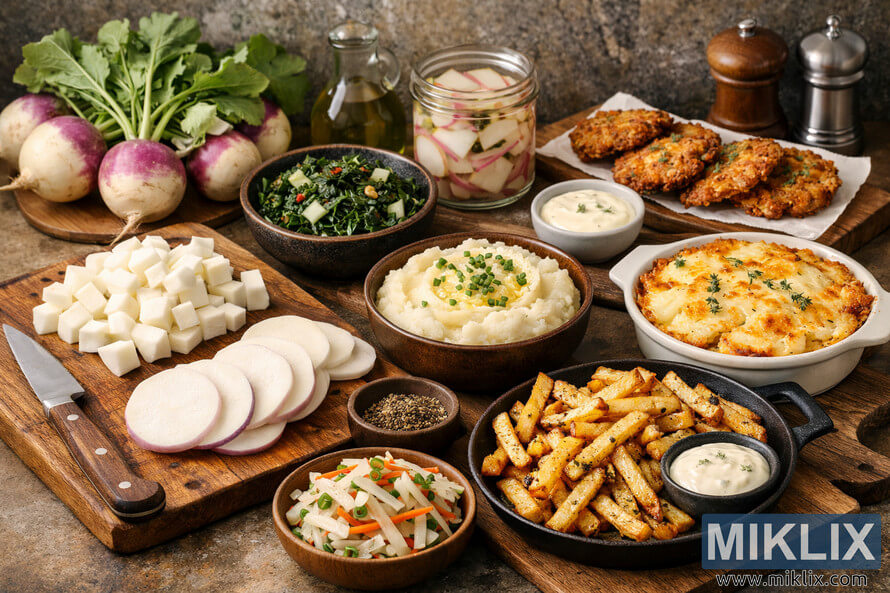
Explore a rich culinary scene featuring diverse turnip preparations displayed on a rustic kitchen counter — from mashed and roasted turnips to gratin, salad, and pickled slices — highlighting the versatility of this humble root vegetable.
Available versions of this image
The image files available for download below are less compressed and higher resolution - and as a result of that, higher quality - than the images embedded in articles and pages on this website, which are more optimized for file size in order to reduce bandwidth consumption.
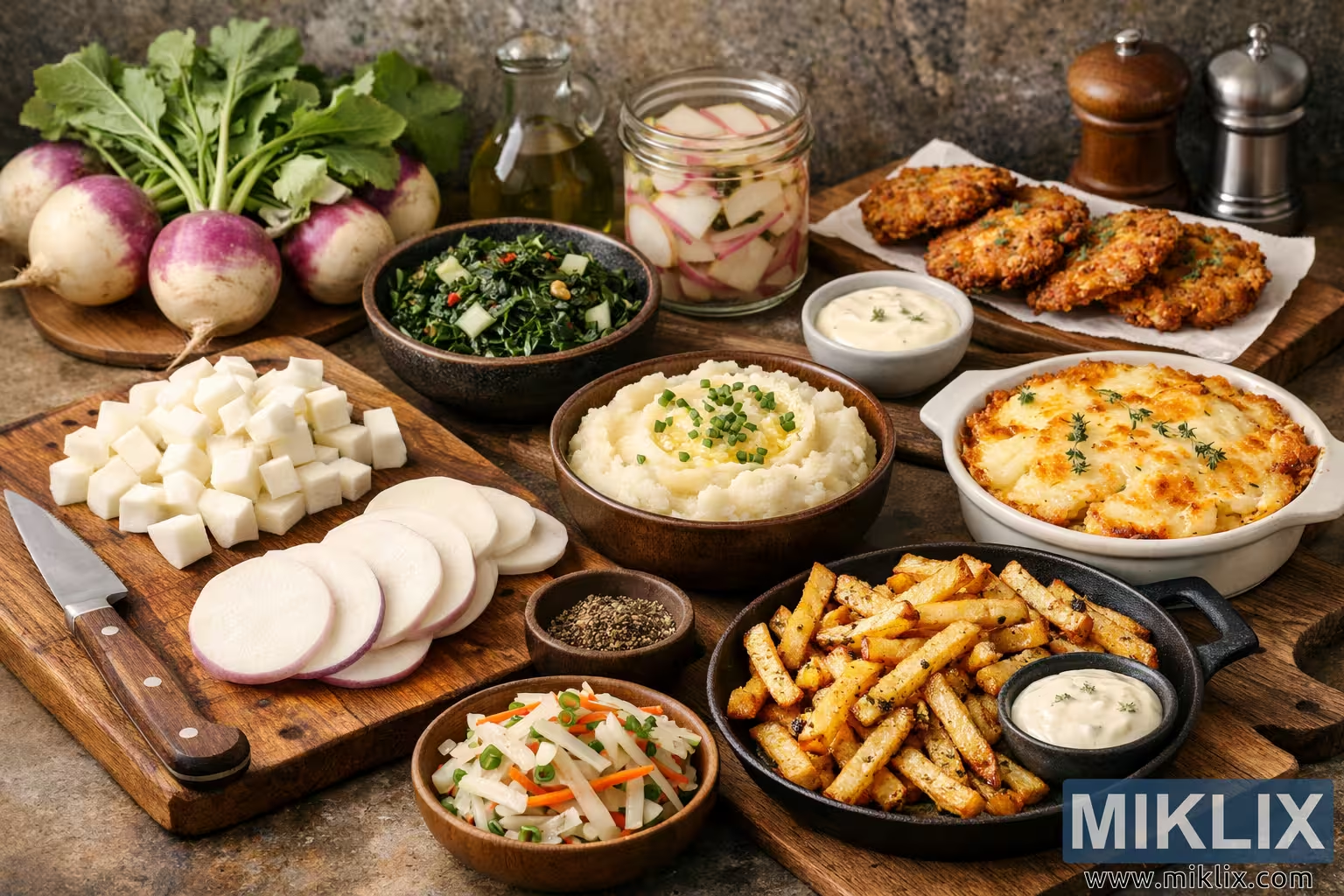
Regular size (1,536 x 1,024)
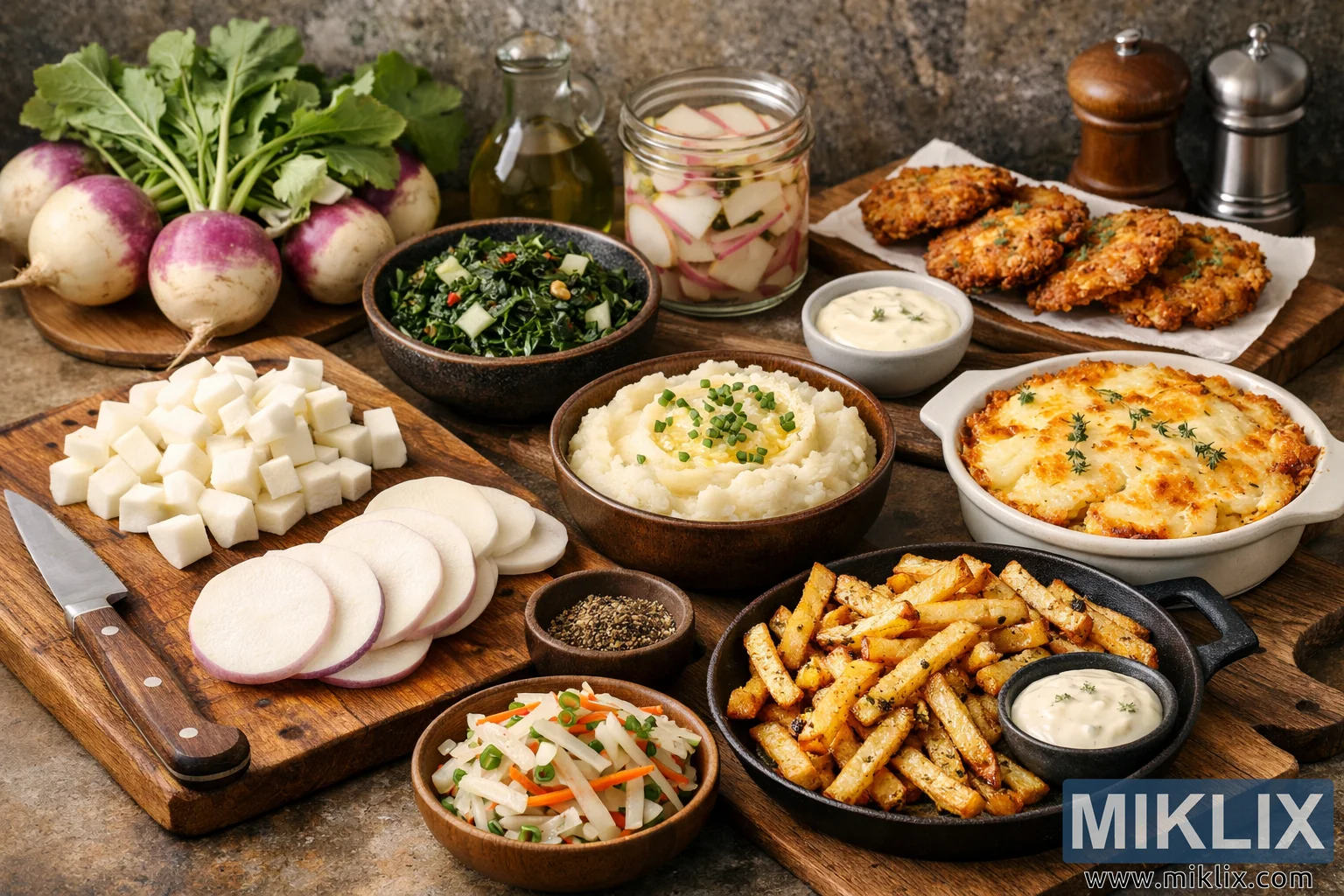
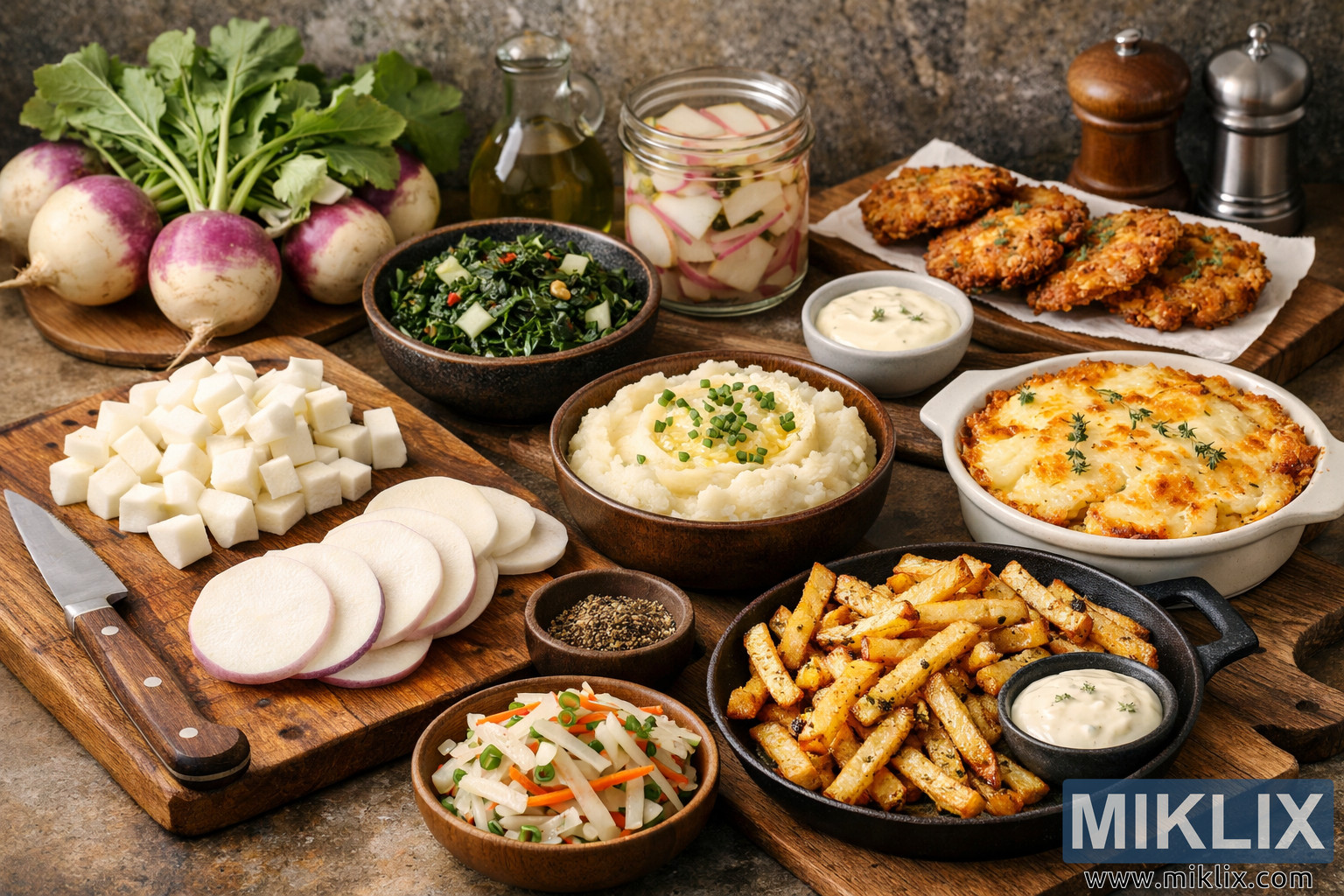
Large size (3,072 x 2,048)
Very large size (4,608 x 3,072)
Extra large size (6,144 x 4,096)
Comically large size (1,048,576 x 699,051)
- Still uploading... ;-)
Image description
The image presents a beautifully composed culinary tableau centered around the theme of turnip preparation, captured in a warm, inviting kitchen setting. The countertop, made of aged wood with visible grain patterns, serves as a natural backdrop that enhances the earthy tones of the turnips and the surrounding dishes. The lighting is soft yet bright enough to reveal the textures and colors of each preparation, evoking a sense of homely comfort and artisanal craftsmanship.
On the left side of the composition, a cluster of fresh turnips with purple and white bulbs and leafy green tops rests on a wooden cutting board. Their natural sheen and crisp leaves suggest freshness, as if they were just harvested. Beside them, cubed turnip pieces are neatly arranged, their pale interiors contrasting with the darker wood beneath. Thinly sliced rounds of turnip are fanned out in a delicate pattern, showcasing the vegetable’s smooth surface and subtle gradient from white to violet. A stainless steel knife with a wooden handle lies adjacent, its blade reflecting the ambient light, symbolizing the act of preparation and culinary creativity.
Moving toward the center, a ceramic bowl filled with creamy mashed turnips takes prominence. The mash is smooth and velvety, topped with finely chopped chives and a drizzle of melted butter that glistens under the light. The bowl’s earthy brown exterior complements the neutral tones of the dish, creating a harmonious visual balance. Nearby, a small bowl of ground pepper adds a touch of realism and functionality to the scene, reminding viewers of the sensory experience of cooking.
To the right of the mashed turnips, a cast iron skillet holds roasted turnip fries, golden brown and crisp at the edges. They are seasoned with herbs, possibly thyme or rosemary, and accompanied by a small dish of creamy dipping sauce. The fries’ irregular shapes and caramelized surfaces convey a rustic charm, emphasizing the home-cooked nature of the meal.
In the upper left corner, a bowl of sautéed turnip greens introduces a splash of deep green color to the composition. The greens are glistening with olive oil and speckled with red pepper flakes and minced garlic, adding vibrancy and contrast. Just above the mashed turnips, a small glass jar contains thin slices of pickled turnip immersed in a brine with visible peppercorns and a bay leaf. The translucent slices catch the light beautifully, creating a sense of freshness and preservation.
On the upper right, golden turnip fritters rest on a wooden board. Their crispy exteriors and irregular shapes suggest they were pan-fried to perfection. A small dish of dipping sauce sits beside them, its creamy texture complementing the fritters’ crunch. Further to the right, a white ceramic dish holds a turnip gratin with a bubbling, golden crust. The gratin’s surface is sprinkled with fresh thyme leaves, and the melted cheese forms a rich, appetizing layer that contrasts with the pale turnip slices beneath.
In the lower center, a wooden bowl contains a turnip salad composed of julienned turnips, carrots, and green onions. The colors — white, orange, and green — create a lively palette that adds freshness and balance to the heavier cooked dishes. The salad appears lightly dressed, maintaining a crisp texture.
Scattered throughout the countertop are small details that enrich the scene: a glass bottle of olive oil with a cork stopper, a wooden salt cellar with a lid, a pepper mill, and a small bowl of ground pepper. These elements contribute to the authenticity of the setting, evoking the atmosphere of a working kitchen where ingredients and tools coexist naturally.
The overall composition is meticulously arranged yet feels spontaneous, as though the cook has just finished preparing a feast and stepped away for a moment. The interplay of textures — from the smooth mashed turnips to the crispy fries and the glossy greens — creates visual depth and tactile richness. The color palette is dominated by warm browns, creamy whites, and muted greens, punctuated by occasional pops of purple and orange.
This image celebrates the versatility of the turnip, transforming a humble root vegetable into a centerpiece of culinary artistry. Each preparation method — raw, mashed, roasted, pickled, sautéed, and baked — demonstrates a different facet of its flavor and texture. The scene invites viewers to appreciate not only the beauty of the ingredients but also the creativity and care that go into preparing them. It is a portrait of rustic elegance, where simplicity meets sophistication, and where the everyday act of cooking becomes a visual and sensory delight.
The image is related to: Turnip: The Root Vegetable That Supports Better Health