
Image: Anti-Inflammatory Effects of Watermelon on Health – Informative Wellness Infographic
Published: August 16, 2026 at 7:07:33 PM UTC
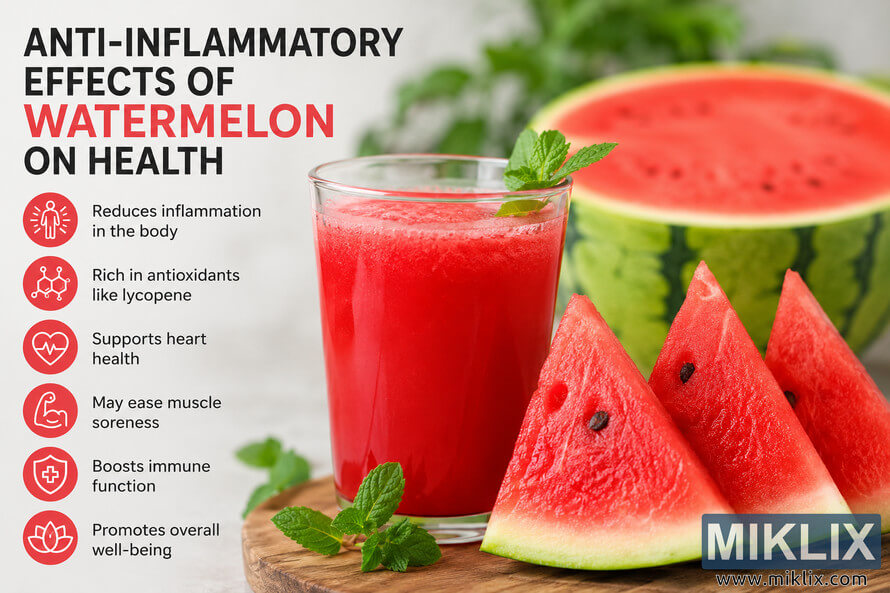
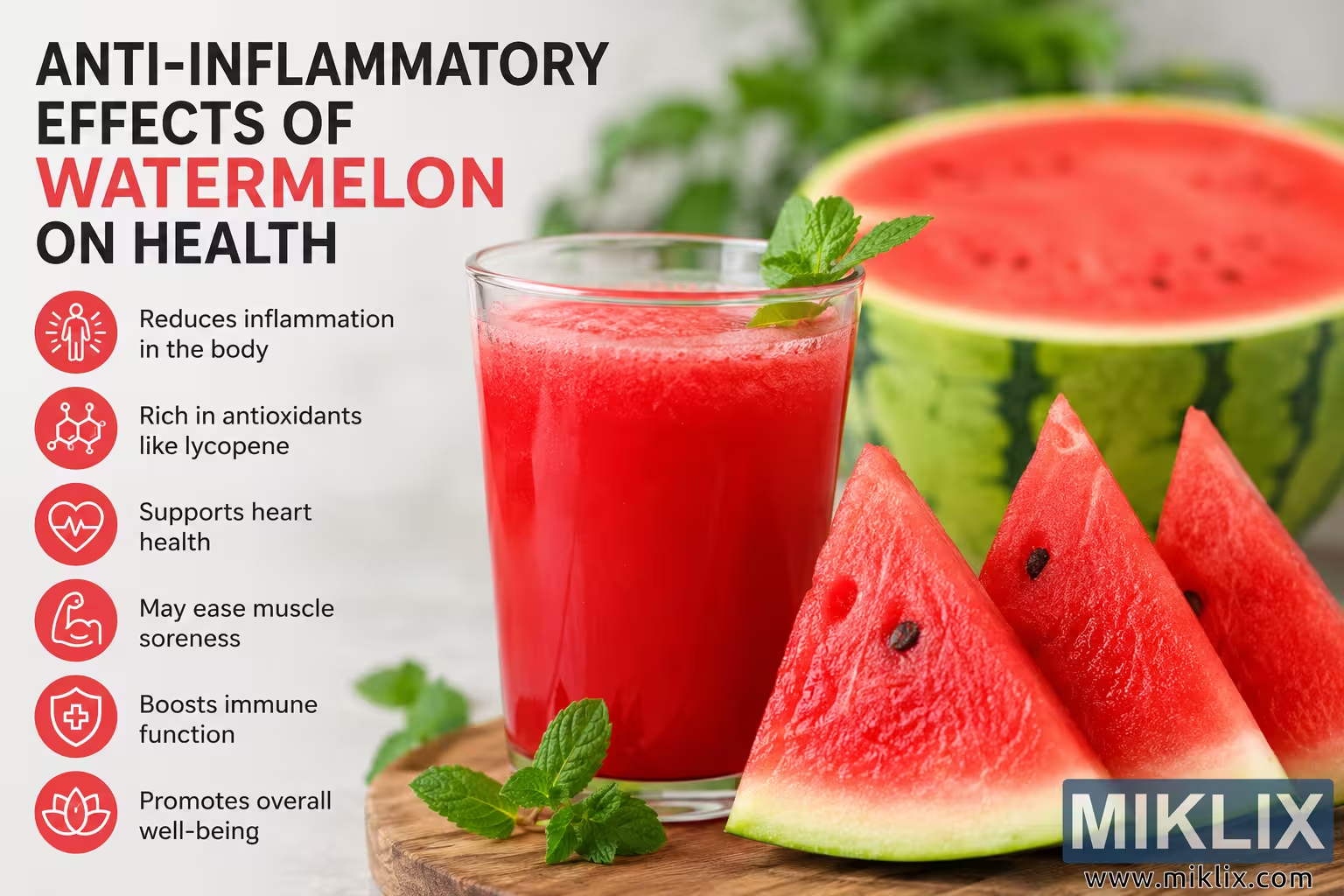
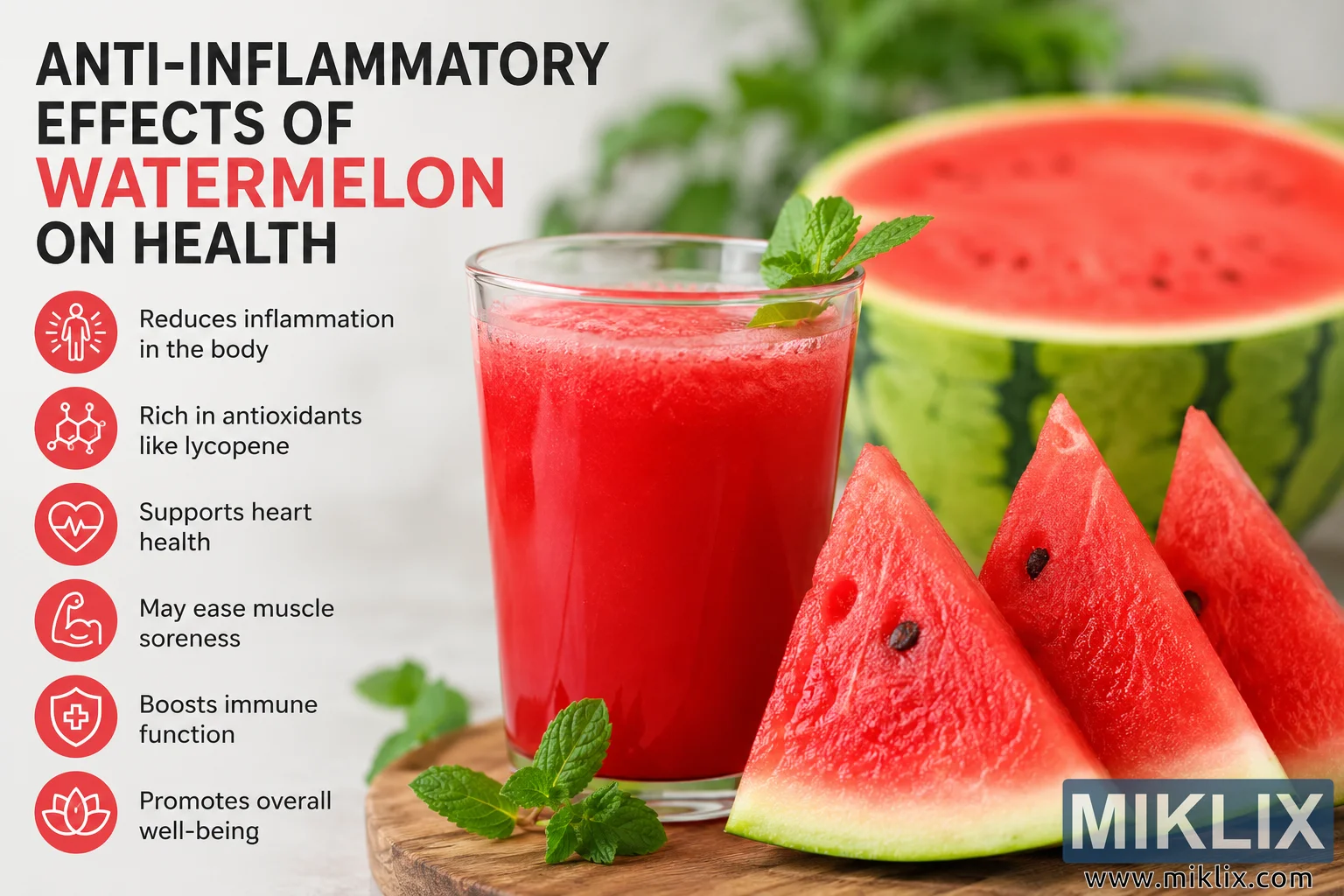
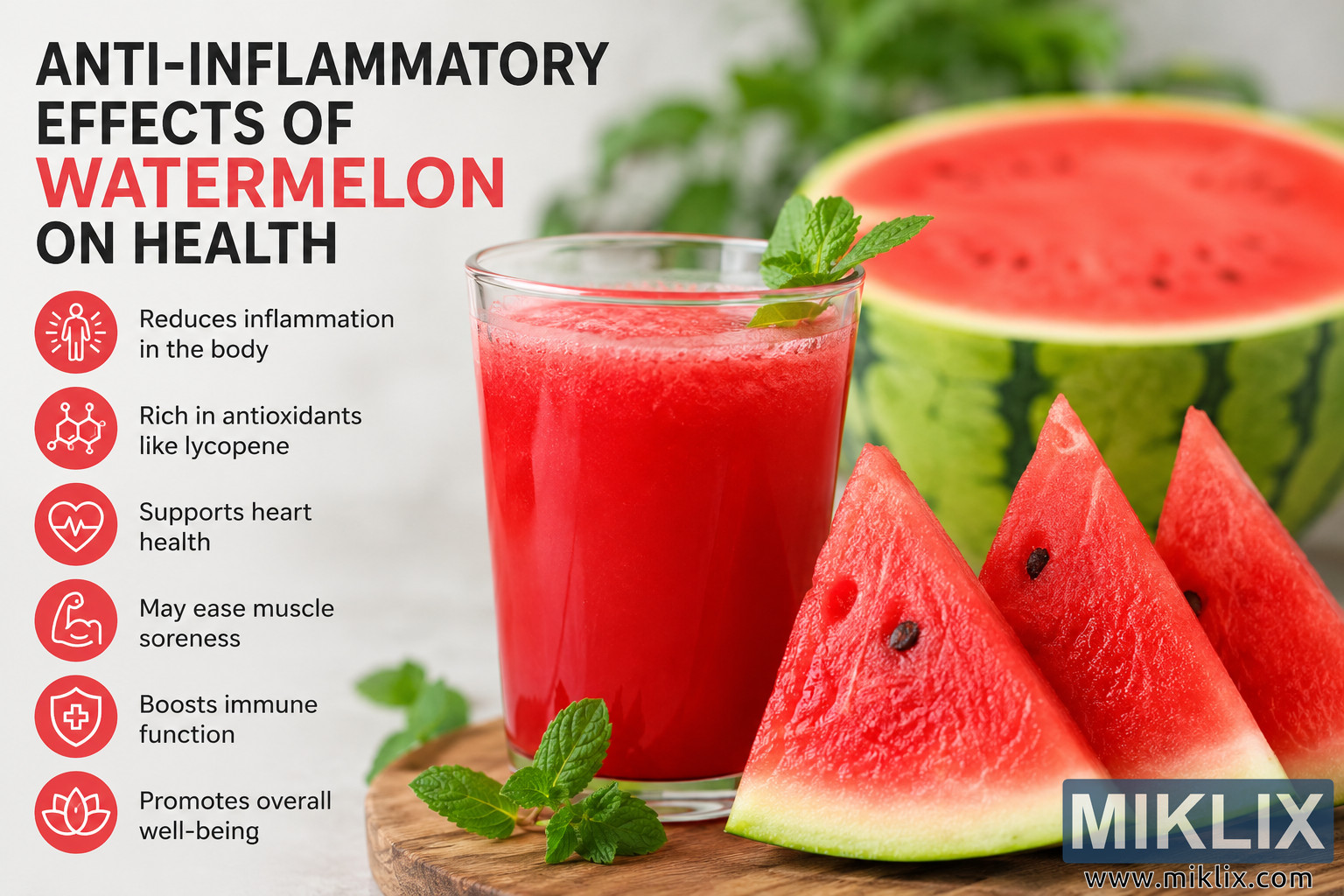
Landscape wellness infographic highlighting the potential anti-inflammatory properties of watermelon. The image combines fresh watermelon slices, watermelon juice, and simple health icons to illustrate antioxidant content, heart health support, immune function, muscle recovery, and overall wellness in a clean educational design.
Available versions of this image
The image files available for download below are less compressed and higher resolution - and as a result of that, higher quality - than the images embedded in articles and pages on this website, which are more optimized for file size in order to reduce bandwidth consumption.
Regular size (1,536 x 1,024)
Large size (3,072 x 2,048)
Very large size (4,608 x 3,072)
Extra large size (6,144 x 4,096)
Comically large size (1,048,576 x 699,051)
- Still uploading... ;-)
Image description
This landscape-oriented infographic presents an educational and visually engaging composition focused on the potential anti-inflammatory effects of watermelon on human health. The overall design follows a modern health and nutrition aesthetic, combining high-quality food photography with clean graphic elements and concise informational highlights. The visual hierarchy immediately directs the viewer's attention to the large headline positioned on the left side of the composition. The heading is displayed using bold, uppercase typography, with the word referring to the fruit emphasized in a vivid red color while the remaining text appears in black. This color contrast reinforces the connection between the written information and the naturally vibrant red color of the fruit itself.
Running vertically beneath the headline is a series of circular icons, each enclosed within a solid red circle. Every icon represents a different aspect of health and wellness. Adjacent to each icon is a short explanatory statement describing one possible benefit associated with watermelon consumption. The listed points include reducing inflammation within the body, supplying antioxidants such as lycopene, supporting cardiovascular health, helping reduce muscle soreness following physical activity, contributing to healthy immune function, and promoting overall well-being. The iconography is intentionally simple, making the information easy to scan while maintaining a balanced visual rhythm throughout the left side of the design.
Occupying the center of the composition is a clear drinking glass filled almost to the rim with freshly blended watermelon juice or smoothie. The beverage displays a rich, saturated crimson-red color that appears fresh and naturally vibrant. Tiny bubbles and subtle surface texture create the impression of a recently blended drink. The transparent glass allows the intense color of the juice to remain the primary visual focal point. Resting on the rim of the glass is a sprig of fresh green mint, introducing an additional accent of natural color while suggesting freshness and a refreshing flavor profile. Additional mint leaves are placed casually near the base of the glass on the wooden serving surface, further reinforcing the healthy and natural presentation.
In the foreground on the right side are several triangular slices of ripe watermelon. Their bright red flesh contrasts beautifully with the pale white inner rind and vibrant green outer skin. A few naturally placed black seeds remain visible, enhancing the realistic appearance of the fruit. The slices are arranged in a slightly overlapping formation on a rustic wooden serving board, creating depth and adding a warm organic texture that complements the fresh produce. The fruit appears juicy and glossy, suggesting peak ripeness and freshness.
Behind the foreground arrangement, a large halved watermelon occupies the upper-right background. Although softly blurred due to shallow depth of field, it remains instantly recognizable through its vivid red interior and green striped rind. The background blur helps maintain emphasis on the foreground elements while adding a professional photographic quality. Additional softly focused green foliage appears behind the fruit, subtly suggesting a natural kitchen or garden-inspired setting without distracting from the central subject matter.
The overall color palette is dominated by saturated reds and fresh greens, balanced by neutral whites, light gray background tones, and the warm brown texture of the wooden serving board. This harmonious palette reinforces themes of freshness, nutrition, and natural ingredients. Bright, even lighting illuminates every major subject without harsh shadows, producing an inviting, clean appearance commonly associated with health education materials, nutrition blogs, wellness articles, and dietary resources.
The composition successfully combines realistic food photography with informational graphic design. Text, icons, and imagery are carefully balanced so that neither overwhelms the other. Generous spacing between elements ensures readability while preserving a polished, uncluttered layout. The typography is bold and highly legible, making the infographic suitable for both digital viewing and print applications.
Although the infographic summarizes commonly discussed nutritional properties of watermelon, it presents the information in a simplified educational format rather than as detailed medical guidance. The emphasis is on visually communicating that watermelon contains naturally occurring compounds such as antioxidants—including lycopene—and is often associated with hydration, balanced nutrition, and healthy dietary patterns. The overall impression is positive, fresh, approachable, and informative, making the image appropriate for wellness websites, healthy eating guides, nutrition presentations, educational articles, social media posts about fruit consumption, or general health awareness materials. The design contains no visible commercial branding, product logos, or corporate identifiers, allowing the focus to remain entirely on the fruit, the beverage, and the educational message regarding watermelon and its potential anti-inflammatory health benefits.
The image is related to: Watermelon: The Hydrating Superfruit You Should Eat More Often