
Image: Fiber Content in Watermelon Supporting Digestive Health
Published: August 16, 2026 at 7:07:33 PM UTC
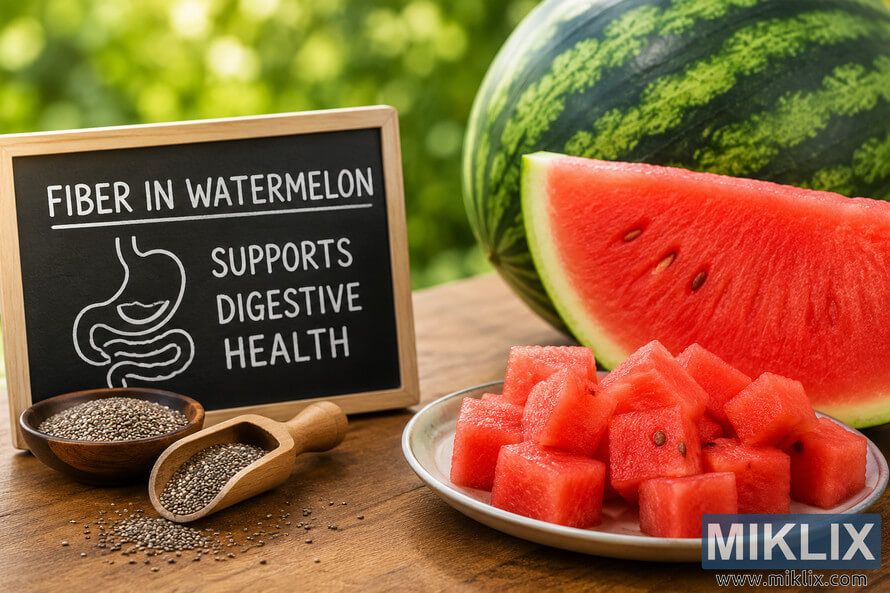
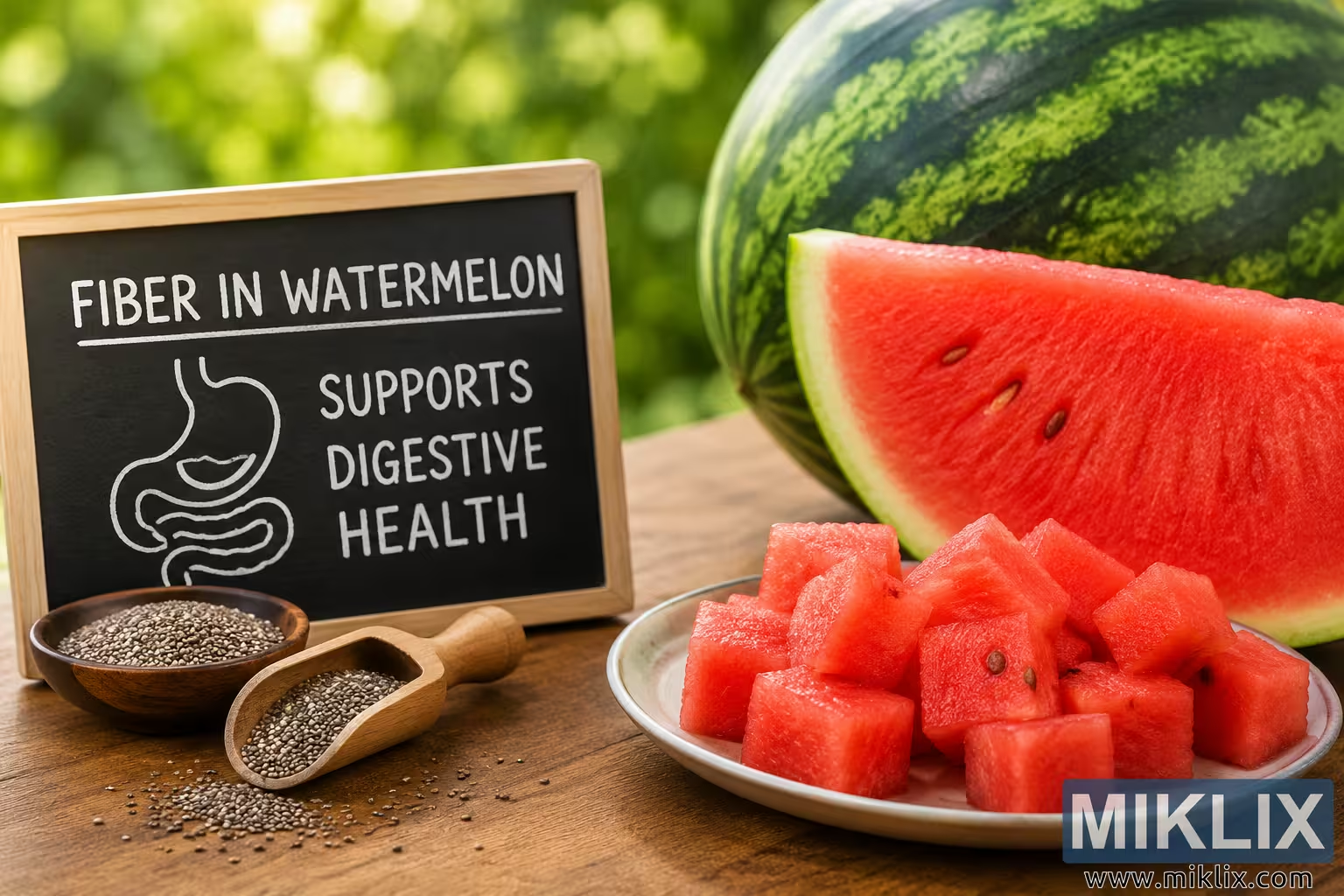
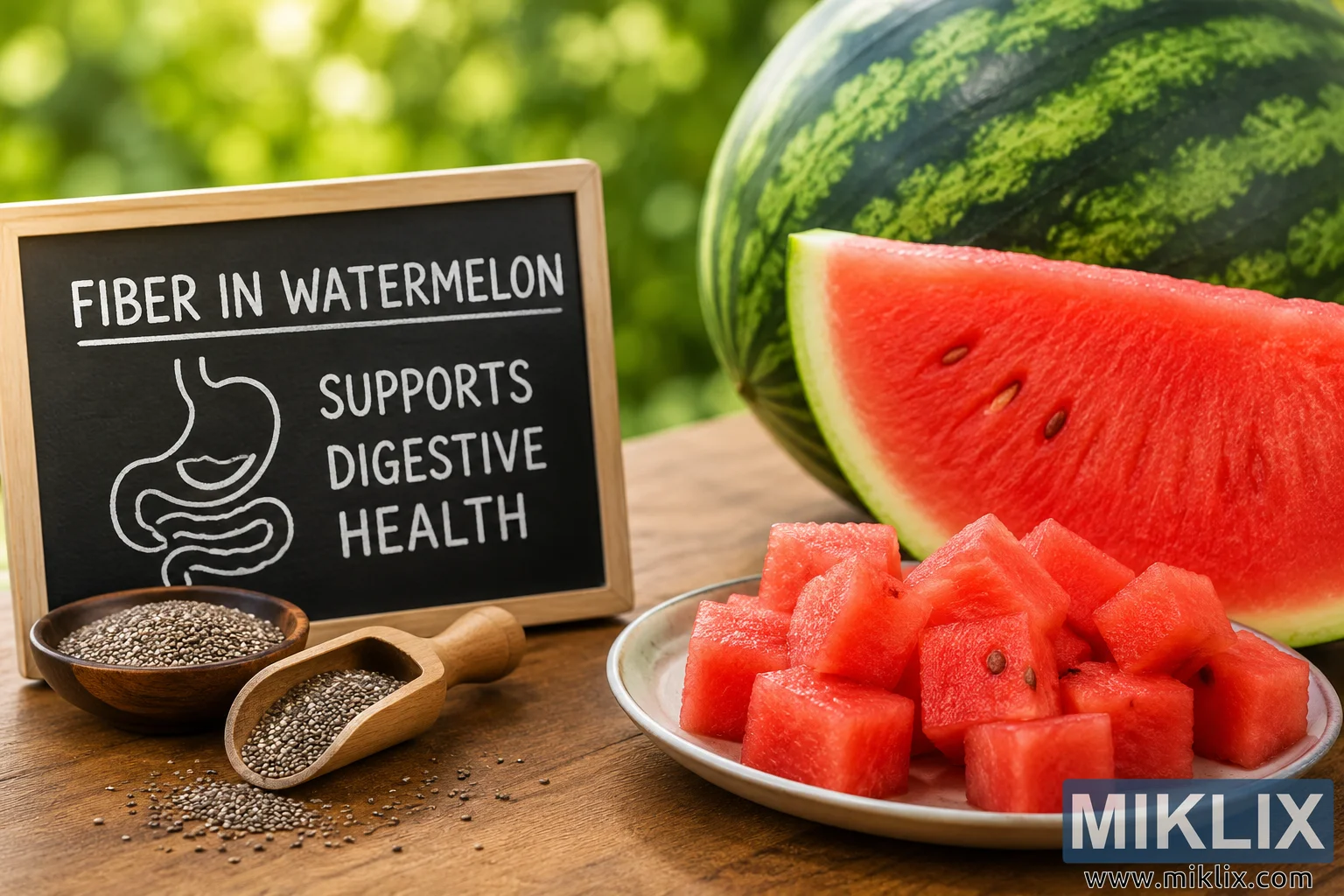
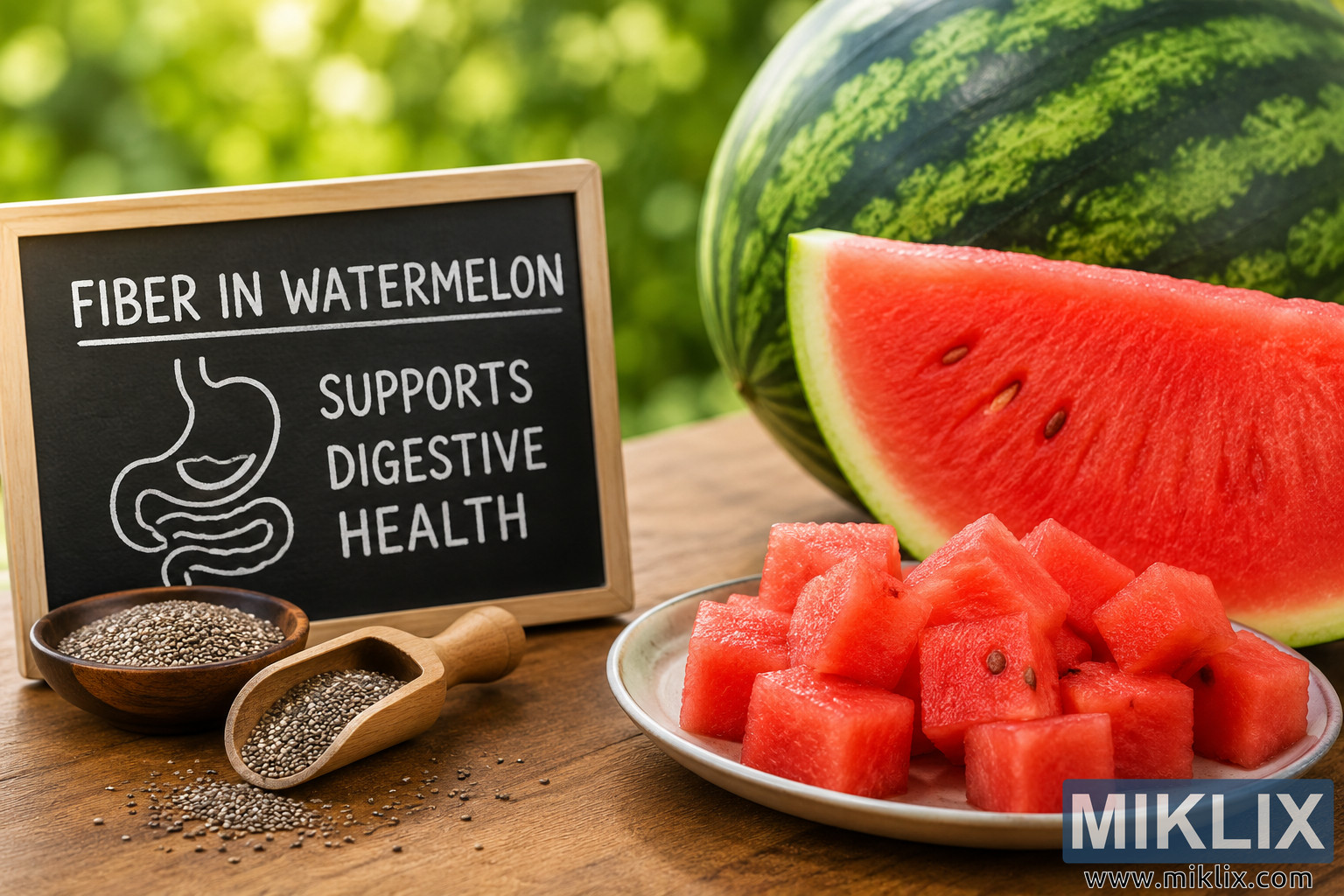
Photorealistic educational image of watermelon highlighting its fiber content and digestive health benefits, featuring fresh watermelon, nutrition-themed chalkboard graphics, natural lighting, and a rustic outdoor setting without any visible brands.
Available versions of this image
The image files available for download below are less compressed and higher resolution - and as a result of that, higher quality - than the images embedded in articles and pages on this website, which are more optimized for file size in order to reduce bandwidth consumption.
Regular size (1,536 x 1,024)
Large size (3,072 x 2,048)
Very large size (4,608 x 3,072)
Extra large size (6,144 x 4,096)
Comically large size (1,048,576 x 699,051)
- Still uploading... ;-)
Image description
This landscape-oriented, high-resolution photorealistic image presents a fresh and inviting still-life composition centered on the topic of watermelon and its contribution to digestive health through its fiber content. The scene is arranged on a warm-toned wooden tabletop that provides a natural, rustic foundation while complementing the vibrant colors of the fruit. In the softly blurred background, lush green foliage is illuminated by bright natural sunlight, creating an outdoor garden atmosphere with a shallow depth of field that keeps the foreground in crisp focus while producing a pleasant bokeh effect.
On the right side of the composition rests a large whole watermelon with a deep green rind featuring lighter green striped patterns. The fruit appears fresh, ripe, and naturally glossy, reflecting soft daylight across its curved surface. Positioned in front of the whole watermelon is a generous wedge that reveals the vivid red flesh inside. The juicy interior displays a moist texture with subtle variations in color, transitioning toward a pale white rind before reaching the green exterior. Several naturally placed dark seeds remain embedded within the slice, reinforcing the authentic appearance of the fruit.
In the lower right foreground sits a simple ceramic plate filled with neatly cut cubes of watermelon. The cubes vary slightly in size and orientation, enhancing the realism of the arrangement. Their freshly cut surfaces glisten gently under the natural lighting, suggesting high water content and freshness. A few visible seeds remain in some cubes, adding visual authenticity. The plate itself is understated with neutral tones so that the vibrant red fruit remains the primary visual focus.
Occupying the left portion of the image is a small framed chalkboard standing upright on the wooden surface. Written in bold white chalk-style lettering across the board is the headline "FIBER IN WATERMELON." Beneath the headline appears a simple hand-drawn illustration representing the human digestive system, consisting of a stylized stomach connected to intestinal loops. To the right of the illustration, additional chalk lettering states "SUPPORTS DIGESTIVE HEALTH." The handwritten appearance gives the sign an educational yet approachable character, resembling information that might appear in a nutrition workshop, health seminar, classroom, or healthy eating campaign.
Directly below the chalkboard are two wooden containers displaying small gray-black seeds resembling chia seeds. One container is a shallow round bowl while the other is a small wooden scoop with a broad handle. A small quantity of seeds has naturally spilled onto the tabletop in front of the containers, adding texture and visual interest while subtly reinforcing the broader nutritional theme of dietary fiber. The wooden containers harmonize with the tabletop, creating a cohesive natural aesthetic throughout the composition.
The lighting throughout the image is soft, warm, and evenly balanced. Gentle highlights emphasize the smooth rind of the watermelon, the moist texture of the cut fruit, the matte finish of the chalkboard, and the natural grain of the wooden surface. Shadows remain soft and realistic, contributing depth without overpowering the scene. The overall color palette is dominated by rich greens, vibrant reds, warm browns, and subtle neutral tones, evoking freshness, health, and wholesome nutrition.
The composition is balanced so that educational information occupies the left side while the fruit itself dominates the right side, naturally guiding the viewer's eye across the frame. Negative space in the blurred background helps isolate the primary subjects and ensures excellent readability of the chalkboard text. No commercial branding, logos, trademarks, packaging, or identifiable products are visible anywhere within the image. Every object appears generic and intentionally free from brand associations.
Overall, the image communicates an educational message about watermelon as part of a healthy diet while visually emphasizing freshness, hydration, natural foods, and digestive wellness. The realistic presentation, natural lighting, appealing food styling, and uncluttered layout make the image suitable for use in nutrition articles, wellness blogs, healthcare educational materials, dietitian presentations, recipe websites, healthy lifestyle publications, and informational web pages discussing fruit, fiber, and digestive health.
The image is related to: Watermelon: The Hydrating Superfruit You Should Eat More Often