
Image: Healthy Gut Microbiome Supported by Watermelon Nutrients
Published: August 16, 2026 at 7:07:33 PM UTC
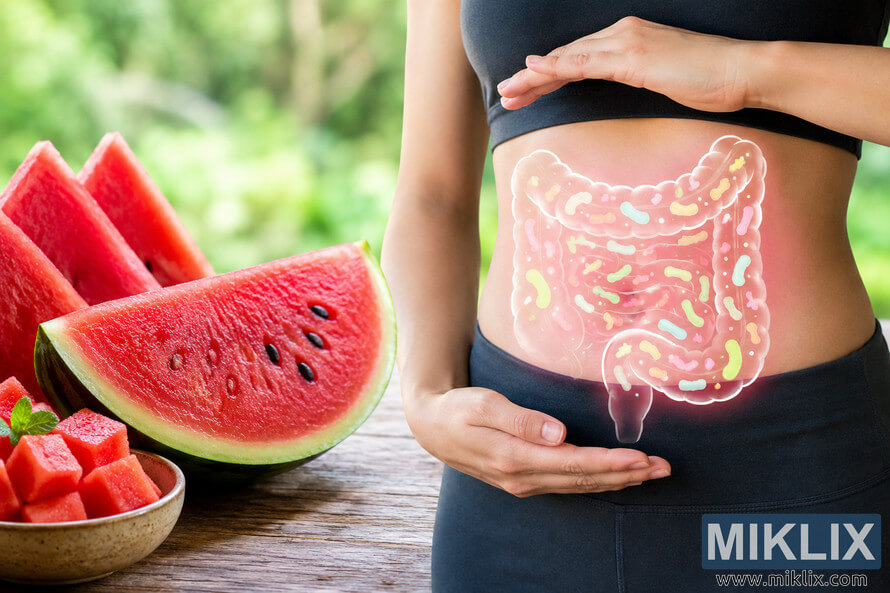
Discover the connection between watermelon nutrients and gut health in this vibrant illustration featuring fresh watermelon alongside a stylized digestive system filled with beneficial microbiome-inspired elements, highlighting nutrition, digestive wellness, and a balanced lifestyle.
Available versions of this image
The image files available for download below are less compressed and higher resolution - and as a result of that, higher quality - than the images embedded in articles and pages on this website, which are more optimized for file size in order to reduce bandwidth consumption.
Regular size (1,536 x 1,024)
Large size (3,072 x 2,048)
Very large size (4,608 x 3,072)
Extra large size (6,144 x 4,096)
Comically large size (1,048,576 x 699,051)
- Still uploading... ;-)
Image description
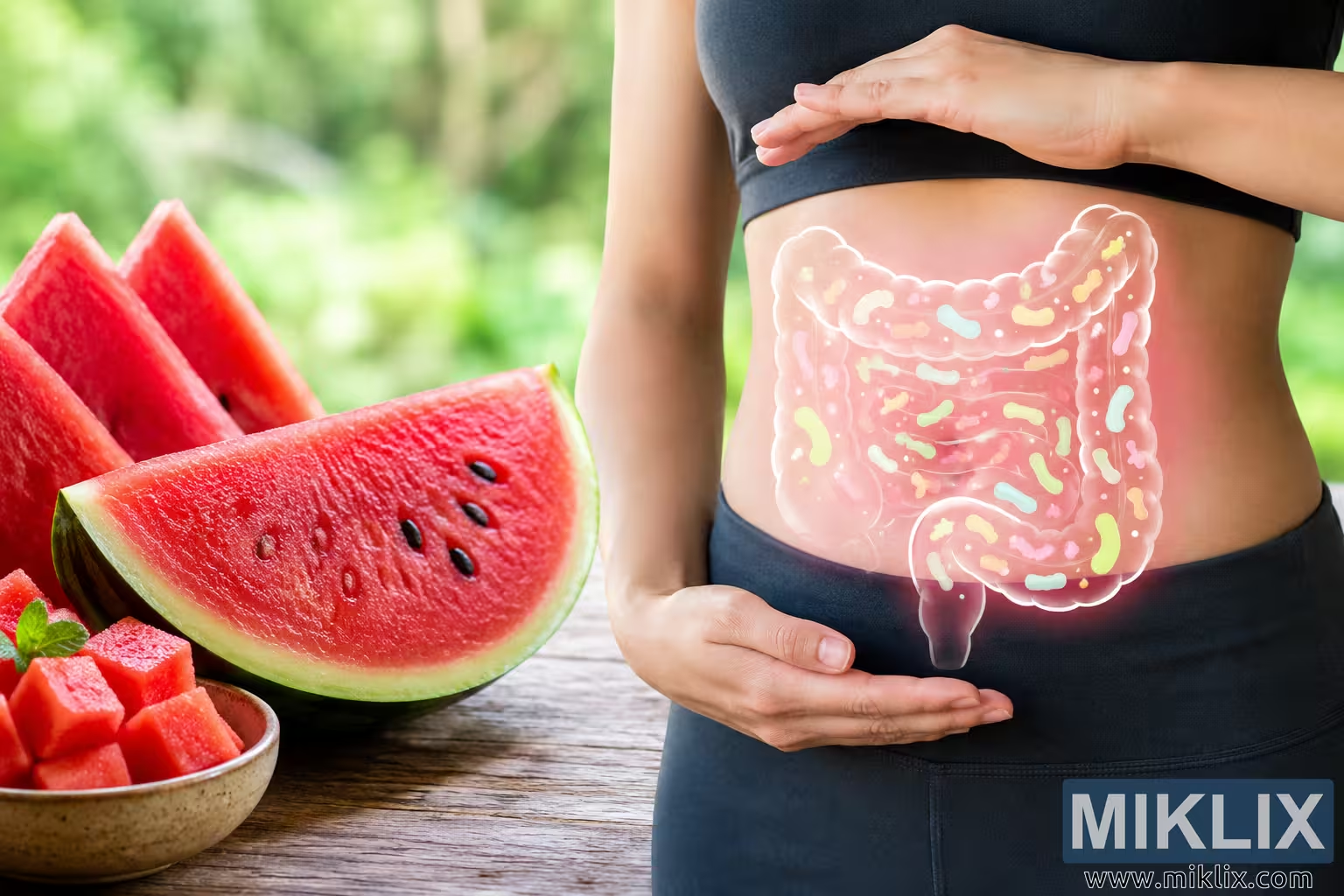
A bright, high-resolution landscape illustration presents a clean and inviting visual concept centered on the relationship between watermelon consumption and digestive wellness. The composition is divided into two complementary sections that naturally guide the viewer's attention from wholesome nutrition to internal gut health. On the left side of the image, several fresh watermelon slices are arranged on a rustic wooden tabletop. The fruit displays vivid red flesh with a moist, juicy texture that appears freshly cut, contrasting beautifully against the pale white rind and vibrant green outer skin. A few glossy black seeds remain embedded within one of the slices, adding realism and emphasizing the fruit's natural appearance. In the foreground sits a small bowl filled with neatly cut watermelon cubes. The cubes have crisp edges, subtle surface moisture, and rich red coloring that conveys freshness. Small green mint leaves rest near the bowl, contributing an additional impression of freshness and healthy eating without distracting from the primary subject. The softly blurred green background suggests an outdoor garden or natural setting illuminated by warm daylight, creating a calm, refreshing atmosphere associated with wellness, hydration, and nutritious food choices.
The right side of the image shifts the focus toward the human body. Only the midsection of a person is visible, avoiding any emphasis on facial identity while directing attention to digestive health. The individual wears simple, unbranded dark athletic clothing consisting of a sports-style top and fitted leggings. Their hands are gently positioned around the abdomen in a supportive gesture, framing the digestive region and visually reinforcing the theme of internal wellness. Overlaid across the abdominal area is a glowing, semi-transparent illustration of the digestive tract. The stylized intestines are outlined with soft white illumination and filled with numerous colorful microorganism-inspired shapes in pastel shades of yellow, pink, green, blue, and orange. These abstract forms resemble beneficial bacteria rather than scientifically accurate organisms, providing a clear visual metaphor for a thriving gut microbiome. The glow surrounding the digestive tract creates a sense of vitality, health, and biological activity without appearing clinical or intimidating.
The image successfully combines realistic food photography aesthetics with a modern medical-style visualization. The wooden tabletop introduces warmth and authenticity, while the softly illuminated digestive overlay provides an educational element that is easy for a broad audience to understand. The composition balances natural textures with clean digital graphics, making it suitable for articles, educational resources, wellness websites, nutrition blogs, healthcare presentations, and marketing materials discussing digestive health, hydration, dietary fiber, antioxidants, vitamins, and healthy eating patterns. The absence of logos, trademarks, packaging, or recognizable commercial branding ensures the illustration remains universally applicable across editorial and commercial contexts.
Lighting throughout the scene is soft and even, with gentle highlights on the watermelon emphasizing its juicy freshness and subtle illumination on the person's skin creating a natural appearance. The glowing digestive graphic is bright enough to attract attention but blends harmoniously with the rest of the composition. The overall color palette features fresh greens, vibrant reds, warm wood tones, neutral skin tones, and luminous pastel accents within the microbiome illustration. These colors work together to communicate health, cleanliness, vitality, and nutritional balance.
Conceptually, the artwork illustrates the broader idea that nutrient-rich foods such as watermelon may contribute to overall digestive wellness and support a healthy lifestyle. Rather than presenting a literal scientific depiction, it uses symbolic visual storytelling to connect fresh fruit with gut microbiome health. The colorful microorganisms represent microbial diversity, while the glowing intestinal outline conveys a healthy digestive environment. The viewer is encouraged to associate wholesome dietary choices with positive internal health outcomes. Overall, the illustration communicates freshness, nutrition, digestive comfort, hydration, balance, and well-being through an appealing blend of realistic food imagery and approachable anatomical visualization, making it highly effective for educational, informational, and wellness-focused communication.
The image is related to: Watermelon: The Hydrating Superfruit You Should Eat More Often