
Image: Macular Degeneration Prevention Through Watermelon Antioxidants
Published: August 16, 2026 at 7:07:33 PM UTC
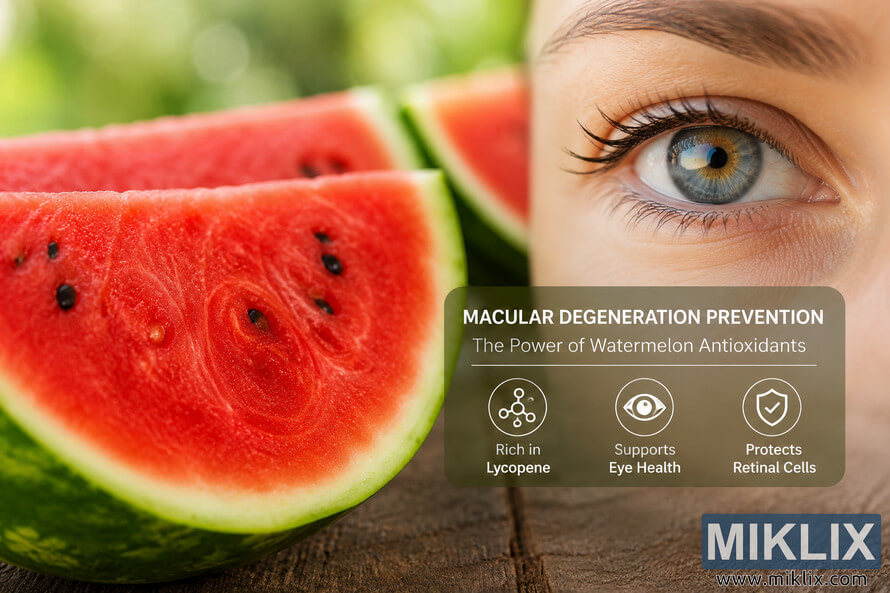
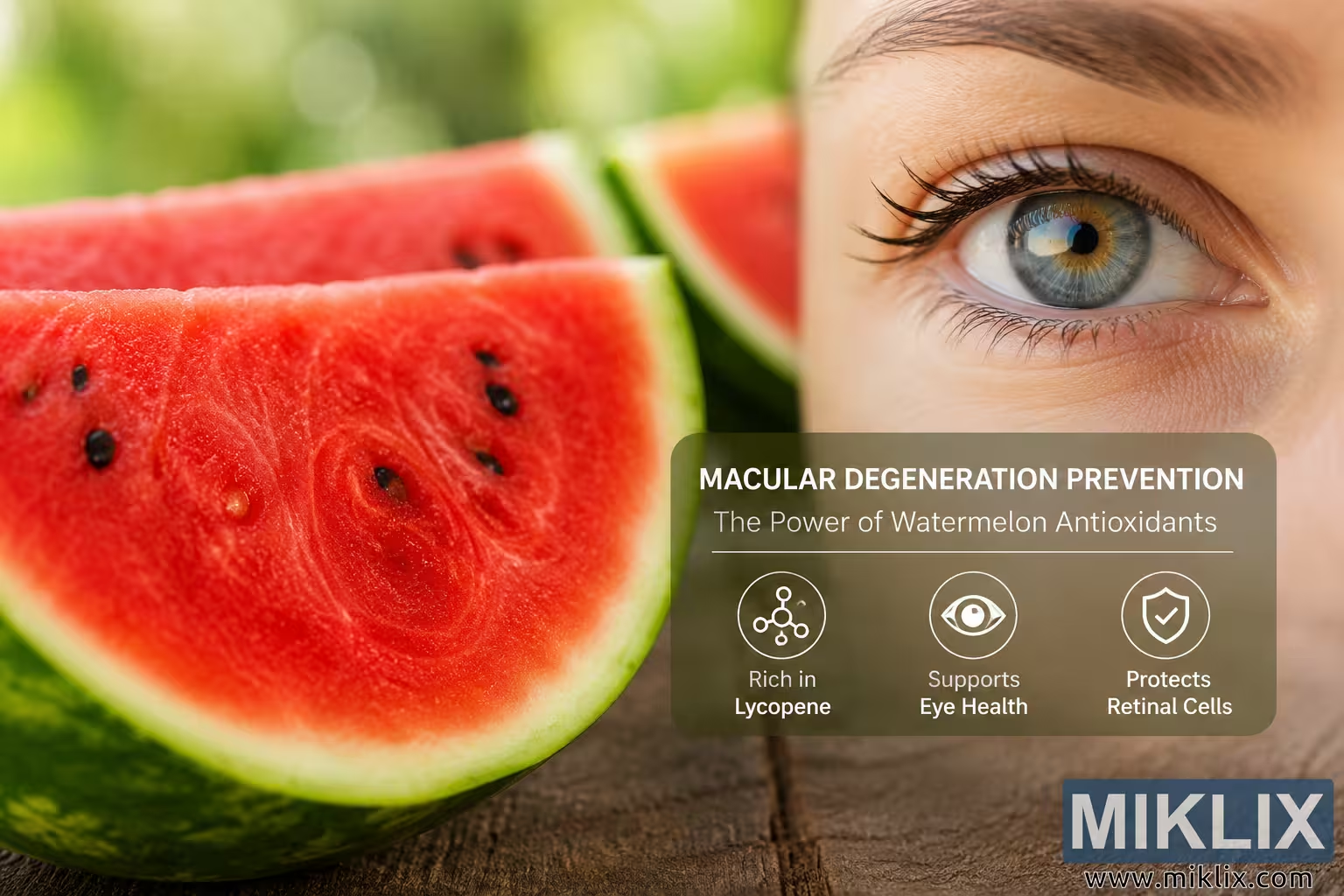
Photorealistic landscape illustration highlighting watermelon antioxidants and their potential role in supporting eye health, featuring fresh watermelon slices, a detailed human eye, and an educational infographic about lycopene and retinal protection.
Available versions of this image
The image files available for download below are less compressed and higher resolution - and as a result of that, higher quality - than the images embedded in articles and pages on this website, which are more optimized for file size in order to reduce bandwidth consumption.
Regular size (1,536 x 1,024)
Large size (3,072 x 2,048)
Very large size (4,608 x 3,072)
Extra large size (6,144 x 4,096)
Comically large size (1,048,576 x 699,051)
- Still uploading... ;-)
Image description
This landscape-oriented, high-resolution educational image presents a clean, modern visual concept centered on the relationship between nutrition and eye health. The composition is divided into two complementary visual areas that immediately communicate the theme of dietary support for healthy vision. On the left side of the image, several vibrant slices of ripe watermelon dominate the foreground. The fruit displays a vivid, saturated red interior with a moist, freshly cut appearance that conveys freshness and nutritional value. Small dark seeds are naturally embedded throughout the flesh, while the rind features a bright white inner layer transitioning into a deep green outer skin with subtle striping. Tiny droplets of moisture and delicate surface texture reinforce the impression that the watermelon has been freshly sliced. The fruit rests on a rustic wooden surface whose warm brown tones provide an attractive contrast to the watermelon’s intense colors. Behind the foreground slices, additional pieces of watermelon appear softly blurred, creating depth through a shallow depth of field while maintaining visual interest.
The background consists of smooth green bokeh that evokes an outdoor garden or natural setting. The blurred foliage creates a calming atmosphere without distracting from the primary subjects. Soft natural lighting illuminates the fruit from above and slightly to one side, producing realistic highlights, gentle shadows, and subtle reflections that enhance the photorealistic quality of the scene.
The right half of the image features a detailed close-up of a human eye. The iris displays intricate radial textures with blue-gray and warm golden tones surrounding a dark, sharply defined pupil. Individual eyelashes are crisp and well separated, while the eyebrow is neatly groomed with visible strands of hair. The surrounding skin exhibits natural texture, fine lines, and realistic coloration without appearing overly retouched. Catchlights reflected in the eye contribute to the lifelike appearance and suggest soft daylight illumination. The eye is directed toward the viewer, reinforcing the image's emphasis on vision and ocular health.
Positioned over the lower-right portion of the composition is a semi-transparent rectangular information panel with rounded corners. The translucent design allows a subtle view of the underlying image while ensuring that the educational content remains highly legible. Large uppercase typography introduces the primary subject of the graphic with the heading "MACULAR DEGENERATION PREVENTION." Beneath the heading, a secondary line of text references the role of watermelon antioxidants. A thin horizontal divider visually separates the headline from the informational icons below.
Three minimalist white line icons are evenly spaced across the lower section of the panel. The first icon depicts a molecular structure representing antioxidant compounds and is accompanied by the statement that watermelon is rich in lycopene. The second icon features a stylized eye symbol paired with messaging indicating support for overall eye health. The third icon presents a shield symbol associated with retinal cell protection. The typography is clean, modern, and balanced, complementing the polished educational aesthetic of the overall composition.
The visual narrative intentionally associates fresh, nutrient-rich food with healthy vision while maintaining a friendly, accessible presentation suitable for wellness education, nutrition articles, healthcare blogs, informational websites, preventive health campaigns, magazine features, presentations, and educational materials. The color palette is dominated by vibrant reds and greens from the watermelon, warm neutral browns from the wooden surface, natural skin tones, and soft green background highlights. These colors work together to create a fresh, healthy, and optimistic atmosphere.
The overall composition demonstrates strong visual balance. The bright watermelon provides immediate visual impact on the left, while the highly detailed human eye creates an equally compelling focal point on the right. The semi-transparent infographic panel bridges both subjects, guiding the viewer through the intended educational message. The shallow depth of field, realistic lighting, high contrast, and premium photographic quality contribute to a professional appearance suitable for digital publishing and print applications.
Although the graphic presents watermelon and antioxidant-related educational messaging, it should be interpreted as a general wellness illustration rather than definitive medical evidence or clinical guidance. The image visually communicates the concept that antioxidant-rich foods may contribute to a healthy lifestyle and support overall eye wellness, while encouraging viewers to consider nutrition as one component of maintaining long-term ocular health. The design remains free of commercial branding, product logos, or promotional elements, emphasizing a neutral educational purpose with a polished, contemporary visual style.
The image is related to: Watermelon: The Hydrating Superfruit You Should Eat More Often