
Image: Healthy Vision Supported by Watermelon Nutrients and Vitamins
Published: August 16, 2026 at 7:07:33 PM UTC
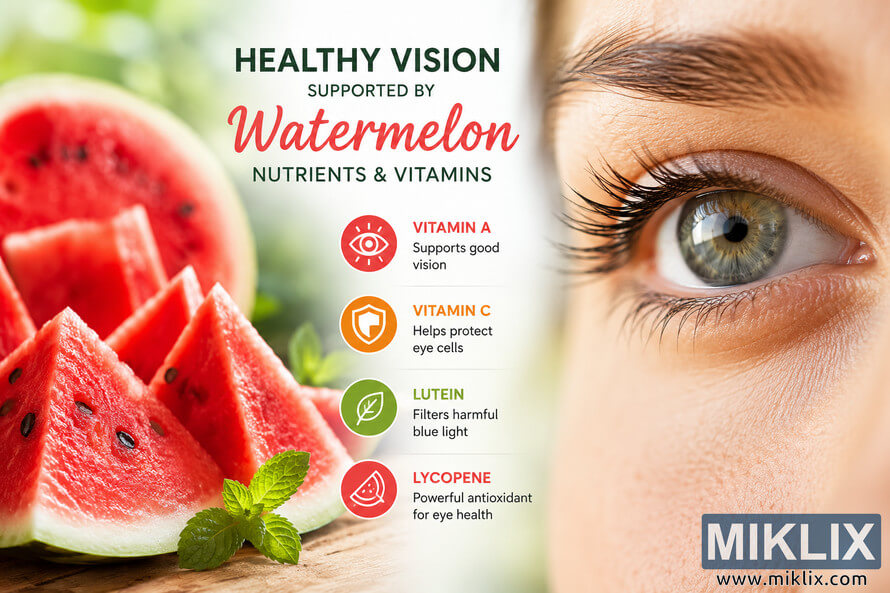
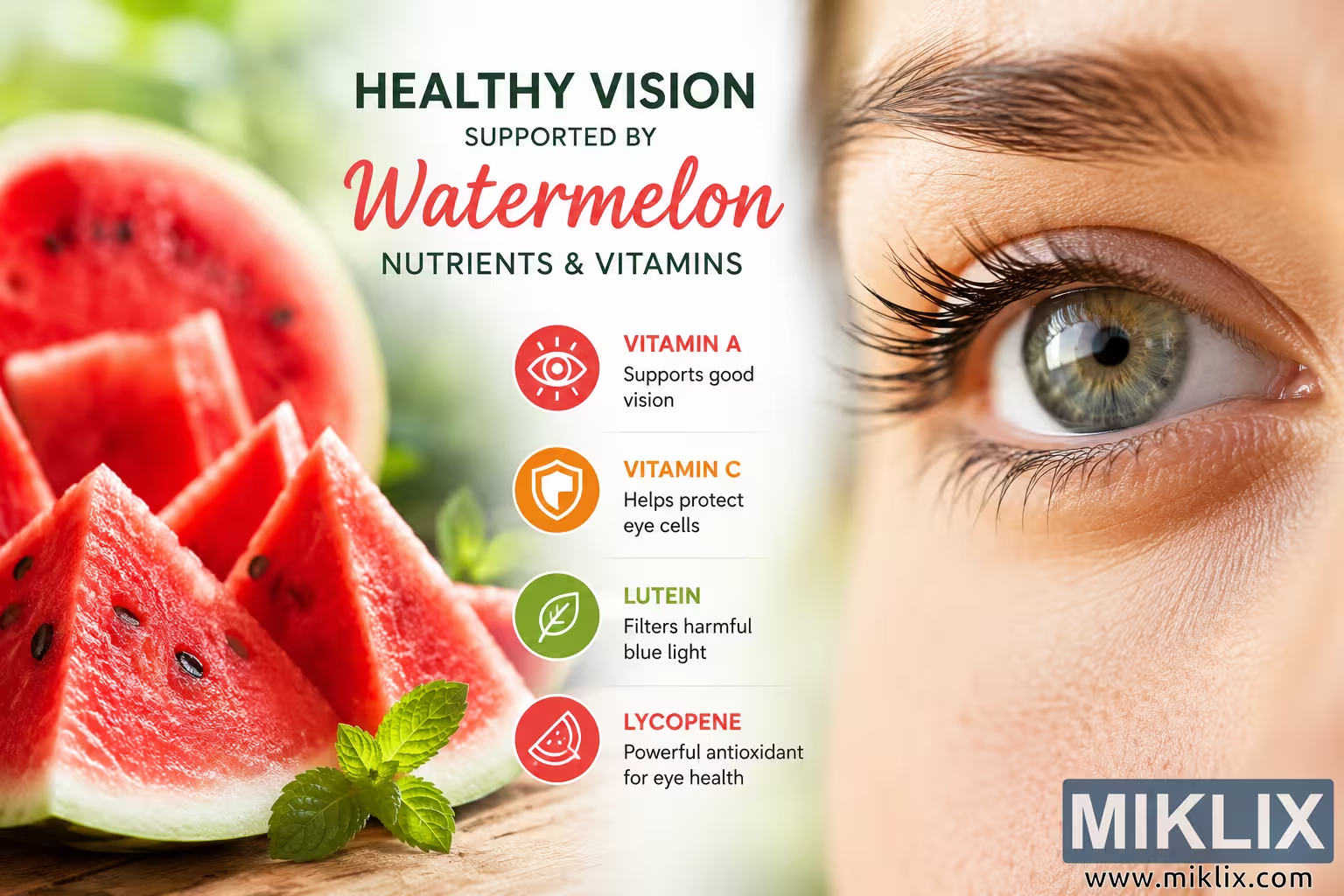
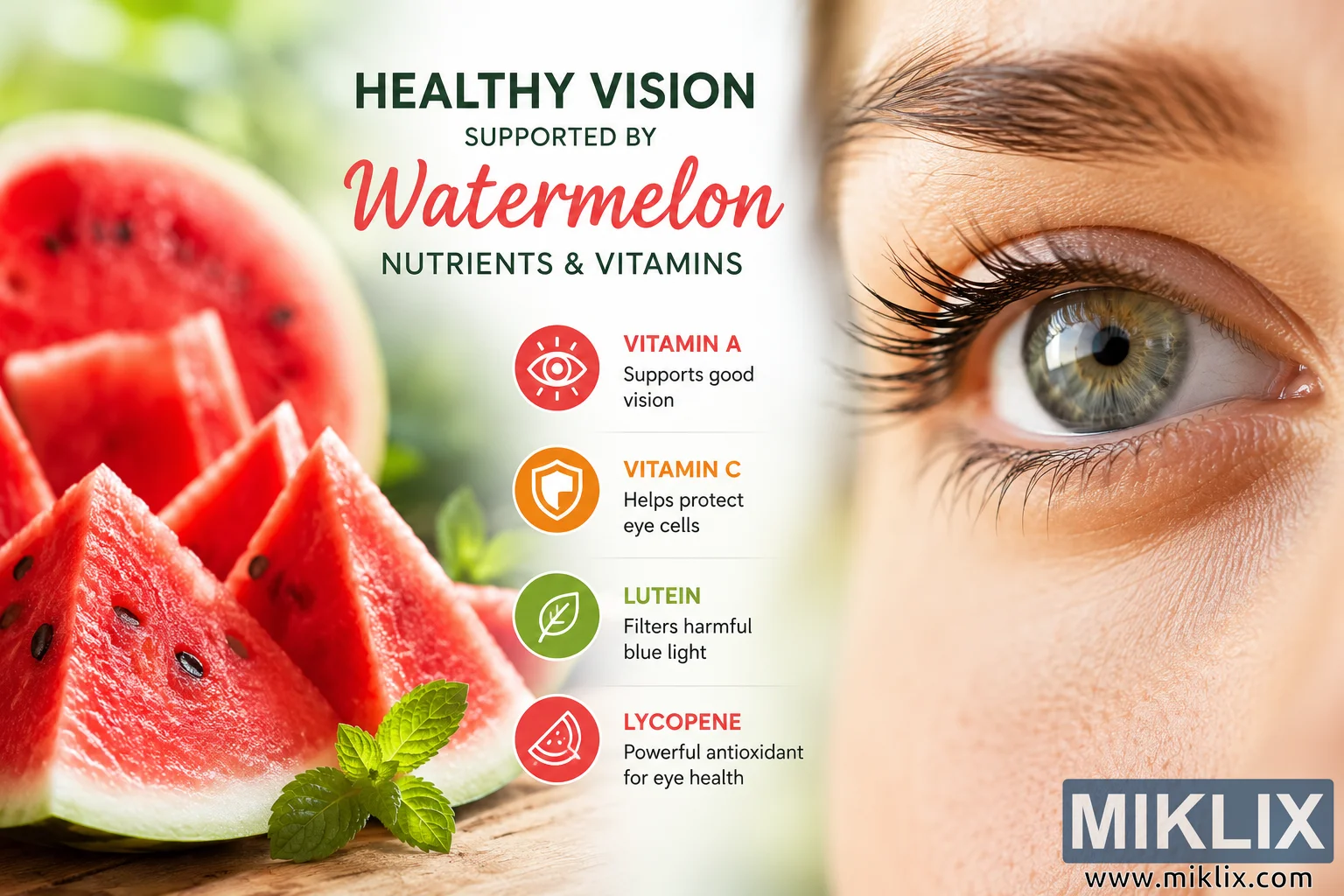
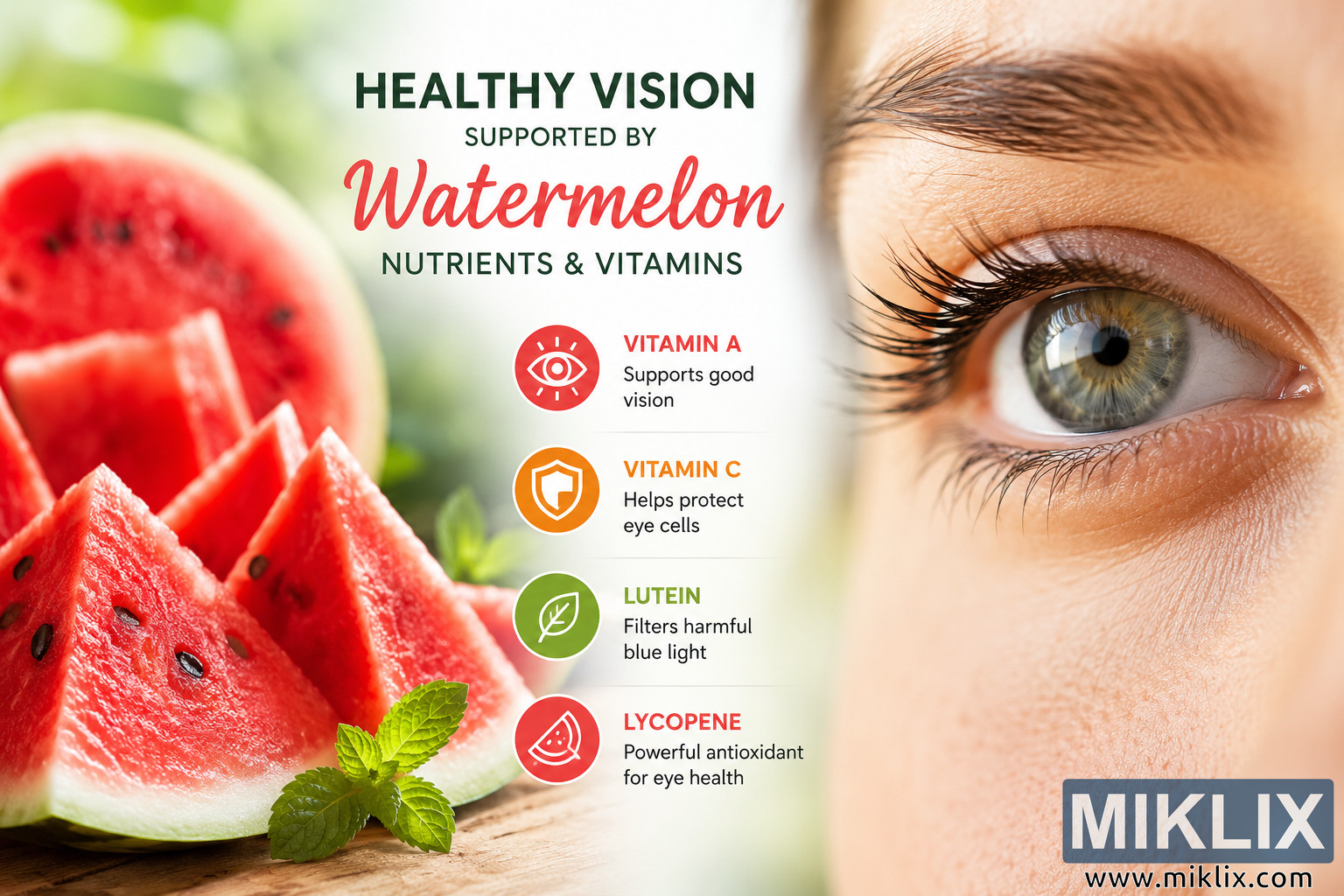
Landscape promotional image illustrating healthy vision supported by watermelon nutrients and vitamins, featuring fresh watermelon slices, educational nutrient highlights, and a detailed close-up of a healthy human eye.
Available versions of this image
The image files available for download below are less compressed and higher resolution - and as a result of that, higher quality - than the images embedded in articles and pages on this website, which are more optimized for file size in order to reduce bandwidth consumption.
Regular size (1,536 x 1,024)
Large size (3,072 x 2,048)
Very large size (4,608 x 3,072)
Extra large size (6,144 x 4,096)
Comically large size (1,048,576 x 699,051)
- Still uploading... ;-)
Image description
This landscape-oriented promotional image presents a clean, vibrant, and health-focused composition centered around the relationship between watermelon and eye wellness. The overall design is divided into three visually balanced sections that naturally guide the viewer's attention from left to right. The left side showcases fresh watermelon, the center contains the headline and nutritional information, and the right side features a highly detailed close-up of a human eye, creating a strong visual association between nutrition and healthy vision.
On the far left, several triangular slices of ripe watermelon are arranged in the foreground on a rustic wooden surface. The fruit appears freshly cut, with bright red flesh, a crisp white rind, and a thin green outer skin. Small dark seeds are visible throughout the fruit, adding realism and texture. Behind the slices, a partially visible watermelon with a cut face provides additional depth and reinforces the central ingredient. A small sprig of fresh green mint rests near the watermelon slices, introducing a complementary splash of green while suggesting freshness and natural ingredients. The background behind the fruit is softly blurred with bright green foliage and warm sunlight, producing a pleasant bokeh effect that creates an inviting outdoor atmosphere and emphasizes freshness without distracting from the primary subjects.
The center portion of the image contains the main textual content arranged in a clean vertical layout. At the top appears a bold uppercase headline reading "HEALTHY VISION," followed by a smaller supporting line stating "SUPPORTED BY." Beneath this is the word "Watermelon" displayed in a flowing script style that contrasts with the surrounding typography and draws attention to the featured fruit. A further subtitle reads "NUTRIENTS & VITAMINS," introducing the educational portion of the design.
Below the heading are four circular icons, each paired with a nutrient name and a concise explanatory statement. The first section highlights Vitamin A using a stylized eye icon and notes that it supports good vision. The second section highlights Vitamin C using a protective shield icon and describes its role in helping protect eye cells. The third section introduces lutein with a leaf icon, explaining that it helps filter harmful blue light. The fourth section features lycopene with a watermelon-themed icon and describes it as a powerful antioxidant associated with eye health. Each nutrient is presented in a different accent color, making the list easy to scan while maintaining visual harmony with the overall design. Thin dividing lines subtly separate each informational block, reinforcing clarity and readability.
Occupying the entire right side of the composition is an extreme close-up photograph of a human eye. The eye is open and sharply focused, displaying intricate details including the iris pattern, eyelashes, eyebrow hairs, skin texture, and natural reflections on the cornea. The iris exhibits a blend of greenish-blue and gray tones with subtle golden highlights around the pupil, creating a striking visual focal point. Long eyelashes frame the eye, while soft natural lighting enhances the contours of the surrounding skin without appearing harsh or artificial. The facial expression appears calm and neutral, conveying a sense of health, confidence, and wellness.
The overall color palette is dominated by vibrant reds from the watermelon, fresh greens from the rind, foliage, mint, and eye-inspired accent colors, warm natural skin tones, and clean white space that separates the informational content. The lighting is bright, soft, and natural, producing high contrast without excessive saturation. Depth of field is carefully controlled so that the foreground elements remain crisp while the background gently fades into an attractive blur.
The composition effectively balances photographic realism with educational infographic elements. Large negative space around the typography ensures readability, while the fruit and eye create an immediate visual narrative linking nutrition with eye health. The design resembles a modern wellness advertisement or educational health poster suitable for articles, blogs, presentations, informational brochures, or health awareness campaigns. No commercial branding, company logos, trademarks, or product packaging are visible anywhere in the composition, allowing the image to remain generic and broadly applicable. The overall impression is fresh, informative, optimistic, and visually engaging, emphasizing natural nutrition and healthy lifestyle choices through an attractive combination of food photography, portrait photography, and clean graphic design.
The image is related to: Watermelon: The Hydrating Superfruit You Should Eat More Often