
Image: Vitamin A from Watermelon Supporting Immune System Barriers
Published: August 16, 2026 at 7:07:33 PM UTC
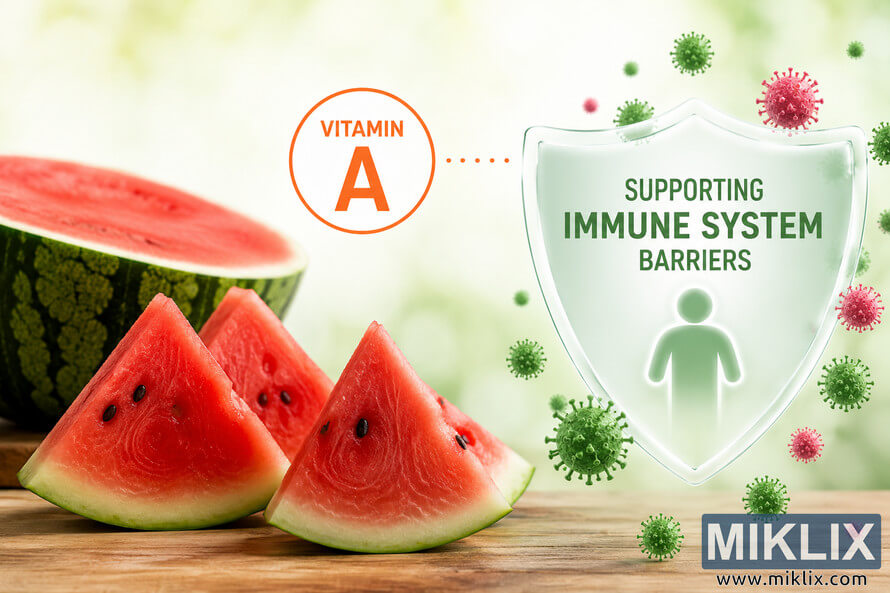
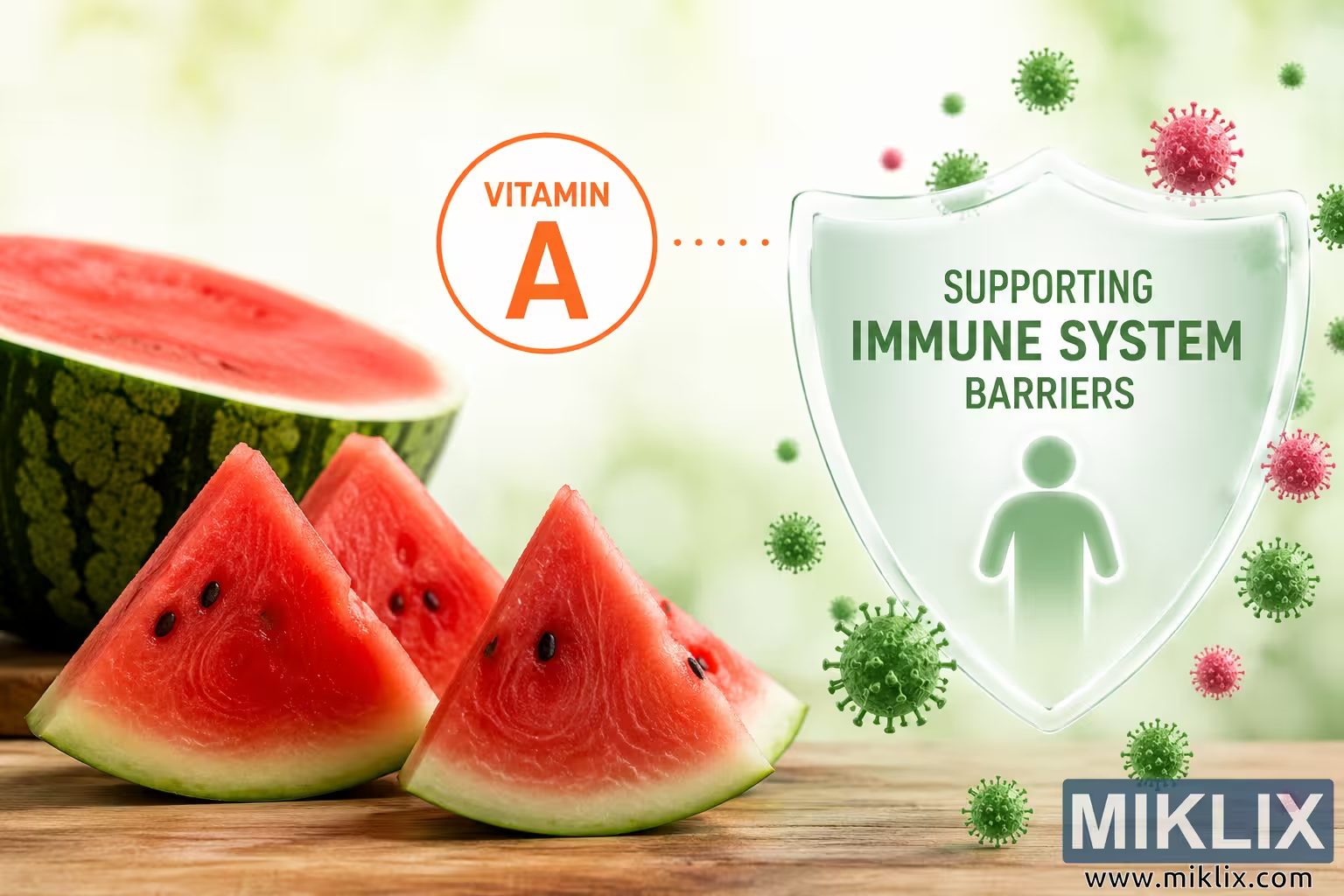
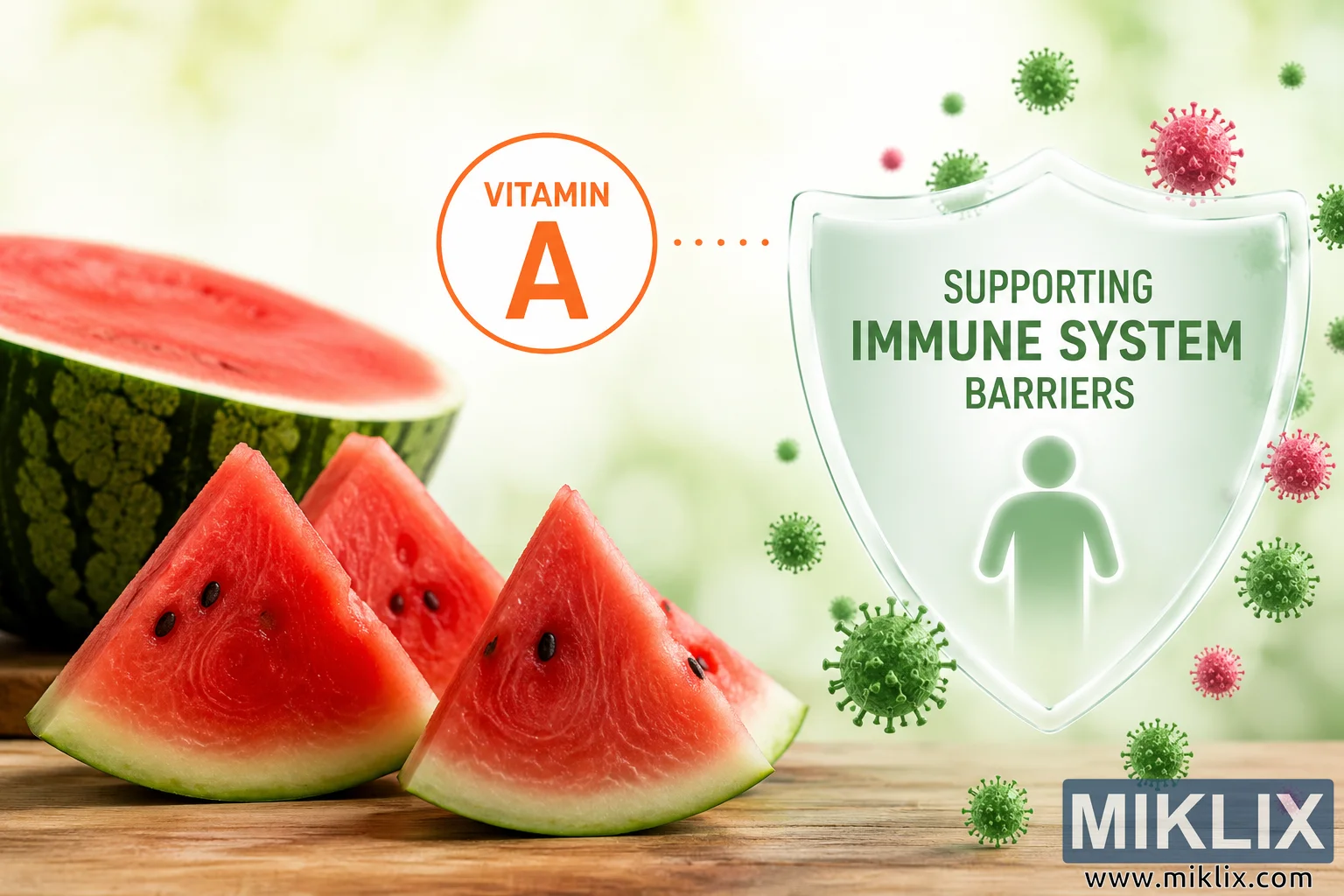
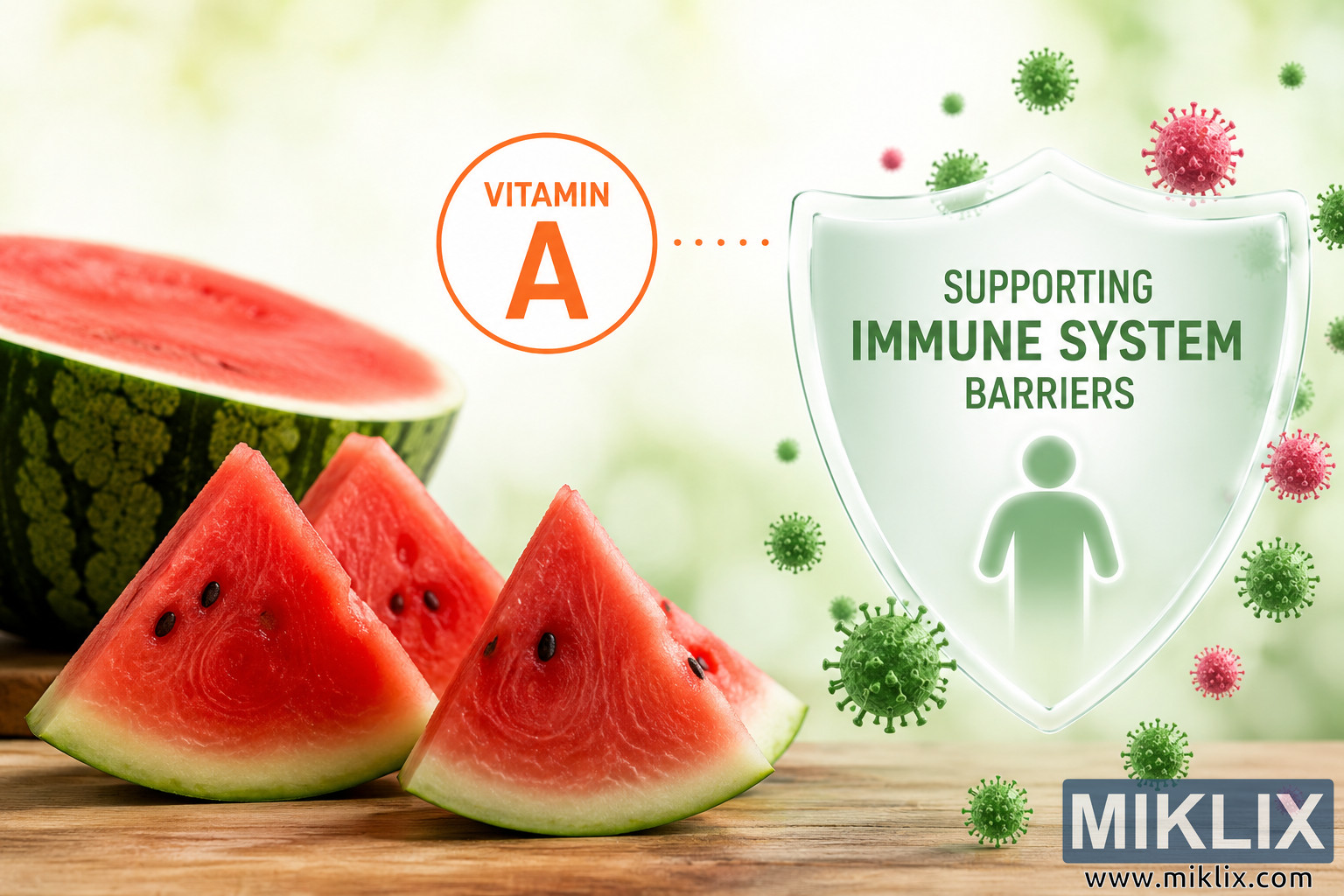
High-resolution landscape illustration showing watermelon as a source of vitamin A connected to immune system barrier support through a clean, modern healthcare-inspired visual with fresh fruit, a protective shield, and a bright natural background.
Available versions of this image
The image files available for download below are less compressed and higher resolution - and as a result of that, higher quality - than the images embedded in articles and pages on this website, which are more optimized for file size in order to reduce bandwidth consumption.
Regular size (1,536 x 1,024)
Large size (3,072 x 2,048)
Very large size (4,608 x 3,072)
Extra large size (6,144 x 4,096)
Comically large size (1,048,576 x 699,051)
- Still uploading... ;-)
Image description
This landscape-oriented digital illustration presents a clean, modern health-themed composition that visually communicates the relationship between watermelon, vitamin A, and the support of immune system barriers. The image is divided into two complementary visual areas that are seamlessly connected by a central nutritional message. On the left side of the composition, several freshly cut watermelon slices are displayed on a natural wooden tabletop. The fruit appears vibrant and juicy, with rich red flesh, subtle gradients of color, scattered dark seeds, and a crisp rind transitioning from pale green to deep green with natural striping. Behind the slices, a larger cut watermelon provides additional depth and reinforces the fruit as the primary nutritional focus. The lighting creates realistic highlights across the moist fruit surfaces, emphasizing freshness and natural appeal while maintaining a polished promotional aesthetic.
Near the center of the composition is a circular graphic element containing the words "Vitamin A" in large, bold lettering. The circular emblem is outlined with a warm orange border that contrasts against the predominantly green background. A series of small orange dots extends horizontally from the vitamin emblem toward the right side of the image, acting as a visual connector that implies a beneficial relationship between the nutrient source and its biological function. The connector guides the viewer's eye naturally from the watermelon toward the immune-support concept.
Occupying the right half of the image is a large translucent shield rendered with smooth gradients and subtle reflections, creating the appearance of glass or polished acrylic. The shield symbolizes the body's protective barriers and stands prominently against the softly blurred background. Centered within the shield is bold green typography stating that vitamin A supports immune system barriers. Below the text appears a simplified human figure icon rendered in matching green tones, reinforcing the concept of human health and wellness without depicting a specific individual. The shield's semi-transparent appearance allows the soft background colors to remain visible while simultaneously conveying strength, protection, and resilience.
Surrounding the shield are numerous stylized microscopic particle illustrations in varying shades of green and pink. These floating elements resemble generalized microorganisms or biological particles rather than scientifically precise organisms. Their scattered placement creates visual movement while reinforcing the theme of immune defense. The translucent shield visually separates these particles from the human figure icon inside, strengthening the metaphor that healthy immune barriers help defend the body against external biological challenges. The particles vary in size and depth, with some appearing slightly blurred to enhance the sense of three-dimensional space.
The background consists of a bright, softly illuminated gradient blending white with pale green tones. Gentle bokeh circles and softly diffused highlights create an airy, clean atmosphere commonly associated with nutrition, healthcare, and wellness communications. The intentionally shallow depth of field keeps attention focused on the watermelon, vitamin label, and protective shield while avoiding unnecessary distractions. The overall color palette emphasizes natural greens, fresh reds, soft whites, and subtle wood tones, producing a harmonious composition that communicates vitality, cleanliness, and health.
The wooden tabletop introduces a natural texture that balances the otherwise polished healthcare-inspired graphics. Fine wood grain patterns and warm brown tones ground the composition and contribute to an organic, wholesome presentation that complements the fresh fruit. The contrast between the realistic fruit photography style and the semi-transparent graphical elements creates a contemporary infographic appearance suitable for educational, editorial, or promotional health content.
Overall, the illustration conveys the concept that watermelon provides vitamin A, which contributes to supporting immune system barriers through a clear visual narrative. The eye is guided from the fresh fruit to the vitamin indicator and finally toward the protective shield, creating a logical flow of information without unnecessary visual clutter. The composition remains bright, balanced, and easy to interpret while presenting a positive message centered on nutrition, healthy eating, and immune support. The landscape format provides generous horizontal space for each major visual component, allowing the fruit, informational graphics, and symbolic immune protection imagery to coexist comfortably within a cohesive, high-resolution design suitable for digital publishing, presentations, educational materials, websites, social media banners, or wellness-related marketing content.
The image is related to: Watermelon: The Hydrating Superfruit You Should Eat More Often