
Image: Raspberries Nutrition and Health Benefits Illustration
Published: January 2, 2026 at 6:04:35 PM UTC
Last updated: January 2, 2026 at 6:05:05 PM UTC
Landscape educational illustration of raspberries highlighting their vitamins, fiber, antioxidants, and key health benefits. Perfect for nutrition, wellness, and food education content.
Available versions of this image
The image files available for download below are less compressed and higher resolution - and as a result of that, higher quality - than the images embedded in articles and pages on this website, which are more optimized for file size in order to reduce bandwidth consumption.
Regular size (1,536 x 1,024)
Large size (3,072 x 2,048)
Very large size (4,608 x 3,072)
Extra large size (6,144 x 4,096)
Comically large size (1,048,576 x 699,051)
- Still uploading... ;-)
Image description
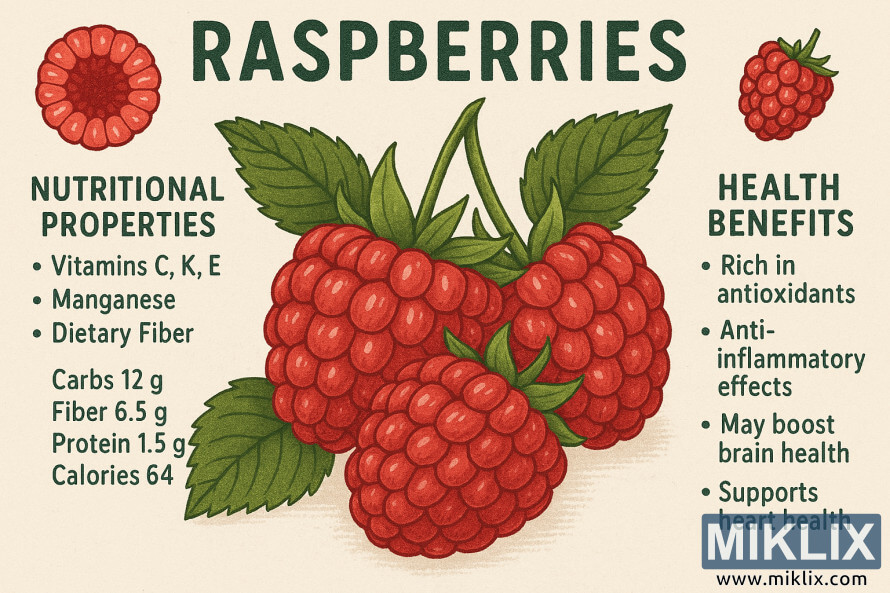
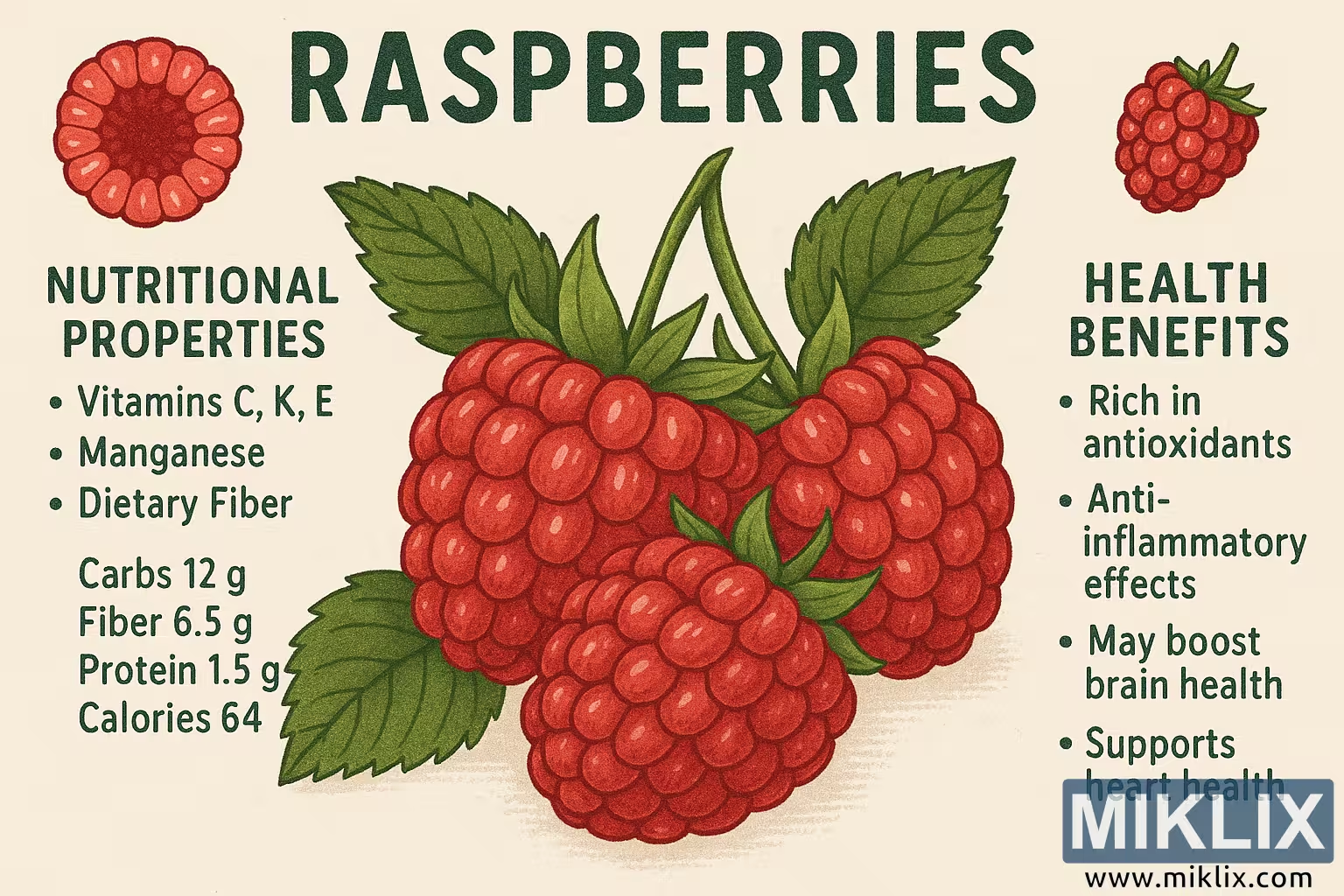
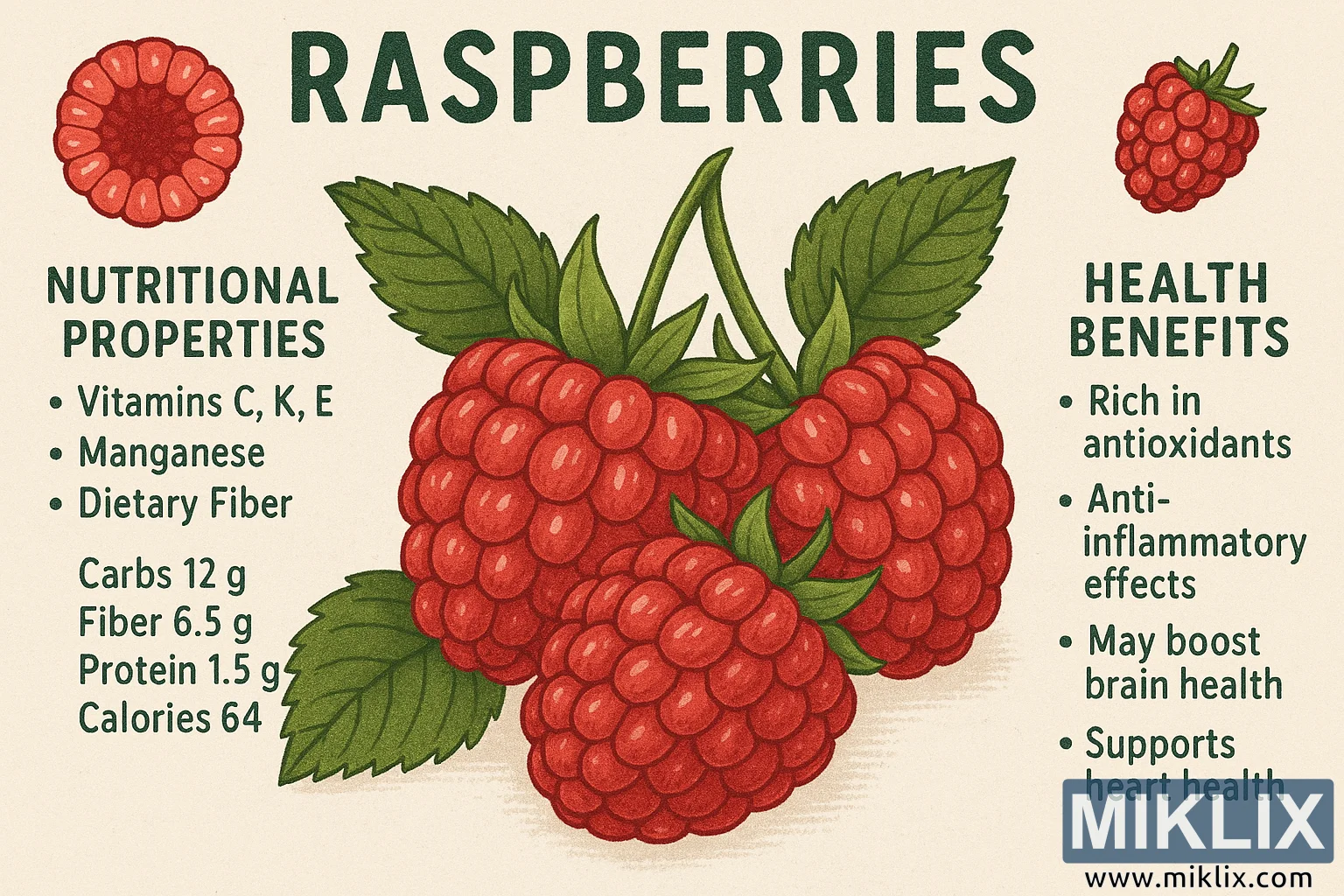
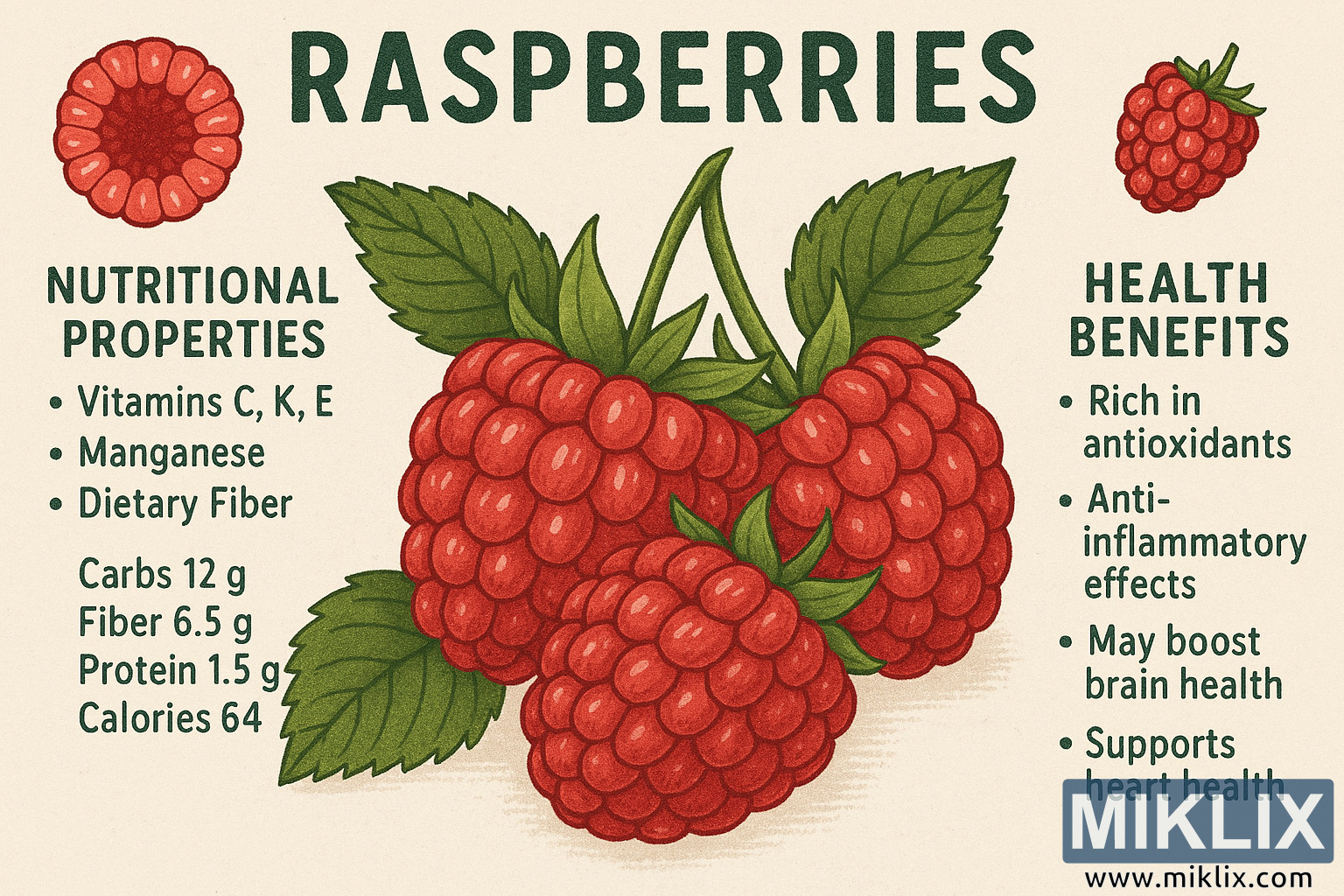
A clean, landscape-oriented educational illustration showcases the nutritional properties and health benefits of eating raspberries, designed to work as both an infographic and a decorative food education poster. The background is a warm, slightly textured off-white, reminiscent of natural paper, which helps the rich reds and deep greens stand out clearly. In the center of the composition, three detailed, photo-realistic raspberries cluster together on a short stem: each berry is composed of many tiny drupelets, rendered with subtle highlights and shadows to suggest juiciness and freshness. Their color ranges from deep crimson to lighter ruby tones, giving them depth and a lifelike appearance. Attached to the stem are several serrated, deep green raspberry leaves with visible veins and slight wrinkles, emphasizing the plant’s natural, botanical character.
Above the central fruit illustration, the word "RASPBERRIES" appears in bold, uppercase lettering. The font is slightly distressed and organic, in a dark green hue that reinforces the natural, health-oriented theme. The text is large enough to serve as an immediate visual anchor, clearly identifying the subject of the image at a glance. The layout is carefully balanced: on the left side of the central raspberry cluster, a vertical section is devoted to nutritional information, while the right side mirrors it with health benefits, creating a clear, readable infographic structure.
On the left side, the heading "NUTRITIONAL PROPERTIES" is written in uppercase dark green text, aligned neatly for easy scanning. Under this heading, short bullet points list key nutrients found in raspberries, such as vitamins C, K, and E, as well as manganese and dietary fiber. Below the micronutrients, a concise macronutrient and calorie breakdown is presented, including approximate values for carbohydrates, fiber, protein, and total calories per serving. The typography is a clean, sans-serif font that contrasts with the more decorative title, supporting legibility and a scientific, trustworthy tone.
On the right side, in parallel, the heading "HEALTH BENEFITS" appears in uppercase dark green letters. Below it, a set of bullet-pointed statements highlight major evidence-based benefits of eating raspberries, such as being rich in antioxidants, offering anti-inflammatory effects, potentially supporting brain health, and contributing to heart health. Each benefit is phrased succinctly, making the image suitable for use in nutrition blogs, educational materials, wellness presentations, or social media posts. The spacing and alignment keep the text blocks visually light and approachable, avoiding clutter.
In the top left corner of the image, there is a smaller, detailed illustration of a raspberry cross-section. This cross-section shows the circular shape, the hollow core typical of raspberries, and the arrangement of the tiny drupelets and seeds around the perimeter. To the right of the central cluster, a single raspberry is depicted, slightly smaller but rendered with the same level of detail and realism, helping to balance the layout visually. Overall, the image communicates a clear, inviting message: raspberries are vibrant, nutritious, and beneficial for health. The combination of natural colors, clear typography, and structured information makes the illustration ideal for educational, culinary, health, and diet-related contexts where both aesthetic appeal and accurate information matter.
The image is related to: Why Raspberries Are a Superfood: Boost Your Health One Berry at a Time