
छवि: Young Parsnip Seedlings Emerging in Mulched Garden Rows
प्रकाशित:
आखरी अपडेट: 18 मार्च 2026 को 8:43:48 pm UTC बजे
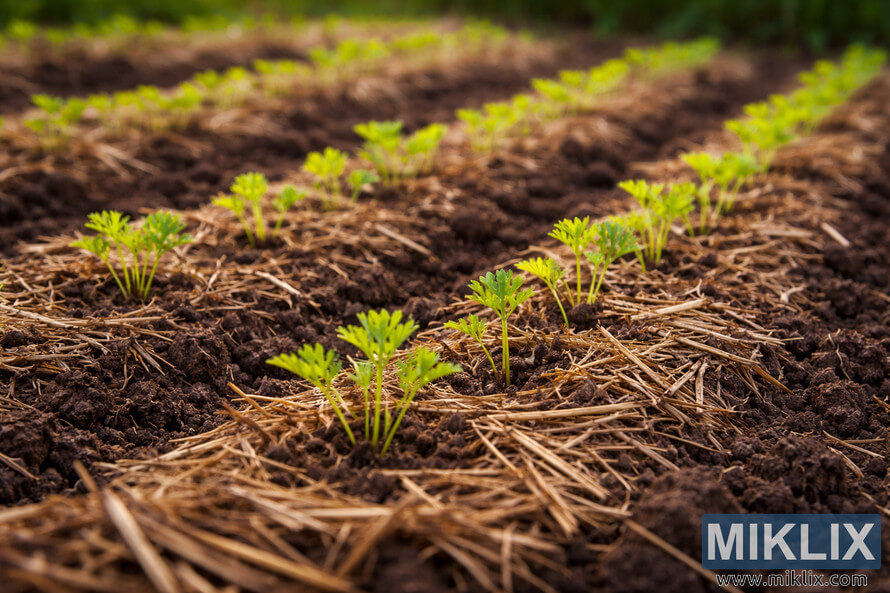
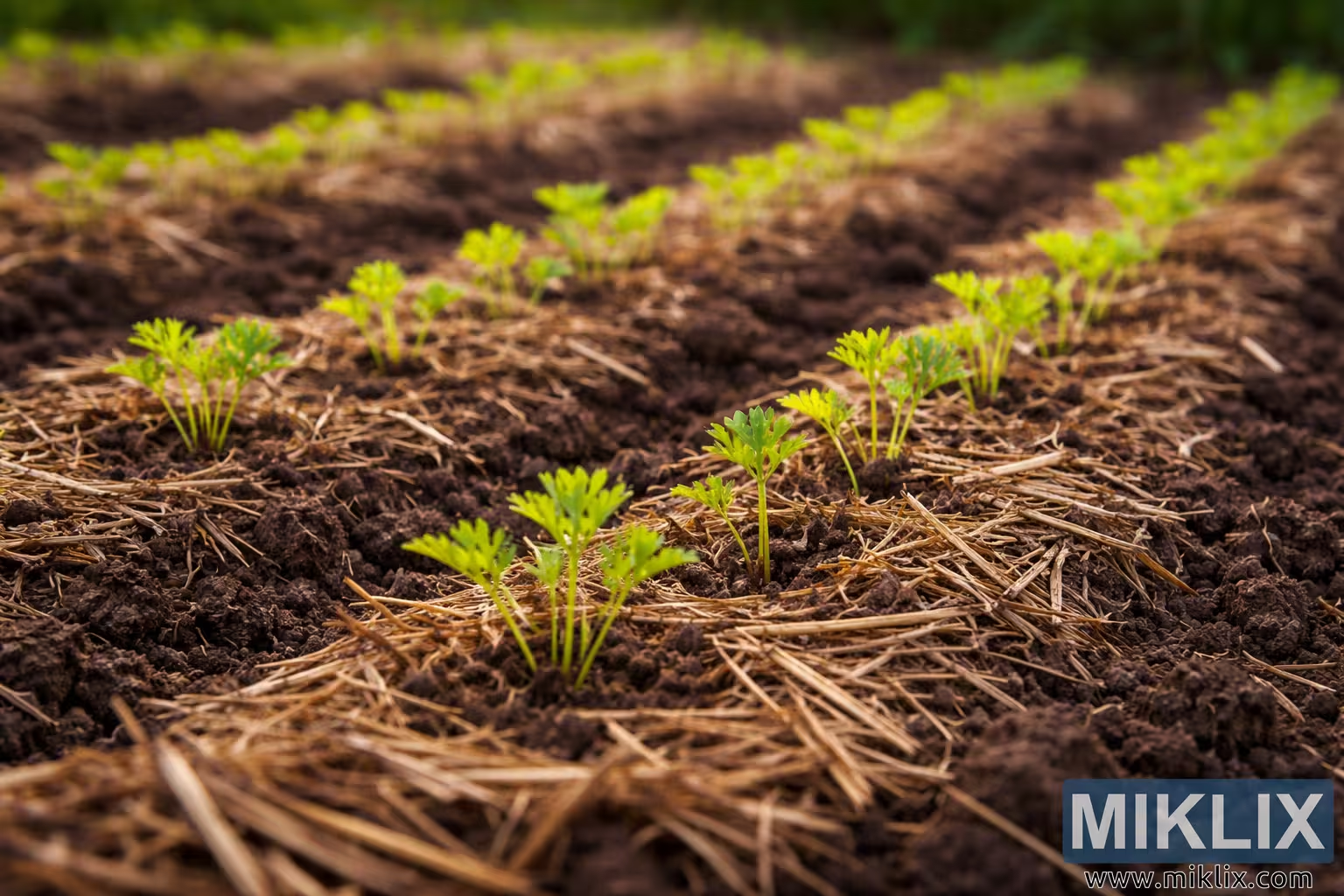
Close-up landscape image of young parsnip seedlings emerging from rich soil in neatly mulched garden rows, illuminated by soft natural sunlight.
Young Parsnip Seedlings Emerging in Mulched Garden Rows
इस छवि के उपलब्ध संस्करण
नीचे डाउनलोड के लिए उपलब्ध इमेज फाइलें इस वेबसाइट पर लेखों और पृष्ठों में एम्बेडेड छवियों की तुलना में कम संपीड़ित और उच्च रिज़ॉल्यूशन वाली हैं - और परिणामस्वरूप, उच्च गुणवत्ता वाली हैं - जिन्हें बैंडविड्थ की खपत को कम करने के लिए फ़ाइल आकार के लिए अधिक अनुकूलित किया गया है।
नियमित आकार (1,536 x 1,024)
बड़ा आकार (3,072 x 2,048)
बहुत बड़ा आकार (4,608 x 3,072)
अतिरिक्त बड़ा आकार (6,144 x 4,096)
हास्यास्पद रूप से बड़ा आकार (1,048,576 x 699,051)
- अभी अपलोड हो रहा है... ;-)
छवि विवरण
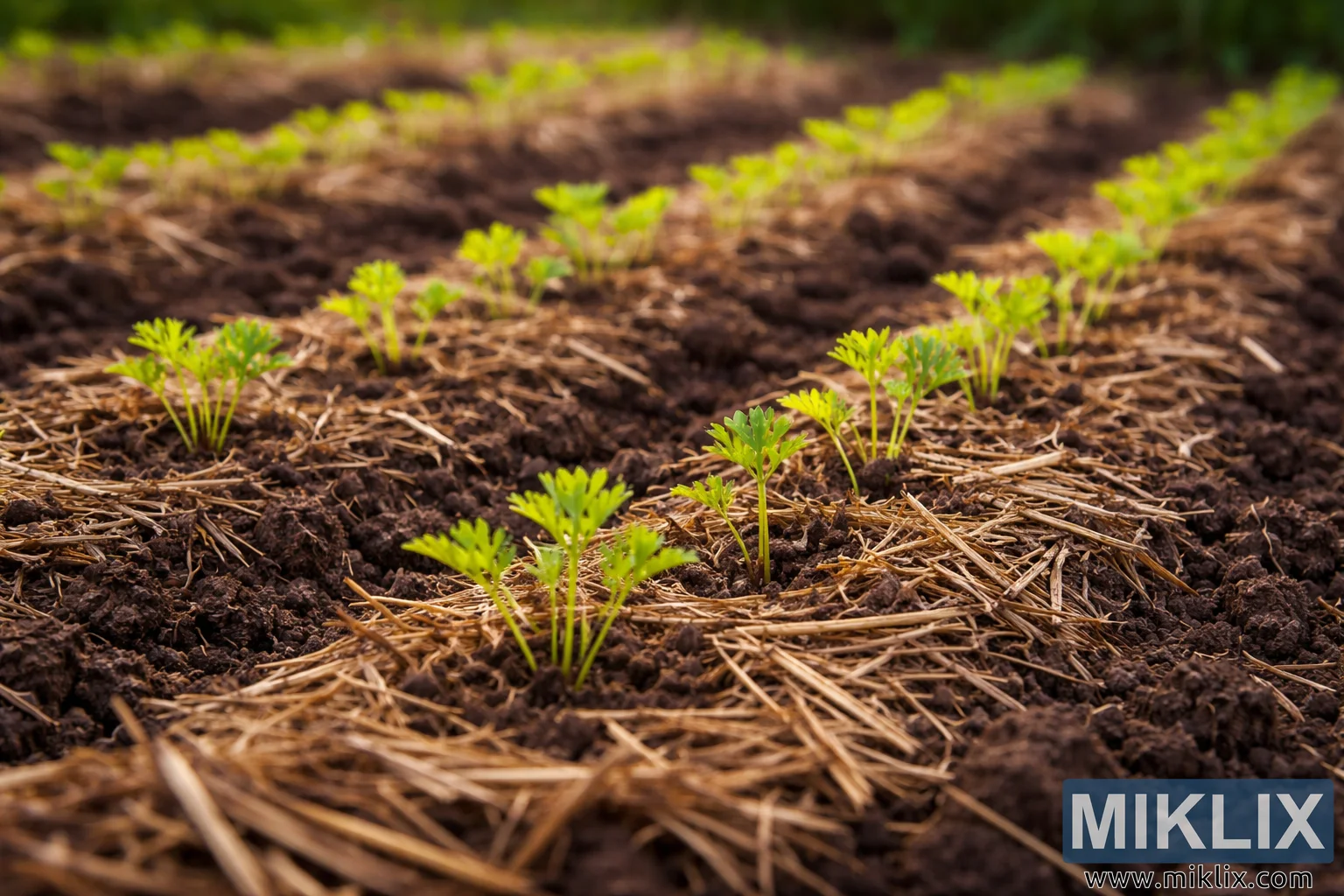
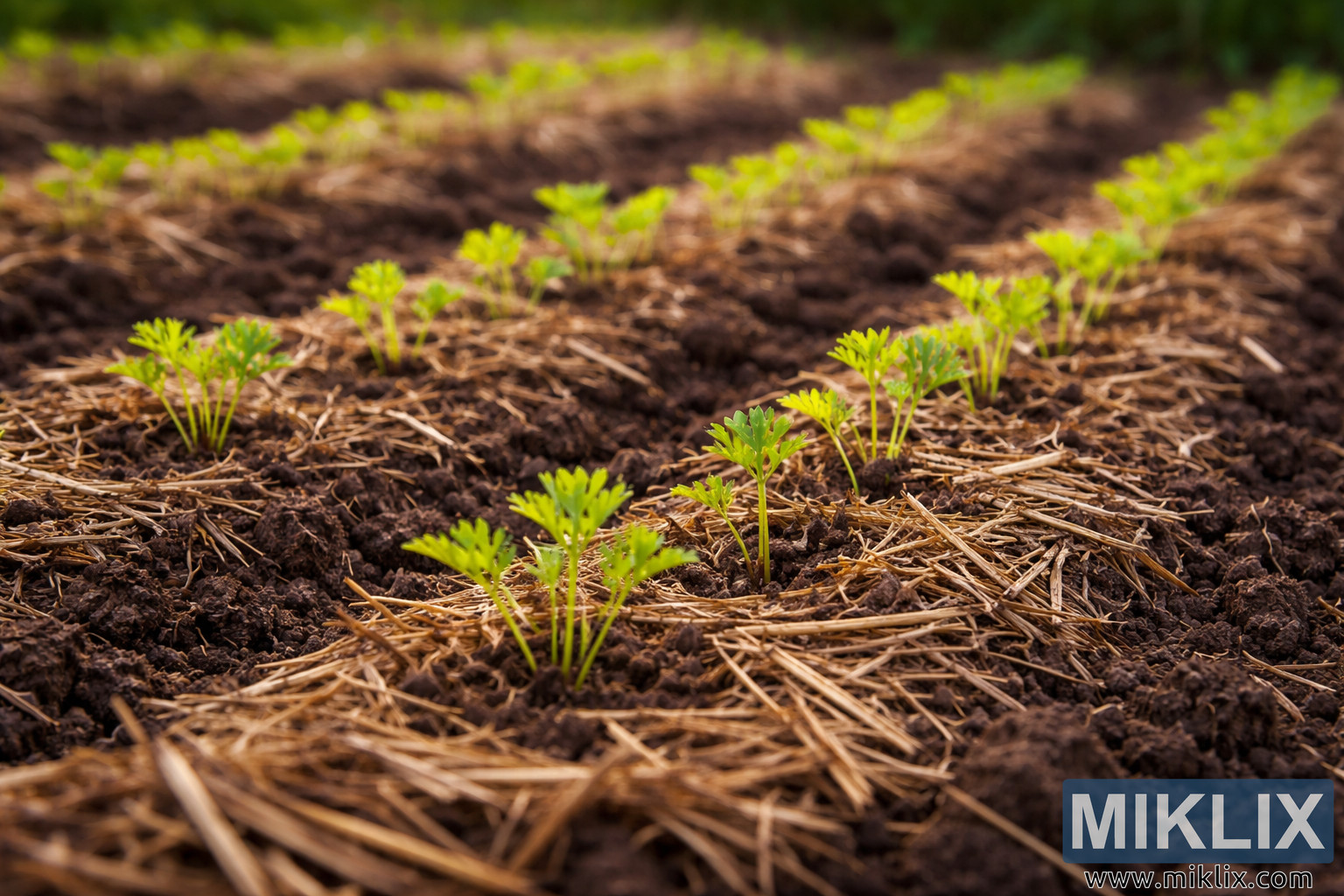
A close-up landscape photograph captures young parsnip seedlings emerging from rich, dark garden soil arranged in orderly rows. The perspective is low to the ground, placing the viewer at soil level and emphasizing the delicate scale of the newly sprouted plants. Each seedling stands only a few centimeters tall, with thin pale-green stems supporting tiny, bright green leaves that are just beginning to unfold. The leaves have a slightly lobed shape typical of young parsnip plants, appearing fresh, tender, and vibrant against the darker tones of the soil.
The seedlings are spaced along shallow garden rows that run horizontally across the frame, creating a repeating pattern that draws the eye from the foreground into the softly blurred background. Around the base of each seedling lies a layer of organic mulch made from straw and small wood fragments. The mulch forms light golden-brown rings and patches around the plants, helping to retain moisture and suppress weeds while providing visual contrast with the deep brown soil beneath.
In the foreground, the soil texture is highly detailed, showing small clumps, granules, and bits of decomposing organic matter. The mulch fibers are clearly visible, thin and irregular, scattered loosely between the seedlings. Several seedlings stand prominently in focus near the center of the frame, their leaves catching soft natural sunlight that highlights their translucent edges and fresh growth.
As the rows extend further into the garden bed, the depth of field becomes progressively shallower. Seedlings in the middle ground remain visible but slightly softened, while those in the background blur into gentle green and brown shapes. This gradual blur creates a sense of depth and emphasizes the repeating geometry of the planted rows.
The lighting appears to be natural daylight, likely from early morning or late afternoon, producing a warm, soft glow that enhances the vivid green of the leaves and the earthy tones of the soil and mulch. The background is composed of diffuse greenery, suggesting surrounding plants or garden borders, but it remains indistinct due to the shallow focus.
Overall, the image conveys the quiet beginning of a garden crop. The tiny seedlings represent the earliest stage of growth, emerging through carefully prepared soil and protective mulch. The scene reflects attentive gardening practices and the promise of future harvest, with rows of young parsnip plants just beginning their development in a well-maintained garden bed.
छवि निम्न से संबंधित है: Growing Parsnips: Your Complete Guide to Sweet, Homegrown Roots