
Hops in Beer Brewing: Tolhurst
Megjelent:
Utolsó frissítés: 2026. április 16. 19:38:14 UTC
Tolhurst hops weave a small but significant part into English brewing's rich tapestry. Developed in the 1880s by James Tolhurst in Horsmonden, Kent, they likely stem from an older landrace. Tolhurst hops have been a cornerstone for English aroma hops for many years.
Hops in Beer Brewing: Tolhurst
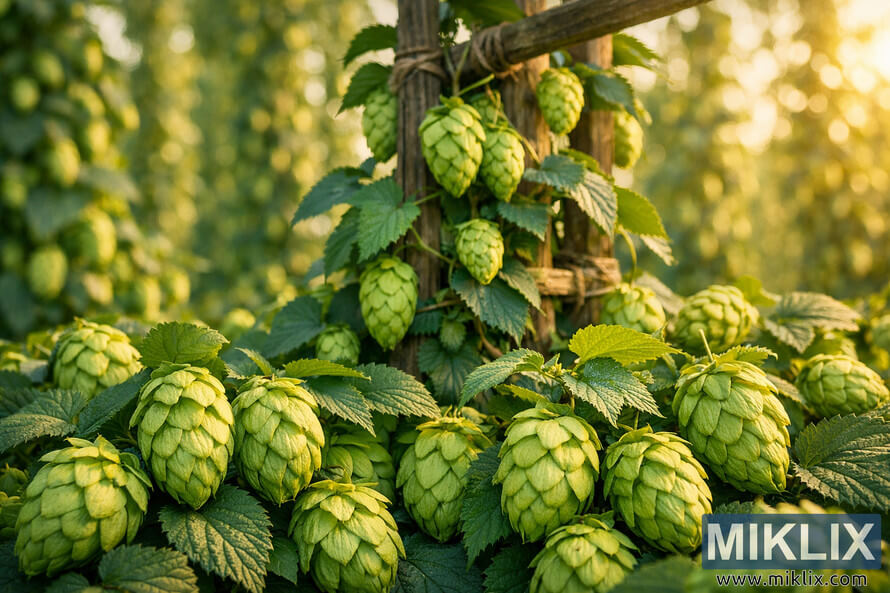
További információkért és nagyobb felbontásért kattintson vagy koppintson a képre.
As an aroma hop, Tolhurst imparts a soft, lightly continental character. It lacks the bold citrus or resinous notes found in other hops. With an alpha acid content around 2.2%, Tolhurst hops are ideal for adding a delicate aromatic lift rather than bittering. This makes them a favorite among brewers aiming to recreate historical ales and pale beers with precision.
However, Tolhurst's use is limited by its characteristics. It has low yields, matures early, grows slowly, and stores poorly. These traits influence how brewers source, handle, and incorporate Tolhurst hops into their recipes.
This article delves into the botanical, chemical, and aromatic aspects of Tolhurst hops. It also explores their historical context, recipe applications, storage and sourcing, and research sources. This information aims to assist brewers in making informed decisions about using Tolhurst hops.
Key Takeaways
- Tolhurst hops are an English aroma hop developed in Horsmonden in the 1880s.
- The Tolhurst hop variety has a mild continental-style aroma and very low alpha acids (~2.2%).
- Yields are low and growth is slow, so Tolhurst brewing often requires careful sourcing.
- Storage stability is poor; use fresh cones or well-handled pellets when possible.
- The variety suits historical recreations and delicate English-style ales more than modern bittering roles.
Overview of Tolhurst hops and their place in brewing history
Tolhurst hops have a rich history, dating back to the late 19th century. They occupy a unique niche in English brewing lore. This overview delves into their origin, early applications in English breweries, and the reasons behind their decline in commercial popularity.
Origin and breeder
In the 1880s, James Tolhurst began cultivating Tolhurst hops in Kent. As a Horsmonden hop breeder, he combined local landraces with continental varieties. This effort aimed to create a hop that complemented regional ales. The genetic lineage of Tolhurst hops is rooted in older Flemish and continental strains.
Historical use in English brewing
By the 1920s, Tolhurst hops were seen as a mild, acceptable choice for beers needing a subtle hop flavor. The variety was prized for its delicate aroma and balanced character. It served as a milder alternative to Fuggle or Golding hops for brewers seeking a less pronounced hop presence.
Modern cultivation status
Today, Tolhurst hops are not commercially grown. Factors like low yields, early maturity, and poor storage stability made them unprofitable for modern production. Despite this, there remains a dedicated interest among historical brewers and researchers. They focus on preserving heritage varieties and recreating traditional recipes.
- Origin of Tolhurst hops: 1880s Kent selection by James Tolhurst.
- Horsmonden hop breeder: local cultivation with continental genetic ties.
- History of Tolhurst: modest role in English brewing, now of niche research interest.
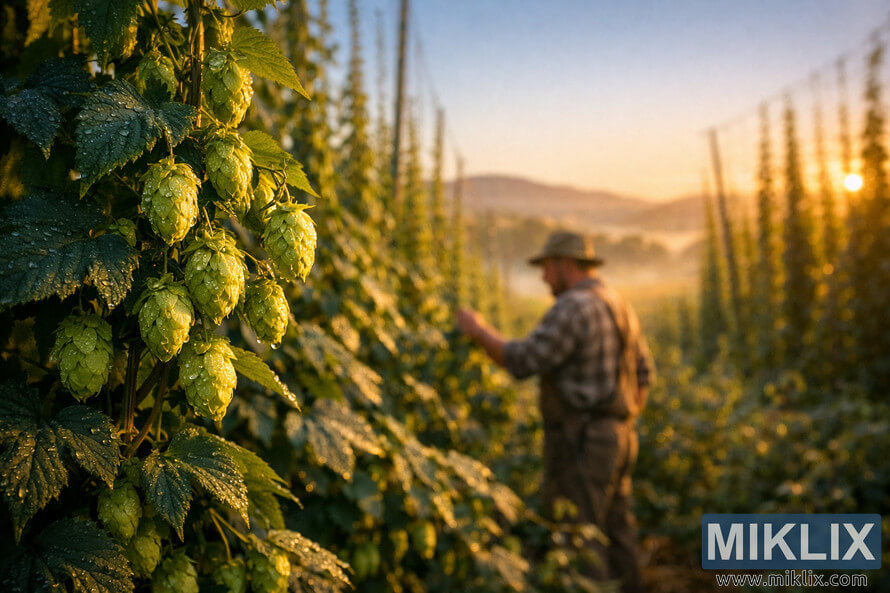
További információkért és nagyobb felbontásért kattintson vagy koppintson a képre.
Botanical and agricultural characteristics of Tolhurst hops
Tolhurst hops exhibit a serene, old-world demeanor in cultivation. Growers observe a slow vine growth and modest seasonal maturity. These traits influence decisions on spacing, trellis height, and harvest timing. Tolhurst agronomy guides small-scale plantings and heritage brewing projects, where authenticity is paramount over commercial output.
Growth habit and yield
The Tolhurst growth habit is marked by a low vigor canopy and steady early-season development. Plants mature earlier than many modern cultivars, mitigating late-season weather risks.
Reported hop yield Tolhurst ranges from about 335 to 785 kg per hectare (300–700 lbs per acre). This places it below many contemporary varieties bred for high output.
Resistances and susceptibilities
Tolhurst shows moderate resistance to downy mildew, beneficial in cooler, damp climates. No strong resistances are recorded for other common hop diseases. This explains its limited presence in large-scale farming.
Growers must consider Tolhurst's disease profile against monitoring and spray program costs. Susceptibility to additional pests or pathogens can increase labor and input needs.
Harvest and cone attributes
Modern records emphasize Tolhurst's functional hop cone attributes over size or density. Descriptions focus on brewing aroma relevance rather than ornamental form.
Ease of harvest is not a highlighted feature. Low overall yield and storability concerns influence grower decisions more than cone morphology when choosing Tolhurst for production.
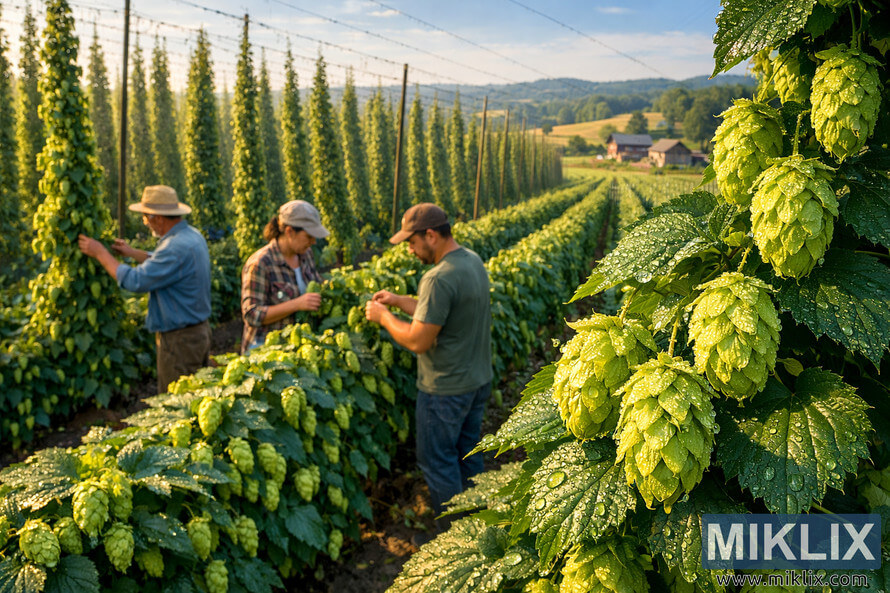
További információkért és nagyobb felbontásért kattintson vagy koppintson a képre.
Chemical profile and alpha/beta acid composition
Tolhurst hops possess a chemical makeup that aligns with aromatic and historical brewing. Their moderate bittering strength and significant humulone fraction influence their use in recipes. The acid levels are measured, showing changes over time and with handling.
Alpha and beta acids
- Tolhurst alpha acid is near 2.2%, positioning it as a low-alpha aroma hop, not a primary bittering source.
- Its beta acid content is around 2.9%, enhancing aroma stability and flavor complexity in late additions.
- This balance makes Tolhurst suitable for adding scent and character, rather than for IBUs. Small late or dry-hop additions are recommended to showcase its profile.
Co-humulone and storage behavior
- Co-humulone Tolhurst makes up about 31% of total humulones, impacting perceived bitterness quality during the boil.
- Hop storage stability is a weakness for Tolhurst. It retains only about 49% of its alpha acid after six months at 20°C (68°F). The rapid loss of alpha and aroma compounds diminishes its utility for long-term storage.
- Due to poor hop storage stability, fresh use or cold, oxygen-free storage is crucial to preserve hop character. Many commercial producers have discontinued Tolhurst for this reason.
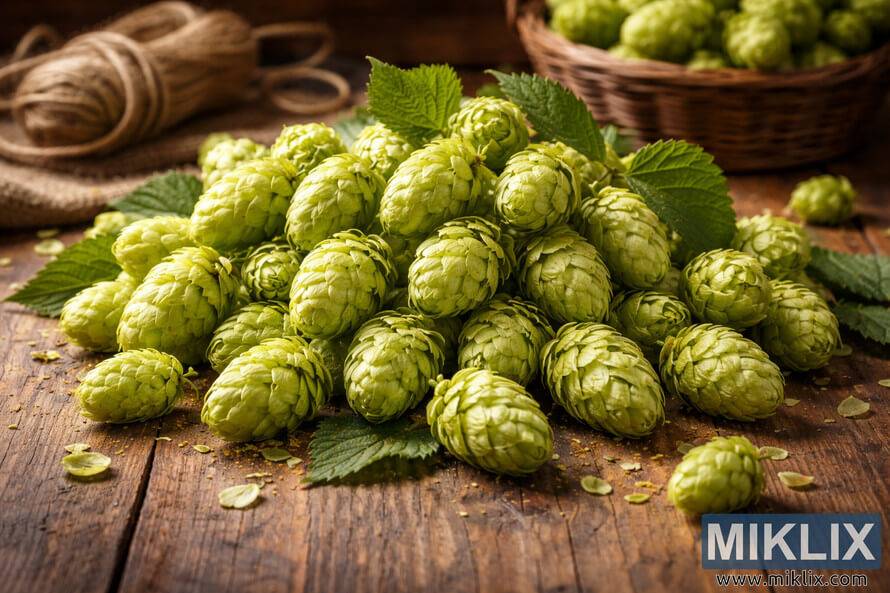
További információkért és nagyobb felbontásért kattintson vagy koppintson a képre.
Aroma and essential oil makeup
Tolhurst hops bring a subtle, continental-style scent to saisons, pale ales, and traditional English beers. The Tolhurst aroma is pleasant yet restrained, offering brewers a soft herbal background. This is ideal for achieving balance and subtle complexity in beer.
The hop's oil profile contributes to its unique character. Tolhurst essential oils are moderate in quantity but diverse in composition. They provide a blend of herbal, floral, and faint spicy notes. These flavors emerge during whirlpool or late additions.
- Total oil: 0.65 mL/100 g.
- myrcene humulene Tolhurst balance: myrcene roughly 42.5%, humulene about 19.4%.
- Other notable constituents: farnesene ~8.3% and caryophyllene ~7.7%.
The high myrcene fraction contributes a mild resinous and green-vegetal tone. The humulene share softens brightness, adding a faint woody-spice quality. This combination creates a balanced Tolhurst aroma. It enhances malt and yeast flavors without overpowering them.

További információkért és nagyobb felbontásért kattintson vagy koppintson a képre.
Brewing purpose and how Tolhurst hops are used in recipes
Tolhurst is highly valued for its aroma, not its bittering qualities. Its low alpha-acid content means it's added to enhance fragrance and subtle flavors. Recipes that include Tolhurst aim to enrich the hop bouquet with its delicate floral and herbal notes, without increasing IBUs.
- Aroma-focused role
- Tolhurst is best used as a late-stage or finishing hop. It's ideal for enhancing esters and malt character with a light, English-style hop perfume. For beers focused on aroma, Tolhurst is perfect for adding top notes, not base bitterness.
- Typical usage rates in recipes
- In aroma-focused recipes, Tolhurst often makes up a significant portion of the hop bill. It typically accounts for about 43% of the total hop weight in blends featuring it. With an alpha of 2.2%, expect to use moderate-to-high hop weights to achieve a pronounced aroma without increasing IBUs.
- Recommended addition timings
- Timing is crucial to preserve Tolhurst's delicate volatile oils. Late boil additions, between 10–5 minutes, extract aroma while minimizing isomerization. Whirlpool and hop-stand additions help pull out aroma without adding bitterness. Dry hopping captures the purest floral and herbal character.
Practical tips for using Tolhurst hops: avoid heavy early-boil use as it wastes its aroma potential. For extract or partial-mash brews, mirror these late additions and use larger gram amounts to match the aroma intensity of all-grain recipes.
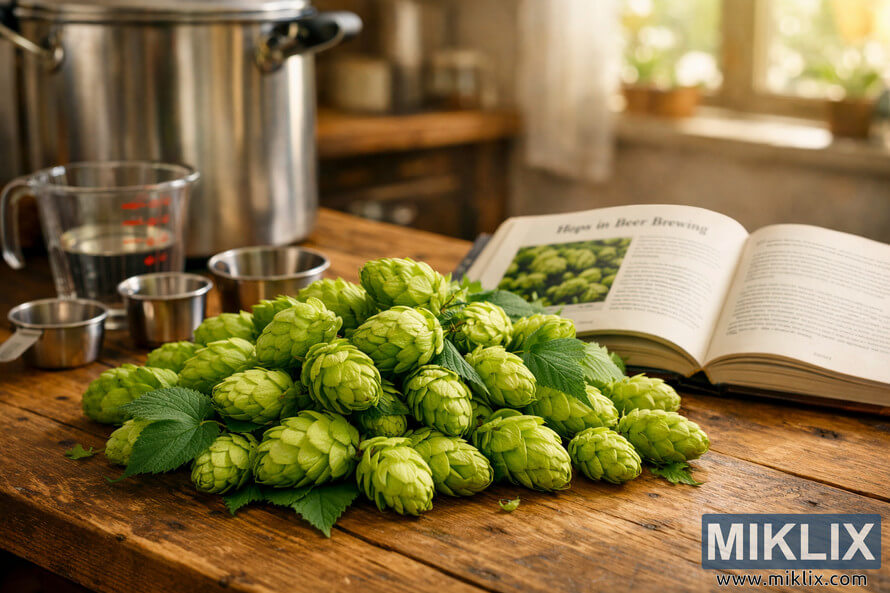
További információkért és nagyobb felbontásért kattintson vagy koppintson a képre.
Flavor and sensory impact on beer styles
Tasters note Tolhurst delivers a gentle, restrained hop voice. The Tolhurst flavor profile leans toward light floral and herbal tones with a soft, slightly bitter finish. It does not dominate malt or yeast characters, so it supports complex, malt-forward beers without stealing focus.
Use of Tolhurst in a recipe mainly adds aroma and subtle bite. The hop’s contribution to mouthfeel is minor; it shapes perception through scent and aftertaste rather than fullness or carbonation. Brewers often count on those delicate notes when crafting nuanced profiles.
Consider these practical points when planning beers with Tolhurst:
- Late additions and dry hopping maximize the light floral-herbal aromas.
- Low to moderate bittering keeps the hop in balance with English malts.
- Pair with clean, neutral yeasts to let the subtle hop character show.
Best matches for Tolhurst suitable styles include historical English ales, mild ales, and restrained pale ales. Period recreations from the 16th to 19th centuries benefit from Tolhurst’s understated aroma. Brewers aiming for a mild continental-style scent rather than citrus-driven intensity will find Tolhurst an apt choice.
When blending, think small adjustments. A light touch preserves the hop’s charm in beers with caramel or biscuit malts. That approach highlights Tolhurst in both modern interpretations and faithful historical recreations.
Tolhurst hops in historical and recreations brewing
Tolhurst hops are a favorite among historians and craft brewers. They aim to recreate beers from the 16th to 19th centuries. The hops' genetics and Flemish lineage make them ideal for these recipes. Researchers appreciate Tolhurst for its unique flavor and as a living link to ancient brewing traditions.
Use in historical research and recreations
Academic teams and living-history brewers choose Tolhurst for its authentic hop character. Its gentle bitterness and modest aromatic notes align with early modern brewing accounts. Through hands-on trials, Tolhurst helps test hypotheses about brewing techniques and ingredient combinations from the past.
Recreations with Tolhurst hops involve pairing heritage malts, local water profiles, and traditional yeast strains. These experiments aim to understand how hop choice influenced the taste, preservation, and perceived medicinal qualities of older ales. Brewers document sensory data, stability, and fermentation behavior to compare with historical descriptions.
Case study summary
A significant project by food historian Susan Flavin Tolhurst recreated 16th-century Irish ales. They used bere barley and oat malt with Tolhurst hops. The team recorded brew gravities that produced beers with 5%–5.3% ABV. The beers were light honey in color and had a hazy mouthfeel from the oats.
The hop contribution was a gentle aroma and slight bitterness, matching historical reports. This project helped refine methods for sourcing heritage ingredients and adapting modern processes to period aims. Its findings guide future work in experimental archaeology and craft brewing.
Comparisons and substitutes for Tolhurst hops
Tolhurst hops are known for their low-alpha, gentle aroma with herbal and light floral notes. When searching for Tolhurst substitutes, it's crucial to consider aroma, alpha acid, and oil balance. This ensures the character of the beer remains consistent, even when Tolhurst is not available.
Contemporary substitutes
Seek hops with a mild English or continental aroma and low bitterness. Many brewers opt for classic English aroma varieties as Tolhurst alternatives. These hops offer soft herbal, floral, and earthy tones that complement the beer without overpowering it.
- Choose options with comparable oil ratios, especially higher myrcene and moderate humulene, to preserve Tolhurst’s aromatic footprint.
- When matching alpha acids, select lower-alpha varieties to avoid changing the brew’s bitterness profile.
- Consider modern growers’ offerings that mimic historic aroma without sacrificing supply chain reliability.
When to choose a substitute
Replace Tolhurst when it is unavailable or when you need more consistent commercial supply. Most commercial sources do not grow Tolhurst at scale. Brewers often choose substitute hops for Tolhurst to secure ingredients and meet deadlines.
Pick hop alternatives to Tolhurst if you require better storability or a slightly higher alpha acid for IBU control. This choice simplifies brewing logistics while keeping the beer’s aromatic balance close to the original.
Retain Tolhurst when historical accuracy matters. For recreations and research, attempt to source genuine cones or preserved samples. Use substitute hops for Tolhurst only after comparing oil composition and tasting trial batches. This ensures the final beer reflects your intent.
Storage, stability, and handling considerations
Tolhurst hops have a limited shelf life, posing challenges for brewers. To preserve aroma and bitterness, practical storage methods are essential.
Storability limitations
Tolhurst hops degrade faster than many modern varieties. At 20°C (68°F), they retain about half of their alpha acids after six months. Their total oil content is moderate, around 0.65 mL per 100 g. This means volatile components decrease rapidly in warm, oxygen-rich environments.
Due to this rapid decline, Tolhurst hop stability is inferior to that of fresh-bred hops. Aroma loss and reduced bittering are common when these hops are not stored properly or at room temperature.
Handling best practices
- Store Tolhurst hops cold and freeze them when possible to slow chemical breakdown.
- Use vacuum or nitrogen flushing with oxygen-barrier packaging to limit exposure.
- Opt for smaller, fresher lots and minimize storage time to preserve oils and alpha acids.
- Plan brewing schedules so Tolhurst is used in late boil additions or as dry hop to capture remaining aroma.
- Label packages with harvest and reception dates to track age and potency.
Adopting these practices minimizes loss from oxidation and heat. Proper care extends the usable life of Tolhurst hops. It also enhances consistency in batch results, especially when storing Tolhurst hops or evaluating hop stability Tolhurst for historical or small-batch brews.
Brewing formulations and recipe ideas featuring Tolhurst hops
Introduce Tolhurst hops to your English ale for a floral touch without bitterness. Below, a concise recipe and pairing suggestions for a 5-gallon batch are provided. The focus is on aroma and balance, with hop quantities adjusted for Tolhurst's low alpha acid and delicate nature.
Simple ale recipe outline (5 gallons)
- Grain bill: 10 lb Maris Otter or British pale ale malt, 1.5 lb medium crystal (40–60L).
- Mash: single infusion to 65–67°C (149–153°F) for 60 minutes for balanced body.
- Boil: 60 minutes. Minimal bittering hops; account for Tolhurst alpha ~2.2%.
- Late hop schedule: 20 g Tolhurst at 10 minutes, 30 g at whirlpool (10–20 minutes at 80°C), and 30–50 g dry hop for 3–5 days.
- Yeast: English ale strain pitched to proper cell count and fermentation at 18–20°C.
- Expected profile: low IBU, soft malt backbone, delicate floral and herbal aroma from Tolhurst ale recipe choices.
Brewing notes
- Adjust late additions if you prefer more aroma or a subtly higher bitterness; Tolhurst recipe calls for late and dry hop emphasis rather than early bittering.
- Use gentle whirlpool temperatures to preserve volatile oils and avoid harsh vegetal notes.
- Cold conditioning for 1–2 weeks clarifies malt character and lets Tolhurst aroma bloom.
Pairings with malts and yeast
Tolhurst pairs best with traditional English malts, enhancing its floral tones. Choose malts that complement Tolhurst to achieve a rounded, authentic profile.
- Base malts: Maris Otter or Golden Promise for bread-like richness and a clean finish.
- Specialty malts: medium crystal for touch of caramel and body. Use modest amounts to avoid masking hop aroma.
- Historical options: bere barley and oats for recreations following Susan Flavin’s documented trials.
- Yeast: English ale strains such as Wyeast 1968 London ESB or Safale S-04 to add fruity esters and support a classic house character.
Scaling and substitution tips
- For smaller batches, scale grains and hops proportionally. Keep late addition percentages the same to preserve aroma balance.
- If Tolhurst supply is limited, blend a small amount with a neutral noble hop to maintain low bitterness while boosting aromatic lift.
- Record mash efficiency and adjust base malt to hit target gravity when using heritage grains like bere barley.
These formulations guide brewers in crafting a Tolhurst ale recipe that showcases subtle floral notes and complements malts. Test small batches and adjust hop timing to align with personal taste and yeast character.
Practical tips for homebrewers using Tolhurst hops
Working with Tolhurst in a homebrewing setup requires small adjustments to technique and weight. Tolhurst's low alpha acid and modest oil content make it ideal for late-stage and dry-hop use. This approach enhances aroma without increasing bitterness.
For homebrew batches, increase the weight of aroma additions compared to modern high-alpha hops. Use 1.5–2 times the gram amount for a contemporary aroma hop to achieve a noticeable floral or herbal presence.
Utilize late-boil, whirlpool, or dry-hop steps to capture volatile oils. Dry-hopping for 3–7 days at 60–68°F ensures a clean, fresh aroma. Cold-crashing after dry hopping helps clear the beer and retain aroma.
Recipe scaling and substitution advice
When scaling recipes, calculate bitterness using an alpha of about 2.2% and assume total oil near 0.65 mL/100 g. Adjust gravities and hop weights proportionally to batch volume. Re-check IBUs after substitution.
- Direct substitution: swap Tolhurst by weight while adjusting boil additions upward for aroma.
- Split substitution: combine Tolhurst with a stable modern English aroma hop such as East Kent Goldings to improve storability and consistency.
- Substitute choices: pick low-alpha English aromas to preserve the gentle continental and herbal notes Tolhurst provides.
Practical handling notes
Store hop pellets or cones cold and vacuum-sealed to slow decline. For using Tolhurst at home, plan to order smaller fresh batches rather than large stock to keep oil character bright.
During Tolhurst scaling for larger batches, scale hop weights linearly and maintain addition timing. Taste-test small pilot batches when trying new proportions to fine-tune aroma without overpowering malt or yeast character.
Research, references, and sources on Tolhurst hops
This section lists key materials and suggested reading for researchers and brewers interested in Tolhurst. It highlights primary archival items, botanical databases, and practical notes that underpin current Tolhurst research and hop literature Tolhurst citations.
Key historical and scientific references include curated cultivar entries and peer-reviewed accounts. The Oregon State University hop cultivar database offers official cultivar data and analytical figures used in many Tolhurst references.
- Early 20th-century horticulture and brewing discussions, such as the 1923 Journal of the Institute of Brewing report, which appears frequently in Tolhurst research.
- Willingham Nurseries and other English hop suppliers that documented agronomic notes and cultivar descriptions for Tolhurst, often cited in hop literature Tolhurst lists.
- Hop compendia and nursery databases that collect alpha/beta acid profiles and growing characteristics for comparative work.
For further reading, academic and popular treatments frame Tolhurst within historical brewing practice. Susan Flavin’s FoodCult project and papers in the Historical Journal provide context for period recreations and interpretive brewing.
- Consult harvest-year product pages and supplier analytical sheets when comparing chemical profiles.
- Use primary archival papers for provenance and early usage notes cited in Tolhurst references.
- Review modern cultivar databases to track updates in Tolhurst research and reported agronomic changes.
Image credits and acknowledgements for reproduction of historical recreations should follow the original photographers’ attributions. When using supplier material, verify that the analytical data corresponds to the specific crop year and batch.
Researchers compiling bibliographies will find that combining archival journals, university databases, and contemporary hop catalogs produces the most complete view of Tolhurst. Careful citation of primary sources improves the reliability of any work that draws on these Tolhurst references and hop literature Tolhurst entries.
Conclusion
The Tolhurst summary reveals a historical British aroma hop, bred by James Tolhurst in the 1880s. It boasts a subdued, almost continental-style aroma, driven by myrcene (≈42.5%) and humulene (≈19.4%). Chemically, Tolhurst has low alpha (≈2.2%) and beta (≈2.9%) acids, with co-humulone near 31%. Total oil is around 0.65 mL/100 g, defining its sensory profile and usage.
From a practical brewing standpoint, Tolhurst's use is clear. It's best for late additions and aroma layers, especially in historical recreations where accuracy is key. Its poor yield and limited storage stability—retaining roughly 49% alpha after six months at 20°C—limit its commercial availability. Freshness is crucial for brewers.
The Tolhurst brewing recap emphasizes the importance of using the freshest cones or pellets. Store them cold to preserve volatile oils. When authentic Tolhurst is not available, choose modern substitutes with a similar myrcene-humulene balance. However, remember that substitutes will alter the historical nuance. Tolhurst is still valuable for research and faithful period recipes, despite practical limitations.
FAQ
What is Tolhurst and why does it matter to brewers?
Tolhurst is a historical British aroma hop first cultivated in the 1880s by James Tolhurst in Horsmonden, England. It matters to brewers and brewing historians. This is because it represents an older landrace-derived aroma profile. This profile is subdued, continental-style, and helps recreate period beers.
Where did Tolhurst originate and who bred it?
Tolhurst was cultivated in Horsmonden, Kent, by nurseryman James Tolhurst in the 1880s. It likely traces back to an older landrace with ancestral genetics linked to Flemish and continental hop lines.
How was Tolhurst used in English brewing historically?
In the early 20th century, Tolhurst was seen as a suitable alternative to Fuggle or Golding for beers that didn't need a distinctive hop flavor. Brewers used it for a mild, unobtrusive hop aroma rather than an assertive character.
Is Tolhurst still grown commercially today?
Tolhurst is no longer grown commercially on any significant scale. Low yields, early seasonal maturity, low growth rate, disease susceptibilities, and poor storage stability led growers to abandon it. It remains of interest to historical brewers and researchers.
What is Tolhurst’s growth habit and typical yield?
Tolhurst has a low growth rate and is an early-season variety. Reported yields are low, roughly 335–785 kg per hectare (300–700 lbs per acre), which contributed to its decline in commercial production.
What diseases is Tolhurst resistant or susceptible to?
Tolhurst shows moderate resistance to downy mildew but lacks robust resistances to many common hop diseases. This susceptibility profile, combined with low vigor, reduced its appeal to commercial growers.
What are Tolhurst’s cone and harvest characteristics?
Modern records do not emphasize distinctive cone size or density for Tolhurst. Cones are described functionally as aroma-type rather than showy. Ease of harvest is not highlighted; the principal issues were low yield and poor storability.
What are Tolhurst’s alpha and beta acids?
Tolhurst is a low-alpha aroma hop with alpha acids around 2.2% and beta acids around 2.9%, making it unsuitable as a primary bittering hop.
What is Tolhurst’s co-humulone and how well does it store?
Co-humulone is reported at about 31% of total humulones. Tolhurst stores poorly: it retains roughly 49% of its alpha acid after six months at 20°C (68°F), so freshness and cold storage are critical when it’s available.
How does Tolhurst smell and taste in beer?
Tolhurst offers a pleasant but subdued continental-style aroma—herbal, mild floral, and slightly spicy. Taste contributions are gentle: light bitterness and a subtle floral/herbal hop character without assertive citrus or resinous notes.
What does Tolhurst’s essential oil profile look like?
Total oil content is modest at about 0.65 mL per 100 g. Major components are myrcene (~42.5%), humulene (~19.4%), farnesene (~8.3%), and caryophyllene (~7.7%), explaining its herbal, lightly spicy, and floral character.
How are Tolhurst hops typically used in brewing?
Tolhurst is used primarily for aroma. Brewers add it late in the boil (last 10–5 minutes), at whirlpool, or as a dry hop to preserve volatile oils. Because of low alpha acids, it’s used for fragrance rather than IBUs.
What are common usage rates for Tolhurst in recipes?
When included, Tolhurst often represents a significant portion of hop weight in the grist for aroma-focused beers—data suggests it can account for around 43% of hops used in recipes featuring it. Expect to use larger weights than for modern high-alpha aroma hops to achieve perceived aroma.
When should I add Tolhurst during the brew day?
Favor late additions: 10–5 minutes before flameout, whirlpool at lower temperatures, and dry hopping. Early boil additions are inefficient for aroma and unnecessary given Tolhurst’s low alpha content.
What mouthfeel effects does Tolhurst have?
Tolhurst contributes minimal mouthfeel changes. Its primary impact is aromatic and a gentle finishing bitterness; it does not significantly alter body or texture.
Which beer styles suit Tolhurst best?
Tolhurst fits historical English ales, mild ales, pale ales, and period-recreation beers where hop presence should be subdued. Use it when a mild continental-style aroma is appropriate rather than modern assertive hop character.
How is Tolhurst used in historical brewing research?
Researchers and historical brewers select Tolhurst for its older genetics and continental ancestry when reconstructing period beers. Its subdued aroma and authenticity make it valuable for scholarly recreations and experimental brewing projects.
Are there case studies using Tolhurst in recreations?
Yes. Susan Flavin’s FoodCult project used Tolhurst in a recreation of 16th-century Irish ales alongside bere barley and oats. The results were slightly bitter, gently hopped beers with light honey color, hazy appearance from oats, and final gravities consistent with ~5–5.3% ABV.
What modern hops can substitute for Tolhurst?
There are no exact commercial equivalents. Brewers often choose mild English aroma hops such as Fuggle or Golding or other low-alpha continental aroma varieties to approximate Tolhurst’s gentle herbal/floral character and oil balance. Combining a small amount of a stable modern aroma hop with a heritage hop can help match aroma while gaining storability.
When should I choose a substitute instead of Tolhurst?
Choose a substitute when Tolhurst is unavailable, when you need better storability, higher alpha for predictable IBUs, or reliable commercial supply. For historically accurate projects where Tolhurst can be sourced fresh, use the original; otherwise select a mild English/continental aroma hop.
How stable are Tolhurst hops in storage?
Tolhurst has poor storage stability. It retains about 49% of alpha acid after six months at 20°C (68°F). Total oil is moderate but volatile components degrade quickly without cold, oxygen-free storage.
What are the best practices for handling and storing Tolhurst?
Store Tolhurst cold and sealed in oxygen-barrier packaging (vacuum or nitrogen flushed). Keep it frozen when possible and use it quickly after purchase. Minimize oxygen exposure and warm storage to preserve aroma and alpha acids.
Can you give a simple recipe outline using Tolhurst?
For a 5-gallon mild English ale: Maris Otter or pale ale malt base with 5–15% medium crystal; mash at 65–67°C (149–153°F). Use Tolhurst late: for example, 20 g at 10 minutes, 30 g at whirlpool, and 30–50 g dry hop. Expect low IBUs and a gentle hop scent; adjust quantities upward compared to higher-alpha aroma hops.
What malts and yeasts pair best with Tolhurst?
Pair Tolhurst with traditional English malts like Maris Otter or Golden Promise and moderate crystal malts for slight sweetness. English ale yeasts such as Wyeast 1968 or Safale S-04 suit its profile. For historical recreations, use bere barley and oats with an appropriate regional yeast strain.
Where can I source Tolhurst hops today?
Tolhurst is largely out of commercial production. Look to heritage hop nurseries, historic hop specialist suppliers, and research institutions. When available, suppliers often ship domestically; check harvest-year analytical sheets and cold-chain shipping options.
What should I check when buying Tolhurst hops?
Buy the freshest harvest-year material available, insist on oxygen-barrier packaging and cold-chain shipping, and request alpha/beta and oil reports where possible. Prioritize frozen or refrigerated storage and short transit times due to Tolhurst’s poor storability.
How do I adapt Tolhurst amounts for homebrew recipes?
Scale Tolhurst quantities upward compared with modern high-alpha aroma hops to reach perceived aroma levels. Use late-boil, whirlpool, and dry-hop additions. Calculate IBUs based on an alpha of ~2.2% and raise hop weights to achieve aroma without impacting bitterness.
Any advice for scaling or substituting Tolhurst in recipes?
When scaling, use Tolhurst’s alpha (~2.2%) and total oil (0.65 mL/100 g) as baselines. If substituting, pick low-alpha English or continental aroma hops or blend Tolhurst with a more stable modern aroma hop to improve storage life while preserving a mild, herbal/floral character.
What are the key sources for information on Tolhurst hops?
Primary references include the Oregon State University hop cultivar database, early 20th-century brewing journals (e.g., Institute of Brewing discussions), hop nursery catalogues, and recent historical brewing research such as Susan Flavin’s FoodCult project and related academic reports.
Where can I read more or find images related to Tolhurst and recreations?
Further reading includes academic and popular articles on historical brewing, the FoodCult project materials, and hop nursery pages that document heritage varieties. Photo credits for recreations often appear with project write-ups—Susan Flavin’s publications are a common source for historical recreation imagery.
További olvasmányok
Ha tetszett ez a bejegyzés, akkor ezek a javaslatok is érdekelhetik: