
Fermenting Beer with Wyeast 1469 West Yorkshire Ale Yeast
Megjelent:
Utolsó frissítés: 2026. május 25. 14:30:03 UTC
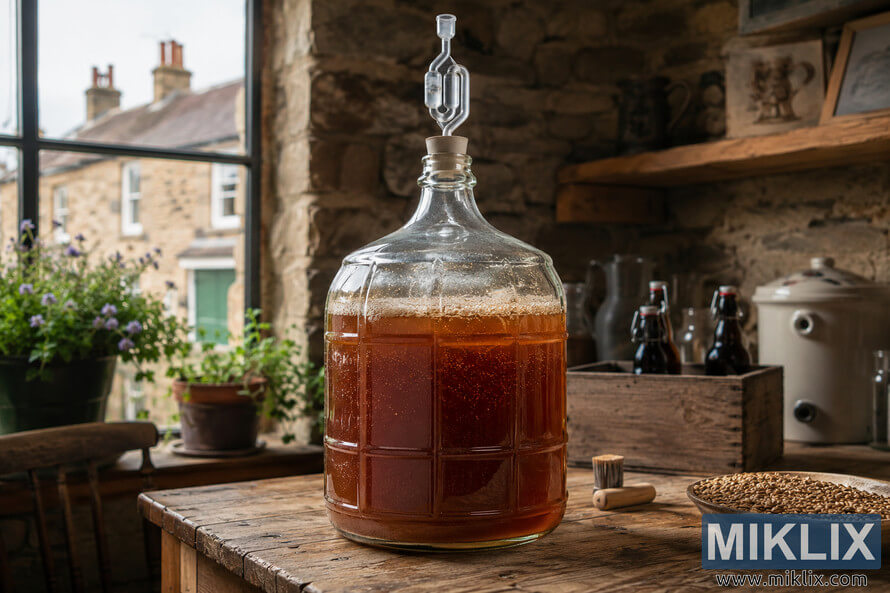
Wyeast 1469 is a favorite among homebrewers seeking authentic English ale character. This introduction to the West Yorkshire yeast highlights its ability to emphasize malt, keeping esters in check. It finishes clean and rounded, ideal for those desiring a traditional West Yorkshire profile without the aggressive fruitiness often found in other strains.
Fermenting Beer with Wyeast 1469 West Yorkshire Ale Yeast
További információkért és nagyobb felbontásért kattintson vagy koppintson a képre.
Key Takeaways
- Wyeast 1469 West Yorkshire Ale Yeast excels in traditional British ale styles.
- This West Yorkshire ale yeast review covers flavor, fermentation behavior, and practical tips.
- Performance notes help U.S. homebrewers choose the right homebrewing yeast choice.
- Expect malty, rounded character suited to bitters, porters, and ESBs.
- The Wyeast 1469 review includes starter and temperature guidance for best results.
Introduction to Wyeast 1469 West Yorkshire Ale Yeast
Wyeast 1469 is a favorite among homebrewers seeking authentic English ale character. This introduction to the West Yorkshire yeast highlights its ability to emphasize malt, keeping esters in check. It finishes clean and rounded, ideal for those desiring a traditional West Yorkshire profile without the aggressive fruitiness often found in other strains.
What makes this strain notable for homebrewers
- It highlights English malts, making caramel and toffee notes more pronounced.
- It shows brisk attenuation while leaving enough body for a satisfying mouthfeel.
- It behaves predictably across typical ale fermentation ranges, which helps craft consistent batches.
Typical flavor and aroma profile
- Expect mild fruity esters like apple or pear at moderate temperatures.
- Light phenolics can appear under certain conditions, adding subtle complexity.
- The overall impression is rounded and malty, supporting stone-fruit or faint citrus notes when warmed slightly.
Why choose this yeast for British-style ales
- Use it for bitters, English pale ales, brown ales, and porters to get an authentic regional expression.
- Its balanced behavior keeps hop character in check, so malt remains the focus.
- Wyeast 1469 characteristics match the needs of brewers aiming for traditional British ale yeast flavors that feel true to West Yorkshire brewing heritage.
További információkért és nagyobb felbontásért kattintson vagy koppintson a képre.
Understanding Ale Yeast Characteristics
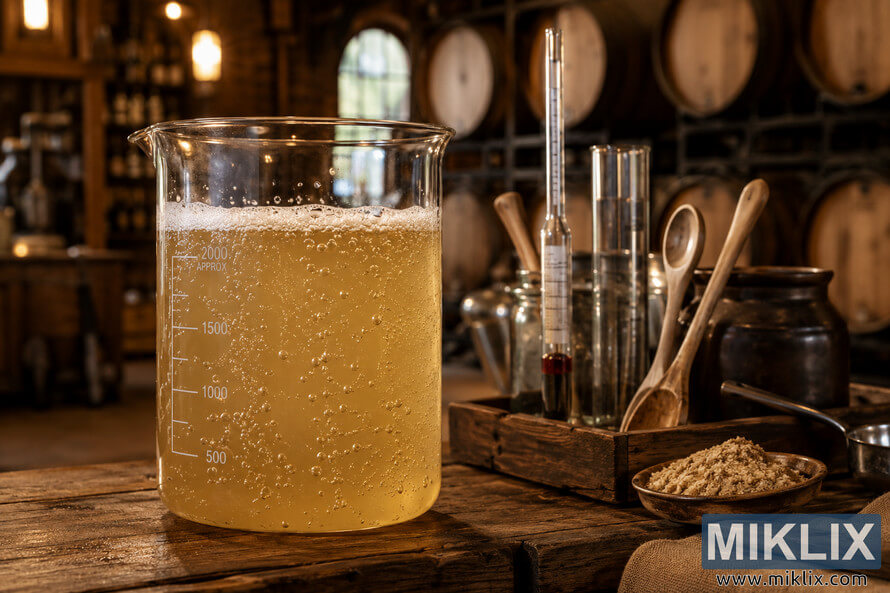
Choosing the right yeast is crucial in shaping the final beer. This section delves into key traits that influence flavor, clarity, and texture. By understanding these, you can fine-tune the profile of your beer with Wyeast 1469 or similar strains.
Attenuation and flocculation explained
Attenuation is the measure of how much sugar yeast consumes during fermentation. Strains with moderate to moderately high attenuation leave some residual sweetness. This balance is key to achieving a body in British ales without cloying.
Flocculation refers to how well yeast clumps and settles out of suspension. Medium to high flocculation results in clearer beer and reduces autolysis risk when handled correctly. Always check the manufacturer's specifications for exact attenuation and flocculation ranges before planning your recipe.
Impact of yeast strain on mouthfeel and body
Yeast influences more than just alcohol and ester levels. Strains that leave dextrins and produce glycerol contribute to a beer's perceived weight. Moderate attenuators often preserve malt richness, enhancing the full yeast mouthfeel in traditional British styles.
Esters and subtle phenolics also impact texture. These compounds can make a beer seem rounder and sweeter, enhancing malt-forward recipes. Adjust mash temperatures and water chemistry to complement yeast-driven body.
Temperature sensitivity and behavioral traits
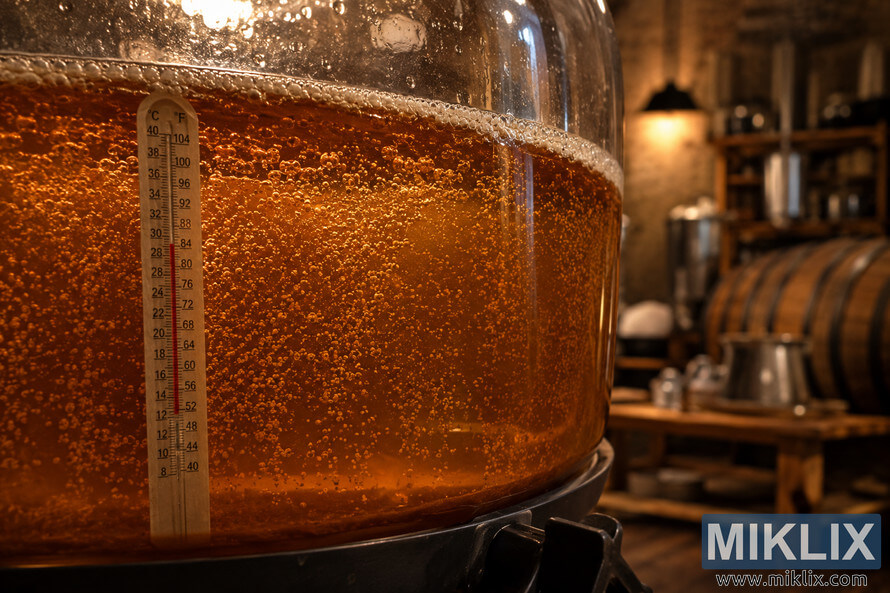
Ale yeast temperature sensitivity is critical in ester formation and overall cleanliness. Cooler fermentations suppress esters, leading to a cleaner profile. Warmer fermentations, on the other hand, boost fruity esters and risk solventy off-notes if taken too far.
Wyeast 1469 ferments steadily with a moderate krausen. Be cautious of diacetyl at the end of fermentation; a short diacetyl rest or extra conditioning can mitigate this risk. Consistent temperature control is essential for predictable results.
További információkért és nagyobb felbontásért kattintson vagy koppintson a képre.
Wyeast 1469 West Yorkshire Ale Yeast
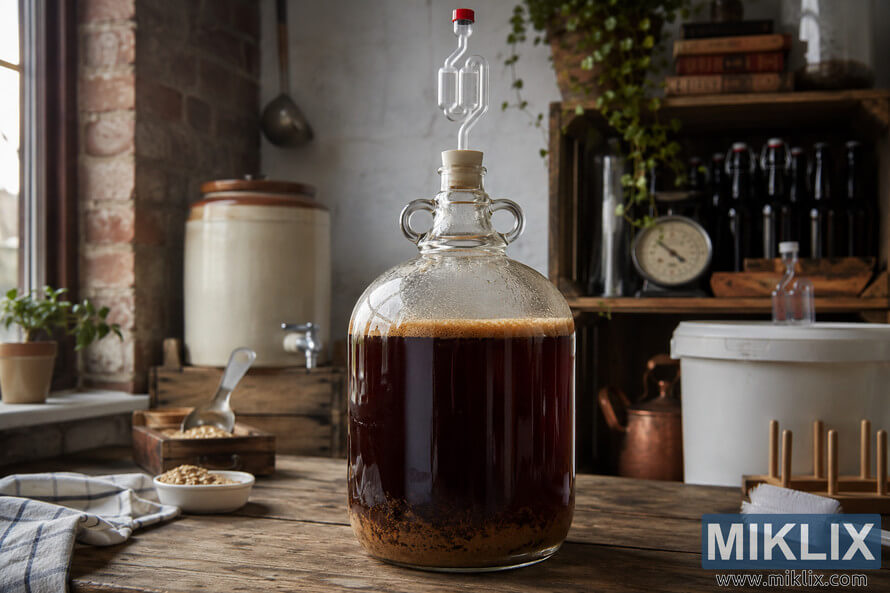
Wyeast 1469 comes from the rich tradition of West Yorkshire breweries. These breweries were known for their malt-forward ales with a subtle hop presence. The yeast's background is why many brewers choose it for classic British ales.
Origin and pedigree of the strain
The Wyeast 1469's roots are in historic Yorkshire, where yeast selection focused on malt and gentle esters. Brewers in West Yorkshire shared strains, creating a lineage known for its consistency in bitters and pale ales. This heritage is why homebrewers value it for its ability to capture regional authenticity.
Laboratory specs and manufacturer notes
Wyeast lab specs recommend fermentation temperatures between mid-60s to low-70s °F. The strain is shipped as a liquid slurry in a Wyeast pouch with nutrient. Wyeast advises standard pitching rates or a starter for higher gravity beers. The latest Wyeast product data provides detailed attenuation and flocculation information, aiding in mash and pitching decisions.
How it compares to other British ale yeasts
Wyeast 1469 stands out for its emphasis on malt character and a hint of fruitiness. This contrasts with Wyeast 1968 London ESB, which leans towards neutral malt and mild esters. Compared to Wyeast 1098 (Whitbread) and White Labs WLP002, 1469 offers a fuller mouthfeel and a more distinct regional flavor.
- Flavor focus: malt-forward with gentle esters.
- Performance: reliable flocculation and solid attenuation for British styles.
- Use cases: best for bitters, pale ales, and session beers where malt character matters.
További információkért és nagyobb felbontásért kattintson vagy koppintson a képre.
Preparing for Fermentation
Effective fermentation prep involves more than just pitching yeast. A concise checklist and the right equipment are essential. They help reduce infection risk, protect flavor, and allow Wyeast 1469 to showcase its English ale character. Here are practical steps and decisions to make before the wort cools.
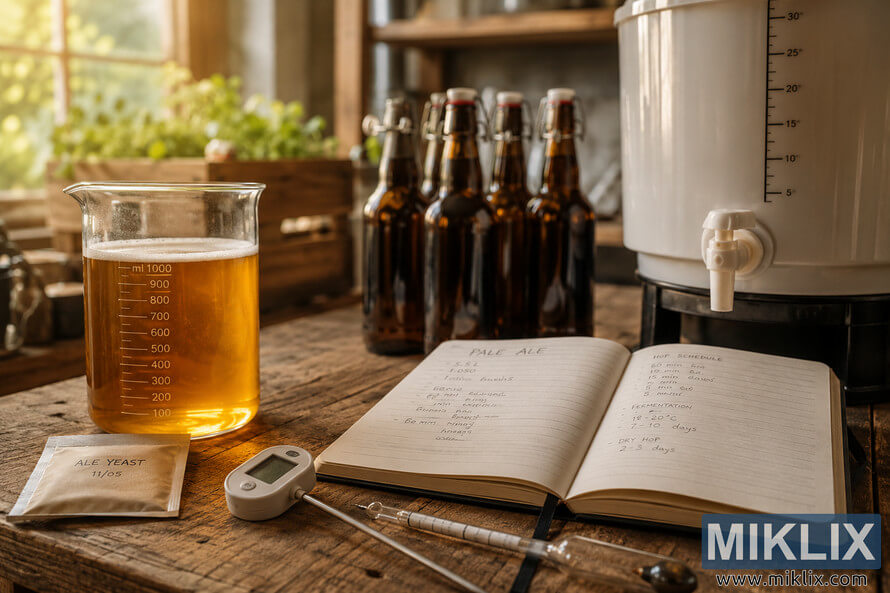
Sanitation and equipment are crucial for a clean brew day. Adhere to a sanitation checklist to ensure surfaces and tools are safe for beer contact. Use reliable sanitizers like Star San or Iodophor for the fermenter, airlock, and racking gear. Clean first, then sanitize to remove residues that harbor bacteria.
- Sanitized fermenter (glass carboy or stainless/conical)
- Airlock and stopper, or pressure-cap for kegs
- Fermentation thermometer or probe to track temps
- Hydrometer or refractometer for gravity readings
- Stir plate or magnetic stirrer when building a yeast starter
- Siphon or auto-siphon with racking cane for transfers
- Packaging gear: bottles, caps, kegging lines
The choice of fermenter impacts yeast health and ease of use. Glass carboys provide a neutral surface that won't impart flavors. Plastic buckets offer larger headspace, simplifying stirring and dry hopping. Conical fermenters facilitate yeast harvesting and reduce transfers.
Select a fermenter size that allows for modest headspace for krausen and minimizes oxygen pickup during transfer. For a five-gallon batch, a six- to seven-gallon vessel is ideal. It accommodates vigorous activity without spillover.
Pitching rate is critical for clean fermentation. Aim for about 0.75 to 1.5 million cells per mL per degree Plato for ales. This range controls esters and supports complete attenuation for typical British-style beers.
Consider making a yeast starter when necessary. Build a starter for batches with an original gravity over 1.060, for tightly attenuating finishes, or if the Wyeast pack is past its best-by date. Use a stir plate to grow healthy cells quickly and reduce lag time after pitch.
- If using a single Wyeast pouch for a 5-gallon, check cell counts; build a starter for high-gravity brews.
- When reviving older packs, size the starter to restore vigor and reduce fermentation lag.
- Measure gravity and temperature early so you can adjust pitching rate or starter volume if needed.
Clean work and careful choices in fermenter selection, a diligent sanitation checklist, and the right pitching rate or yeast starter will give Wyeast 1469 the best chance to show its classic Yorkshire profile.
További információkért és nagyobb felbontásért kattintson vagy koppintson a képre.
Making a Yeast Starter for Best Performance
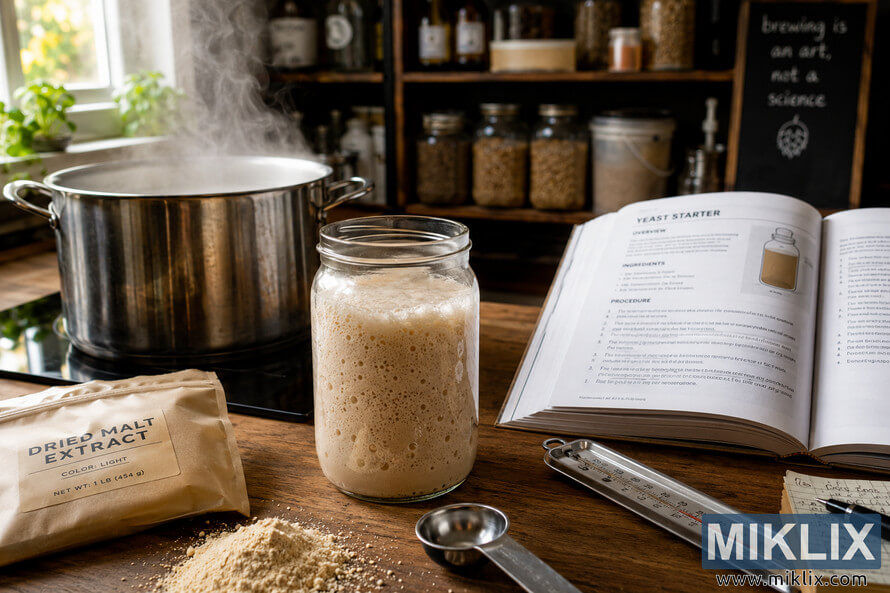
Creating a healthy starter is key to better fermentation and less lag. This guide will help you size, mix, and time your Wyeast 1469 starter. It's perfect for a five-gallon batch or larger brews.
The size of your starter depends on the original gravity and target cell count. Use tools like Mr. Malty or Brewer's Friend to figure out the needed cells. For average-strength ales, a 1–2 L starter is usually enough for a five-gallon batch. But, high OG beers or older yeast packs need bigger starters to achieve the same cell count.
To determine the starter size, input your batch size and OG into a calculator. Increase the volume if you plan to repitch or use older yeast packs. Remember, high gravity beers require larger starters to avoid underpitching and stressed fermentation.
Follow these steps for reliable preparation and growth.
- Sanitize a flask or Erlenmeyer thoroughly before use.
- Make a 1.030–1.040 SG wort using light DME. Boil for 10–15 minutes to sanitize, then cool to pitching temperature.
- Transfer cooled wort to the sanitized flask and aerate by shaking or use an oxygen source if available.
- Pitch the yeast into the aerated starter wort. Use a stir plate for faster, healthier growth when possible.
- Place the starter in a warm area and monitor for activity; krausen or foam often appears within 12–48 hours.
Watch the starter for signs of peak growth. When the foam subsides and yeast settles, the cell count is near maximum. If you used a stir plate, growth may peak sooner and show a dense yeast raft when it slows.
Decanting and pitching starter require a short delay to avoid adding too much starter wort to the main batch. Cold-crash the starter in the refrigerator for several hours to help yeast settle, then pour off most of the spent wort if it was made at higher gravity. Pitch the dense yeast slurry into your cooled main wort when it is near fermentation temperature.
If you plan to pitch an active, still-bubbling starter, wait until the most vigorous activity has slowed but some movement remains. This approach delivers oxygenated, active yeast ready to begin fermentation quickly without shocking the culture.
Use this how to make yeast starter checklist to keep steps clear: calculate starter volume, prepare 1.030–1.040 SG DME wort, sanitize, aerate, pitch, monitor growth, then decant and pitch starter at the right time for best results.
További információkért és nagyobb felbontásért kattintson vagy koppintson a képre.
Ideal Fermentation Temperatures
Mastering fermentation temperatures for Wyeast 1469 is crucial for flavor. This strain thrives in a wide temperature range, yet small variations significantly alter ester production and mouthfeel. Consistency is key, so monitor temperatures closely to ensure your beer stays on course.
Recommended temperature range for flavor balance
- Wyeast suggests a working range of mid-60s to low-70s °F. For British-style ales, aim for a tight yeast temp range of 64–68°F. This enhances malt character and keeps esters in check.
- For a fruitier profile, consider temperatures of 69–72°F. However, this will introduce a more lively character and quicker attenuation.
Effects of high and low fermentation temps
- Lower temperatures result in a cleaner beer, with fuller malt sweetness and fewer fusel notes. Ferment at the lower end for a traditional English ale character.
- Warmer temperatures increase ester production and can lead to solvent-like fusels. Extreme temperatures stress yeast, potentially causing phenolic or harsh off-flavors and increasing diacetyl risk.
- Rapid temperature changes can lead to uneven fermentation and unpredictable aroma. Make adjustments gradually to avoid this.
Temperature control methods for homebrewers
- Employ a temperature-controlled chest freezer or refrigerator with an external controller for precise control. This is ideal for homebrewing.
- Swamp coolers are simple: place the fermenter in a tub of water to cool, then use an aquarium heater and thermostat to warm as needed.
- In cold climates, insulated jackets, heat wraps, or dedicated fermentation heaters maintain yeast activity without temperature spikes. Monitor with a probe near the wort and log readings daily.
- Choose any method, but always aim for stable fermentation temperatures. This protects yeast health and preserves the desired flavor profile.
Fermentation Timeline and Signs of Activity
Monitoring a precise fermentation timeline is crucial for brewers. It helps them anticipate and act at the right time. With Wyeast 1469 West Yorkshire Ale yeast, early signs and steady progress assure brewers that their batch is progressing well. It's important to observe visual indicators, take regular measurements, and document the results for consistent outcomes.
What to expect in the first 24–72 hours
Following a short lag phase after pitching, a well-prepared starter and correct pitch rate can reduce lag time to 6–24 hours. For many brewers using Wyeast 1469, vigorous activity is noticeable within 12–48 hours. Look for a creamy krausen, CO2 release, and airlock bubbling as primary fermentation signs.
How long primary and secondary fermentations usually take
Primary fermentation for traditional English ales usually lasts 5–10 days to reach near-terminal gravity. Many homebrewers leave the beer on the yeast for about two weeks to allow for conditioning. If a secondary fermentation is chosen, plan for 1–4 weeks for maturation. However, a growing number of brewers skip secondary and package straight from a healthy primary.
Reading krausen, gravity, and other indicators
Use hydrometer or refractometer readings to confirm progress. Take gravity readings daily at first, then every few days. Look for consistent gravity readings across 2–3 days before declaring fermentation complete. Visual signs such as krausen collapse, yeast settling, and beer clearing support the instrument data as trustworthy fermentation signs.
- Log specific gravity and temperature each day during the first week.
- Expect krausen to peak and fall within the main active period.
- Confirm final gravity with two matching gravity readings 48 hours apart.
Managing Off-Flavors and Troubleshooting
Common off-flavors can derail a batch if not caught early. Small faults often point to specific causes and simple fixes. Read sensory cues, check fermentation data, and act fast to troubleshoot fermentation before packaging.
Common culprits include:
- Diacetyl — buttery note from premature cold crash or weak yeast activity.
- Esters — fruity aromas when fermentation runs hot.
- Phenolics — clove or medicinal tones from contamination or certain strain traits and precursors in the wort.
- Acetaldehyde — green apple from an arrested or very young fermentation.
- Solventy/fusel alcohols — hot, chemical smells from excessive fermentation temperatures or stressed yeast.
Common off-flavors with ale yeast and their causes
Diacetyl often shows late in fermentation. If yeast are tired or you’ve cooled too soon, the compound can persist.
High mash or fermentation temps raise ester production. English ales like those with Wyeast 1469 tolerate modest esters, yet excess veers off style.
Corrective actions during active fermentation
To fix diacetyl, raise the temperature a few degrees for 24–48 hours and give the yeast a gentle swirl to resuspend them. This diacetyl rest helps yeast reabsorb the compound.
If fermentation stalls, check gravity. Low activity can mean oxygen or nutrient deficiency. Rousing yeast, adding a starter or repitching healthy slurry will often restart activity. Sanitation checks are critical if off aromas suggest infection.
When to accept mild esters versus when to dump a batch
Mild esters can suit British-style ales and may be acceptable if consistent with the recipe. Taste in context of style before acting.
Dump the batch if you detect strong solventy notes, heavy fusel alcohols, or clear signs of infection such as persistent phenolic, sour, or barnyard characters. If corrective measures fail after reasonable interventions, start fresh rather than risking bottles or kegs.
Recipe Pairings and Style Recommendations
Wyeast 1469 West Yorkshire Ale yeast offers a warm, malt-forward profile that complements classic British recipes. This section guides you in matching styles, grain bill suggestions, and hop pairings. These pairings should enhance the yeast's characteristics without overshadowing the malt's subtlety.
Opt for recipes that highlight malt depth and moderate attenuation with Wyeast 1469. The best styles include English Pale Ale, Bitter, Best Bitter, Brown Ale, Old Ale, Porter, and session ales. These styles bring out toffee, biscuit, and gentle fruity esters, maintaining balance.
- Grain bill suggestions: begin with a Maris Otter base. Add 5–10% crystal malts in the 40–120L range for color and caramel notes.
- Enhance complexity with small portions of Munich or Biscuit malt. For darker styles, use roasted barley or chocolate malt sparingly to avoid harshness.
- For lighter session ales, reduce specialty malts and keep the base grain neutral. This allows yeast esters to shine.
Hop choices should complement malt and yeast, not overpower them. Traditional British varieties are best, while restrained modern hops can add a contemporary twist.
- Classic hop pairings: East Kent Goldings, Fuggle, and Challenger at modest IBUs of 20–40 support malt character. They add gentle herbal or earthy notes.
- Modern variations: use limited late additions of floral or citrus-forward hops like Citra or Amarillo. This creates a hybrid English IPA while maintaining balance with the yeast.
- Single-hop trials reveal direct yeast-hop interaction. Try a small batch with one hop to learn how 1469 shifts perceived bitterness and aroma.
Seasonal and experimental recipe ideas can expand your repertoire. For winter, boost crystal and darker malts for a robust bitter with warming caramel and dark fruit notes. For summer, lower original gravity and sharpen mash temperatures for a crisp session bitter.
Try hybrid recipes like an English IPA that pairs restrained American hops with Wyeast 1469. This creates a balanced cross-style character. Small-scale experiments with single-hop beers or slight variations in crystal percentage quickly reveal how grain bill suggestions and hop pairings affect the finished beer.
Water Chemistry and Mash Considerations
Mastering water chemistry is key to unlocking Wyeast 1469's full potential. Opt for a water profile that's moderately soft to moderately hard, typical of many British regions. This balance ensures malt character shines without overpowering the hop bitterness. Begin by testing your water with a local report, then fine-tune it to align with your desired style.
Ideal water profile for British ales
Strive for a water profile rich in chloride to enhance malt roundness. Target chloride levels between 50–150 ppm and sulfate between 25–75 ppm, adjusting based on the style. Lower sulfate levels help avoid accentuating hop bitterness in bitters and brown ales. Maintain moderate levels of carbonate and calcium to support mash pH and yeast health.
Mash temperature choices to support yeast character
Mash temperature is a crucial factor in achieving the desired mouthfeel. Higher mash temperatures, around 154–156°F, increase dextrins and body, complementing 1469's malt-forward nature. Conversely, lower temperatures in the 148–152°F range result in a drier finish, ideal for session beers and bitters.
Adjust your mash schedule according to the beer's style. For a full-bodied English bitter, elevate the mash temperature. Conversely, for a crisp session pale, aim for lower temperatures.
Adjusting water to enhance malt and yeast expression
Utilize brewing salts with precision. Add calcium chloride to accentuate malt sweetness and fullness. Gypsum, on the other hand, is used for dryness and hop bite, when a sharper balance is desired. This simple choice—gypsum vs. chloride—significantly impacts malt and hop perception.
- Begin with small additions and re-measure pH after mashing.
- Balance carbonate for dark malts using food-grade acid or Burton-style remineralization.
- Employ tools like Bru’n Water or Brewer’s Friend to model adjustments before you dose.
Minor adjustments to water chemistry can significantly alter mouthfeel and fermentation behavior. Aim for subtle corrections that allow yeast character and malt bill to dominate the final profile.
Conditioning, Carbonation, and Packaging
After fermentation, the character of a Wyeast 1469 West Yorkshire ale is shaped by conditioning and packaging. The choice between bottle conditioning and force carbonation impacts aroma, mouthfeel, and clarity. Cold conditioning and packaging best practices are crucial to preserve yeast-driven flavors and prevent oxidation.
- Bottle conditioning Wyeast 1469 promotes gentle secondary fermentation in each bottle. This method adds natural carbonation and lets yeast clean up minor byproducts. It can round esters and enhance complexity. Use accurate priming sugar calculations to avoid over-carbonation and sanitize bottles thoroughly.
- Force carbonation speeds packaging and gives precise control over CO2 volumes. For brewers comparing kegging vs bottling, kegging offers consistent, fast results and lower risk of bottle bombs. Kegging makes it easier to serve and adjust carbonation without re-fermentation.
Timing is crucial when moving beer from bright tanks or fermenters into bottles or kegs. Avoid packaging while fermentation is still active to reduce the risk of gushing. Let gravity readings stabilize for a few days before transfer.
Bottle vs. Keg Choices
Consider storage, service, and style when deciding between bottle conditioning Wyeast 1469 and kegging. Small batch and traditionalists often prefer bottle conditioning to showcase yeast character. Homebrewers seeking consistency and speed tend to prefer kegging for simpler filling and controlled carbonation.
Cold Conditioning and Maturation
Cold conditioning at near-freezing temps (34–40°F) helps clear haze and dull some esters. For English ales, 1–2 weeks is often enough to polish flavor and drop yeast. Stronger or higher-gravity beers may benefit from up to 4 weeks of cold conditioning.
Packaging Best Practices
- Minimize oxygen pickup during racking and filling. Use a closed transfer when possible and purge kegs with CO2 before filling.
- Sanitize all bottles, caps, siphons, and keg lines. Cleanliness prevents infections that can mask yeast-driven flavors.
- Calculate priming sugar precisely for bottle conditioning Wyeast 1469 and temperature. Record target volumes of CO2 so carbonation meets style expectations.
- Chill moderately before packaging. Quick chilling while active can cause gushing. Allow the beer to settle and cool gradually for best results.
Follow these steps and balance tradition with practicality. Careful cold conditioning and strict packaging best practices preserve the subtle character that Wyeast 1469 brings to British-style ales.
Measuring Success: Gravity, pH, and Sensory Evaluation
During and after fermentation, brewers rely on reliable checks to assess their batch's success. This guide offers practical steps for measuring attenuation, monitoring pH, and conducting a sensory evaluation. These steps are crucial for continuous improvement.
Attenuation tracking begins with accurate OG and FG readings. A hydrometer is ideal for straightforward gravity checks in a sample jar. For small samples at high gravity, a refractometer is better. Use an online calculator or a refractometer correction chart to adjust for alcohol.
- Record OG before pitch and again at stable FG.
- Calculate apparent attenuation: (OG − FG) / (OG − 1) × 100.
- Compare observed attenuation to Wyeast 1469 expected ranges to spot under- or over-attenuation.
Monitoring pH fermentation involves testing at key stages: post-mash, start of fermentation, and near terminal FG. Expect wort pH around 5.2–5.6 and finished beer pH near 4.2–4.6. A calibrated pH meter offers the best accuracy; pH strips are suitable for rough checks.
- Low finishing pH may point to long cold conditioning, certain malts, or high hop acids.
- High or rising pH during fermentation can indicate contamination or stressed yeast health.
- Record pH alongside gravity to correlate yeast performance with acidity trends.
Sensory evaluation beer requires a concise checklist to capture measurable impressions. Use small pours, neutral glassware, and proper lighting. Take detailed notes on each item and repeat evaluations blind when possible.
- Appearance: color, clarity, head size, and retention.
- Aroma: esters, malt, hops, and any off-notes like sulfur or DMS.
- Flavor: balance of malt and bitterness, ester intensity, and any phenolic sharpness.
- Mouthfeel: body, carbonation level, astringency, and perceived sweetness.
- Aftertaste: length, harshness, or pleasant lingering malt or hop notes.
Combine readings and tasting notes to refine recipes and processes. Use measured attenuation and pH records to diagnose issues and guide adjustments. Iterative sensory evaluation rounds help fine-tune desired profiles for Wyeast 1469 batches.
Comparing Wyeast 1469 to Similar Strains
Brewers often wonder how Wyeast 1469 compares to other English strains. This guide outlines the practical differences, when to switch strains, and what homebrewers say about performance and flavor.
Differences from other Yorkshire and English strains
Wyeast 1469 exhibits a distinct West Yorkshire character, favoring malt-forward, rounded profiles. It differs from Wyeast 1968 London ESB, being less ester-driven and cleaner on malt tones. In contrast, Wyeast 1098 often presents a crisper, more neutral taste, while White Labs WLP002 can offer a fuller or fruitier finish.
Manufacturer notes and community tasting impressions confirm these differences. Brewers praise 1469 for its balanced malt presence, steady attenuation, and classic English mouthfeel. This comparison aids in selecting strains that align with a recipe's goals, rather than defaulting to the most common choice.
When to swap strains for different outcomes
Swap strains when the brew requires a different finish or flavor focus. Opt for a cleaner yeast like Nottingham for a neutral house ale that highlights hops and malt. Use Wyeast 1469 for traditional English character with rounded malt notes. For pronounced fruitiness or a drier finish, choose a more ester-prone or high-attenuating strain.
Small adjustments in pitch rate and fermentation temperature can significantly alter results, akin to a full strain change. Conduct trials with identical recipes to compare outcomes side by side for the best yeast comparison data.
User-reported variations in performance and flavor
Homebrew forums and club reports highlight consistent themes. Performance varies based on starter freshness, pitch rate, fermentation temperature, and wort composition. Many brewers find Wyeast 1469 responds well to a healthy starter and moderate temperatures, delivering consistent attenuation and reliable flocculation.
Practical tips from users include pitching a stepped starter for large beers and maintaining fermentation in the mid-60s°F for balanced ester levels. These insights help interpret English yeast differences in real-world batches and guide strain selection for repeatable results.
Storage, Viability, and Reusing Yeast
Proper storage and handling are key to maintaining yeast health. For those using liquid cultures, store Wyeast packs in the refrigerator at 35–40°F. It's crucial to use them before the printed best-by date. As yeast viability decreases over time, older packs may require a starter to rebuild cell counts before pitching.
Storing Wyeast packs and longevity
Refrigeration helps slow down cell decline. Wyeast advises using packs within their shelf-life for optimal results. If a pack is past its date, a larger starter is recommended. Always check the yeast's activity before using it in a full batch. Keeping track of storage time is essential to maintain yeast viability.
Harvesting and repitching yeast safely
When harvesting yeast, cold-crash the fermenter first. Then, collect the settled slurry from above the trub layer. Separate the darker trub from the creamier yeast by decanting or siphoning carefully. Store the harvested yeast cold and use it within a few weeks if possible.
- Sanitize all tools to prevent contamination.
- Smell and taste a small sample; off-flavors or odd aromas mean discard the slurry.
- Limit reuse to about 2–4 generations to avoid contamination and genetic drift.
Scaling up for larger batches
To successfully repitch into larger volumes, scale starters proportionally. Use step-up starters or yeast calculators to estimate required cell counts. Build a propagation schedule that increases volume in stages rather than one giant jump.
- Estimate required cells for your target batch size.
- Create a series of starters, increasing wort volume and aeration each step.
- Consider splitting yeast slurries across multiple starters to maintain yeast viability and reduce stress.
Careful storage, hygienic harvesting, and measured scaling protect yeast health. These practices help preserve yeast viability, enable safe harvesting, and make repitching a practical tool for most homebrewers.
Conclusion
Wyeast 1469 review conclusion: This strain consistently brings out the West Yorkshire character. It has a malt-forward profile, moderate attenuation, and reliable flocculation when fermented at mid-60s°F. Ferments exhibit gentle esters and a rounded mouthfeel, perfect for bitters, brown ales, and milds. The West Yorkshire ale yeast summary suggests using traditional English malts and classic hop varieties to enhance its character.
For practical brewing, consider making a starter for higher-gravity worts or older packs to ensure vitality. Keeping a stable fermentation temperature in the mid-60s°F is crucial. This balance is key to managing ester production and attenuation. Pairing Wyeast 1469 with Maris Otter, British crystal malts, and East Kent Goldings or Fuggle hops showcases its strengths and ensures consistent results.
As final buyer guidance, this strain is a reliable choice for U.S. homebrewers and small breweries aiming for authentic British ale character. If you prefer a cleaner or drier finish, consider alternative ale strains in single-batch trials. Monitoring OG, FG, and fermentation temperatures will help refine your process. This ensures Wyeast 1469 meets your style goals, making it one of the best yeast for British ales.
FAQ
What is Wyeast 1469 West Yorkshire Ale Yeast and who is it for?
Wyeast 1469 West Yorkshire Ale Yeast is a liquid ale strain from traditional West Yorkshire brewery yeasts. It's designed for homebrewers and small breweries in the United States. They aim to capture the authentic British ale character, which is malt-forward, moderately estery, and perfect for bitters, English pale ales, brown ales, porters, and session beers.
What typical flavor and aroma profile should I expect from 1469?
Expect a rounded maltiness with caramel and toffee notes. Light fruity esters like apple or pear are present at moderate temperatures. The hop expression is restrained. Under warmer fermentation, it can show stronger esters. When kept cooler, it leans cleaner and highlights English malt flavors.
What fermentation temperature range is recommended for balanced results?
Aim for a mid-60s°F window—roughly 64–68°F—to balance esters and malt character. Cooler approaches (low 60s) produce a cleaner profile and fuller malt impression. Higher temps increase fruity esters and risk solvent or fusel notes if pushed too far.
How does attenuation and flocculation affect my beer with this strain?
Wyeast 1469 typically shows moderate to moderately high attenuation, leaving enough residual dextrins for body and malt perception. Flocculation tends to be medium to high, helping clarify beer without excessive autolysis risk. This balance supports malt-forward British styles with pleasant mouthfeel.
When should I make a yeast starter for Wyeast 1469?
Make a starter for higher gravity beers (OG > 1.060), for larger batch sizes, or if the pack is older than the recommended shelf-life. For average 5-gallon, session-strength ales, a 1–2 L starter is common. Use calculators like Mr. Malty or Brewer’s Friend to size starters to desired pitching rates.
How do I build and pitch a proper starter?
Sanitize an Erlenmeyer or flask, prepare a 1.030–1.040 SG DME wort, boil and cool, transfer to the flask, aerate, and pitch yeast. Use a stir plate for faster growth if available. Decant most starter wort after cold-crash if it’s high gravity, then pitch the yeast slurry when the main wort is at fermentation temperature.
What equipment and sanitation steps are essential before fermentation?
Essentials include a sanitized fermenter (carboy, bucket, or conical), airlock, thermometer or probe, hydrometer or refractometer, and sanitizer like Star San or Iodophor. Also have a siphon, racking cane, and packaging gear ready. Clean and sanitize all contact surfaces to prevent infections.
How long should primary fermentation and conditioning take with 1469?
Primary fermentation commonly reaches near-terminal gravity in 5–10 days with a healthy pitch; many brewers leave beer on the yeast for two weeks for conditioning. Cold-conditioning (34–40°F) for 1–2 weeks further polishes flavors, though higher-gravity beers may benefit from longer maturation.
What off-flavors are most likely and how do I fix them?
Common issues include esters from high temps, diacetyl from insufficient yeast activity or premature cold-crash, and fusel alcohols from excessive fermentation heat. Corrective actions include raising fermentation temperature for a diacetyl rest, gently rousing yeast to restart fermentation, repitching healthy yeast if stalled, and confirming sanitation if infection is suspected.
How does water chemistry influence beers fermented with 1469?
A chloride-forward profile enhances malt roundness—target chloride 50–150 ppm and sulfate 25–75 ppm for many British styles. Mash temps of 154–156°F increase body and dextrins to complement 1469’s malt focus, while lower mash temps (148–152°F) yield drier finishes for more drinkable session beers.
Which grains and hops pair best with Wyeast 1469?
Maris Otter or similar English pale malts as a base with 5–10% crystal malts (40–120L) create the classic template. Small additions of Munich or biscuit malts add complexity. Traditional hops—East Kent Goldings, Fuggle, Challenger—at moderate IBUs (20–40) work well to support malt rather than dominate.
Should I bottle-condition or force carbonate beers fermented with 1469?
Both methods work. Bottle conditioning can add subtle maturation and a traditional character, while force carbonation in a keg gives precise, consistent results and less risk of over-carbonation. For preserving delicate yeast-driven flavors, minimize oxygen exposure during transfers and packaging.
How do I measure fermentation progress and confirm final gravity?
Use a hydrometer or refractometer to record OG and FG. If using a refractometer, correct readings for alcohol with a calculator. Confirm fermentation completion with consistent gravity readings over 2–3 days, observe krausen collapse, and check clarity. Track temperature and gravity to help interpret yeast behavior.
How does 1469 compare to other English strains like Wyeast 1968 or White Labs WLP002?
1469 is characterized as West Yorkshire—leaning malt-forward and rounded. Wyeast 1968 (London ESB) can be slightly fruitier and fuller, while WLP002 and strains like 1098 may be more neutral or crisp. Choose 1469 for traditional Yorkshire character; swap strains when you want cleaner or drier finishes.
How should I store Wyeast 1469 packs and reuse yeast from fermentations?
Store Wyeast packs refrigerated at ~35–40°F and use before the best-by date. For harvesting, cold-crash, separate healthy yeast from trub, store cold, and reuse only a few generations (2–4) to avoid viability loss or contamination. Older packs benefit from larger starters to rebuild cell counts.
Where can U.S. brewers source Wyeast 1469 and what alternatives exist if supply is limited?
Major U.S. suppliers include Northern Brewer, MoreBeer, and Midwest Supplies, plus local homebrew shops. If Wyeast packs are unavailable, consider White Labs equivalents or dry English ale strains that approximate the West Yorkshire profile. Check current availability and compare lab specs before buying.
Are there regulatory or labeling concerns for small breweries using this yeast?
Small breweries should follow state and local regulations for ingredient labeling and production permits. Allergens generally relate to grains rather than yeast, but accurate records and transparency help with compliance. Homebrewers typically do not face labeling requirements but should keep good brewing logs for competitions and quality control.
What practical tips do experienced brewers share about getting the best from 1469?
Common community advice: make a starter for older packs or high OG, keep fermentation temperatures steady in the mid-60s°F, match the yeast to English malt-forward grain bills, and avoid over-aeration late in fermentation. Single-batch trials and careful note-taking (OG, FG, temps, tasting notes) help dial in desired characteristics.
További olvasmányok
Ha tetszett ez a bejegyzés, akkor ezek a javaslatok is érdekelhetik:
- Sör erjesztése Wyeast 1087-PC Bohemian Ale élesztőkeverékkel
- Sör erjesztése Lallemand LalBrew CBC-1 élesztővel
- Sör erjesztése CellarScience Origin élesztővel