
Fermenting Beer with Wyeast 3191-PC Berliner Weisse Blend
Megjelent:
Utolsó frissítés: 2026. július 22. 12:45:19 UTC
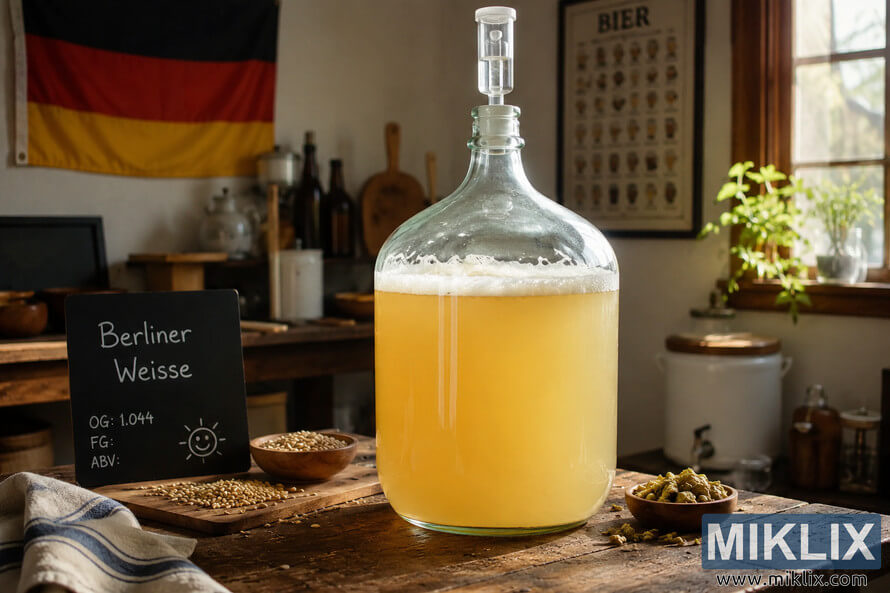
Wyeast 3191-PC is a mixed culture designed for quick Berliner-style sours. It's chosen for its ability to integrate yeast and bacteria, shortening the time from mash to glass. This blend ensures the beer remains bright and drinkable.
Fermenting Beer with Wyeast 3191-PC Berliner Weisse Blend
További információkért és nagyobb felbontásért kattintson vagy koppintson a képre.
Key Takeaways
- Wyeast 3191-PC Berliner Weisse Blend combines yeast and lactic bacteria for in-ferment souring.
- It simplifies fermenting Berliner Weisse compared with long mixed-fermentation aging.
- Follow starter and pitching guidance to ensure healthy lactobacillus activity and yeast performance.
- Control temperature and monitor pH to manage sourness and flavor balance.
- Ideal for small to mid-scale brews seeking authentic Berliner Weisse character without kettle souring.
Why Choose Wyeast 3191-PC Berliner Weisse Blend for Your Berliner Weisse
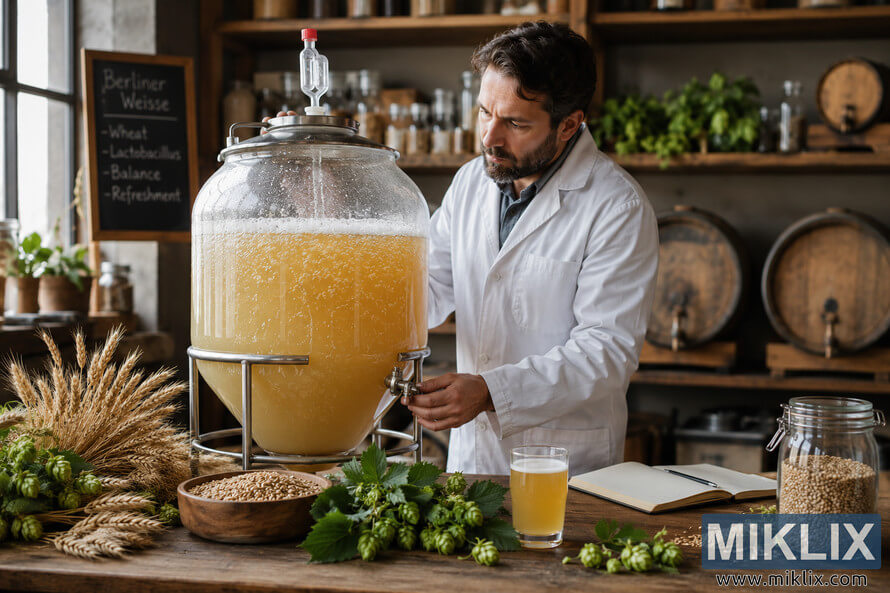
The strain components of Wyeast 3191 include Saccharomyces for primary fermentation and lactobacillus for rapid lactic acid production. Some batches may also contain Brettanomyces or Pediococcus, adding complexity with longer conditioning.
Overview of the strain blend and its components
This culture combines fermentation and souring organisms for one-step fermentation and acidification. Expect predictable yeast attenuation and steady acidification from lactobacillus at warm fermentation temperatures. It aims for a clean sour without the need for barrel aging.
How this blend compares to single-strain starters
- mixed culture vs single strain: A single Saccharomyces starter provides precise attenuation and neutral flavors but lacks souring.
- A pure lactobacillus starter produces acid but leaves unfermented sugars, requiring a separate yeast pitch for attenuation.
- Wyeast 3191-PC combines steps, saving time and reducing equipment needs compared to kettle souring followed by ale fermentation.
- However, it offers less precise pH control and some batch-to-batch variation in culture balance compared to separate processes.
Targeted flavor profile and expected contributions to beer
The Berliner Weisse flavor profile from this blend features crisp lactic tartness, light wheat character, and subtle fruity esters like lemon or green apple. Mild phenolic notes may appear based on mash temperatures and fermentation warmth.
Beers from this pack typically finish with low alcohol, often between 3–5%. Expect spritzy carbonation and a clean sour character. Heavy barnyard funk is unlikely unless Brett or Pediococcus are encouraged through extended aging.
További információkért és nagyobb felbontásért kattintson vagy koppintson a képre.
Key Characteristics of Wyeast 3191-PC Berliner Weisse Blend
This blend is crafted to produce tart, light-bodied Berliner Weisse beers. It ensures active attenuation in low-gravity worts, aiming for final gravities around 1.004–1.010. Monitoring Wyeast 3191 attenuation is crucial for achieving the right balance between malt and hops.
Flocculation in mixed cultures is moderate to low. This means some cells remain suspended, impacting clarity, mouthfeel, and bottle-conditioning. Brewers should consider flocculation Wyeast 3191 when planning for cold-crash or filtering.
Alcohol tolerance is suitable for typical Berliner Weisse strengths of 3–5% ABV. However, stronger brews may stress the bacterial fraction, reducing acid output. It's essential to match the target ABV with the expected yeast and bacteria performance.
- H3: Attenuation, flocculation, and alcohol tolerance
- The Saccharomyces component efficiently consumes fermentable sugars, leading to a crisp finish. Wyeast 3191 attenuation excels in dilute worts. Flocculation Wyeast 3191 remains lower than many pure ale strains, ensuring lively suspension for continued conditioning.
- H3: Acid production and souring behavior
- Lactobacillus activity in the blend produces lactic acid, lowering beer pH to the Berliner Weisse range, typically around pH 3.2–3.6. Acidification occurs during primary fermentation under typical pitching and temperature regimes.
- Controlling souring kinetics depends on pitch size, wort gravity, and oxygen exposure. Since lacto ships with yeast, acid and ethanol production occur in parallel. Proper management is necessary to avoid overly sharp or underdeveloped tartness.
- H3: Temperature and fermentation kinetics
- Primary fermentation is brisk, with active signs appearing within 12–48 hours of pitching. Fermentation temperature Wyeast 3191 influences both yeast vigor and lactobacillus activity.
- Warmer temperatures accelerate souring kinetics and ester production. Cooler temperatures slow acid development but favor cleaner esters. Significant acid gains occur in the first 3–7 days when kept warm.
Equipment and Ingredients Needed for a Successful Fermentation
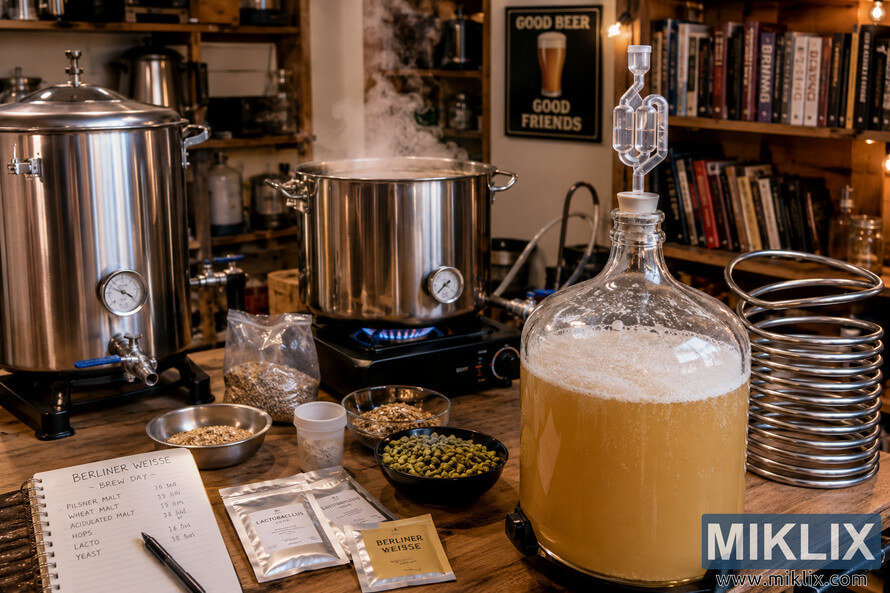
Creating a clean, lively Berliner Weisse requires the right tools and ingredients. Choose brewing equipment that fits your batch size and goals. For small batches, a BIAB setup or a 5-gallon kettle and bucket fermenter works well. Commercial or repeatable hobby setups benefit from stainless conicals, temperature-controlled chambers, and kegging gear.
További információkért és nagyobb felbontásért kattintson vagy koppintson a képre.
Reliable measurement tools are crucial. An accurate thermometer, hydrometer or refractometer, and a pH meter or quality pH strips are essential. Sanitation is key; use a no-rinse sanitizer like Star San to prevent contamination. For mixed-culture work, consider dedicated fermenters or quarantining sour equipment to avoid cross-contamination.
Essential brewing equipment for small-batch and larger brews
- Brew kettle sized to the boil volume and batch (BIAB for all-grain wheat-forward brews).
- Mash tun or BIAB system optimized for high wheat ratios.
- Fermenters: glass carboy, stainless conical, or food-grade bucket based on scale.
- Temperature control: fermentation chamber, chest freezer with controller, or glycol system for tight control.
- Kegging and force-carbonation gear for commercial or fast packaging.
Grain bill, hops, and water profile recommendations
- Grain bill Berliner Weisse typically runs 50–70% malted wheat with the remainder pilsner or pale malt. Aim for OG between 1.030 and 1.045 for a light, tart base.
- Keep hops for Berliner Weisse minimal. Choose low-alpha noble varieties like Saaz or Hallertau and target under 10 IBUs to avoid inhibiting lactobacillus.
- A water profile for sour beer should be soft to moderately hard with low alkalinity to preserve bright acidity. Balance sulfate and chloride for a clean mouthfeel, and remove chloramine with carbon filtration or Campden tablets.
Starter yeast nutrients and oxygenation tools
- Yeast starter equipment such as a stir-plate or flask for shaken starters helps build healthy Saccharomyces populations before pitching mixed cultures.
- Use yeast nutrient like DAP sparingly to support the yeast phase without overfeeding bacteria.
- Oxygenation tools: sanitized aeration stone with bottled oxygen or vigorous shaking to dissolve oxygen. Oxygen mainly benefits yeast growth; lactobacillus behavior varies by strain.
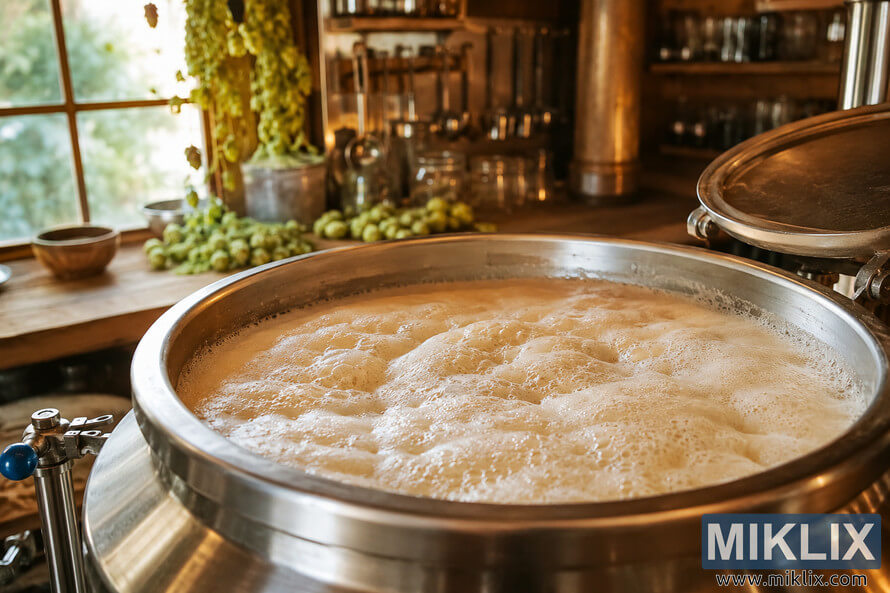
Size your starter to match batch gravity and plan oxygenation early in the process. Proper brewing equipment Berliner Weisse choices, a balanced grain bill Berliner Weisse, a considered water profile for sour beer, restrained hops for Berliner Weisse, and correct yeast starter equipment together set the stage for consistent fermentation and a lively, clean sour character.
További információkért és nagyobb felbontásért kattintson vagy koppintson a képre.
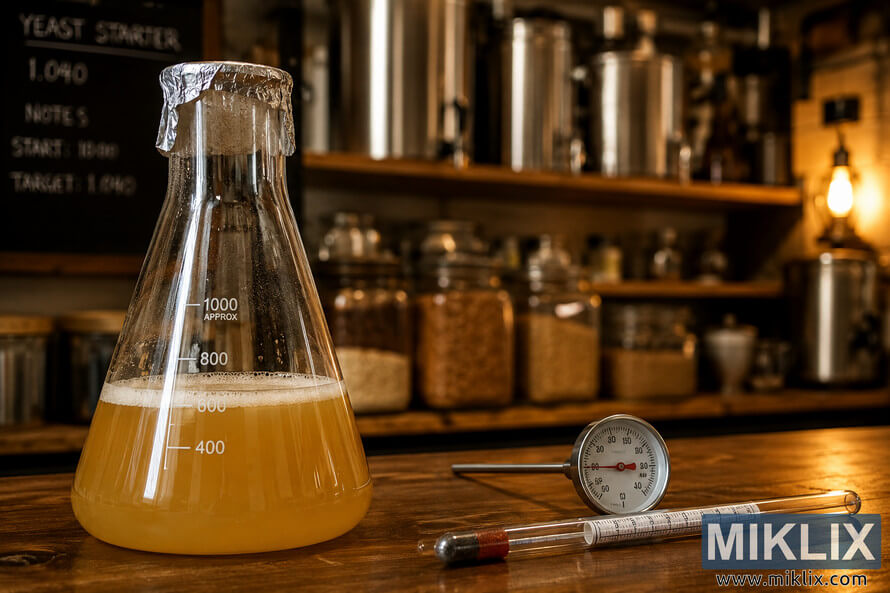
Preparing a Yeast Starter for Wyeast 3191-PC Berliner Weisse Blend
Creating a yeast starter is crucial for a successful fermentation with Wyeast 3191-PC. A well-prepared starter boosts cell count and minimizes lag time. This is especially important for brewing a delicate Berliner Weisse. Below, we outline practical steps for timing, composition, and handling.
When to make a starter and how large it should be
For batches over five gallons or when using chilled packs, a starter is essential. Aim for 0.75–1.5 million cells per mL per degree Plato for ales. A 1–2 L starter is usually sufficient for a five-gallon batch with a typical Berliner gravity of 1.030–1.045.
Scale up the starter size for higher OGs or larger volumes. If the pack's freshness is uncertain, opt for the larger end of the range.
Procedures for creating a healthy starter (wheat/OG, aeration, timeline)
Use a starter wort with a gravity between 1.030 and 1.040. Boiled DME in sterile water or a pilsner-base wort is ideal. Adding some wheat can enhance character, but avoid excessive nutrients that favor bacteria in mixed culture starters.
- Sanitize flask and tools thoroughly before use.
- Prepare 1–2 L of starter wort at starter wheat OG around 1.030–1.035 when using wheat in the starter.
- Cool, pitch the entire Wyeast pack, and incubate on a stir plate or swirl periodically to provide aeration for 12–24 hours until activity is vigorous.
Plan the timeline so the starter peaks 24–72 hours before pitching. Avoid letting the starter sit long past peak to prevent autolysis and viability loss.
Tips for storing and pitching the starter
Chill and decant most of the starter beer for clearer wort before pitching. For mixed culture preparations, many brewers pitch the whole starter to preserve lactobacillus or Brett components.
- Keep sanitation strict throughout to prevent contaminant bacteria from taking hold.
- Bring the starter up to fermentation temperature before pitching to reduce thermal shock.
- Distribute the starter evenly across the main wort for uniform fermentation when pitching Wyeast 3191.
By following these steps, you'll achieve a robust starter. This supports healthy fermentation and predictable acid and ester development in your Berliner Weisse.
További információkért és nagyobb felbontásért kattintson vagy koppintson a képre.
Preferred Fermentation Temperatures and Timelines
Temperature and timing are crucial for a successful Berliner Weiss. Aim for a balance that supports Saccharomyces activity while allowing lactobacillus acidification. Monitor the fermentation schedule closely, adjusting as needed based on aroma and gravity readings.
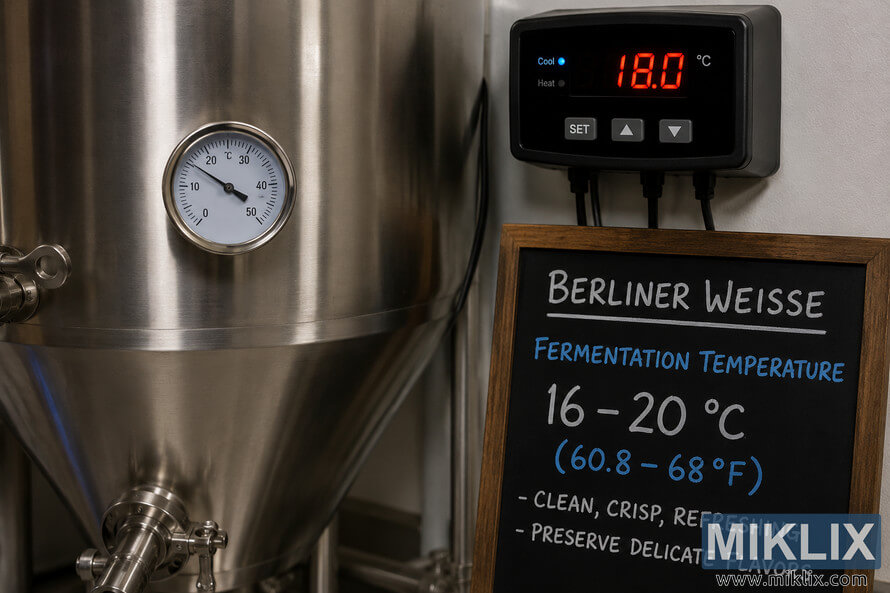
Optimal primary fermentation temperatures range from 64–72°F (18–22°C). For a more lively sour beer with ester or phenolic notes, target 68–72°F. For a cleaner profile and slower acid development, aim for 62–66°F. Temperatures above 75°F can introduce harsh off-flavors, while below 60°F slows both yeast and lacto too much.
Effective temperature control is key. A swamp cooler with frozen bottles can help with minor adjustments over a day or two. For consistent results, a dedicated ferm chamber or fridge with an Inkbird or Johnson controller is ideal. Commercial setups often use glycol chillers and PID control for stable fermentation rooms and data logging.
- Swamp cooler: low cost, useful for small adjustments and short periods.
- Ferm chamber + external controller: repeatable control for home batches.
- Glycol/PID systems: recommended for commercial scale and tight temp control for sour beer.
Active fermentation typically begins within 12–48 hours after pitching. The primary fermentation phase lasts 3–7 days, depending on temperature and starter size. Warmer temperatures speed up both attenuation and acid production, while cooler temperatures extend the active phase and slow souring.
Allow for conditioning time after primary fermentation. Many brewers condition for 1–3 weeks to integrate acidity and esters. Bottle conditioning or force carbonation usually follows 2–6 weeks of maturation. If Brett or Pediococcus are present, extended aging for months will alter complexity and move the beer away from a bright Berliner character.
When mapping your fermentation schedule for Berliner Weisse, log temperatures and gravity daily for the first week. Note aroma shifts and pH trends to understand how fermentation temperature Wyeast 3191 responds in your setup. Good records help make future batches more consistent and allow for precise temperature control for sour beer.
További információkért és nagyobb felbontásért kattintson vagy koppintson a képre.
Managing Sourness and Lactobacillus Activity
Working with mixed cultures demands a strategic approach to manage sourness and yeast interactions. In blends like Wyeast 3191-PC, Saccharomyces and lactobacillus work simultaneously. Saccharomyces produces ethanol and CO2, while lactobacillus contributes lactic acid. The balance between clean tartness and complex souring is influenced by temperature, oxygen, and nutrients.
Understanding the souring process
Lacto strains exhibit different behaviors. Homofermentative lactobacillus produces mainly lactic acid, resulting in a clean profile. Heterofermentative strains, however, yield lactic acid and other byproducts like acetic and diacetyl under stress. Favoring lactobacillus viability involves low hops and limited oxygen. Brewers can influence souring by controlling these factors.
Techniques to control acidity and timing
Temperature is the key to managing acidity. Warmer temperatures accelerate acid production, while cooler temperatures slow it down. Adjusting the pitch rate also impacts the balance between Saccharomyces and lactobacillus. A large Saccharomyces pitch can suppress lacto activity, while a small pitch allows for faster acid development.
- Use kettle souring for precise control; sour with Lactobacillus plantarum, then boil and ferment with Saccharomyces.
- Reserve hops for late additions. Low initial bitterness and late hopping protect lacto activity.
- Avoid heavy dry hopping during active lactobacillus phases to prevent reduced viability.
pH testing and tasting schedule
Accurate pH testing is essential for sour beer. Aim for a final pH of 3.2–3.6 for the desired tartness. Check pH and taste after 24–48 hours, then every 24–48 hours until reaching the target acidity.
- Record gravity alongside pH to track attenuation and acid progress.
- If pH falls too fast or drops below your style target, cold crash to slow activity or blend with unsoured wort to raise pH.
- Adjust fermentation temperature or pitch additional Saccharomyces if you need to moderate further souring.
Keeping detailed records of timing, temperature, and pH testing is crucial. This approach helps recreate successful batches. By combining objective measurements with regular tasting, you can achieve the bright, balanced profile characteristic of Berliner Weisse.
Flavor Development: Esters, Phenols, and Complexity
Exploring esters and phenols is key to crafting a lively, balanced Berliner Weisse. The Wyeast 3191-PC Berliner Weisse blend weaves a rich aroma tapestry through yeast metabolism and mixed-culture interactions. Small mash and addition choices can transform the beer from crisp and tart to fruity or subtly funky.
How the blend produces fruity esters and phenolic notes
- Saccharomyces strains in the blend produce esters that read as pear, apple, or citrus when fermentation temperatures rise. Pitch rate and oxygen levels change ester intensity.
- If the blend includes phenolic-off-flavor positive (POF+) yeast or a Brett component during conditioning, expect mild clove, spice, or barnyard complexity layered beneath the fruit notes.
- Lactic acidity from Pediococcus or Lactobacillus brightens esters, making the beer taste more refreshing. Balance prevents the tartness from masking delicate fruit aroma.
Influence of mash temperature and grain bill on flavor
- Lower mash temps (148–152°F) yield a drier, more attenuated beer that highlights acidity and ester clarity. This mash temp flavor choice suits a traditional, crisp Berliner Weisse.
- Higher mash temps (154–158°F) increase dextrins and body, softening perceived sourness and rounding ester edges for a fuller mouthfeel.
- Wheat in the grain bill adds breadiness and foam stability. Pale or pilsner malt supplies a neutral backbone while small amounts of carapils or acidulated malt fine-tune body and acidity.
Use of fruits, spices, or aging to complement the base beer
- Fruit Berliner Weisse variants shine when fruit is added late in fermentation or in the keg to preserve fresh flavor. Raspberry, cherry, and peach pair especially well with the blend’s esters.
- Spices such as ginger or coriander can add interest in measured doses. Test small batches to ensure the spice plays well with lactic acidity and phenolic notes.
- Short cellar time keeps the beer bright and true to style. Extended barrel or Brett aging develops funk and complexity for brewers who want to move away from a classic profile.
Common Fermentation Issues and Troubleshooting
Mixed fermentations with Wyeast 3191-PC can be both rewarding and challenging. This section guides you on identifying slow activity, distinguishing true contamination from desired souring, and deciding when to repitch or blend to salvage a batch.
Signs of slow or stalled activity and corrective actions
Monitor gravity readings over several days. No change for more than 48–72 hours, a thin or collapsing krausen, or very sluggish airlock activity often signal a problem. Start by checking temperature and raise it into the strain’s preferred range for a few degrees to revive yeast metabolism.
Gently rouse settled yeast by swirling the fermenter if the vessel allows. If pitching rate was low, consider repitching a healthy Saccharomyces strain that tolerates low pH and modest alcohol. If fermentation is in its first 12–24 hours, a controlled oxygenation can help yeast establish, but never add oxygen late when lactobacillus or Brettansomyces are active.
Contamination risks and how to differentiate them from intended sour character
True lactic souring usually smells clean and tart, with bright yogurt- or lemon-like notes. Contamination sour beer often shows off-flavors that are harsh or foreign. Cheesy, solventy, medicinal, or sharp vinegar notes point to problems such as unwanted bacteria or excessive acetobacter activity.
Brett and Pediococcus evolve slowly over weeks to months into leathery, barnyard, or funky characters. Immediate putrid or acetone aromas soon after pitch are red flags. When unsure, send a sample to a brewing lab for culture or microscopy to confirm contamination.
When to repitch or blend with other cultures
If gravity stalls high and corrective steps fail, repitching with a fresh, vigorous Saccharomyces strain is often the fastest remedy. Choose a strain known for acid tolerance and good attenuation to work alongside residual lacto activity.
Blending can rescue a beer that has become too sharp or unbalanced. Mix with a young, neutral beer or a less-soured portion to lower perceived acidity without altering original batches. Add Brett or Pediococcus only when you want extended aging and complexity, knowing these organisms complicate sanitation and may affect future brews.
- Monitor gravity and pH regularly to catch issues early.
- Keep a strain-compatible Saccharomyces on hand for repitching.
- If contamination sour beer is suspected, isolate the batch and limit contact with shared equipment.
Packaging, Carbonation, and Serving Recommendations
Proper packaging and carbonation are crucial for a Berliner Weisse's final impression. Select a method that aligns with your service style and comfort level. Always check gravity and yeast activity before sealing bottles to prevent pressure problems.
Bottle conditioning vs. force carbonation
Bottle conditioning maintains tradition and offers natural carbonation. When using mixed cultures, ensure viable yeast remains. Calculate priming sugar carefully. Be cautious that low-flocculation strains and active lactobacillus can continue fermenting, altering acidity over time.
Kegging and force carbonation provide precise CO2 control. This method minimizes the risk of over-carbonation if lacto or bacteria are still active. Commercial breweries often choose force carbonation for its consistency and safety in packaging.
Target carbonation levels and serving temperatures
A Berliner Weisse should be lively. Aim for 2.8–3.2 volumes of CO2 for a crisp, spritzy mouthfeel. For fruit-forward variants, slightly increase to 3.5 volumes for extra lift.
Serve cold to enhance refreshment and tame sharpness. The ideal serving temperature is between 40–45°F (4–7°C), balancing acidity and aromas. Check the beer at tasting temperature before serving to ensure balance.
Glassware and pairing suggestions
Select glassware that highlights effervescence and focuses on aromas. Small tulip or half-pint glasses, roughly 200–300 mL, are ideal for traditional service. Short glasses emphasize the beer's lively carbonation and bright profile.
- Seafood and shellfish pair well with the beer’s acidity.
- Green salads and light cheeses match the tartness without overpowering it.
- Spicy Asian dishes benefit from the beer’s cleansing acidity.
- Fruit versions pair nicely with desserts and summer fare.
For consumer-facing service, offer fruit syrups like raspberry or woodruff as a nod to classic practice. Clear labeling and a brief serving note help guests choose the right pour and food pairings that complement the style.
Sanitation and Cross-Contamination Precautions for Mixed Cultures
Working with mixed cultures requires strict sanitation practices to safeguard both sour and clean beers. Simple routines can significantly reduce risks and ensure that Brett, lactobacillus, and other organisms remain where they belong. Implementing clear labeling, a set order for sour batches, and consistent cleaning steps is crucial for maintaining control.
Cleaning and sanitizing practices specific to lactobacillus and Brett use
- Begin with a caustic cleaner like PBW to remove organic matter from fermenters, fittings, and tubing.
- Follow caustic cleaning with an acid rinse or a no-rinse sanitizer such as Star San before any equipment touches sour beer.
- Scrub hard-to-reach spots: dip tubes, racking arms, gasket grooves, and spigot internals can harbor biofilms from Brett and lactobacillus.
- Schedule periodic hot-water or oxygen-based chemical treatments to break down persistent biofilms and reduce long-term survival of wild yeasts.
- Never move uncleaned hoses, siphons, or transfer gear between sour and non-sour fermentations without full deep cleaning and separate sanitization cycles.
Quarantine and dedicated equipment recommendations
- Keep dedicated fermenters, kegs, lines, and kegging tools for sour and wild beers when possible to prevent cross-contamination sour beer into clean ales and lagers.
- If you cannot dedicate gear, brew sour batches last and run extra-deep cleaning and sanitizing afterward to reduce residual organisms.
- Store culture packs, slurries, and sour starters in clearly labeled, separate containers and a different refrigerator or shelf to avoid accidental use in clean batches.
- Maintain a log of equipment use and cleaning dates to track potential contamination points over time.
How to handle waste and spent yeast safely
- Collect trub and spent yeast in sealed containers. Dispose or compost according to local rules to limit environmental spread.
- Rinse and sanitize any lines or buckets used to transfer waste immediately after emptying to reduce lingering organisms.
- Recognize that spent sour yeast can carry lactobacillus and Brett; do not repitch those slurries into clean beer production.
- Designate a trash and wash area for biological material and keep it separated from general brew gear and food prep spaces.
These steps form a practical hygiene plan that helps prevent cross-contamination sour beer while protecting your clean beer program. Proper cleaning lactobacillus Brett routines and careful handling spent yeast sour beers make mixed-culture brewing manageable in both home and commercial settings.
Conclusion
Wyeast 3191-PC Berliner Weisse Blend review: This packaged blend offers brewers a straightforward path to a bright, tart Berliner Weisse. It eliminates the need for the complex setup of pure lactobacillus methods. The blend combines lactic acid production with yeast behavior, resulting in effervescent, drinkable beers. These beers align with traditional profiles when brewed with a low-hop, soft-water grain bill.
For those fermenting Berliner Weisse, key practices are essential. Start with an appropriately sized starter and pitch into low-oxygen wort. Hold temperatures between the mid-60s to low-70s °F to balance ester formation and acidification. Regularly monitor pH and gravity, keep hopping minimal, and dedicate equipment to avoid cross-contamination.
Packaging choices significantly impact the beer's outcome and safety. Bottle conditioning should only occur after fermentation and acidification are complete. Alternatively, force carbonation ensures consistent carbonation levels. The Wyeast 3191-PC blend offers a practical balance between predictability and complex sour character. It is particularly appealing to U.S. homebrewers and small craft brewers seeking efficiency without sacrificing flavor.
FAQ
What is Wyeast 3191-PC Berliner Weisse Blend and what does it contain?
Wyeast 3191-PC is a mixed culture for Berliner Weisse-style beers. It combines Saccharomyces yeast for primary fermentation with lactic acid bacteria for souring. Some blends may include Brettanomyces or Pediococcus for added complexity. The goal is a clean, tart flavor and reliable attenuation for low-gravity wheat beers.
How does this blend compare to using a single ale yeast or a kettle sour with pure Lactobacillus plantarum?
The blend simplifies the process by souring and fermenting in one step. This contrasts with kettle souring and a separate ale yeast pitch. Single Saccharomyces strains offer predictable fermentation but no souring. Pure Lactobacillus kettle sours control pH but require a separate step. Blends save time but offer less control over acidity and may vary batch-to-batch.
What starter size and pitching rate should I use for a 5-gallon Berliner Weisse?
For a 5-gallon Berliner Weisse at OG 1.030–1.045, a 1–2 liter starter is recommended. Aim for 0.75–1.5 million viable cells per mL per °P for ales. Scale the starter up for larger batches or higher OGs. Many brewers pitch the whole starter to preserve lactobacillus; others decant and pitch just the slurry.
What fermentation temperatures and timeline produce the best balance of sourness and esters?
Ferment between 64–72°F (18–22°C) for balanced Saccharomyces attenuation and lacto acidification. Warmer temperatures (68–72°F) accelerate acid production and ester/phenolic character. Cooler temperatures (62–66°F) give a cleaner profile with slower souring. Expect visible activity in 12–48 hours, major acid development within 3–7 days at warmer temps, and primary conditioning in 1–3 weeks.
How fast will the lactobacillus in 3191-PC lower pH, and what pH should I target?
Acidification speed depends on pitch rate, temperature, oxygen, and wort gravity. In warm primary conditions, lacto activity can drop pH substantially within 3–7 days. Target pH for a traditional Berliner Weisse is generally 3.2–3.6, with the lower end for a very tart beer. Monitor pH daily or every 48 hours during active souring with a calibrated meter.
Will hops inhibit the lactobacillus in this blend? What IBU range is safe?
Lactic acid bacteria are hop-sensitive; high hop bitterness can inhibit acid production. Keep bitterness low—typically under 10 IBUs and use low-alpha noble hops like Saaz or Hallertau sparingly. Late or whirlpool additions should be minimal, and dry hopping during active lacto phases is generally discouraged if you want robust souring.
Should I oxygenate or use nutrients for this mixed culture starter? Could that encourage unwanted bacteria?
Oxygenation at the starter stage helps Saccharomyces build healthy cell counts and is advisable for yeast growth. Moderate yeast nutrient (e.g., DAP) can support fermentation but use cautiously—excessive nutrients may fuel unwanted bacteria. Maintain strict sanitation in starter wort to avoid contaminant organisms.
How should I sanitize and prevent cross-contamination when working with 3191-PC and other non-sour beers?
Use caustic cleaners (PBW) for organic removal followed by no‑rinse sanitizers like Star San. Whenever possible, keep dedicated fermenters, transfer lines, spigots, and kegging gear for sour/wild beers. If dedicated equipment isn’t available, brew sour batches last and perform extra-deep cleaning and sanitization afterward.
Is bottle conditioning safe with mixed cultures that include lactobacillus or Brett?
Bottle conditioning is traditional and provides natural effervescence, but it carries risk if fermentation or acidification is still active at packaging. Mixed cultures with low flocculation can continue fermenting and souring in bottles, increasing over‑carbonation risk. For consistency and safety, many brewers prefer force carbonation in kegs, especially commercial operations.
What grain bill, mash temp, and water profile best support a classic Berliner Weisse with this blend?
A traditional grain bill is high in malted wheat (50–70%) with pilsner or pale malt for the remainder, targeting OG 1.030–1.045. Mash at 148–152°F (64–67°C) for a drier finish that highlights tartness; higher mash temps increase body and soften perceived acidity. Use soft to moderately hard water with low alkalinity to preserve acidity.
What are common signs of contamination versus intended sour character, and how do I troubleshoot stuck fermentation?
Clean lactic sourness presents as sharp, bright tartness with lemon/citrus notes. Contaminants often produce off-aromas like solventy, medicinal, putrid, cheesy, or strong acetic vinegar. Stuck fermentation signs include no gravity change for days, thin krausen, or sluggish activity. Remedies: check and raise temperature within safe limits, gently rouse yeast, consider repitching a healthy Saccharomyces strain tolerant of existing acidity, and avoid late oxygenation that could encourage spoilage organisms.
Can I add fruit, spices, or use barrel aging with beers fermented with Wyeast 3191-PC?
Yes. Fruit additions like raspberry, peach, or cherry work well and are usually added in secondary or the keg to preserve bright character. Spices may be used sparingly for variants. Short fruit aging preserves clean sour-fruit interplay. Barrel aging or long conditioning will develop Brett/Pediococcus-driven complexity and funk if those organisms are present or introduced, but that moves the beer away from the classic bright Berliner profile and increases cross-contamination risk.
What are good alternative products or methods if I want more control over pH or a different sour profile?
Alternatives include White Labs WLP670 Berliner Weisse Blend, Omega Yeast Lab blends, or a kettle sour approach using pure Lactobacillus plantarum followed by fermentation with a neutral ale strain like Wyeast 1056 or Safale US‑05. Kettle souring offers precise pH control and a very clean lactic profile. Choose blends for simplicity, kettle souring for control, and pure lacto inoculation when separate souring steps are acceptable.
How consistent are results between packs of Wyeast 3191-PC, and should I make a starter to verify viability?
Pack-to-pack variability can occur with mixed cultures. Making a starter is recommended for larger batches, older packs, or when repeatability matters. A starter helps assess viability and builds cell counts. Many brewers report variability and therefore prefer to test or build starters to ensure predictable attenuation and acid development.
What carbonation levels and serving temperature should I aim for with a Berliner Weisse fermented with this blend?
Berliner Weisse is highly carbonated—aim for about 2.8–3.2 volumes CO2 for a crisp, spritzy presentation. Serve cold, around 40–45°F (4–7°C), which enhances refreshment and tempers perceived acidity. Use small glassware (200–300 mL or half-pint tulips) to showcase effervescence and aroma.
When should I consider repitching another yeast or blending with non-soured beer?
Repitch a healthy Saccharomyces if primary fermentation stalls and gravity remains high. Blend with non-soured beer to reduce perceived acidity if the beer overshot your target sourness. Introduce Brett or Pediococcus only when intentionally seeking long-term funk and complexity and when you can quarantine equipment to prevent cross-contamination.
Are there special waste handling or slurry disposal considerations after using mixed cultures?
Treat spent yeast and trub from sour batches as potentially persistent biological material. Dispose of waste in sealed containers or compost where allowed, rinse and sanitize lines thoroughly, and avoid reusing sour slurries in clean beer production. Label and store sour culture remnants separately to prevent accidental cross-use.
További olvasmányok
Ha tetszett ez a bejegyzés, akkor ezek a javaslatok is érdekelhetik:
- Sör erjesztése Wyeast 1087-PC Bohemian Ale élesztőkeverékkel
- Sör erjesztése Wyeast 1272 American Ale II élesztővel
- Sör erjesztése Lallemand LalBrew Köln élesztővel