
Kép: Failed Okra Seedlings After Planting Too Early
Megjelent:
Utolsó frissítés: 2026. március 17. 21:37:43 UTC
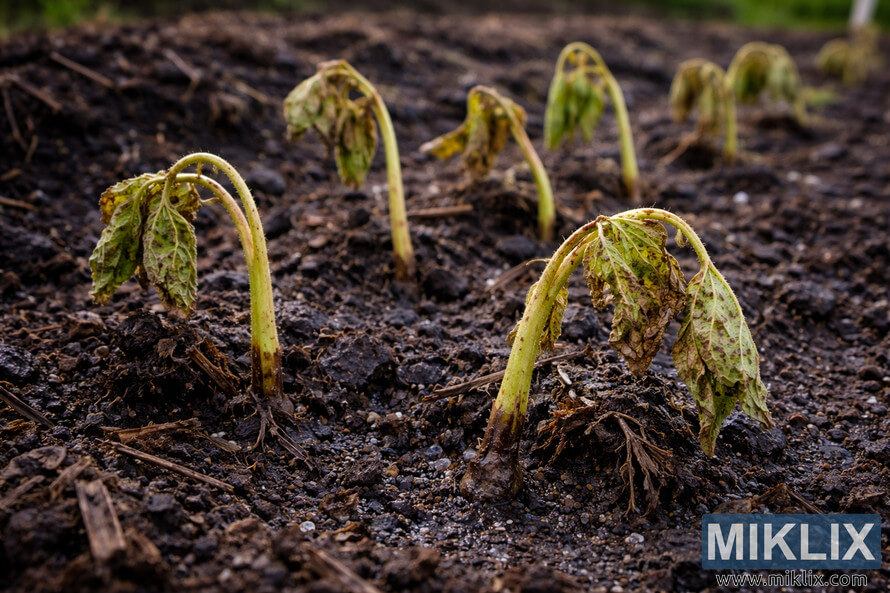
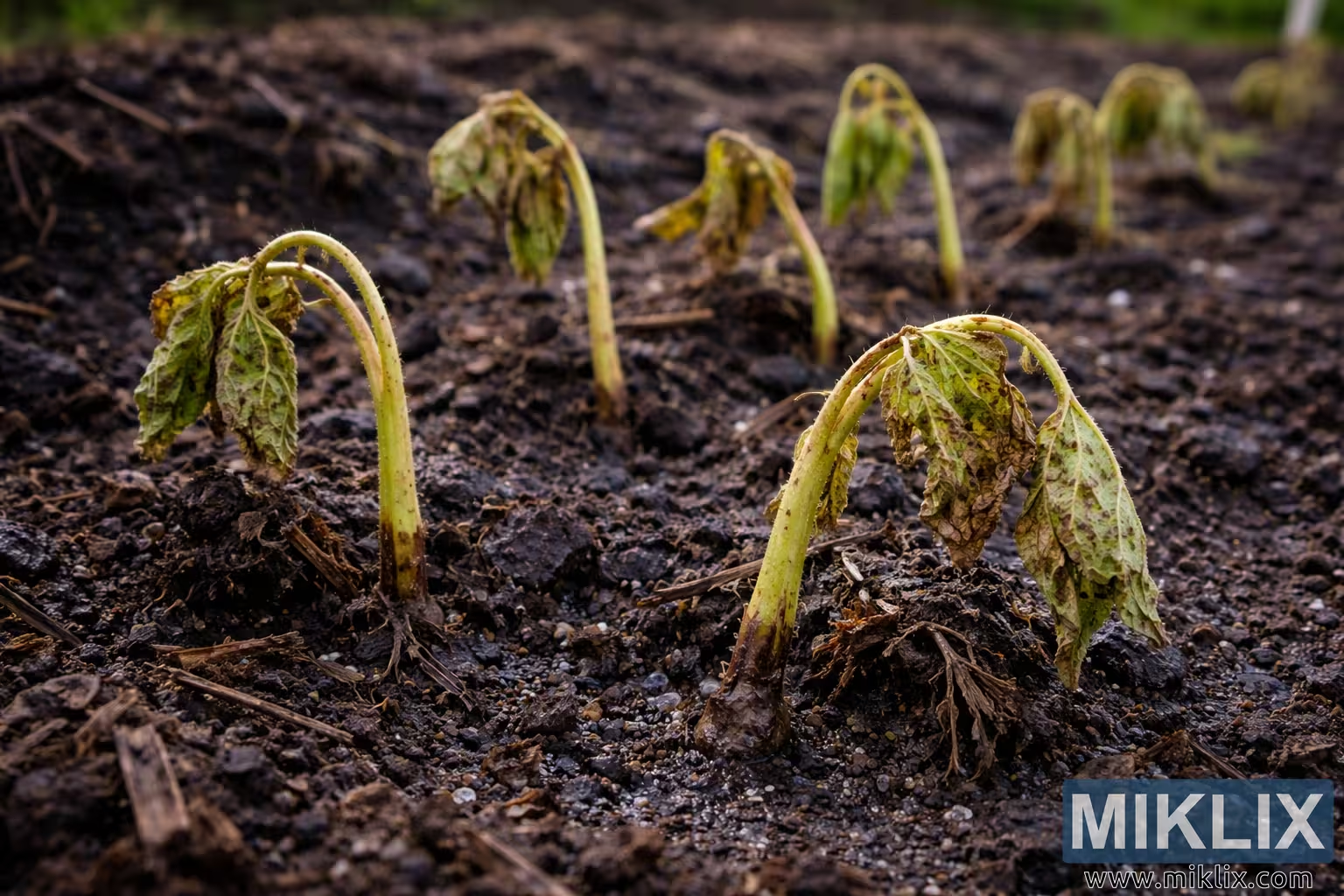
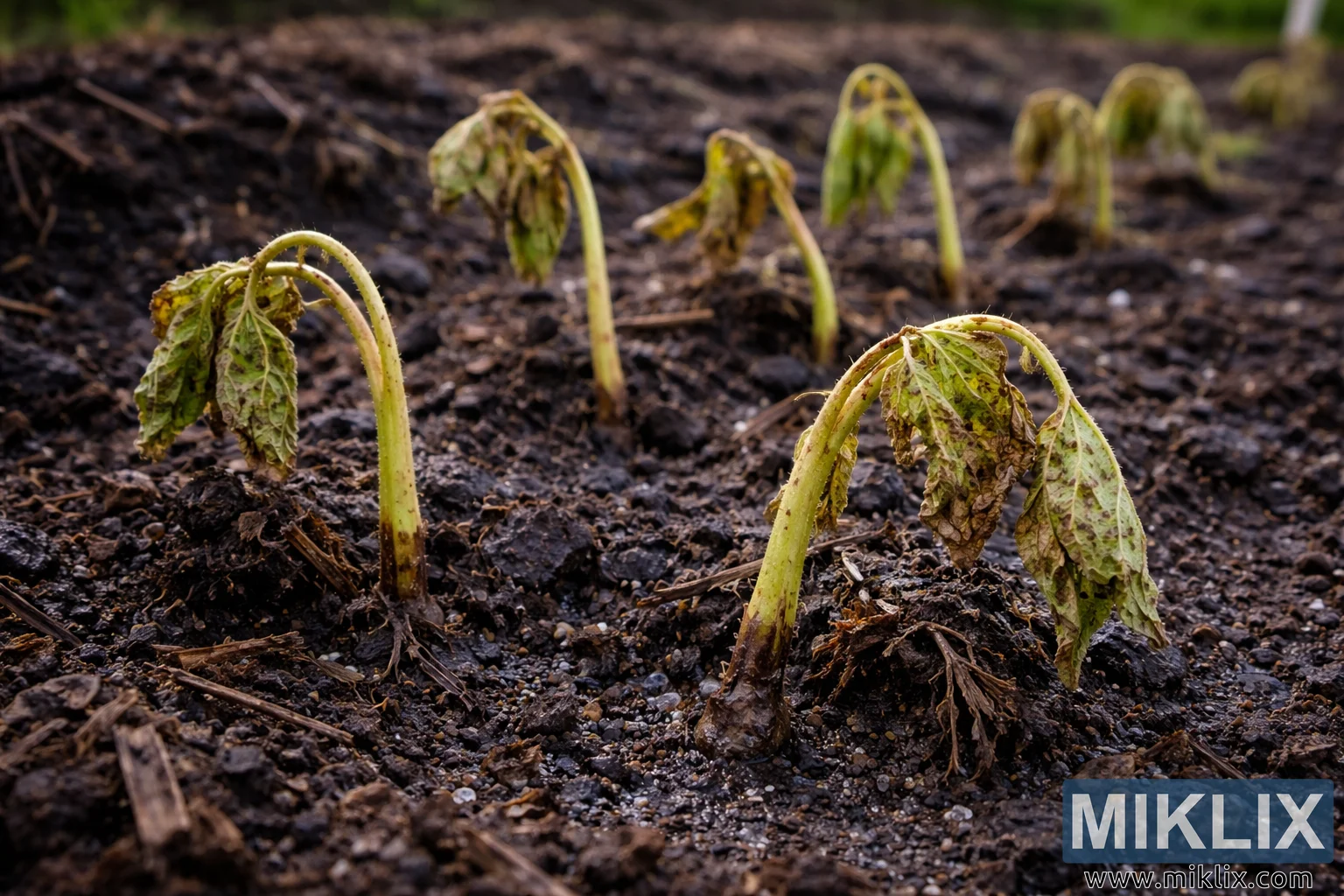
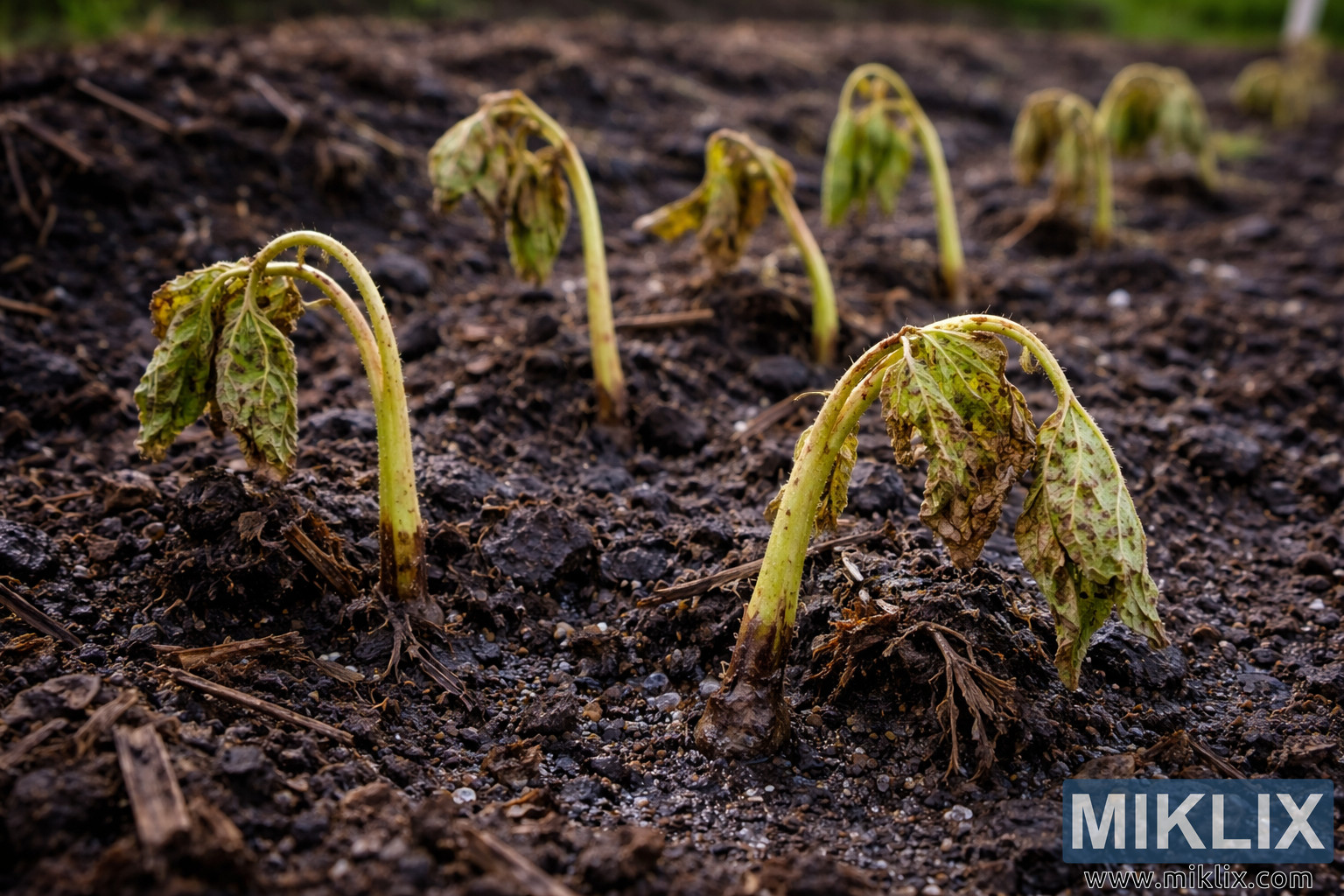
Close-up photograph of failed okra seedlings planted too early, showing wilted leaves, weak stems, and damp soil conditions in a garden bed.
Failed Okra Seedlings After Planting Too Early
A kép elérhető változatai
Az alább letölthető képfájlok kevésbé tömörítettek és nagyobb felbontásúak - és ennek eredményeként jobb minőségűek -, mint a weboldalon található cikkekbe és oldalakba ágyazott képek, amelyek a sávszélesség-fogyasztás csökkentése érdekében jobban optimalizáltak a fájlméret tekintetében.
Normál méret (1,536 x 1,024)
Nagy méret (3,072 x 2,048)
Nagyon nagy méret (4,608 x 3,072)
Extra nagy méret (6,144 x 4,096)
Komikusan nagy méret (1,048,576 x 699,051)
- Még mindig feltöltöm... ;-)
Kép leírása
A high-resolution landscape photograph presents a close-up view of several struggling okra seedlings growing in a garden bed. The image focuses on a short row of young plants emerging from dark, damp soil, but each seedling appears weak and severely stressed. Their thin stems bend forward in pronounced arcs, unable to support the weight of their small leaves. The leaves themselves are shriveled, drooping, and mottled with brown and yellow discoloration, suggesting cold stress or disease associated with planting too early in unfavorable conditions. The seedlings lean at different angles, creating a subtle rhythm across the frame as each plant appears to sag toward the soil surface.
The soil around the seedlings looks heavy and moist, with small clumps and granules clearly visible due to the shallow depth of field and crisp photographic detail. Tiny fragments of mulch and decomposing organic matter are scattered throughout the bed, adding texture and visual complexity to the foreground. At the base of several seedlings, the stems appear darker and slightly swollen or soft, hinting at damping-off or rot caused by cold, wet soil. The delicate root areas appear partially exposed in places where the soil has shifted, reinforcing the fragile state of the plants.
Soft natural lighting illuminates the scene, likely captured in early morning or late afternoon when the sun is low. The warm but subdued light enhances the earthy tones of the soil and the faded green of the leaves while casting gentle shadows that emphasize the curvature of the stems and the uneven surface of the garden bed. The background gradually blurs into an indistinct mixture of soil and muted greenery, directing the viewer’s attention toward the failing seedlings in the foreground.
Despite the scene’s sense of decline, the photograph carries a quiet realism familiar to gardeners. It captures a common gardening mistake—planting heat-loving crops like okra before the soil has warmed sufficiently. The visual details communicate the consequences: slow growth, weakened structure, and damaged leaves. The composition emphasizes vulnerability and early-stage failure in the life cycle of a plant, turning a simple garden observation into a study of environmental stress and timing in cultivation.
Overall, the image documents the fragile early growth phase of okra plants under unsuitable conditions. Through careful focus, natural light, and close observation of plant structure, the photograph conveys both the biological effects of cold soil and the broader lesson of seasonal timing in gardening.
A kép a következőhöz kapcsolódik: The Complete Guide to Growing Okra in Your Home Garden