
Kép: Plate Method Diagram Showing Ideal Meal Proportions with Potatoes
Megjelent:
Utolsó frissítés: 2026. augusztus 4. 13:57:08 UTC
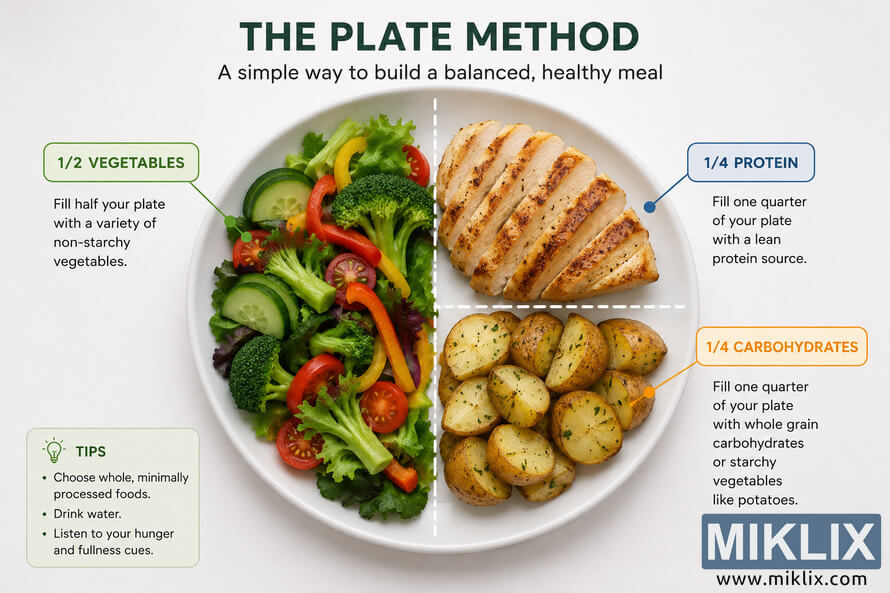
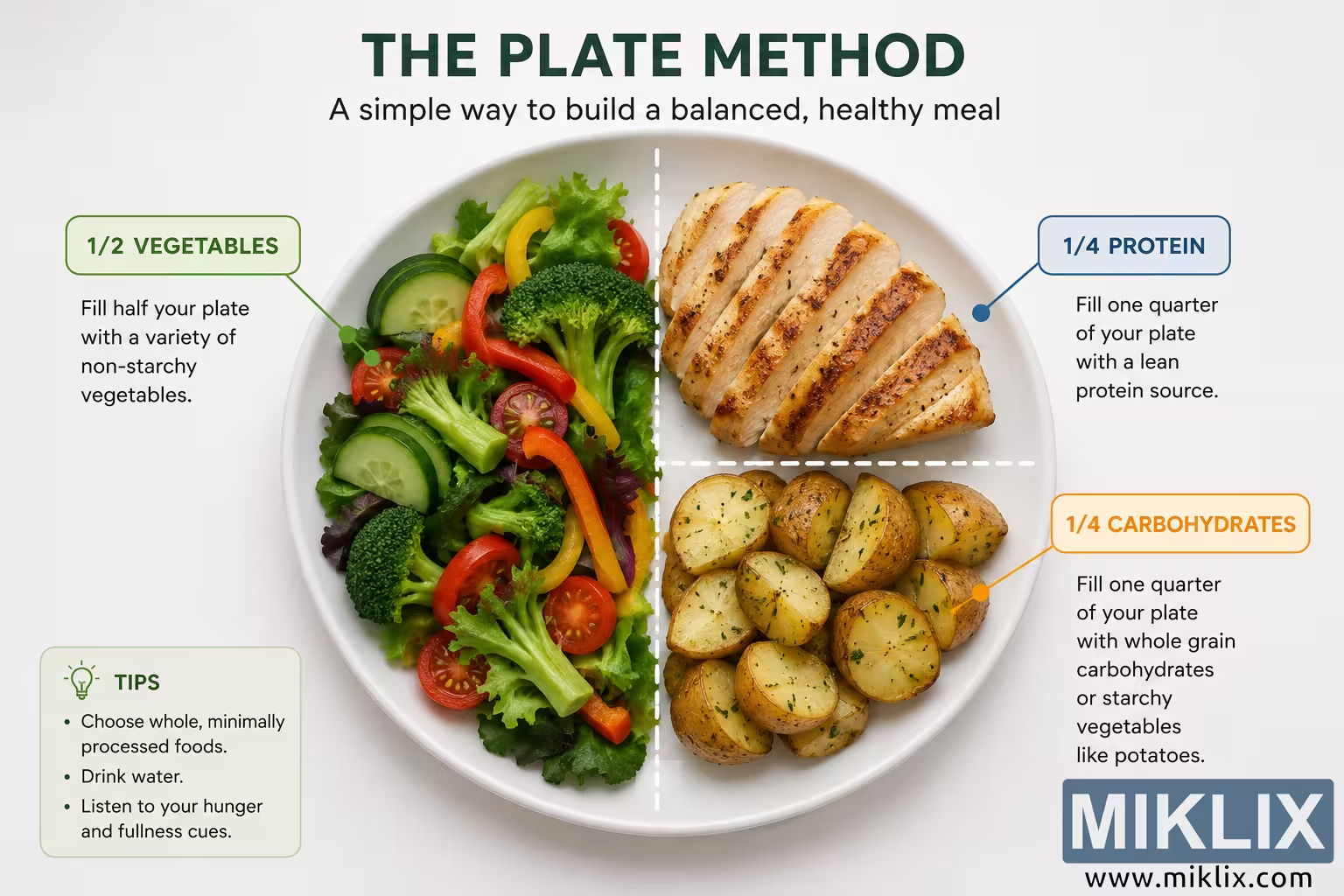
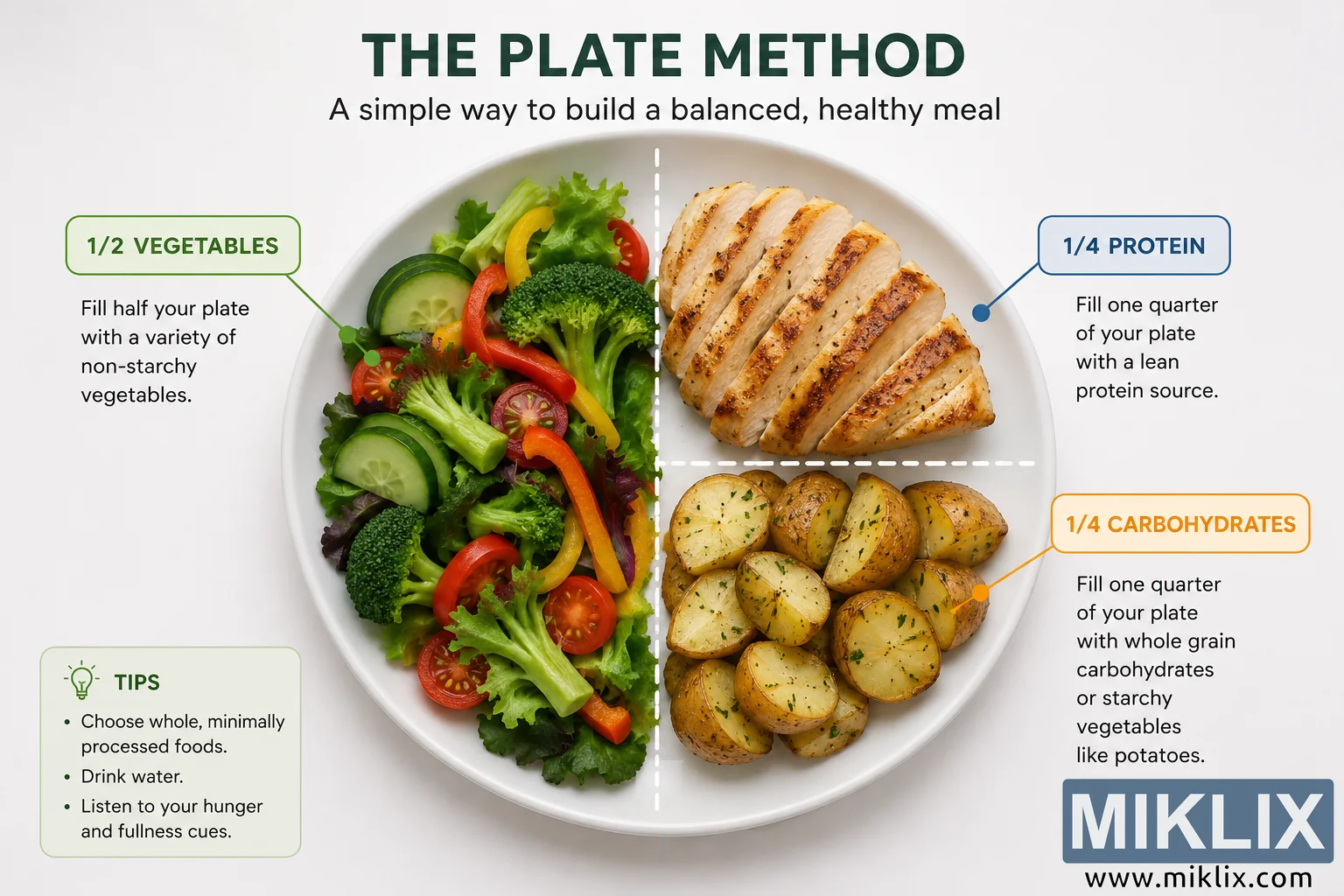
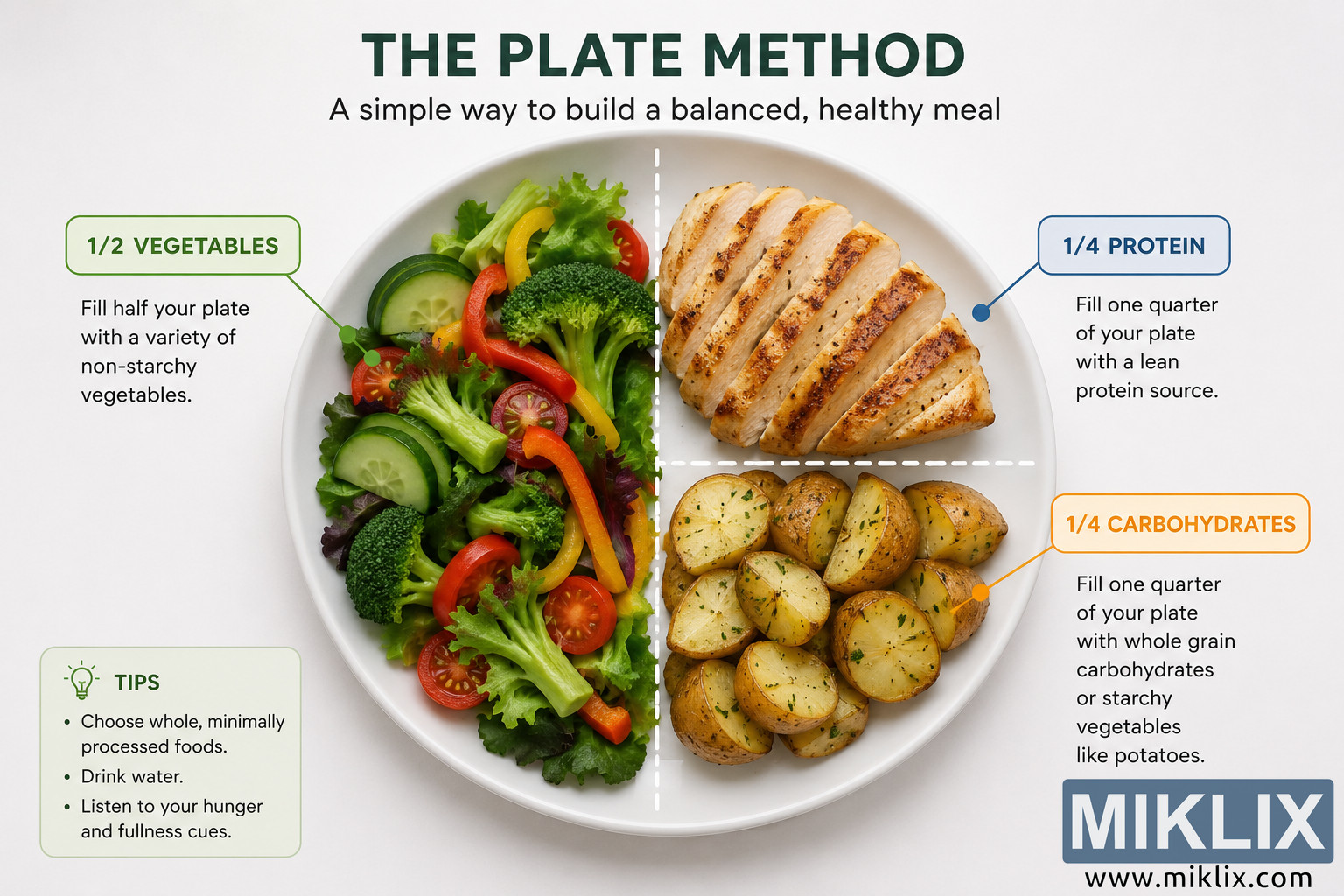
Illustrated plate method diagram showing a balanced meal with half non-starchy vegetables, one quarter lean protein, and one quarter potatoes. Includes labeled sections and healthy eating tips in a clean, educational infographic layout.
Plate Method Diagram Showing Ideal Meal Proportions with Potatoes
A kép elérhető változatai
Az alább letölthető képfájlok kevésbé tömörítettek és nagyobb felbontásúak - és ennek eredményeként jobb minőségűek -, mint a weboldalon található cikkekbe és oldalakba ágyazott képek, amelyek a sávszélesség-fogyasztás csökkentése érdekében jobban optimalizáltak a fájlméret tekintetében.
Normál méret (1,536 x 1,024)
Nagy méret (3,072 x 2,048)
Nagyon nagy méret (4,608 x 3,072)
Extra nagy méret (6,144 x 4,096)
Komikusan nagy méret (1,048,576 x 699,051)
- Még mindig feltöltöm... ;-)
Kép leírása
This image is a high-resolution, landscape-oriented educational infographic designed to explain the plate method for building a balanced meal. The composition combines a realistic food photograph with clean graphic design elements, creating an informative visual suitable for nutrition education, health promotion, or general wellness content. The overall appearance is bright, uncluttered, and modern, using a white background with subtle shadows that help the central plate stand out clearly. The design relies on a restrained color palette accented by the natural colors of the food and a few colored outlines for emphasis.
Centered within the image is a large, round white dinner plate viewed from above at a nearly perpendicular angle. Dashed white divider lines split the plate into three clearly defined sections representing recommended meal proportions. The left half of the plate is dedicated to non-starchy vegetables, while the right half is divided equally into an upper quarter for lean protein and a lower quarter for carbohydrate-rich foods. The proportions are visually balanced and immediately understandable, allowing the viewer to recognize the recommended distribution without needing to read the accompanying labels.
The vegetable section occupies approximately half of the plate and contains a colorful assortment of fresh produce. Visible ingredients include leafy green lettuce, broccoli florets, cucumber slices, halved cherry tomatoes, and strips of red and yellow bell pepper. The vegetables are arranged naturally with overlapping textures and varying shades of green, red, and yellow, giving the impression of freshness and variety. The vegetables are intentionally abundant to reinforce the recommendation that half of every meal should consist of non-starchy vegetables.
The upper-right quarter contains sliced grilled lean poultry arranged in a fan-like pattern. The slices display lightly browned grill marks and a moist interior, suggesting careful cooking without excessive fat. The protein portion is intentionally smaller than the vegetables yet substantial enough to communicate its importance in a balanced meal. The neutral beige and golden tones contrast effectively with the vibrant vegetables beside them.
The lower-right quarter contains roasted baby potatoes cut into halves. The potatoes have lightly browned skins with a golden interior and a light garnish of green herbs. Their placement illustrates the carbohydrate portion of the meal while emphasizing potatoes as an example of a starchy food. The potatoes are grouped neatly to fill approximately one quarter of the plate, matching the educational recommendation presented in the infographic.
Above the plate, a large bold heading reads "THE PLATE METHOD," followed by a smaller subtitle stating that it is a simple way to build a balanced, healthy meal. The typography is clean, sans-serif, and highly legible. The title establishes the educational purpose of the image while remaining visually balanced with the central plate.
Three labeled callout boxes surround the plate. A green callout on the left identifies the vegetable section and explains that half of the plate should consist of a variety of non-starchy vegetables. A blue callout on the right identifies the protein section and recommends filling one quarter of the plate with a lean protein source. An orange callout beneath it identifies the carbohydrate section and explains that one quarter of the plate should contain whole-grain carbohydrates or starchy vegetables such as potatoes. Thin connector lines visually link each callout to its corresponding section on the plate, making the relationships immediately apparent.
In the lower-left corner of the infographic is a separate tip box with a small lightbulb icon. This panel provides concise healthy eating reminders presented as a bulleted list. The tips encourage choosing whole, minimally processed foods, drinking water, and paying attention to hunger and fullness cues. The tip box is visually separated from the main plate but remains stylistically consistent through the use of soft borders, rounded corners, and restrained color accents.
The background remains clean and mostly white with subtle gradients and soft shadows that provide depth without distracting from the educational content. The lighting appears even and diffuse, minimizing harsh reflections and ensuring that all food items remain clearly visible. The composition emphasizes clarity, accessibility, and immediate comprehension rather than artistic complexity.
Overall, the infographic communicates the plate method through a combination of realistic food photography, proportional plate divisions, explanatory labels, and concise nutrition guidance. The visual hierarchy naturally guides the viewer from the title to the plate, then to the explanatory callouts and supporting tips. The result is an easy-to-understand educational image that clearly demonstrates how to assemble a balanced meal featuring vegetables, lean protein, and potatoes while maintaining a clean, professional, and approachable presentation.
A kép a következőhöz kapcsolódik: The Surprising Health Benefits of Potatoes: A Complete Nutrition Guide