
Immagine: Freshly Harvested Burdock Roots with Soil in Field
Pubblicato:
Ultimo aggiornamento: 12 marzo 2026 alle ore 15:15:49 UTC
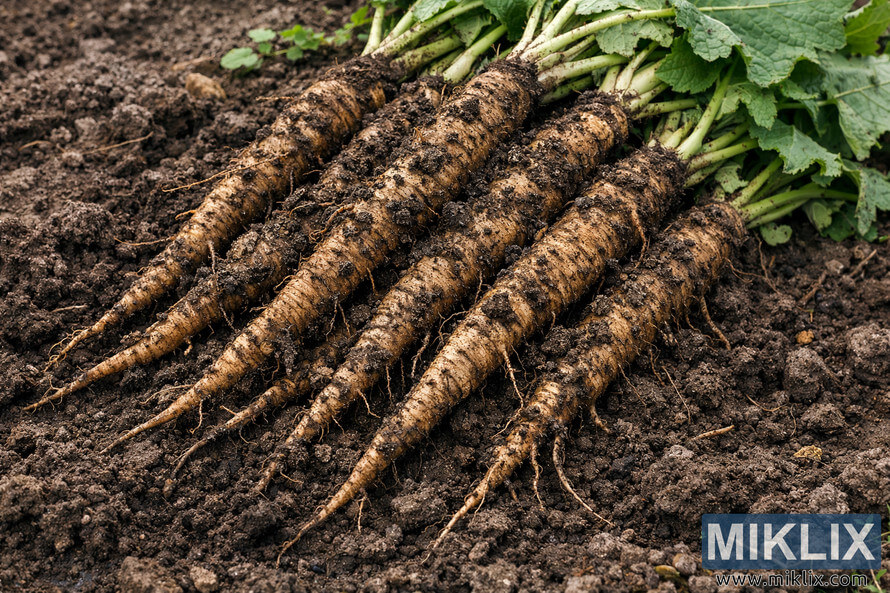
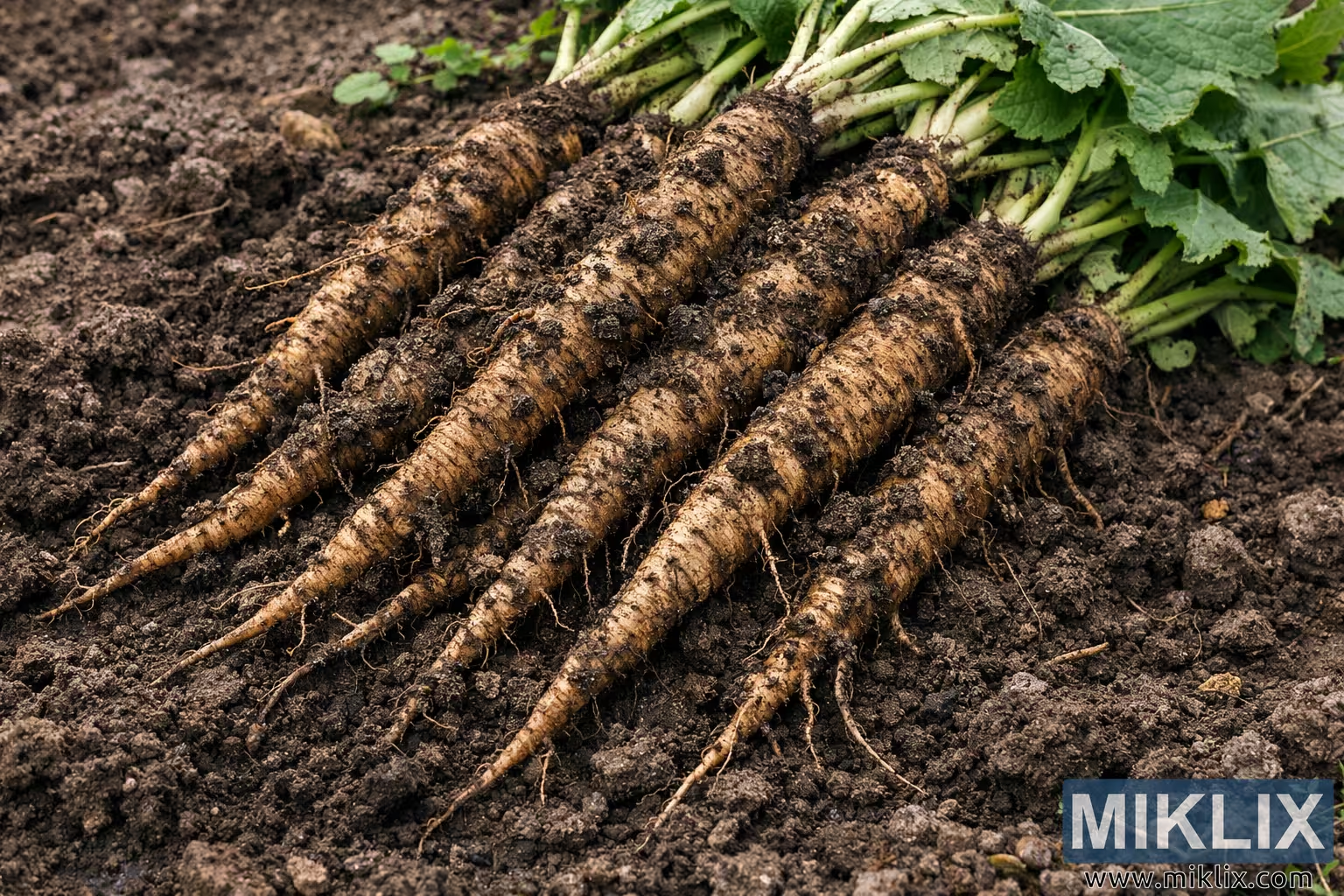
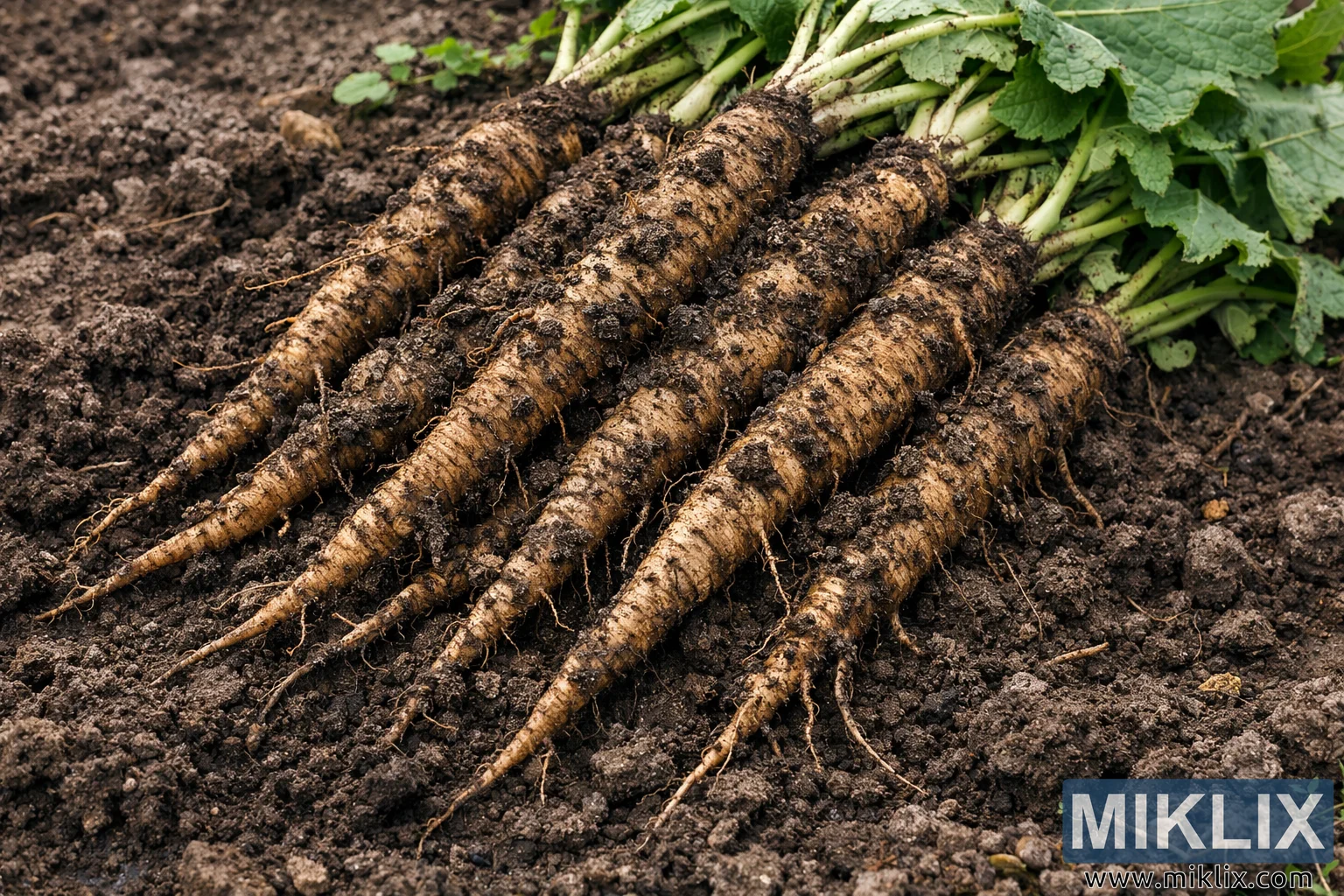
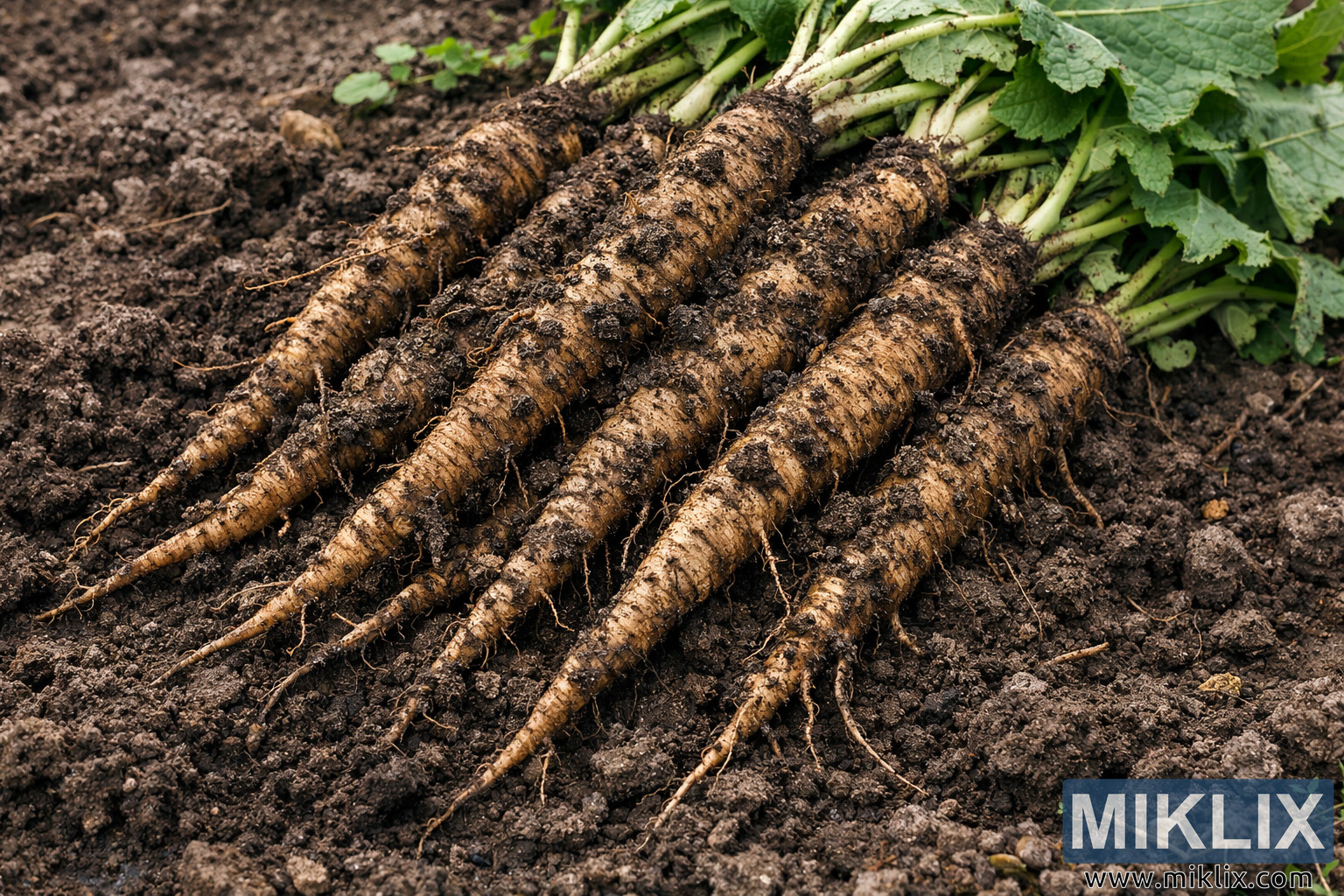
High-resolution landscape photo of freshly harvested burdock roots with long soil-covered taproots resting on rich, dark earth in natural daylight.
Freshly Harvested Burdock Roots with Soil in Field
Versioni disponibili di questa immagine
I file immagine disponibili per il download qui sotto sono meno compressi e ad alta risoluzione - e di conseguenza di qualità superiore - rispetto alle immagini incorporate negli articoli e nelle pagine di questo sito, che sono più ottimizzate per le dimensioni dei file al fine di ridurre il consumo di banda.
Taglia regolare (1,536 x 1,024)
Dimensione grande (3,072 x 2,048)
Dimensioni molto grandi (4,608 x 3,072)
Dimensione extra large (6,144 x 4,096)
Dimensioni comiche (1,048,576 x 699,051)
- Sto ancora caricando... ;-)
Descrizione dell'immagine
This high-resolution landscape photograph captures a freshly harvested cluster of burdock roots laid out across dark, freshly turned soil. The composition stretches horizontally, emphasizing the impressive length and tapering form of the burdock taproots as they extend from thick crowns to slender, pointed tips. Each root is coated in clinging clumps of moist earth, highlighting the texture of both the vegetable and the ground from which it was pulled. The soil appears rich and loamy, with visible granules, small stones, and uneven ridges that suggest recent digging. The earthy brown tones of the dirt contrast with the lighter, tan-brown skin of the burdock roots, whose rough, fibrous surfaces are marked by subtle ridges and fine root hairs.
At the top of the frame, the green stalks and broad leaves remain attached to the roots, fanning outward and adding a vibrant splash of color. The leaves are large and slightly crinkled, with visible veins and gently serrated edges. Their fresh, matte green hue contrasts strongly with the darker soil and the muted browns of the roots. The stems transition from pale green near the root crowns to deeper green toward the foliage, visually connecting the underground and above-ground portions of the plant.
The arrangement appears natural and unstyled, as if the roots were just pulled from the ground and placed side by side. Some roots curve slightly, while others lie straighter, creating visual variety while still forming a cohesive cluster. Small fragments of soil cling unevenly along their length, emphasizing their recent harvest and the authenticity of the agricultural setting. Fine rootlets extend from the main taproots, thin and threadlike, adding delicate detail against the darker background.
The lighting suggests daytime conditions with soft, even illumination that avoids harsh shadows. This gentle light enhances surface textures, making the soil appear damp and crumbly and the root skins subtly matte. The image communicates a sense of freshness, earthiness, and farm-to-table authenticity. It evokes sustainable agriculture and seasonal harvesting, celebrating the natural form of burdock in its raw state. The overall impression is grounded and tactile, inviting the viewer to imagine the weight, smell, and feel of freshly unearthed roots resting on nutrient-rich soil.
L'immagine è correlata a: Growing Burdock: Your Complete Guide from Seed to Harvest