
Immagine: Freshly Harvested Parsnips with Soil in a Garden Bed
Pubblicato:
Ultimo aggiornamento: 18 marzo 2026 alle ore 20:43:38 UTC
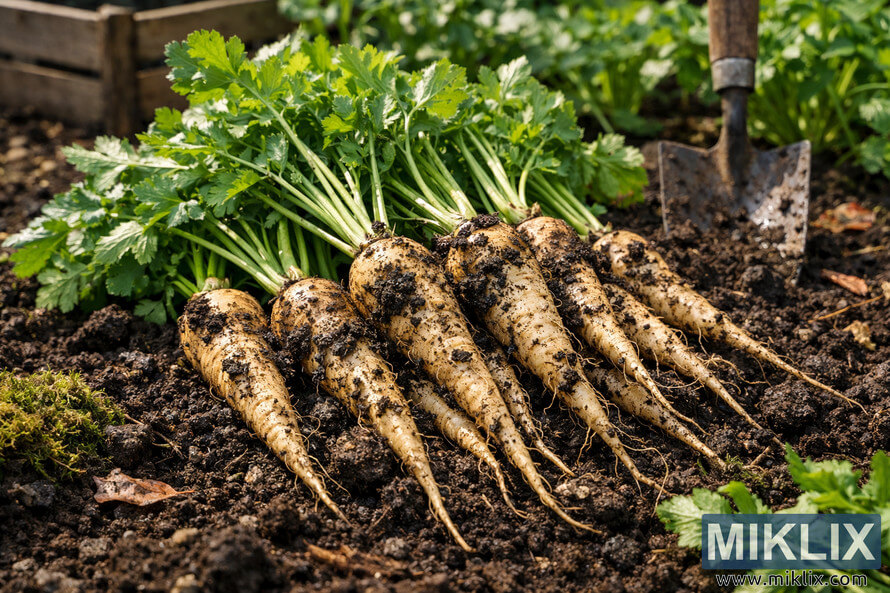
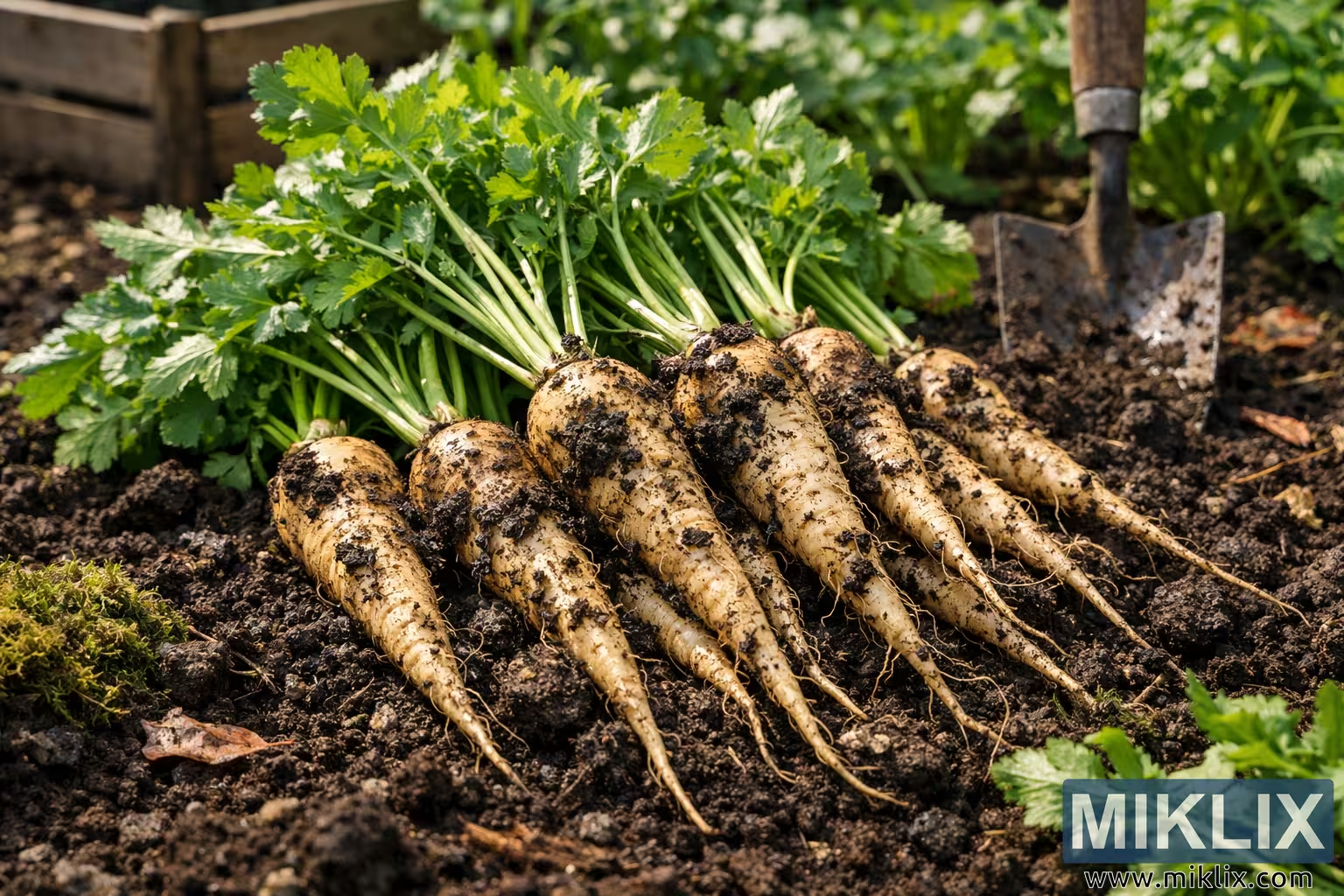
A rustic garden scene showing freshly harvested parsnips with soil still clinging to their roots and vibrant green tops resting on rich garden soil.
Freshly Harvested Parsnips with Soil in a Garden Bed
Versioni disponibili di questa immagine
I file immagine disponibili per il download qui sotto sono meno compressi e ad alta risoluzione - e di conseguenza di qualità superiore - rispetto alle immagini incorporate negli articoli e nelle pagine di questo sito, che sono più ottimizzate per le dimensioni dei file al fine di ridurre il consumo di banda.
Taglia regolare (1,536 x 1,024)
Dimensione grande (3,072 x 2,048)
Dimensioni molto grandi (4,608 x 3,072)
Dimensione extra large (6,144 x 4,096)
Dimensioni comiche (1,048,576 x 699,051)
- Sto ancora caricando... ;-)
Descrizione dell'immagine
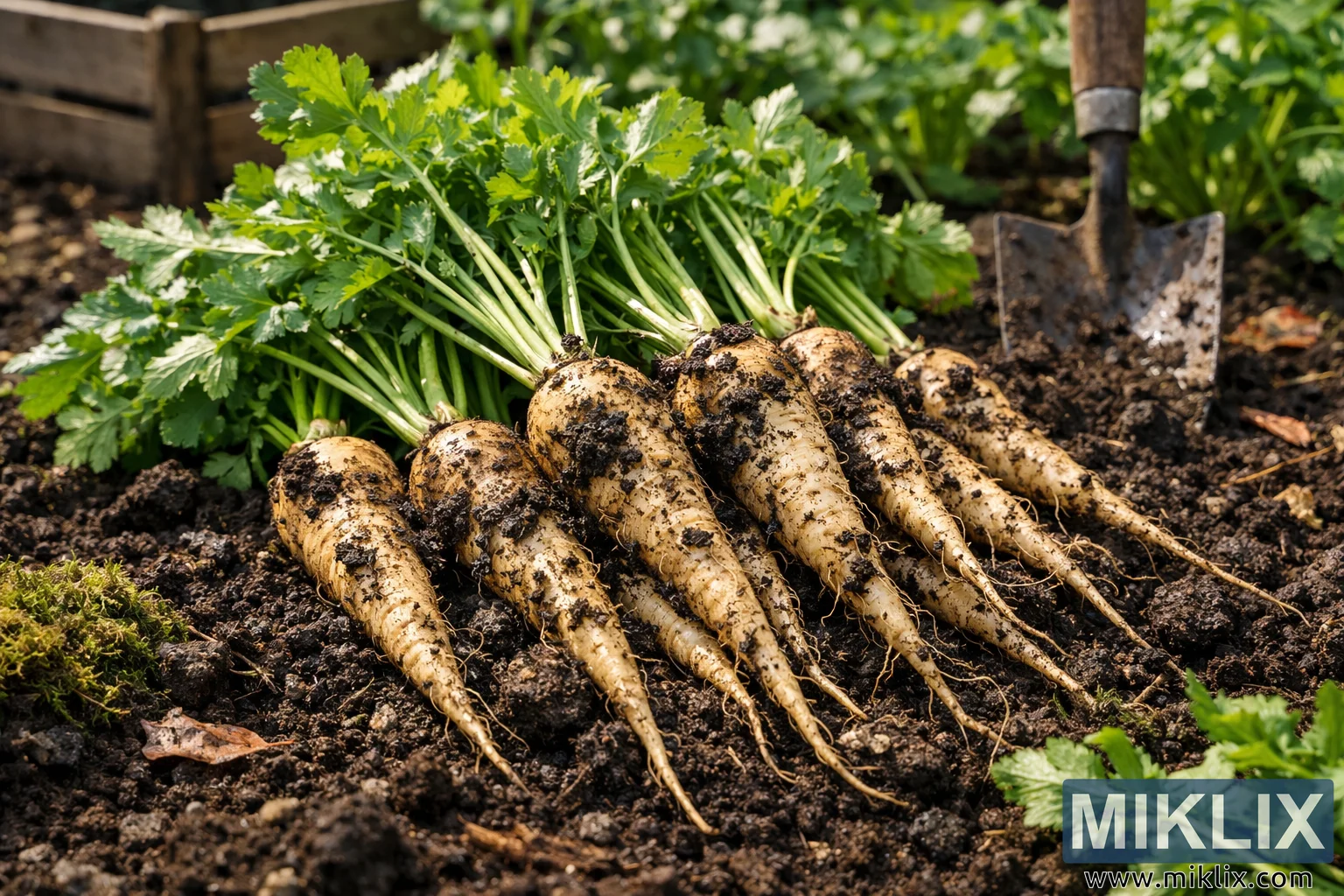
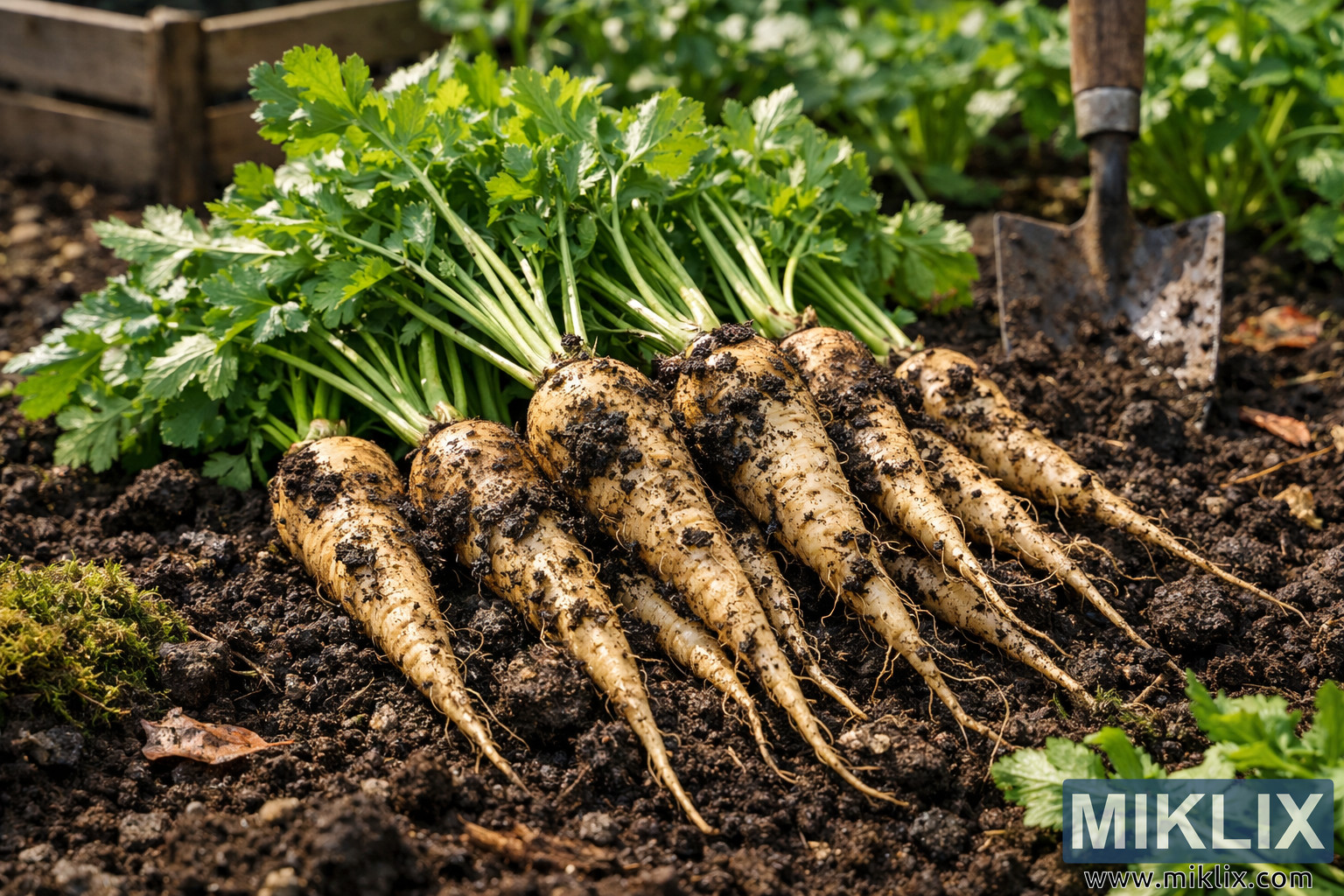
A detailed garden scene shows a group of freshly harvested parsnips resting on dark, loose soil in a vegetable bed. The parsnips are arranged horizontally in the foreground, their long tapered roots pointing toward the viewer while their leafy green tops fan outward behind them. Each root varies slightly in size and shape, ranging from slender and elongated to thicker and more robust, emphasizing the natural variation found in homegrown produce. The pale cream-colored skins of the roots are still coated with clumps of moist earth and fine root hairs, reinforcing the impression that they were just pulled from the ground moments earlier.
The soil beneath them appears rich and fertile, with a deep brown color and a crumbly texture scattered with small clods and bits of organic matter. Some loose dirt still clings to the parsnips, forming irregular patterns along their length and collecting in the ridges of the roots. The slightly rough and imperfect surfaces add to the authenticity of the harvest scene.
Behind the roots, a thick cluster of vibrant green leaves spreads outward. The leafy tops are composed of serrated, parsley-like foliage with thin stems emerging from the crowns of the roots. The leaves catch the sunlight, creating bright highlights and soft shadows that give the greenery a lively, fresh appearance. The foliage appears healthy and abundant, suggesting the plants were grown in a well-maintained garden bed.
To the right side of the composition, a small garden trowel stands partially embedded in the soil. The metal blade is slightly dirty from recent digging, while the handle extends upward at an angle. Its presence hints at the harvesting process and adds a practical gardening element to the scene. In the softly blurred background, additional leafy plants and the wooden edge of a raised bed can be seen, reinforcing the setting of a productive vegetable garden.
Natural daylight illuminates the scene, producing a warm and inviting atmosphere. The sunlight highlights the textures of the soil, the subtle ridges along the parsnip roots, and the delicate structure of the leaves. The overall composition captures a moment immediately after harvesting, celebrating the earthy beauty of freshly grown vegetables and the satisfaction of gathering them directly from the garden.
L'immagine è correlata a: Growing Parsnips: Your Complete Guide to Sweet, Homegrown Roots