
Immagine: Row Cover Protecting Parsnip Plants in a Garden Bed
Pubblicato:
Ultimo aggiornamento: 18 marzo 2026 alle ore 20:43:39 UTC
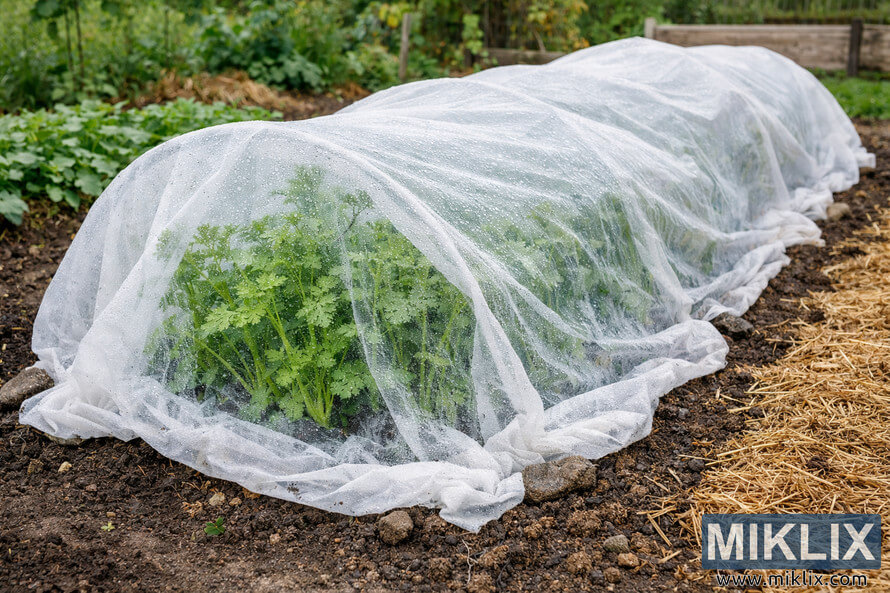
Semi-transparent row cover fabric protects parsnip plants in a garden bed, allowing sunlight through while shielding the crop from insects and pests.
Row Cover Protecting Parsnip Plants in a Garden Bed
Versioni disponibili di questa immagine
I file immagine disponibili per il download qui sotto sono meno compressi e ad alta risoluzione - e di conseguenza di qualità superiore - rispetto alle immagini incorporate negli articoli e nelle pagine di questo sito, che sono più ottimizzate per le dimensioni dei file al fine di ridurre il consumo di banda.
Taglia regolare (1,536 x 1,024)
Dimensione grande (3,072 x 2,048)
Dimensioni molto grandi (4,608 x 3,072)
Dimensione extra large (6,144 x 4,096)
Dimensioni comiche (1,048,576 x 699,051)
- Sto ancora caricando... ;-)
Descrizione dell'immagine
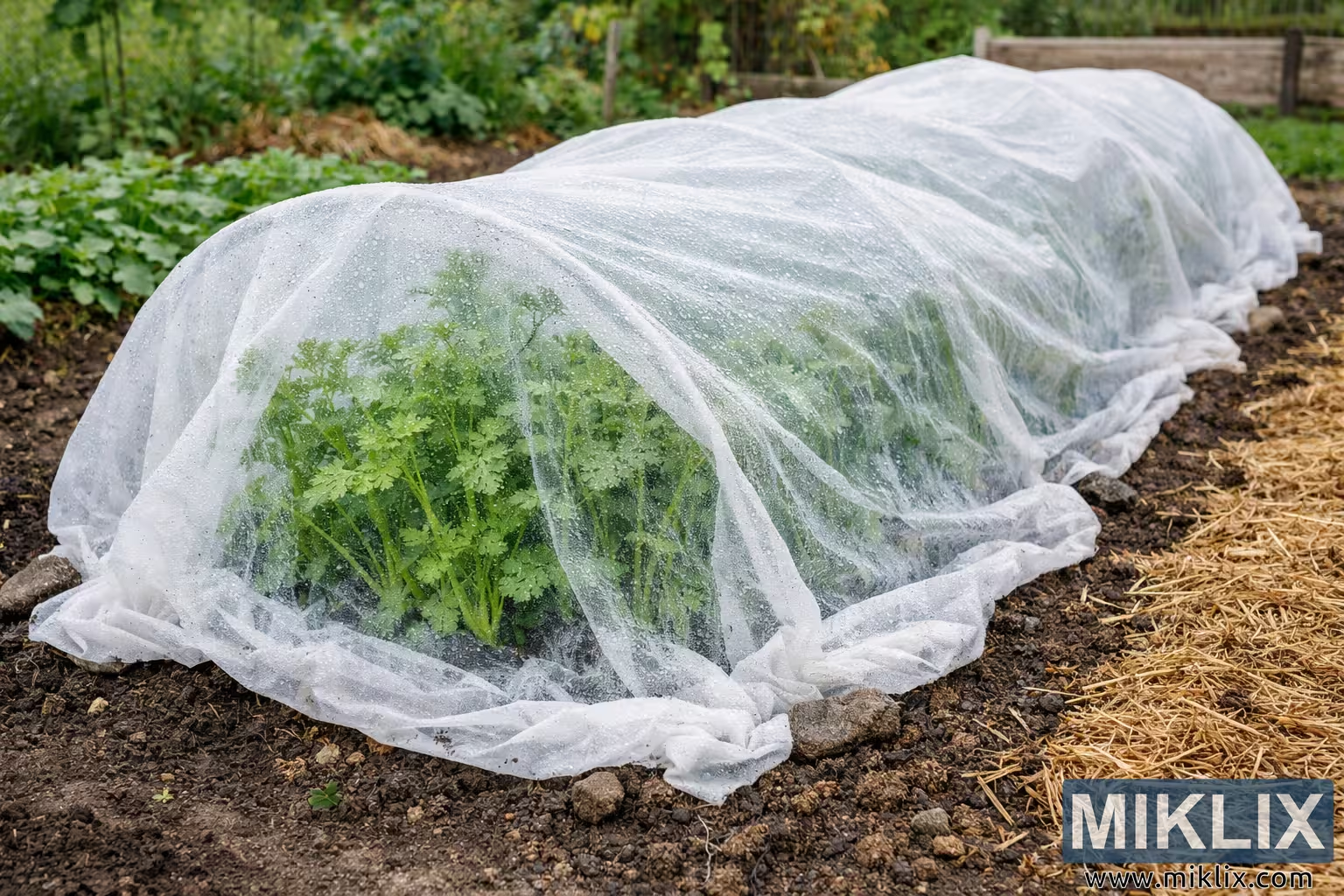
A daytime garden scene shows a raised vegetable bed where young parsnip plants are protected beneath a lightweight row cover fabric. The cover forms a long, low tunnel over the plants, its semi-transparent material gently draped and arched across the bed. The fabric allows soft daylight to filter through, revealing the feathery green foliage of the parsnip plants underneath while still providing a physical barrier against insects and other pests. Tiny droplets of condensation are scattered across the surface of the fabric, suggesting cool morning conditions or recent watering, and adding texture that catches the light across the cover’s smooth surface.
The row cover appears to be loosely supported by the natural height of the plants and the tension of the fabric itself, creating a rounded shape that runs the full length of the bed. Along the edges, the fabric is carefully tucked down and held in place with small stones and clumps of soil, ensuring that insects cannot easily crawl underneath. This simple but effective method keeps the protective barrier secure while remaining easy to lift when tending to the plants. The protective layer also helps moderate temperature and reduce wind stress, creating a slightly warmer microclimate for the developing vegetables.
Beneath the translucent cover, the parsnip leaves appear vibrant and healthy, their delicate, fern-like structure visible through the thin material. The plants grow in neat rows in dark, freshly cultivated soil. The soil looks moist and well maintained, suggesting attentive garden care and regular watering. The contrast between the rich brown earth and the bright green foliage beneath the pale fabric creates a visually balanced composition.
In the surrounding garden environment, additional raised beds and patches of greenery can be seen softly out of focus in the background. Wooden borders frame parts of the garden, indicating an organized vegetable-growing space. To the side of the bed, a layer of straw mulch lies on the ground, helping to retain soil moisture and suppress weeds. The mulch’s warm golden color contrasts with the darker soil and the cool white tone of the row cover fabric.
Overall, the image captures a practical and sustainable gardening technique. The protective row cover demonstrates a common method used by gardeners to shield crops from flying insects such as carrot flies while still allowing sunlight, air, and moisture to reach the plants. The scene conveys careful cultivation and seasonal vegetable growing, highlighting the balance between natural plant growth and simple protective measures used to support a healthy harvest.
L'immagine è correlata a: Growing Parsnips: Your Complete Guide to Sweet, Homegrown Roots