
Immagine: Hands Mixing Compost into Garden Soil
Pubblicato:
Ultimo aggiornamento: 22 marzo 2026 alle ore 21:44:06 UTC
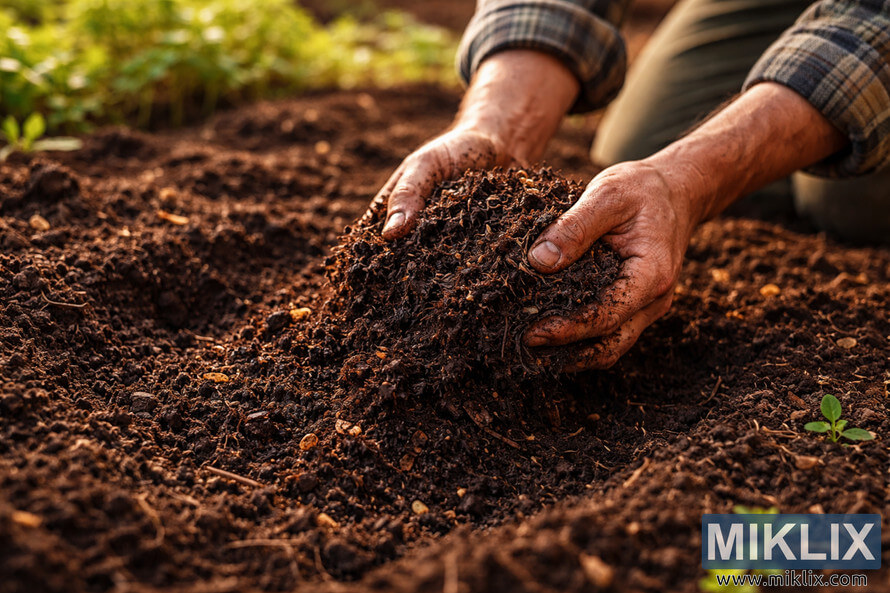
Close-up photo of hands working nutrient-rich compost into garden soil, preparing a fertile planting bed in warm natural afternoon light.
Hands Mixing Compost into Garden Soil
Versioni disponibili di questa immagine
I file immagine disponibili per il download qui sotto sono meno compressi e ad alta risoluzione - e di conseguenza di qualità superiore - rispetto alle immagini incorporate negli articoli e nelle pagine di questo sito, che sono più ottimizzate per le dimensioni dei file al fine di ridurre il consumo di banda.
Taglia regolare (1,536 x 1,024)
Dimensione grande (3,072 x 2,048)
Dimensioni molto grandi (4,608 x 3,072)
Dimensione extra large (6,144 x 4,096)
Dimensioni comiche (1,048,576 x 699,051)
- Sto ancora caricando... ;-)
Descrizione dell'immagine
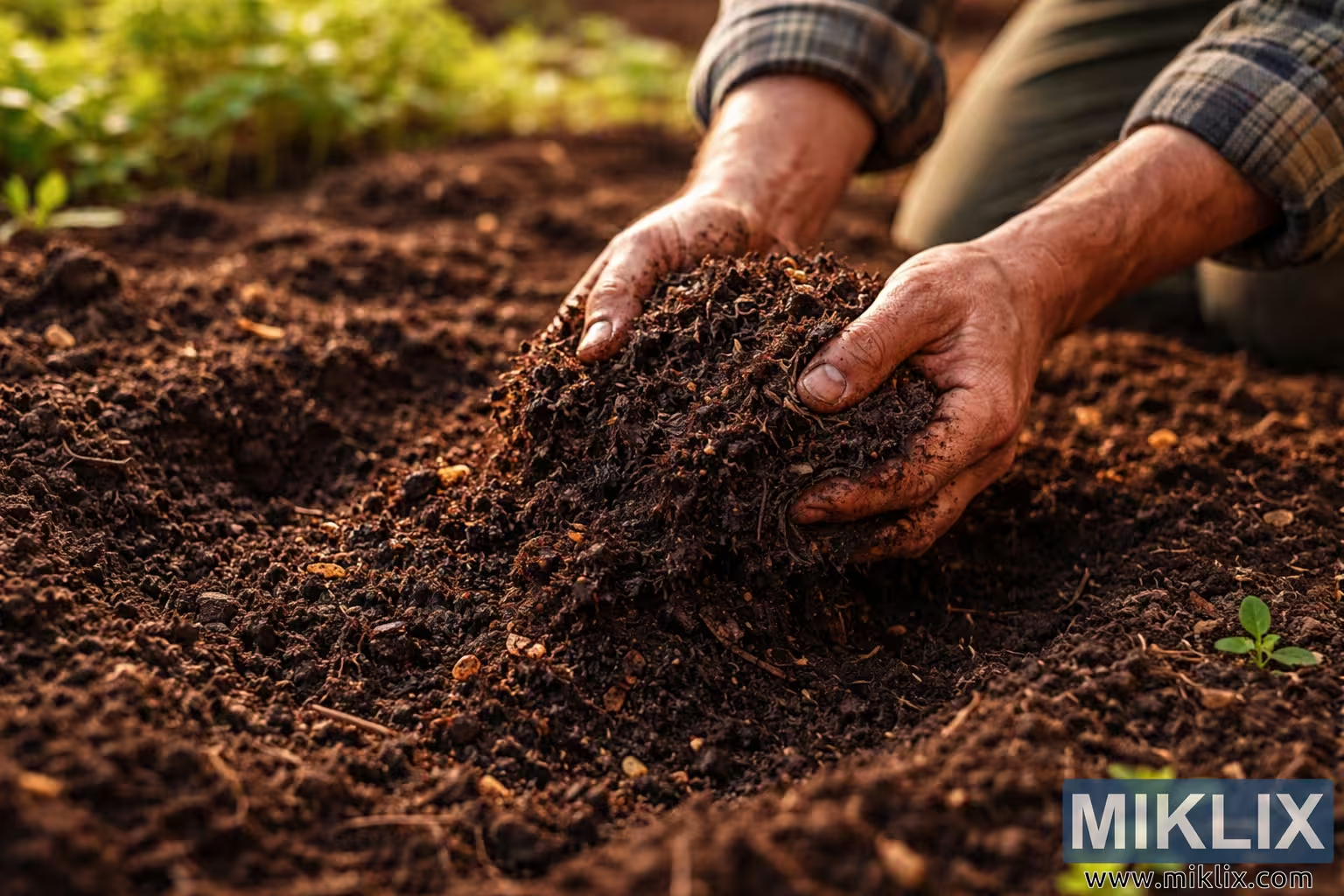
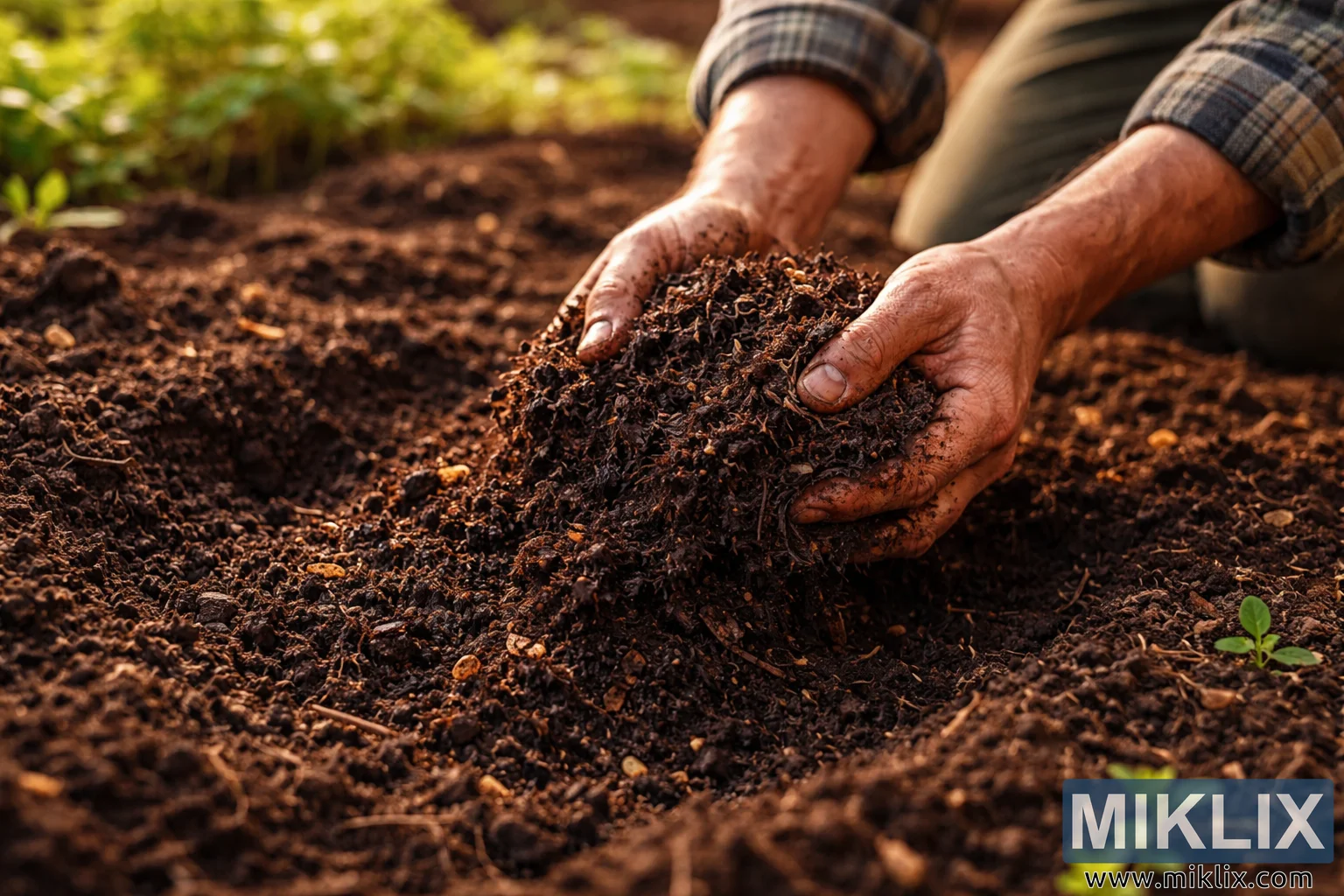
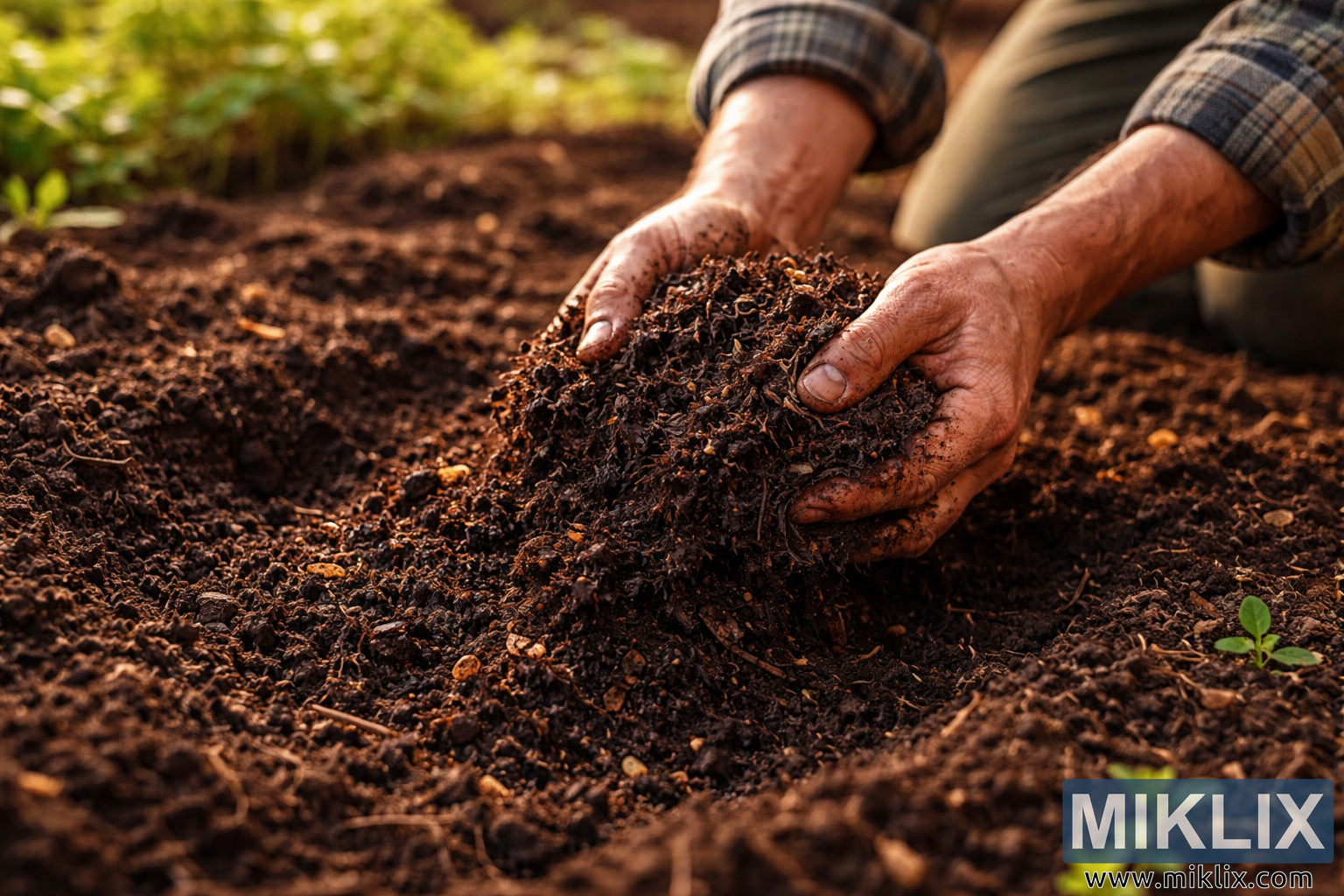
A close-up, landscape-oriented photograph captures the tactile moment of preparing a garden bed by hand. At the center of the image, a pair of weathered human hands gently gathers and spreads a mound of dark, crumbly compost into freshly turned soil. The hands appear slightly rough and earth-stained, with small traces of soil beneath the fingernails and along the fingertips, emphasizing the physical and intimate connection between the gardener and the earth. The compost itself is rich in texture, made up of decomposed organic matter such as small wood fragments, leaf particles, and dark humus, which together form a nutrient-dense mixture ready to nourish new plant life.
The gardener’s sleeves, visible just above the wrists, are made of a soft plaid flannel fabric in muted earth tones, reinforcing the natural, practical atmosphere of the scene. The hands are positioned as if carefully blending the compost into the surrounding soil, allowing it to fall loosely between the fingers and spread evenly across the planting bed. Small clumps of soil crumble and break apart as the compost is incorporated, suggesting the soil is moist and fertile.
Warm late-afternoon sunlight illuminates the scene from the side, casting gentle highlights on the contours of the hands and creating soft shadows within the folds of soil and organic matter. The lighting enhances the deep browns of the compost and the reddish-brown tones of the garden bed, while subtle golden hues from the sun give the image a calm, natural warmth.
In the softly blurred background, hints of green vegetation and tiny seedlings suggest a thriving garden environment. The shallow depth of field keeps the focus tightly on the hands and the compost while allowing the surrounding garden to dissolve into soft shapes and colors. This background context subtly communicates that the soil preparation is part of a larger gardening process.
The image conveys themes of sustainability, growth, and care for the land. By working compost into the soil, the gardener is recycling organic material and enriching the earth to support future plants. The act feels deliberate and mindful, highlighting the quiet satisfaction of preparing the ground before planting. Overall, the photograph evokes a sense of patience, connection to nature, and the rewarding process of cultivating a healthy garden ecosystem.
L'immagine è correlata a: Growing Shallots: Your Complete Guide to a Bountiful Harvest