
Immagine: Annie Oakley II Okra Plants with Pods and Flowers
Pubblicato:
Ultimo aggiornamento: 17 marzo 2026 alle ore 21:37:44 UTC
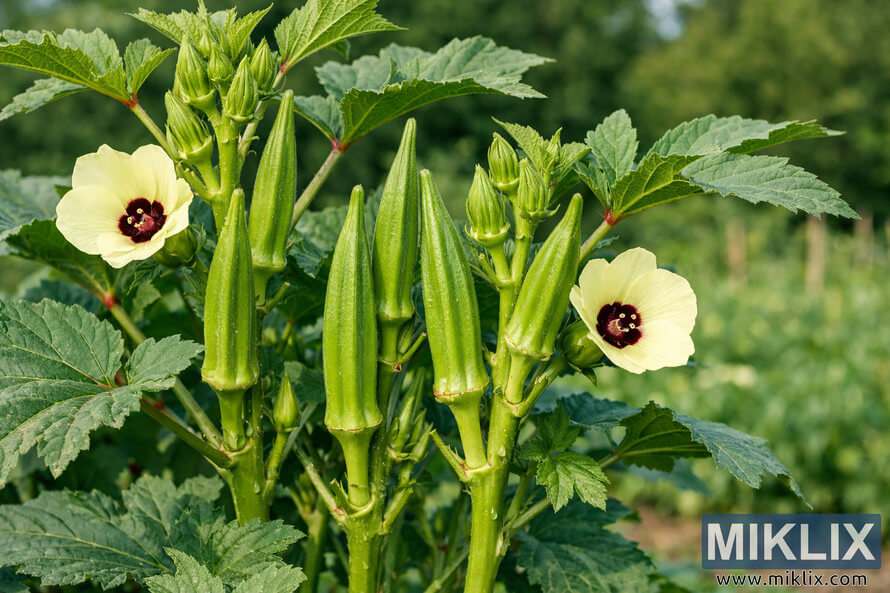
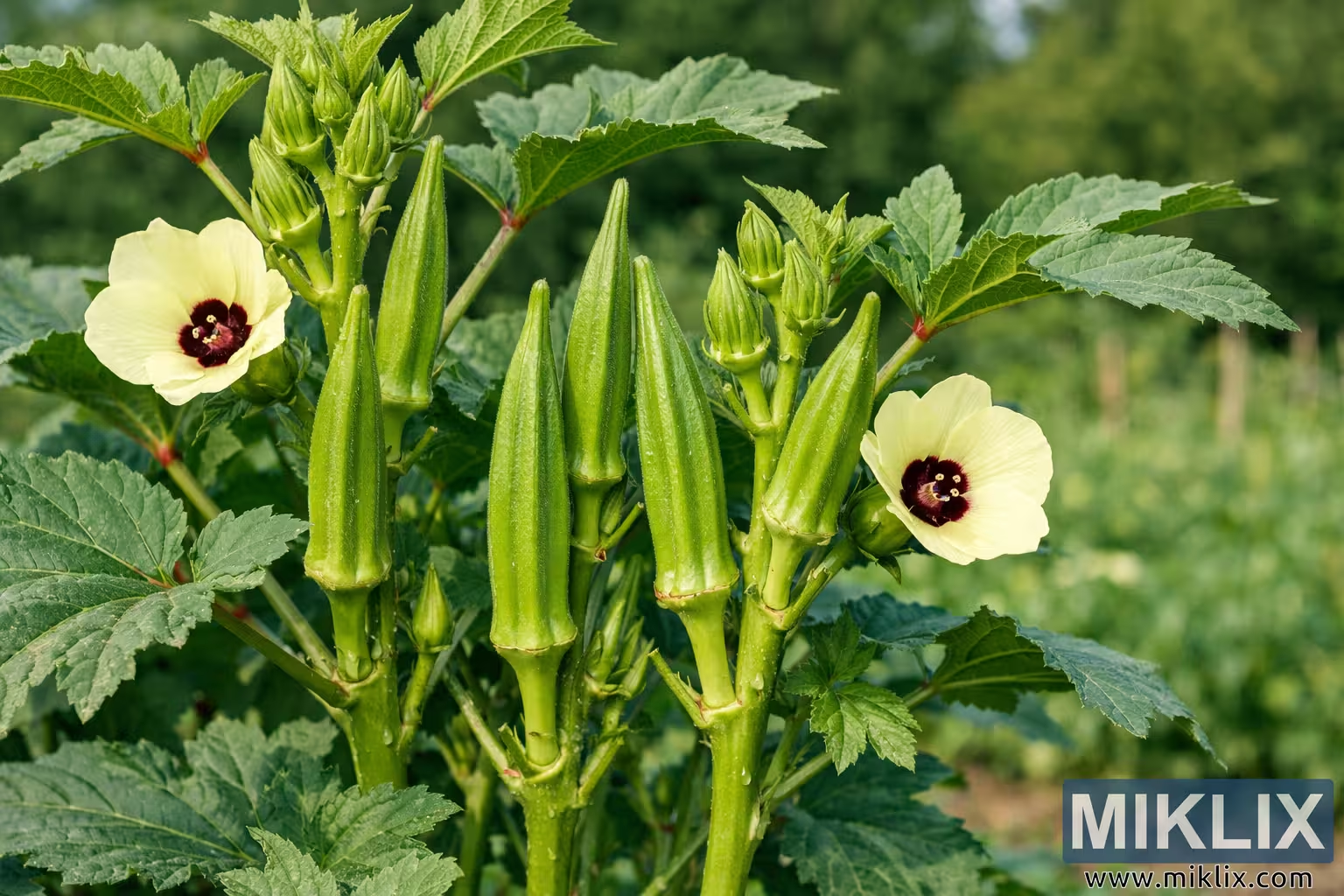
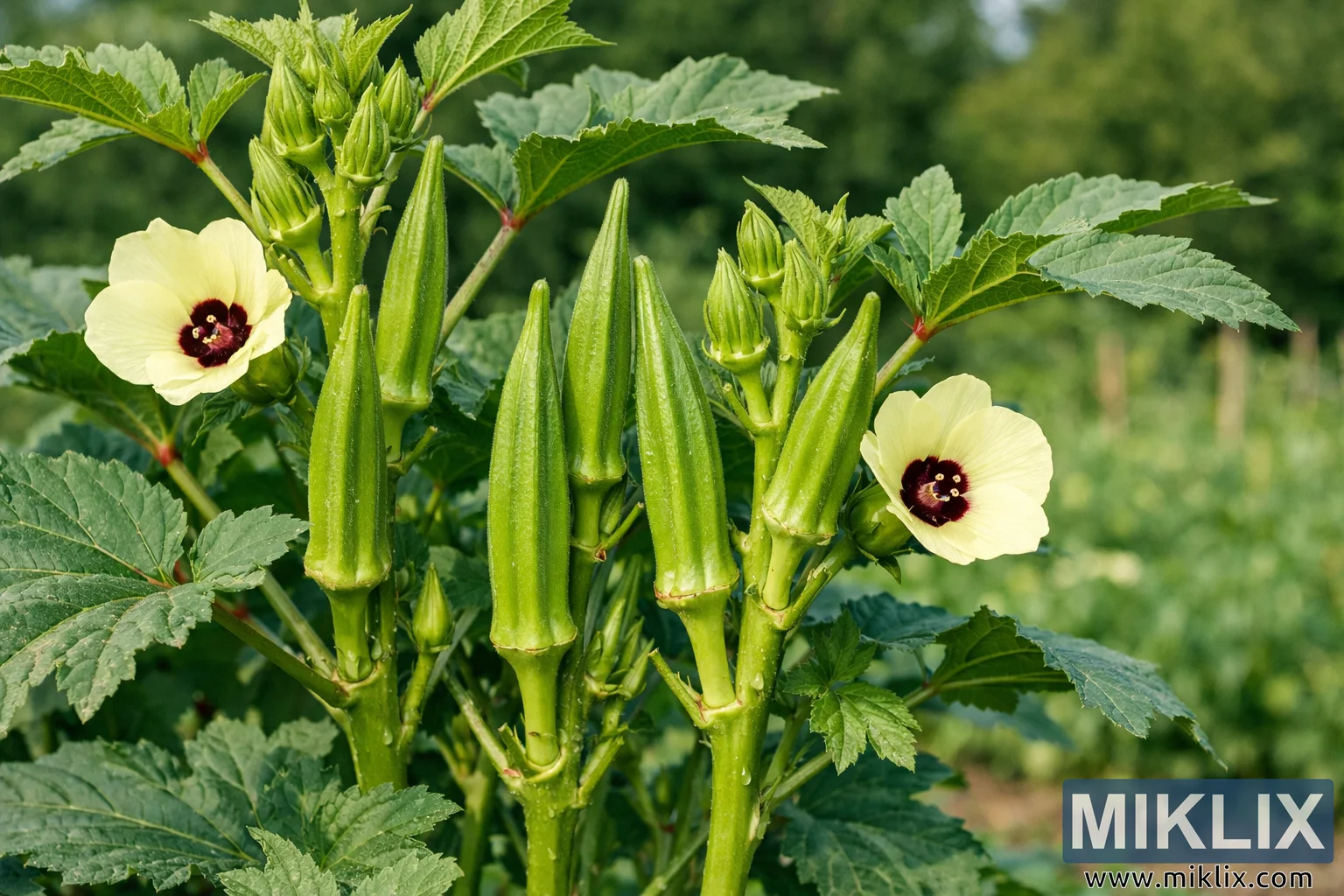
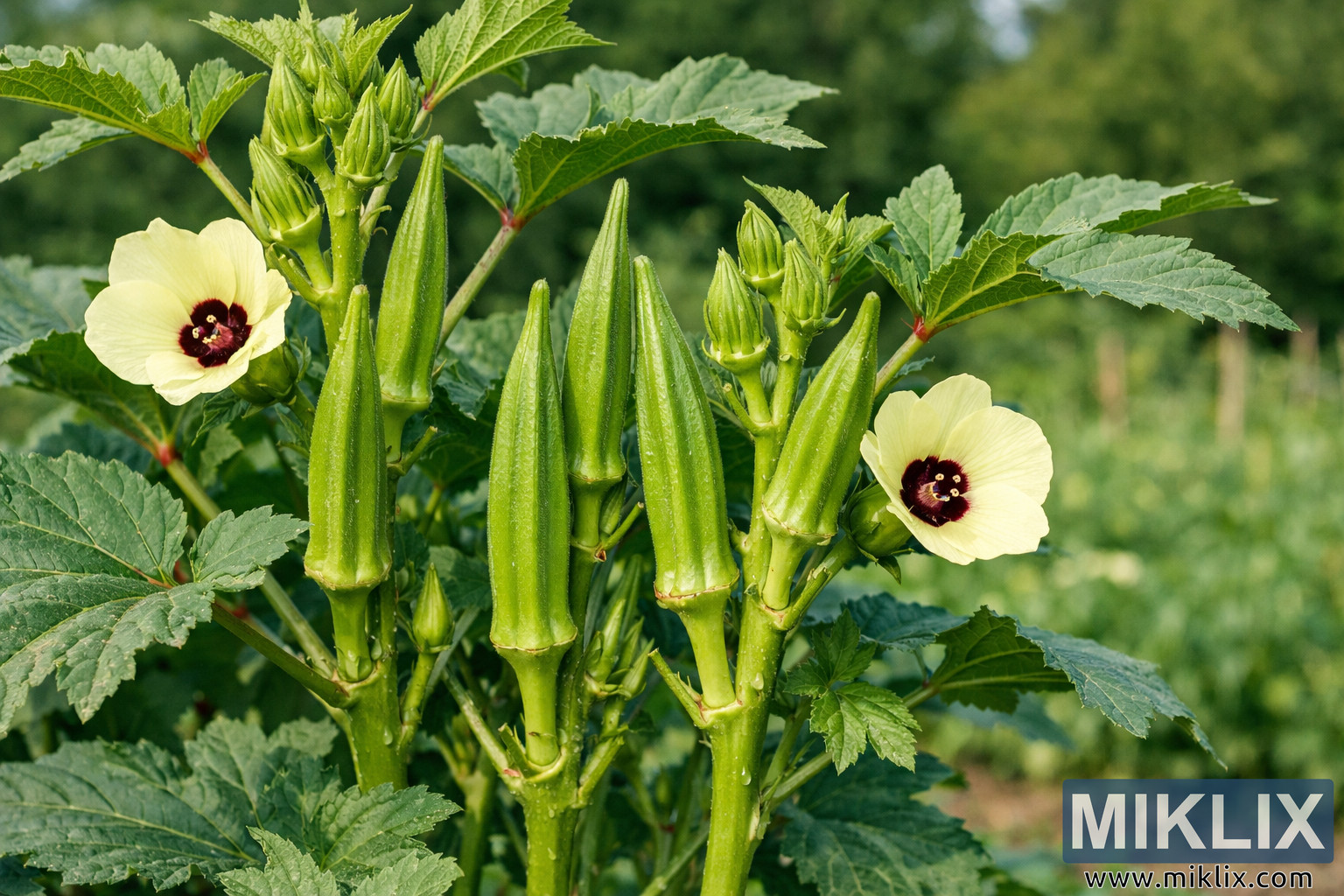
High-resolution landscape photo of Annie Oakley II okra plants featuring green pods, pale yellow hibiscus-like flowers with dark centers, and lush foliage in a garden setting.
Annie Oakley II Okra Plants with Pods and Flowers
Versioni disponibili di questa immagine
I file immagine disponibili per il download qui sotto sono meno compressi e ad alta risoluzione - e di conseguenza di qualità superiore - rispetto alle immagini incorporate negli articoli e nelle pagine di questo sito, che sono più ottimizzate per le dimensioni dei file al fine di ridurre il consumo di banda.
Taglia regolare (1,536 x 1,024)
Dimensione grande (3,072 x 2,048)
Dimensioni molto grandi (4,608 x 3,072)
Dimensione extra large (6,144 x 4,096)
Dimensioni comiche (1,048,576 x 699,051)
- Sto ancora caricando... ;-)
Descrizione dell'immagine
This high-resolution landscape photograph presents a detailed close-up view of Annie Oakley II okra plants growing in a garden during daylight. Several tall, vibrant green okra pods dominate the foreground, rising upright from thick, textured stems. The pods are firm, ridged, and tapered, each showing the characteristic angular shape typical of okra varieties. Their fresh green color suggests healthy growth and a plant in its productive stage. Around the pods, clusters of smaller developing buds can be seen at various stages of maturity, indicating ongoing flowering and fruit production.
Among the pods are delicate okra blossoms, which resemble hibiscus flowers due to their shared botanical family. The flowers display soft, pale yellow petals that open wide around a deep maroon or burgundy center. The dark central eye creates a striking contrast against the light petals and draws attention to the reproductive structures of the flower. These blossoms appear fresh and recently opened, with smooth petals and clearly visible stamens emerging from the center.
The stems supporting the pods and flowers are sturdy and upright, branching outward with broad, lobed leaves typical of okra plants. The leaves have a slightly rough texture and visible veins, with serrated edges and varying shades of green. Some leaves extend outward toward the edges of the frame, partially overlapping the pods and blossoms, creating a dense and lively plant structure.
The photograph uses a shallow depth of field, keeping the pods, flowers, and nearby leaves sharply in focus while softly blurring the background. Behind the main subject, a gentle wash of green foliage and hints of soil form an unobtrusive backdrop that emphasizes the plant’s details without distraction. The lighting suggests natural sunlight, illuminating the surfaces of the pods and leaves while casting subtle shadows that enhance texture and dimensionality.
Overall, the image captures the productive growth stage of the Annie Oakley II okra variety, highlighting both its edible pods and its ornamental, hibiscus-like flowers. The composition focuses on botanical detail, plant health, and the natural beauty of a thriving garden crop, making the photograph both informative and visually appealing for gardening, agriculture, or plant identification contexts.
L'immagine è correlata a: The Complete Guide to Growing Okra in Your Home Garden