
Immagine: Soil pH Testing Kit and Mustard-Friendly Color Chart
Pubblicato:
Ultimo aggiornamento: 7 marzo 2026 alle ore 18:30:02 UTC
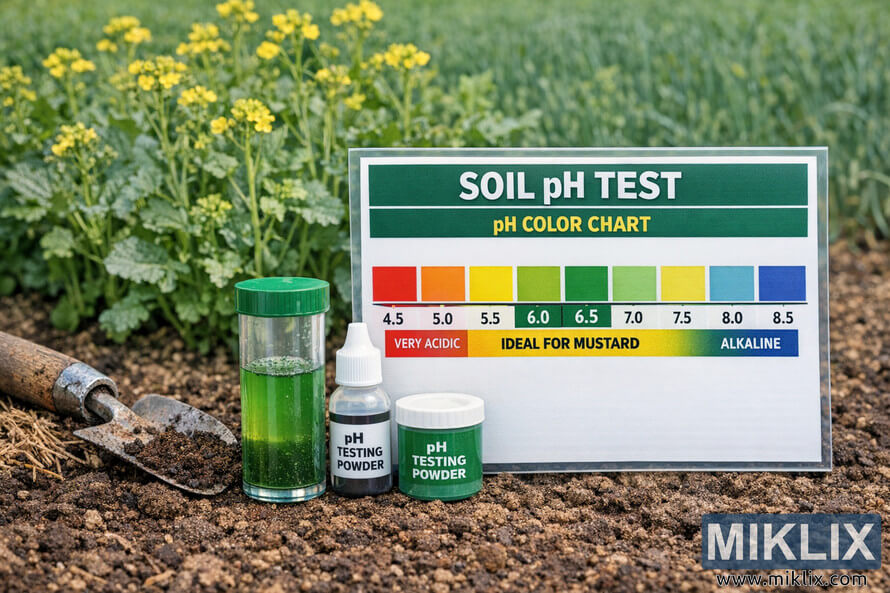
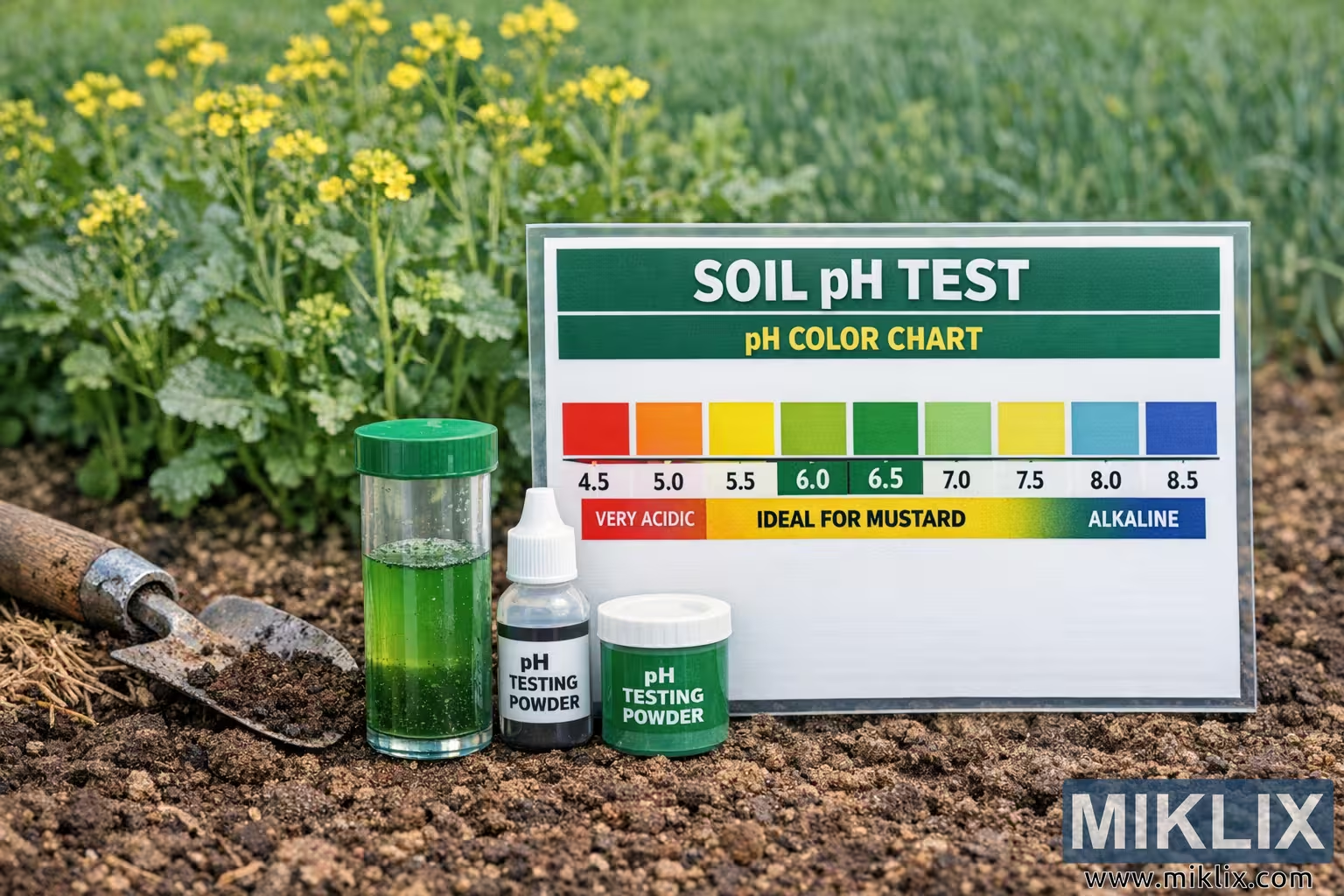
Landscape photo of a soil pH testing kit with reagent bottles and a color chart labeled “ideal for mustard,” set on garden soil with mustard plants and yellow blooms behind.
Soil pH Testing Kit and Mustard-Friendly Color Chart
Versioni disponibili di questa immagine
I file immagine disponibili per il download qui sotto sono meno compressi e ad alta risoluzione - e di conseguenza di qualità superiore - rispetto alle immagini incorporate negli articoli e nelle pagine di questo sito, che sono più ottimizzate per le dimensioni dei file al fine di ridurre il consumo di banda.
Taglia regolare (1,536 x 1,024)
Dimensione grande (3,072 x 2,048)
Dimensioni molto grandi (4,608 x 3,072)
Dimensione extra large (6,144 x 4,096)
Dimensioni comiche (1,048,576 x 699,051)
- Sto ancora caricando... ;-)
Descrizione dell'immagine
A landscape-oriented close-up shows a soil pH testing kit arranged on freshly disturbed garden soil, with a soft-focus field of mustard plants rising behind it. In the foreground, the earth is dark and crumbly, dotted with small clods and bits of organic matter that catch the light. On the far left lies a well-used hand trowel, its wooden handle worn and slightly rough, leading to a metal blade streaked with soil and speckled with rust. The trowel is partly embedded in the dirt, suggesting the test has just been performed.
Centered low in the frame are the kit’s components: a clear cylindrical test container filled with bright green liquid and capped with a ribbed green lid; beside it, a small white dropper bottle and a squat plastic jar, both labeled for pH testing powder. The container’s liquid appears freshly mixed, with faint bubbles and sediment hints near the bottom, implying a soil sample has been combined with reagent. The labels are clean and legible, reinforcing the instructional, practical tone of the scene.
Dominating the right side is a large, laminated pH color chart board propped upright in the soil. A bold header reads “SOIL pH TEST” with a secondary line “pH COLOR CHART,” presented in crisp, high-contrast lettering. Beneath the header stretches a horizontal row of colored blocks transitioning from warm reds and oranges through yellows and greens into cooler blues, each block aligned with a numeric pH value. The visible scale runs from acidic to alkaline, with numbers marked at regular steps: 4.5, 5.0, 5.5, 6.0, 6.5, 7.0, 7.5, 8.0, and 8.5. Below the scale, the left end is labeled “VERY ACIDIC” and the right end “ALKALINE,” while the middle band is emphasized with the phrase “IDEAL FOR MUSTARD,” highlighting the preferred growing range.
In the background, mustard plants provide context and purpose. Their stems and leaves form a dense green wall, and clusters of small yellow flowers rise above the foliage, creating a bright, natural backdrop. The shallow depth of field keeps the plants softly blurred, drawing attention to the kit and the chart’s central message. Overall, the image feels like an educational gardening photo: practical tools in the soil, clear guidance on pH interpretation, and mustard crops nearby to show exactly what the test is meant to support.
L'immagine è correlata a: Complete Guide to Growing Your Own Mustard Plants