
Immagine: Beneficial Insects Pollinating Flowers Near Mustard Plants
Pubblicato:
Ultimo aggiornamento: 7 marzo 2026 alle ore 18:30:02 UTC
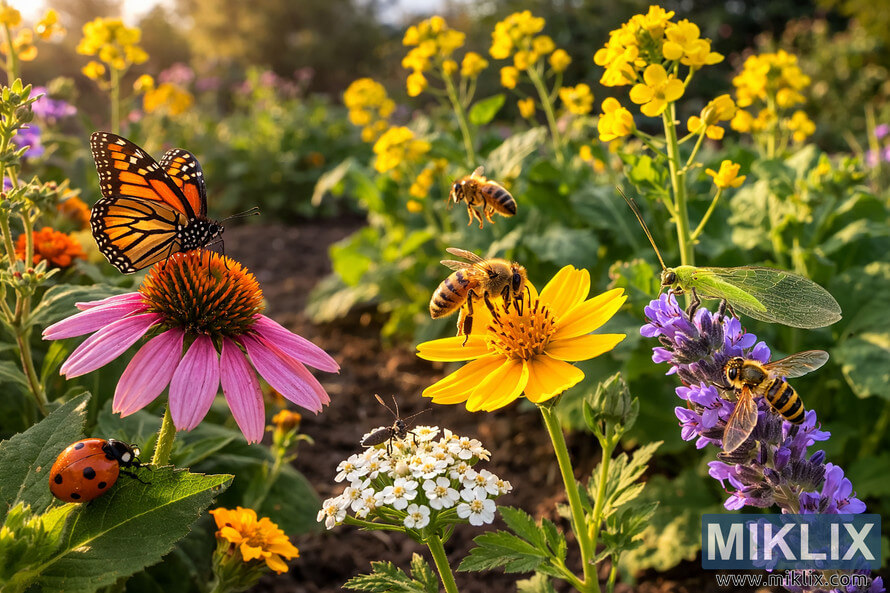
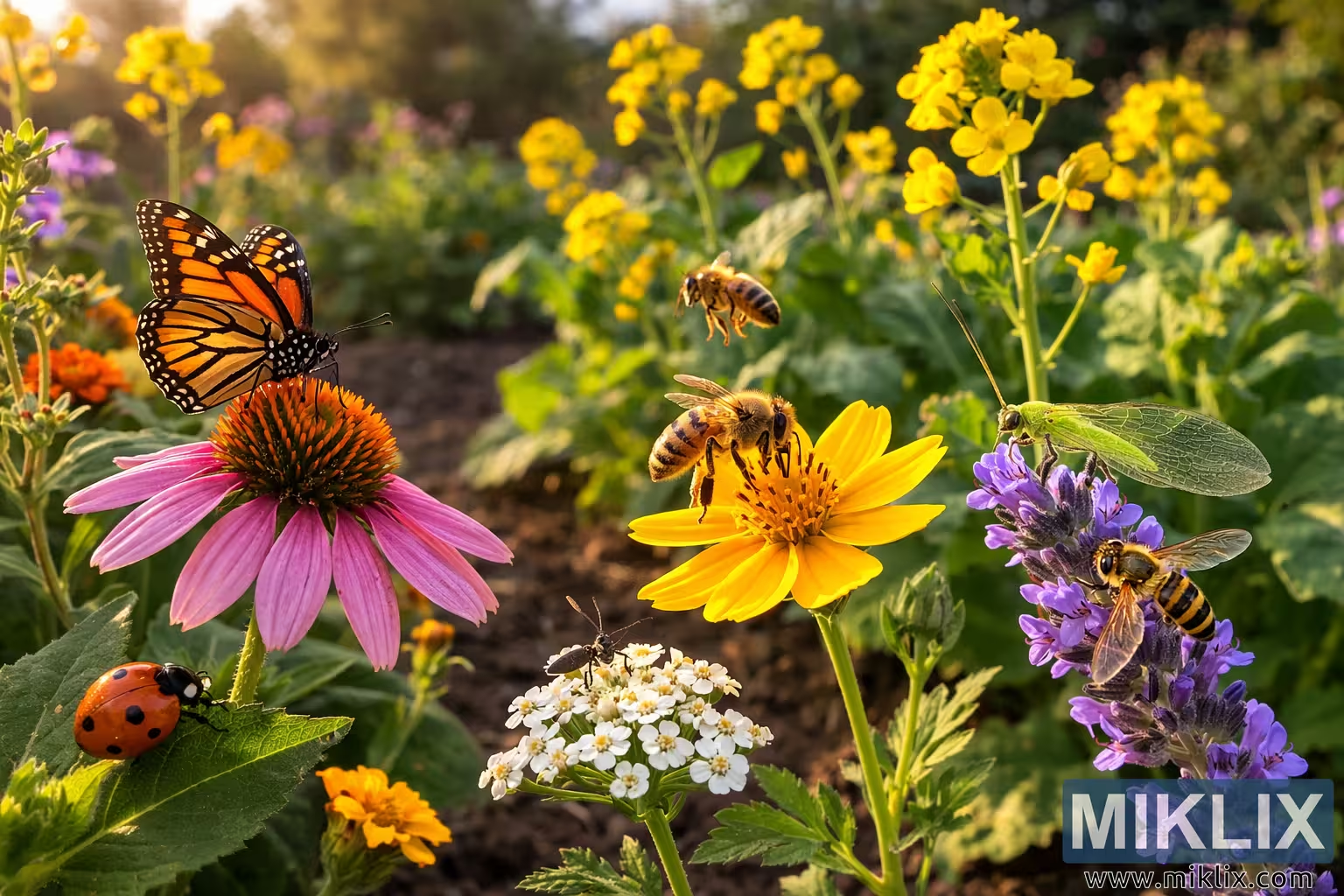
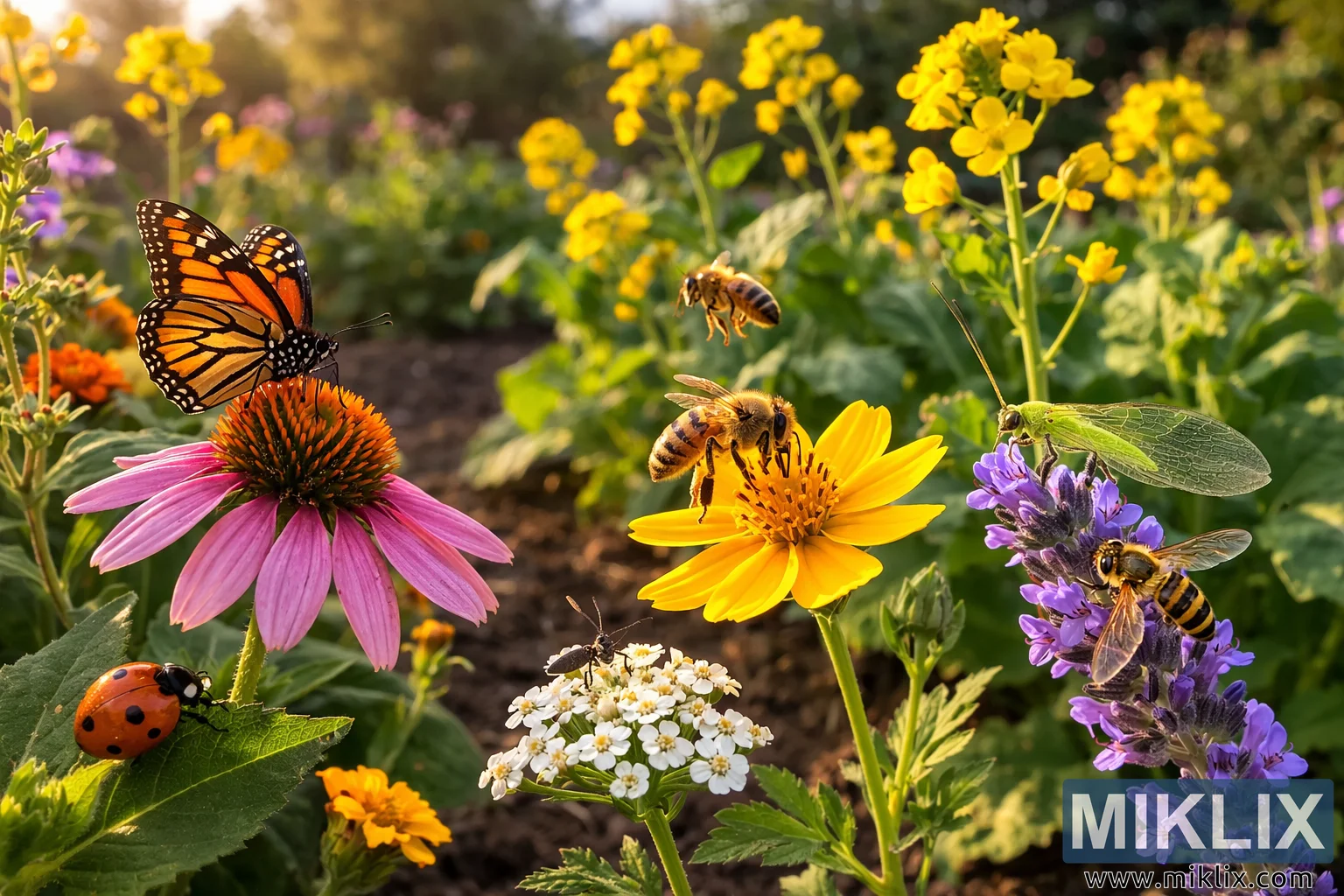
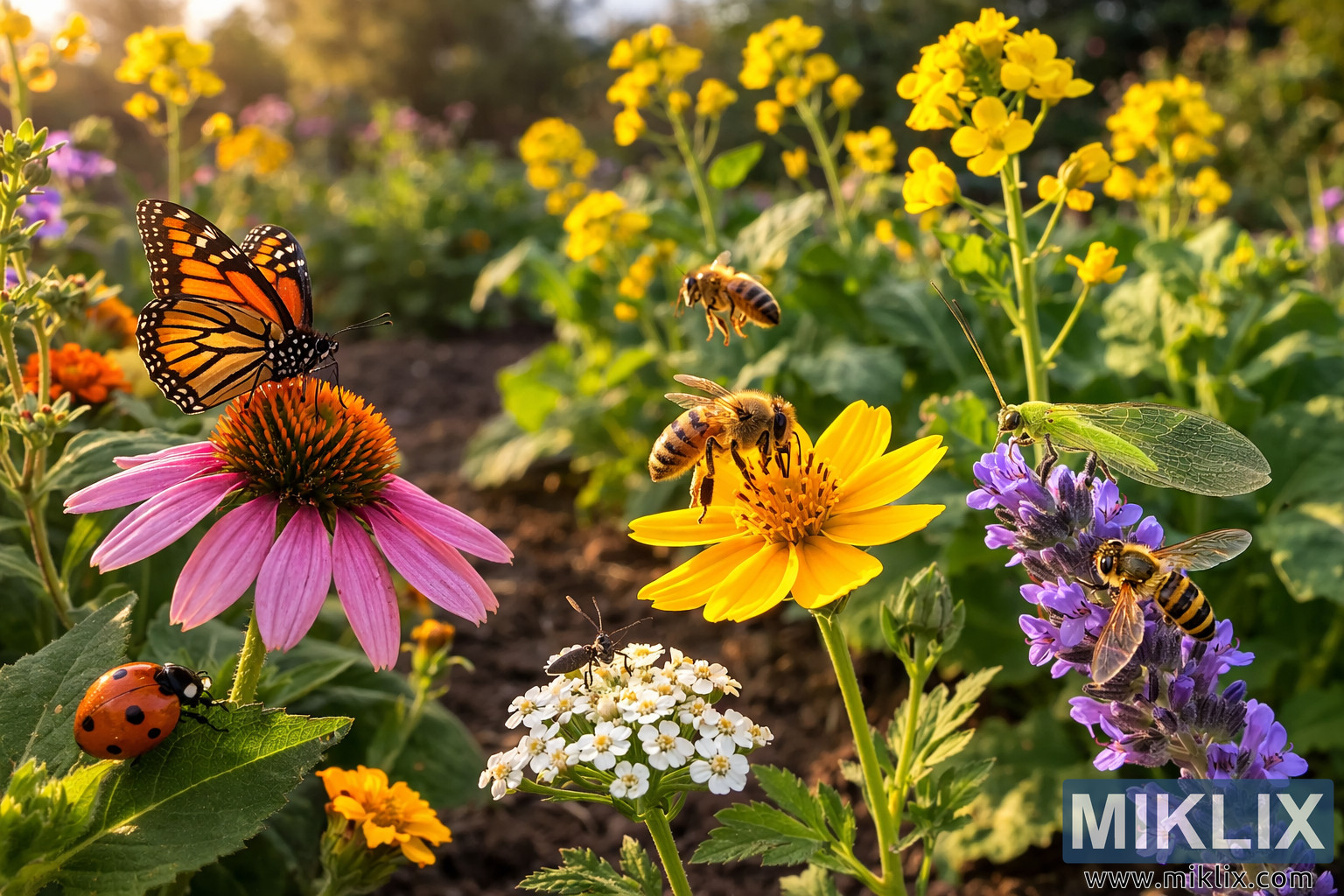
High-resolution landscape photo of beneficial insects including a monarch butterfly, honeybees, ladybug, and lacewing pollinating vibrant flowers near blooming mustard plants in a sunlit garden.
Beneficial Insects Pollinating Flowers Near Mustard Plants
Versioni disponibili di questa immagine
I file immagine disponibili per il download qui sotto sono meno compressi e ad alta risoluzione - e di conseguenza di qualità superiore - rispetto alle immagini incorporate negli articoli e nelle pagine di questo sito, che sono più ottimizzate per le dimensioni dei file al fine di ridurre il consumo di banda.
Taglia regolare (1,536 x 1,024)
Dimensione grande (3,072 x 2,048)
Dimensioni molto grandi (4,608 x 3,072)
Dimensione extra large (6,144 x 4,096)
Dimensioni comiche (1,048,576 x 699,051)
- Sto ancora caricando... ;-)
Descrizione dell'immagine
A high-resolution landscape photograph captures a vibrant garden scene bathed in warm, golden sunlight. In the foreground, a richly detailed cluster of flowering plants hosts an array of beneficial insects actively foraging and pollinating. On the left, a monarch butterfly with striking orange wings edged in black and dotted with white markings rests delicately atop a pink coneflower, its wings partially open and illuminated by the late-afternoon sun. The coneflower’s spiky orange center contrasts vividly with its soft pink petals, each petal gently curving downward. Below it, a bright red ladybug with distinct black spots crawls across a textured green leaf, adding a bold accent of color.
Near the center of the composition, a golden honeybee hovers midair, its translucent wings frozen in motion as it approaches a yellow daisy-like bloom. Another honeybee clings to the flower’s central disk, gathering nectar and pollen. Slightly behind them, a small cluster of white blossoms forms a delicate umbrella-shaped spray, where a dark, slender-bodied insect explores the tiny flowers. The intricate details of wings, legs, antennae, and pollen grains are crisp and sharply defined, emphasizing the macro perspective.
To the right, a tall purple flower spike rises vertically, its many small blossoms attracting another honeybee that grips the petals while feeding. Perched along the purple blooms is a green lacewing, its elongated, translucent wings veined like fine lace and glowing softly in the sunlight. The lacewing’s pale green body and delicate structure reinforce the theme of beneficial garden insects.
In the background, mustard plants with bright yellow flowers stand upright, their clustered blooms forming cheerful bursts of color against a softly blurred backdrop. The shallow depth of field keeps the focus on the insects and foreground flowers while the mustard plants and garden foliage create a lush, green setting. Sunlight streams from the upper left corner, casting warm highlights and gentle shadows that add depth and dimension to the scene. The overall composition conveys harmony between flowering plants and pollinators, illustrating a thriving, biodiverse garden ecosystem where beneficial insects support plant health and productivity.
L'immagine è correlata a: Complete Guide to Growing Your Own Mustard Plants