
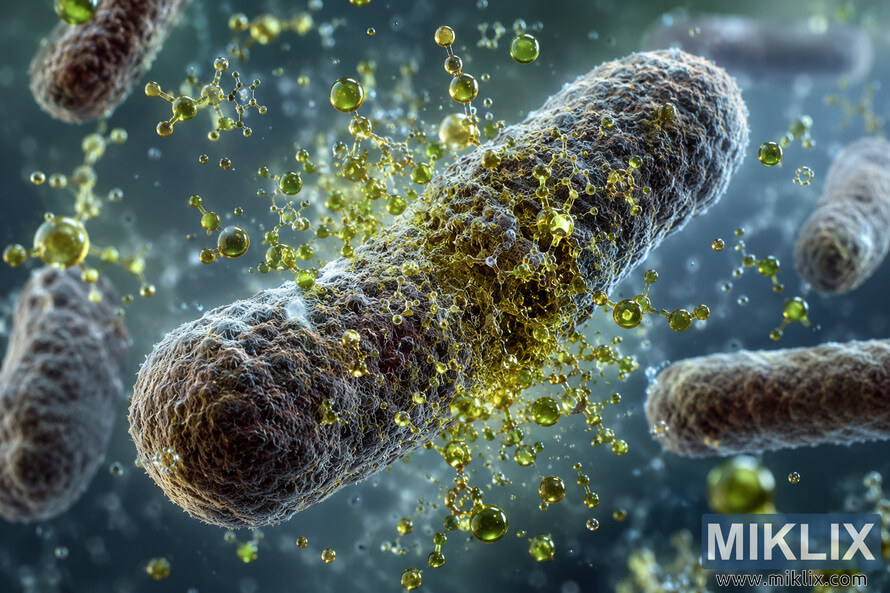
Immagine: Microscopic View of Oregano Oil Molecules Attacking Harmful Bacteria
Pubblicato:
Ultimo aggiornamento: 6 luglio 2026 alle ore 20:14:46 UTC
Explore a highly detailed microscopic visualization of oregano oil molecules attacking harmful bacteria. This cinematic scientific illustration features glowing molecular particles, textured bacterial cells, and a realistic medical-style microscopic environment.
Microscopic View of Oregano Oil Molecules Attacking Harmful Bacteria
Versioni disponibili di questa immagine
I file immagine disponibili per il download qui sotto sono meno compressi e ad alta risoluzione - e di conseguenza di qualità superiore - rispetto alle immagini incorporate negli articoli e nelle pagine di questo sito, che sono più ottimizzate per le dimensioni dei file al fine di ridurre il consumo di banda.
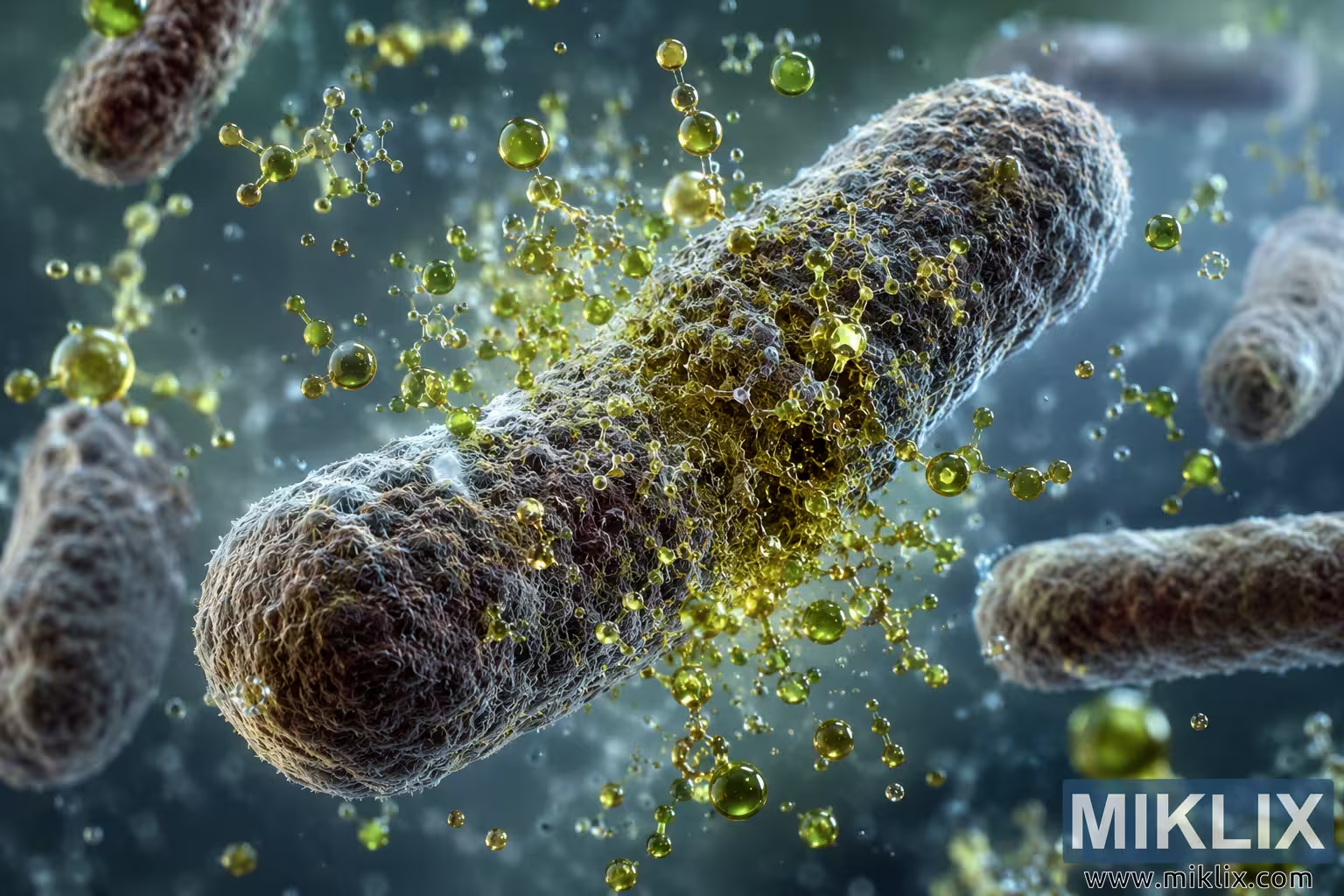
Taglia regolare (1,536 x 1,024)
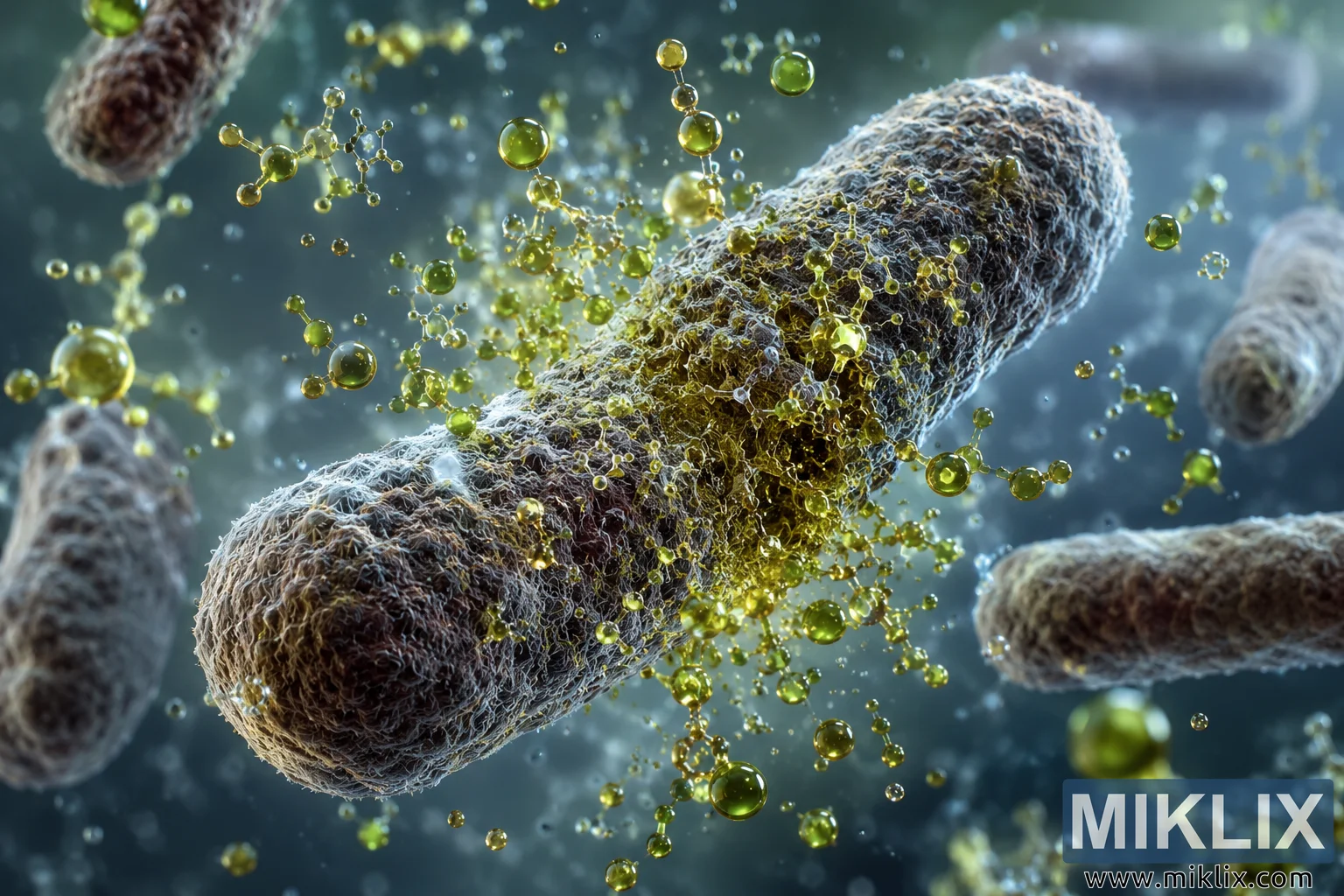
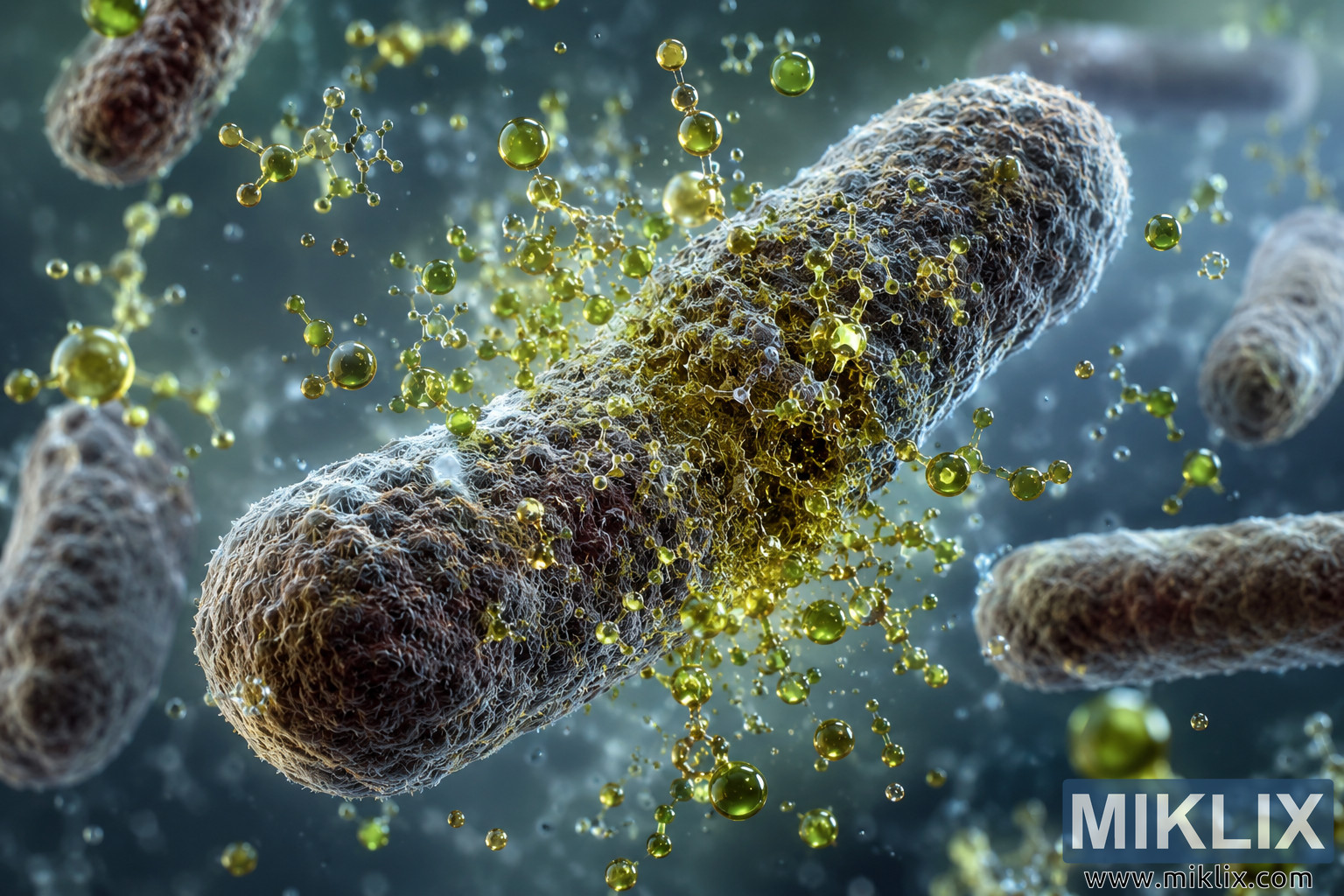
Dimensione grande (3,072 x 2,048)
Dimensioni molto grandi (4,608 x 3,072)
Dimensione extra large (6,144 x 4,096)
Dimensioni comiche (1,048,576 x 699,051)
- Sto ancora caricando... ;-)
Descrizione dell'immagine
This hyper-realistic scientific illustration presents a dramatic microscopic scene in which oregano oil molecules appear to attack and break down harmful bacteria within a highly detailed biological environment. The composition is rendered in landscape orientation with cinematic depth, showcasing several elongated rod-shaped bacterial cells floating in a softly blurred microscopic space. The central bacterium dominates the foreground, displaying a rough, fibrous, and organic surface texture that resembles intertwined microscopic strands or biofilm material. Its surface appears partially damaged and compromised, visually communicating the destructive effect of the surrounding oil molecules.
Suspended throughout the scene are dozens of glowing greenish-yellow droplets and molecular clusters intended to symbolize oregano oil compounds. These molecules vary in size, from tiny floating particles to larger translucent spheres that reflect and refract light realistically. Several of the molecular structures resemble stylized chemical formations, connected by thin bonds and arranged in dynamic patterns around the bacteria. The molecules appear to converge toward the bacterial membrane, creating the impression of an active antimicrobial attack. Bright highlights and reflective surfaces on the droplets enhance the realism and create a luminous scientific aesthetic.
The lighting within the image is highly cinematic and directional, with cool bluish ambient tones filling the background while warm golden-green highlights emphasize the oregano oil particles. This contrast between cool and warm colors creates a visually striking composition that feels both medical and futuristic. The bacteria themselves are rendered with subtle brown, gray, and off-white coloration, giving them a natural biological appearance. Fine details such as surface fibers, membrane irregularities, and soft translucency help create a believable microscopic texture.
The background environment remains intentionally soft and out of focus, utilizing shallow depth of field to draw attention toward the central interaction between bacteria and oil molecules. Additional bacterial forms are visible in the distance, fading into the blur and contributing to the sense of scale and immersion. Tiny floating particles and bokeh-like light effects enhance the sensation of movement within a fluid microscopic environment.
The image combines elements of scientific visualization, medical illustration, and cinematic 3D rendering. It evokes themes of natural antimicrobial defense, microbiology, and alternative wellness science without depicting any specific commercial product or brand identity. The oregano oil molecules are represented abstractly through glowing droplets and stylized molecular forms rather than literal chemical diagrams, making the image visually accessible while retaining a scientific atmosphere.
The overall composition emphasizes action and biological interaction. The oil molecules appear to penetrate and destabilize the bacterial surface, with some regions of the bacterium showing fragmentation, perforation, or discoloration where the molecules cluster most densely. The visual storytelling suggests that the natural compounds are actively disrupting the bacteria at a cellular level.
Every aspect of the image is rendered with high detail and realism, including the reflective liquid textures, microscopic surface patterns, atmospheric depth, and volumetric lighting. The scene has the polished appearance of a premium medical animation still frame or a high-end biotechnology visualization intended for educational, editorial, or health-related media. The landscape format provides a wide cinematic field of view that allows multiple bacterial organisms and molecular interactions to coexist naturally within the frame while maintaining a clear focal point on the primary bacterial cell under attack.
The final image conveys a fusion of science, nature, and advanced digital artistry, creating an immersive microscopic world filled with energy, motion, and biological tension.
L'immagine è correlata a: A Complete Guide to the Health Benefits of Oregano