
Immagine: Historical Illustration of Bok Choy Cultivation in Traditional Chinese Farming
Pubblicato:
Ultimo aggiornamento: 12 luglio 2026 alle ore 20:33:20 UTC
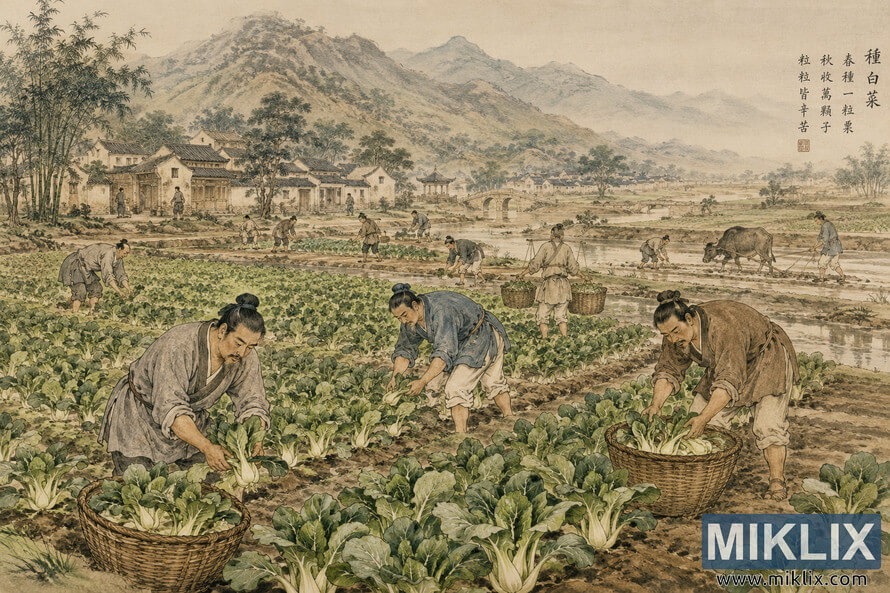
Historical illustration depicting traditional Chinese bok choy cultivation with farmers harvesting vegetables in irrigated fields, a water buffalo, rural village architecture, bamboo, bridges, and mist-covered mountains rendered in a classical watercolor and ink-inspired style.
Historical Illustration of Bok Choy Cultivation in Traditional Chinese Farming
Versioni disponibili di questa immagine
I file immagine disponibili per il download qui sotto sono meno compressi e ad alta risoluzione - e di conseguenza di qualità superiore - rispetto alle immagini incorporate negli articoli e nelle pagine di questo sito, che sono più ottimizzate per le dimensioni dei file al fine di ridurre il consumo di banda.
Taglia regolare (1,536 x 1,024)
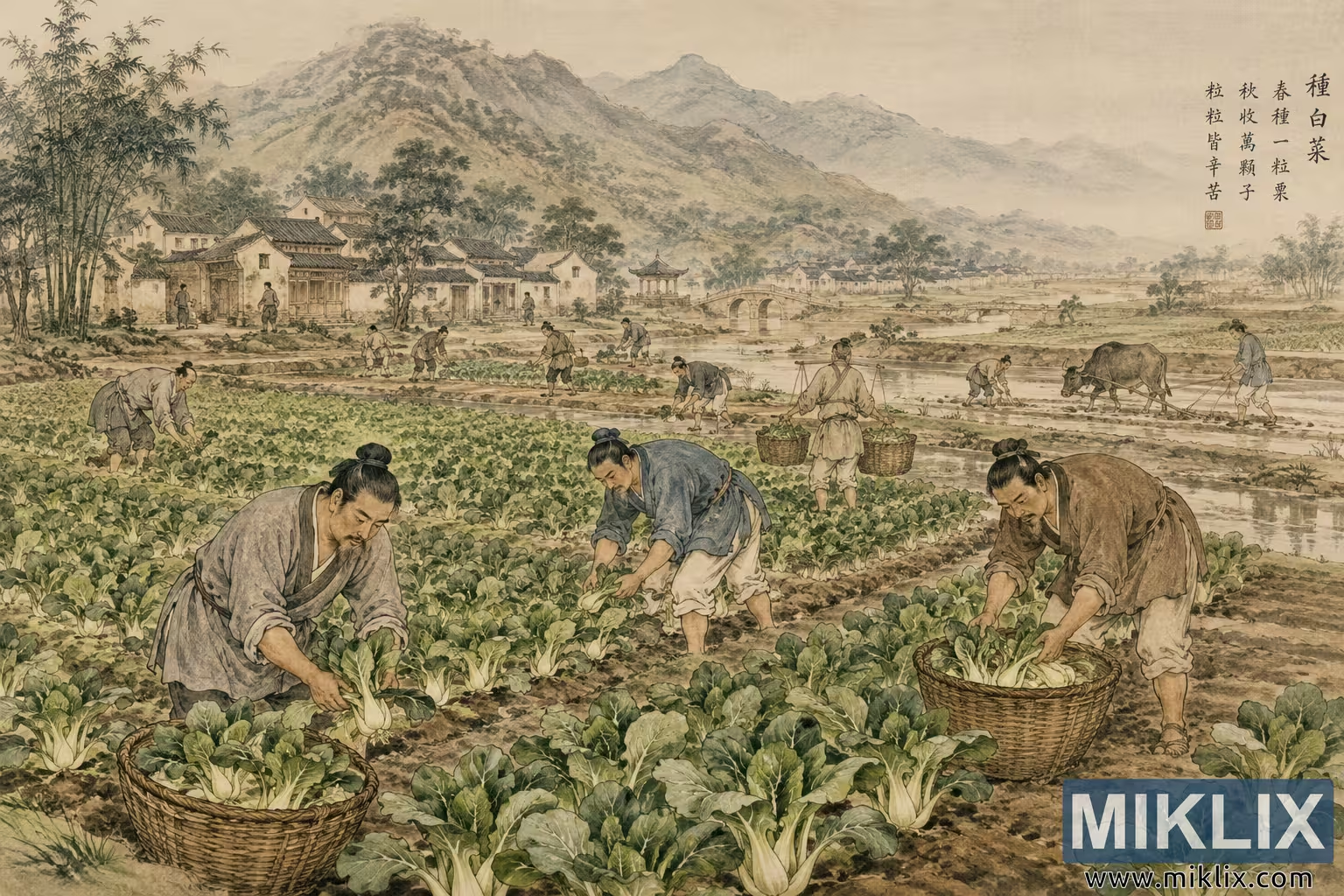
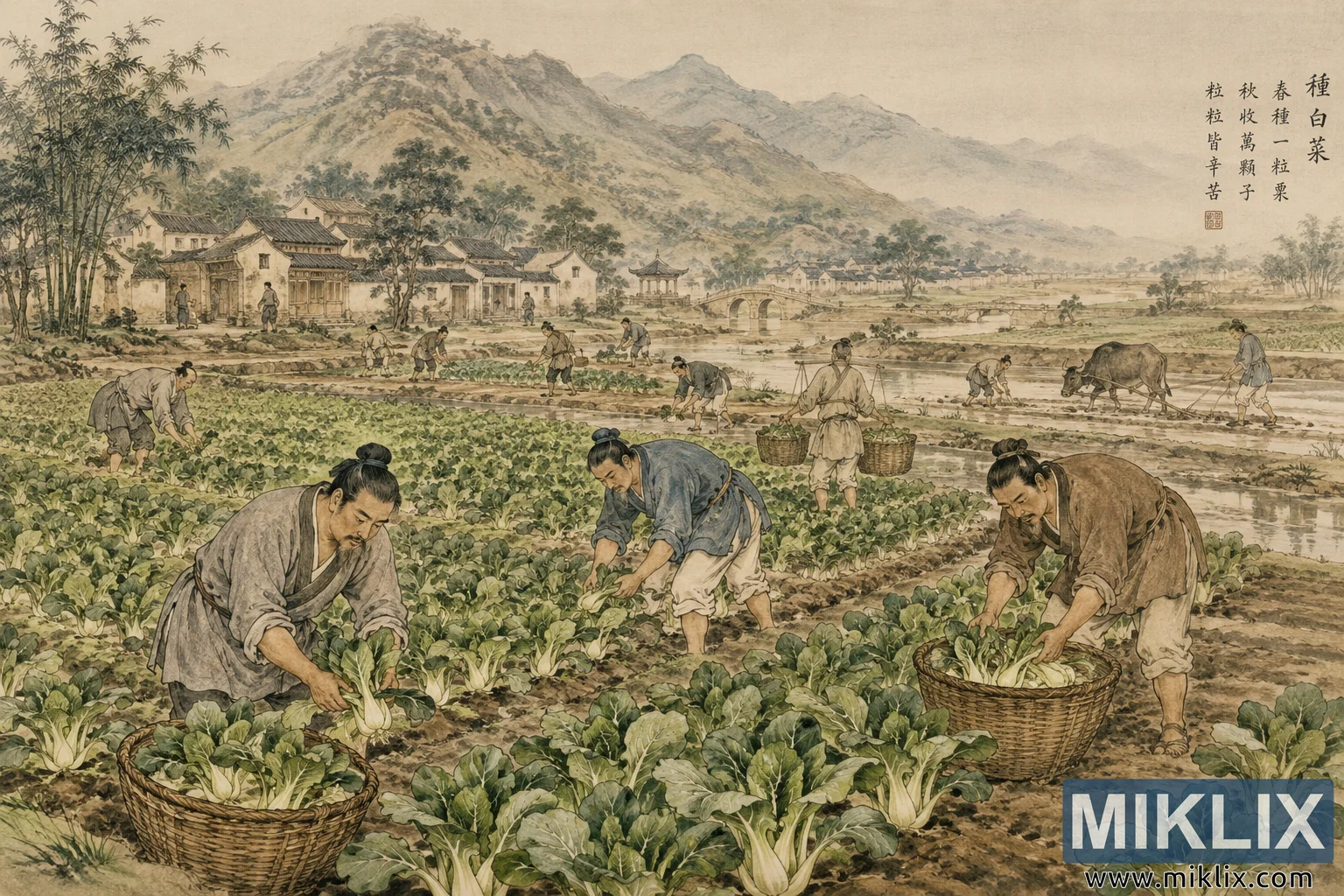
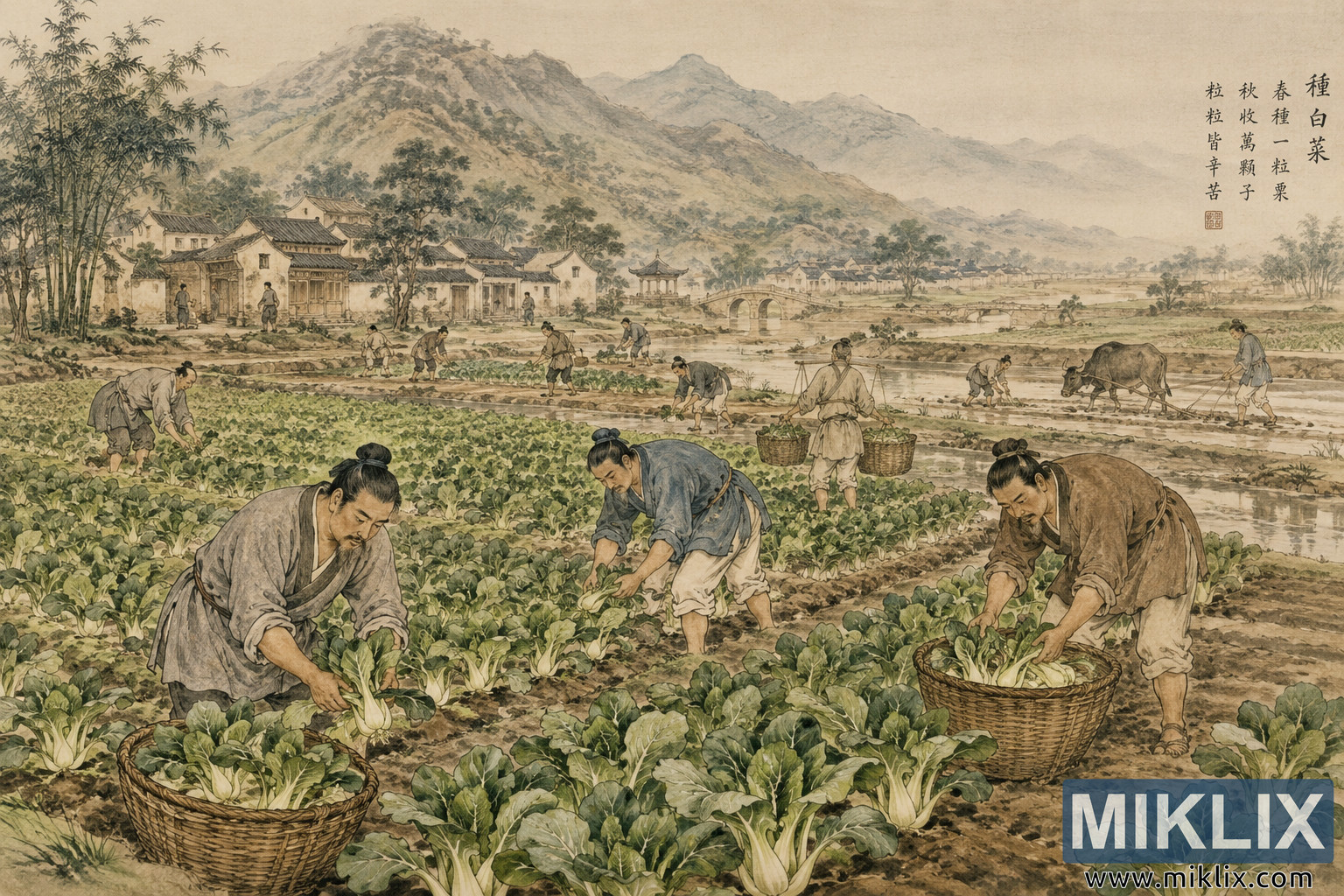
Dimensione grande (3,072 x 2,048)
Dimensioni molto grandi (4,608 x 3,072)
Dimensione extra large (6,144 x 4,096)
Dimensioni comiche (1,048,576 x 699,051)
- Sto ancora caricando... ;-)
Descrizione dell'immagine
This historical-style illustration presents a panoramic landscape depicting the cultivation of bok choy within a traditional Chinese agricultural setting. The composition is arranged in a broad horizontal format that guides the viewer across an expansive rural environment, emphasizing harmony between people, cultivated land, waterways, architecture, and the surrounding mountains. In the foreground, several farmers are carefully harvesting mature bok choy plants from orderly rows of fertile soil. Each individual is dressed in historically inspired rural clothing consisting of simple tunics, loose trousers, cloth footwear, and neatly tied hairstyles characteristic of traditional depictions of farming communities. Their postures communicate focused manual labor as they bend toward the crops, gently lifting the leafy vegetables from the earth and placing them into woven baskets. The bok choy itself is illustrated with crisp white stalks that transition into lush green leaves, creating a vivid contrast against the brown cultivated soil.
Large handwoven baskets dominate portions of the foreground, already filled with freshly harvested vegetables. The texture of the woven wicker is rendered with careful detail, suggesting the craftsmanship associated with rural agricultural life. The fields extend beyond the foreground into the middle distance where additional workers continue planting, tending, harvesting, and transporting produce. Narrow earthen paths divide the cultivated plots, while shallow irrigation channels carry water throughout the farmland, reflecting the historical importance of controlled irrigation within traditional Chinese agriculture.
To the right side of the landscape, a farmer guides a water buffalo through a flooded field, illustrating another essential aspect of historical farming practices. The animal moves steadily through the wet soil while pulling agricultural equipment, reinforcing the image's emphasis on labor performed with the assistance of domesticated livestock rather than mechanized machinery. Nearby, additional workers carry baskets suspended from shoulder poles, balancing harvested vegetables while walking between fields and village pathways.
The middle ground introduces a peaceful rural settlement composed of traditional buildings with white plaster walls, dark tiled roofs, wooden structural elements, and gracefully curved rooflines. The houses are arranged organically along the edge of the farmland, creating a seamless transition between agricultural production and everyday village life. A small pavilion and an elegant arched stone bridge span a calm waterway, providing architectural focal points that reinforce the tranquil atmosphere. The river reflects the muted colors of the surrounding landscape while connecting the cultivated fields with the settlement beyond.
Clusters of mature bamboo rise prominently along one side of the village, their slender stalks and delicate leaves contributing vertical rhythm to the composition. Large deciduous trees scattered throughout the landscape soften the transition between cultivated land and residential structures. Beyond the village, additional fields gradually fade into atmospheric perspective, conveying the vast scale of the agricultural environment.
The distant background is dominated by layered mountain ranges rendered with soft washes and delicate tonal variations. Their gentle silhouettes disappear into mist, creating depth while evoking the aesthetic traditions of classical East Asian landscape painting. The subdued atmospheric treatment contrasts with the sharper detail of the foreground figures and vegetables, naturally guiding the viewer's eye through the composition.
The artwork adopts a visual language inspired by historical ink-and-watercolor painting. Fine linework defines architecture, figures, baskets, and vegetation, while transparent washes establish subtle gradients throughout the sky, mountains, and cultivated land. The overall palette consists primarily of warm earth tones, muted greens, soft grays, and gentle beige paper textures that suggest an aged historical document or archival illustration rather than a modern digital painting. Light appears diffused, producing few harsh shadows and reinforcing the calm, timeless quality of the scene.
Near the upper right portion of the illustration, vertically arranged Chinese calligraphic characters accompanied by a traditional seal contribute to the appearance of a historical educational plate or agricultural manuscript. These calligraphic elements function as decorative visual components that complement the composition without distracting from the agricultural subject matter.
Overall, the illustration celebrates the historical cultivation of bok choy by portraying every stage of a productive farming landscape: carefully maintained vegetable beds, manual harvesting, irrigation systems, traditional transport methods, animal-powered fieldwork, village architecture, and the surrounding natural environment. Rather than focusing on a single individual, the artwork emphasizes collective agricultural labor and the interconnected relationship between rural communities and the land they cultivate. The balanced composition, restrained color palette, detailed botanical rendering, and historically inspired artistic style combine to create an image that conveys both documentary character and aesthetic serenity while illustrating traditional Chinese farming practices centered on bok choy cultivation.
L'immagine è correlata a: Bok Choy Health Benefits: Transform Your Diet with This Nutritional Powerhouse