
Immagine: Measuring Fresh Dill Portions for Daily Recommended Intake on a Kitchen Scale
Pubblicato:
Ultimo aggiornamento: 23 luglio 2026 alle ore 18:43:09 UTC
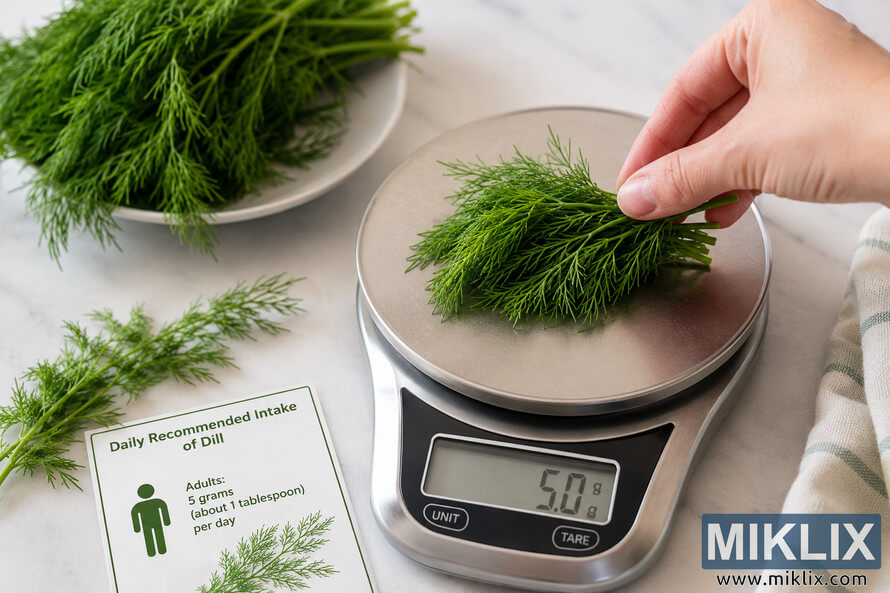
High-quality image showing fresh dill being weighed on a digital kitchen scale to illustrate portion measurement for daily recommended intake in a bright, modern kitchen setting.
Measuring Fresh Dill Portions for Daily Recommended Intake on a Kitchen Scale
Versioni disponibili di questa immagine
I file immagine disponibili per il download qui sotto sono meno compressi e ad alta risoluzione - e di conseguenza di qualità superiore - rispetto alle immagini incorporate negli articoli e nelle pagine di questo sito, che sono più ottimizzate per le dimensioni dei file al fine di ridurre il consumo di banda.
Taglia regolare (1,536 x 1,024)
Dimensione grande (3,072 x 2,048)
Dimensioni molto grandi (4,608 x 3,072)
Dimensione extra large (6,144 x 4,096)
Dimensioni comiche (1,048,576 x 699,051)
- Sto ancora caricando... ;-)
Descrizione dell'immagine
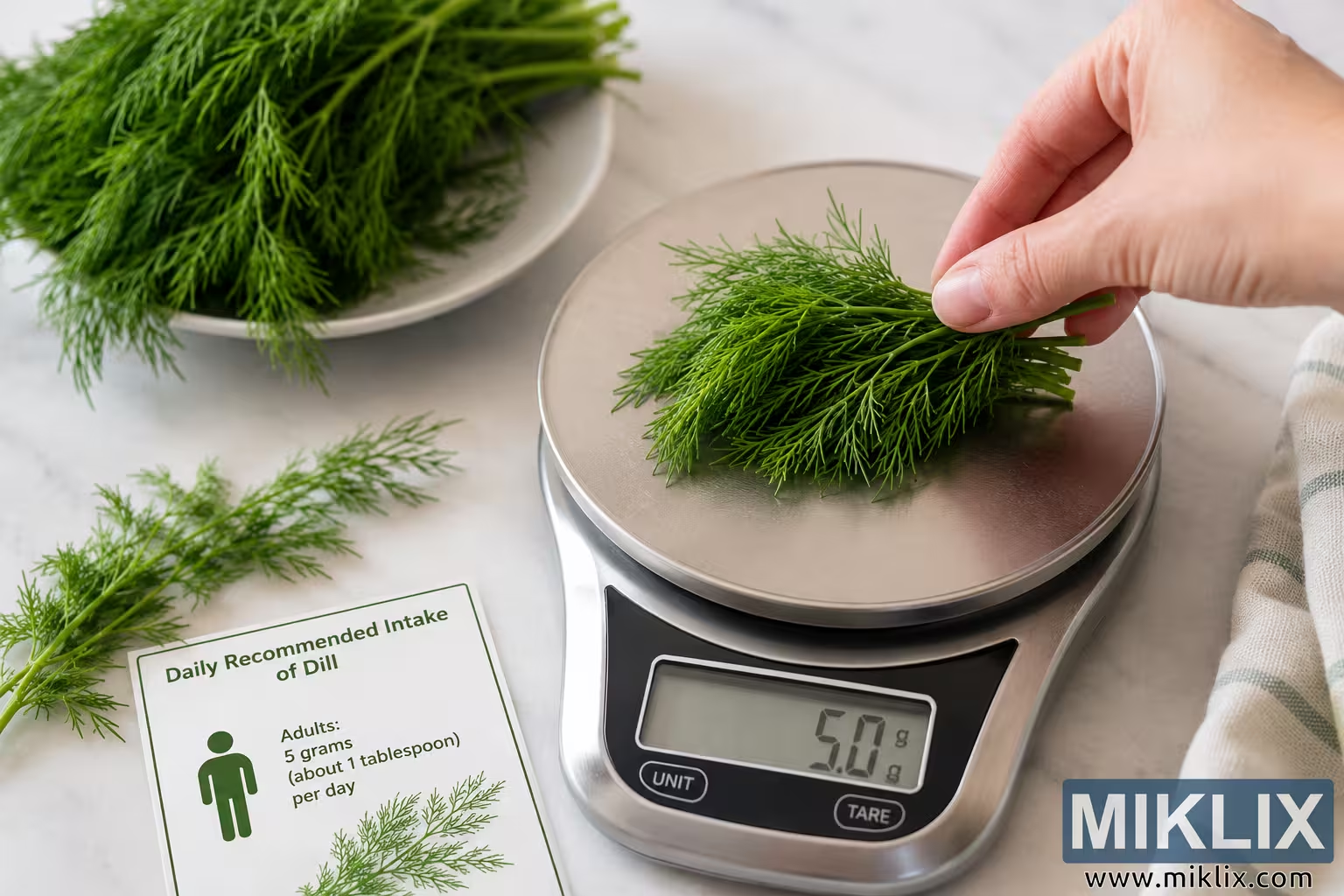
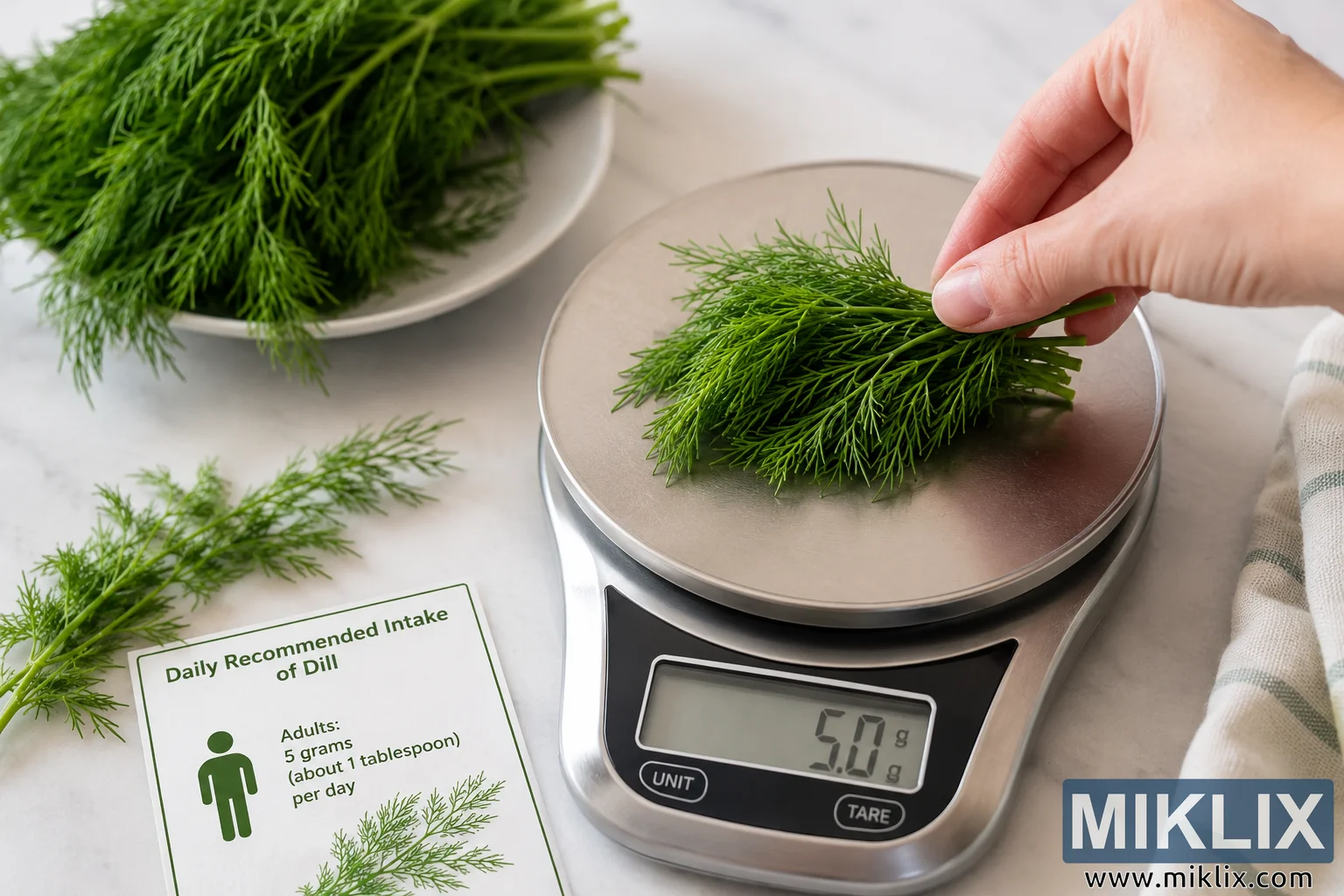
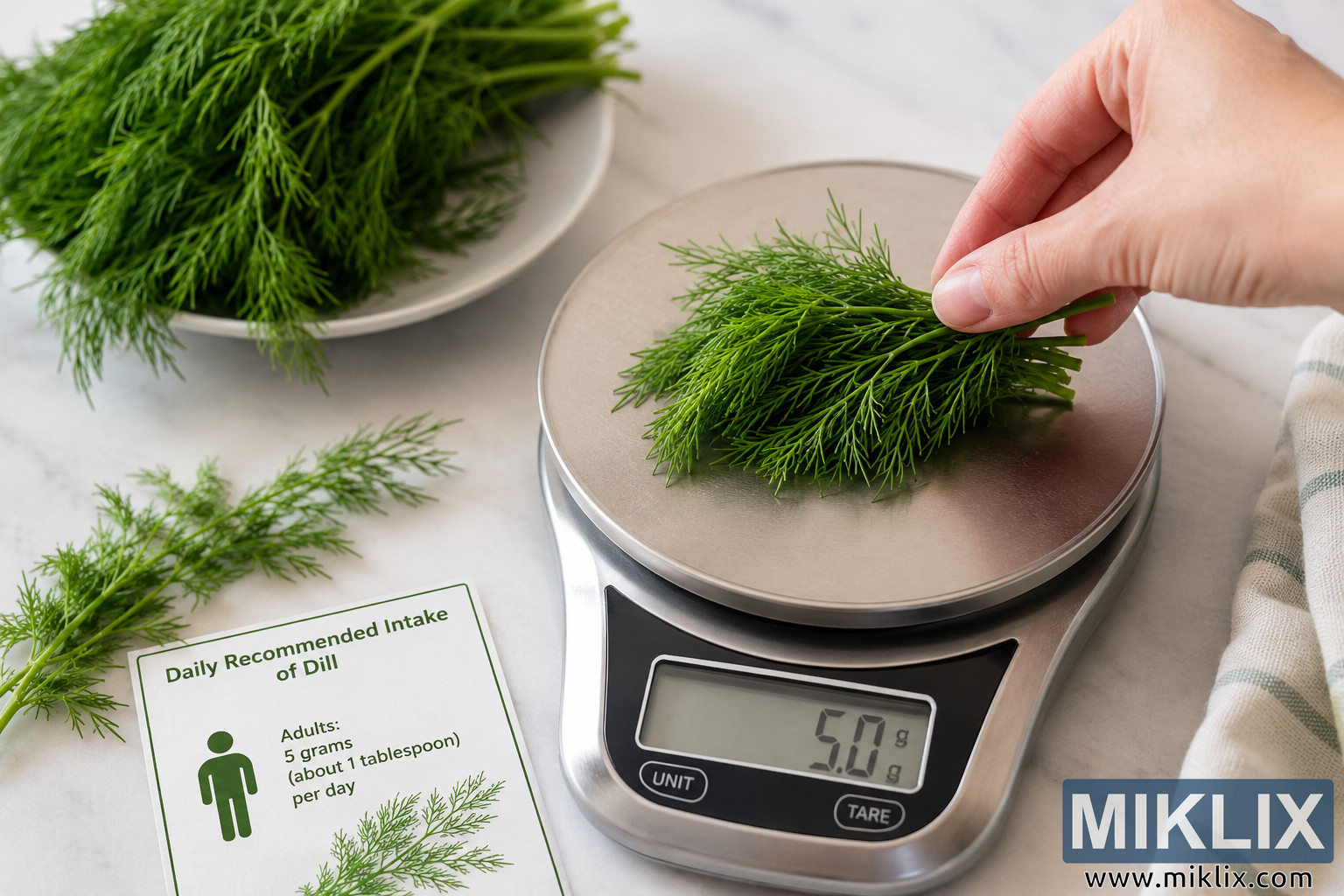
This landscape-oriented image presents a bright, clean, and contemporary kitchen scene focused on the careful measurement of fresh dill. The composition emphasizes healthy food preparation and portion awareness without promoting any commercial products or recognizable brands. At the center of the image is a digital kitchen scale with a brushed metallic weighing platform and a simple, unbranded interface. The scale's digital display clearly reads 5.0 grams, indicating a carefully measured quantity of fresh dill. The numerical display is easy to read while remaining a secondary visual element to the vibrant green herb resting on the platform.
A person's hand enters the frame from the upper right, gently holding a small bundle of freshly harvested dill by the stems. The fingers delicately position the herb onto the scale, conveying precision and care during the measuring process. The hand appears relaxed and natural, without jewelry or accessories that might distract from the primary subject. The positioning suggests that the measurement is either being finalized or carefully adjusted to reach the intended weight.
The dill itself is vivid and fresh, with fine, feathery leaves displaying rich green tones that contrast beautifully against the neutral metallic surface of the scale. Individual fronds are sharply detailed, allowing viewers to appreciate the delicate texture characteristic of fresh dill. The stems are neatly gathered, while the leafy tops spread naturally across the weighing surface, adding softness and organic structure to the overall composition.
In the background toward the upper left sits a white ceramic plate containing a larger collection of fresh dill. The plate remains softly blurred due to the shallow depth of field, helping direct attention toward the dill currently being measured while still providing useful visual context. The larger bundle reinforces the idea that the measured portion represents only a small serving taken from a larger quantity prepared for cooking or meal planning.
Near the lower left of the composition lies an informational reference card discussing daily dill intake. The card features a clean layout with green accents, simple typography, and an illustrated human figure icon. Decorative dill illustrations appear near the bottom of the card, visually connecting the educational material with the fresh herb displayed throughout the scene. Although the card references a suggested intake amount, it functions primarily as a visual educational prop that supports the overall concept of mindful portion measurement rather than serving as a medical recommendation.
The entire arrangement rests upon a light-colored marble or stone countertop with subtle gray veining. The bright surface reflects soft natural light, contributing to an atmosphere of cleanliness, freshness, and simplicity. The lighting appears to come from an off-camera window, producing gentle highlights on the metallic scale and creating soft shadows beneath the dill and the hand. No harsh reflections or dramatic contrasts are present, giving the image an inviting, realistic appearance suitable for editorial, educational, or health-related content.
A folded kitchen towel with understated green stripes is partially visible along the right edge of the frame. The towel introduces a domestic touch while complementing the natural green color palette established by the dill. Its soft fabric texture contrasts with the smooth countertop and metallic scale, adding subtle visual variety without competing for attention.
The composition follows a balanced layout in which the scale occupies the visual center, the hand guides the viewer's eye toward the measured herb, and supporting elements such as the plate of dill and informational card provide context. The shallow depth of field creates pleasing background separation while maintaining enough detail to communicate the purpose of each object. Colors remain fresh and restrained, dominated by greens, whites, silvers, and soft neutral tones that reinforce themes of healthy eating, freshness, and careful food preparation.
Overall, the image communicates the concept of measuring fresh dill for a specific daily portion in a calm, organized kitchen environment. It conveys accuracy, nutrition awareness, and culinary preparation through realistic details, natural lighting, and an uncluttered composition. The absence of visible commercial branding allows the focus to remain entirely on the herb, the measuring process, and the educational message surrounding portion awareness and mindful ingredient preparation.
L'immagine è correlata a: Health Benefits of Dill: Your Complete Guide to This Powerful Herb