
Immagine: Nutritional Breakdown of Vitamins and Minerals in Fresh Radicchio Leaves
Pubblicato:
Ultimo aggiornamento: 8 settembre 2026 alle ore 08:40:15 UTC
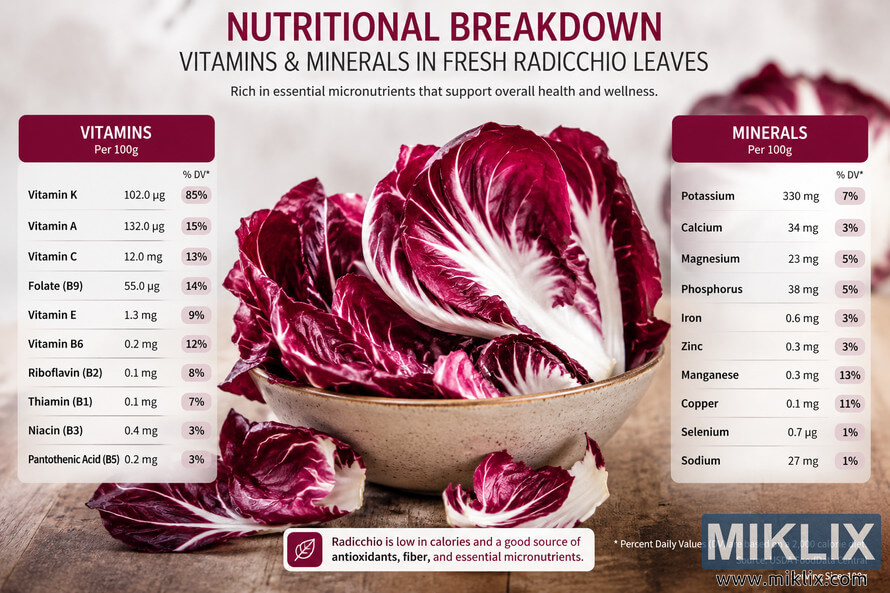
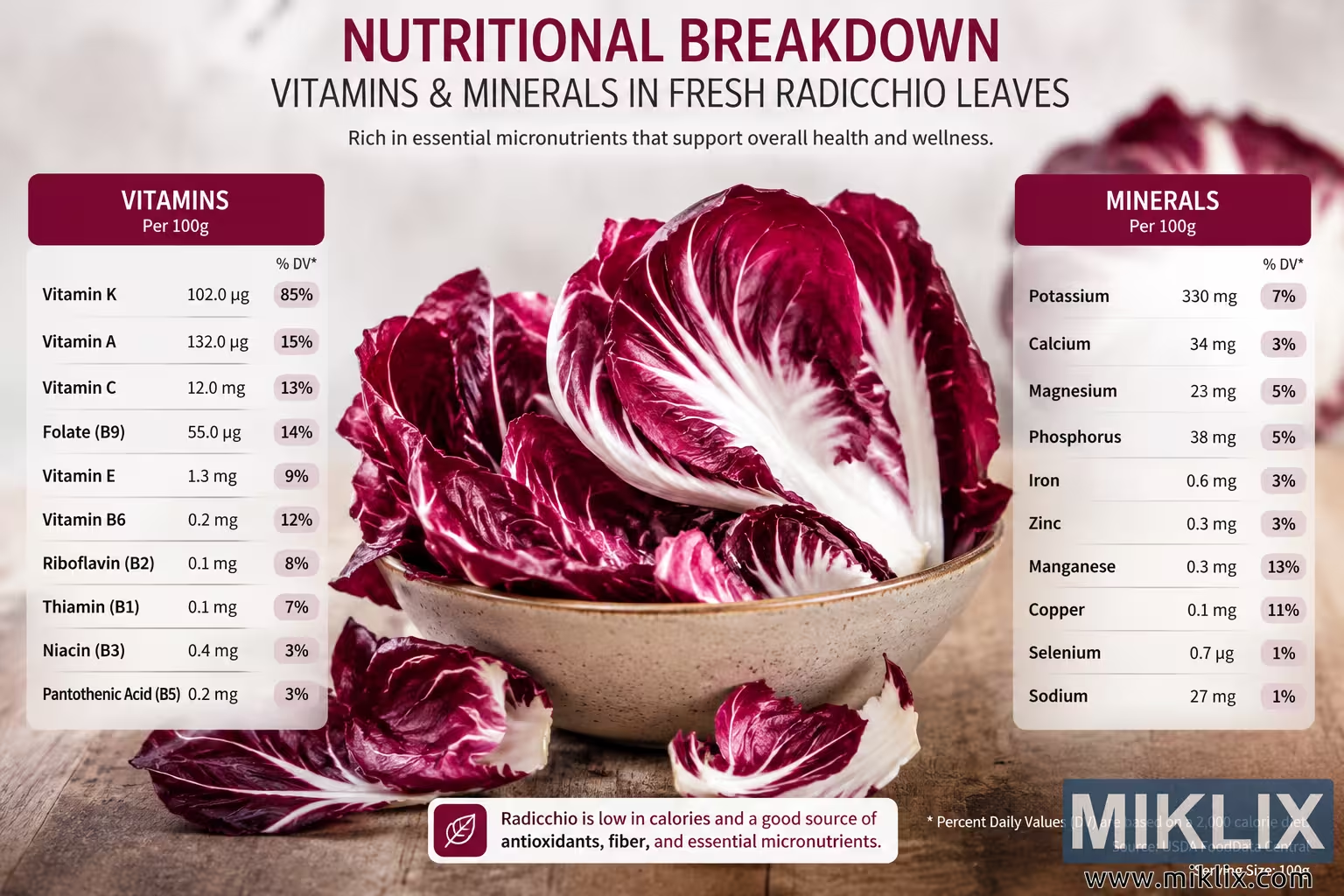
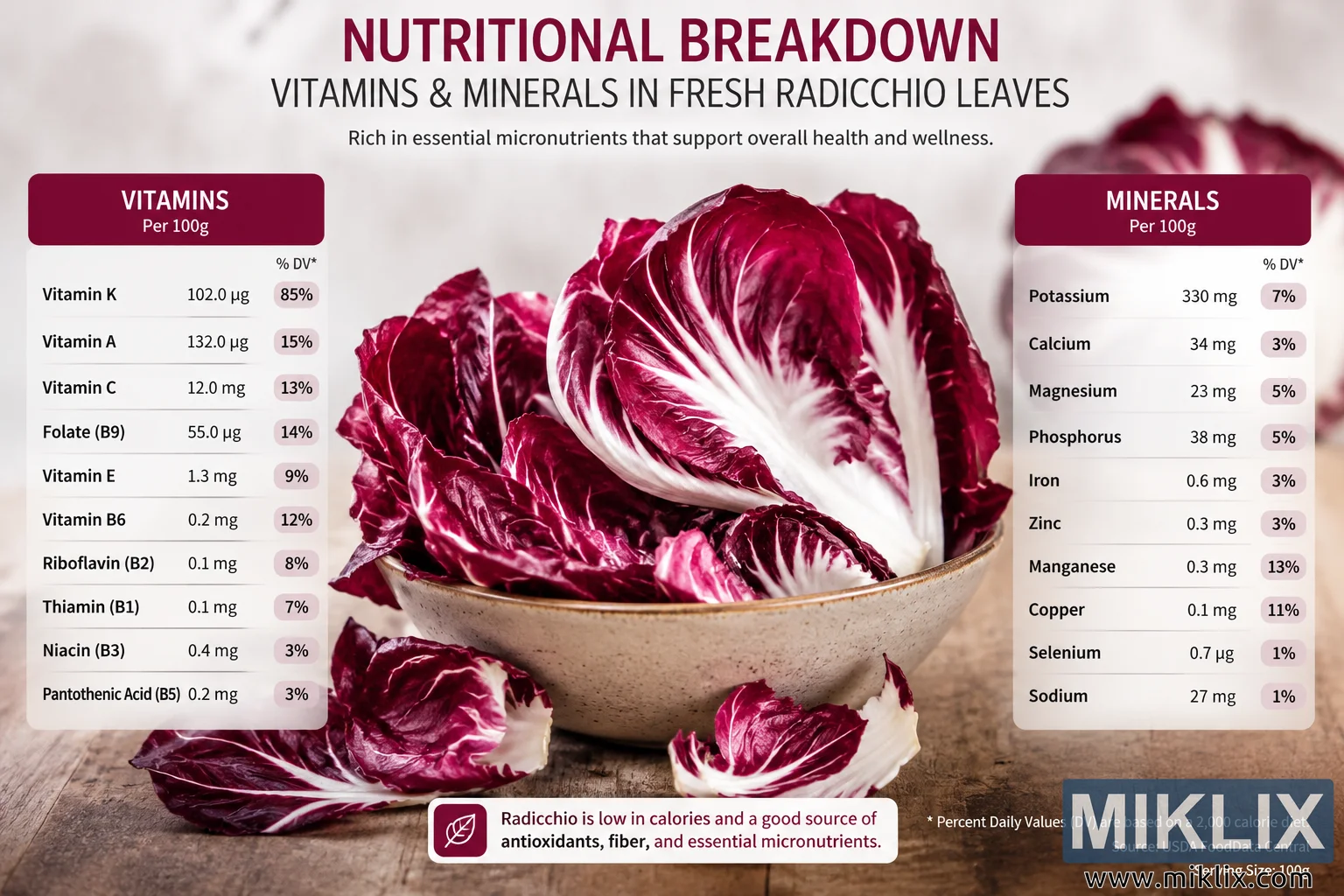
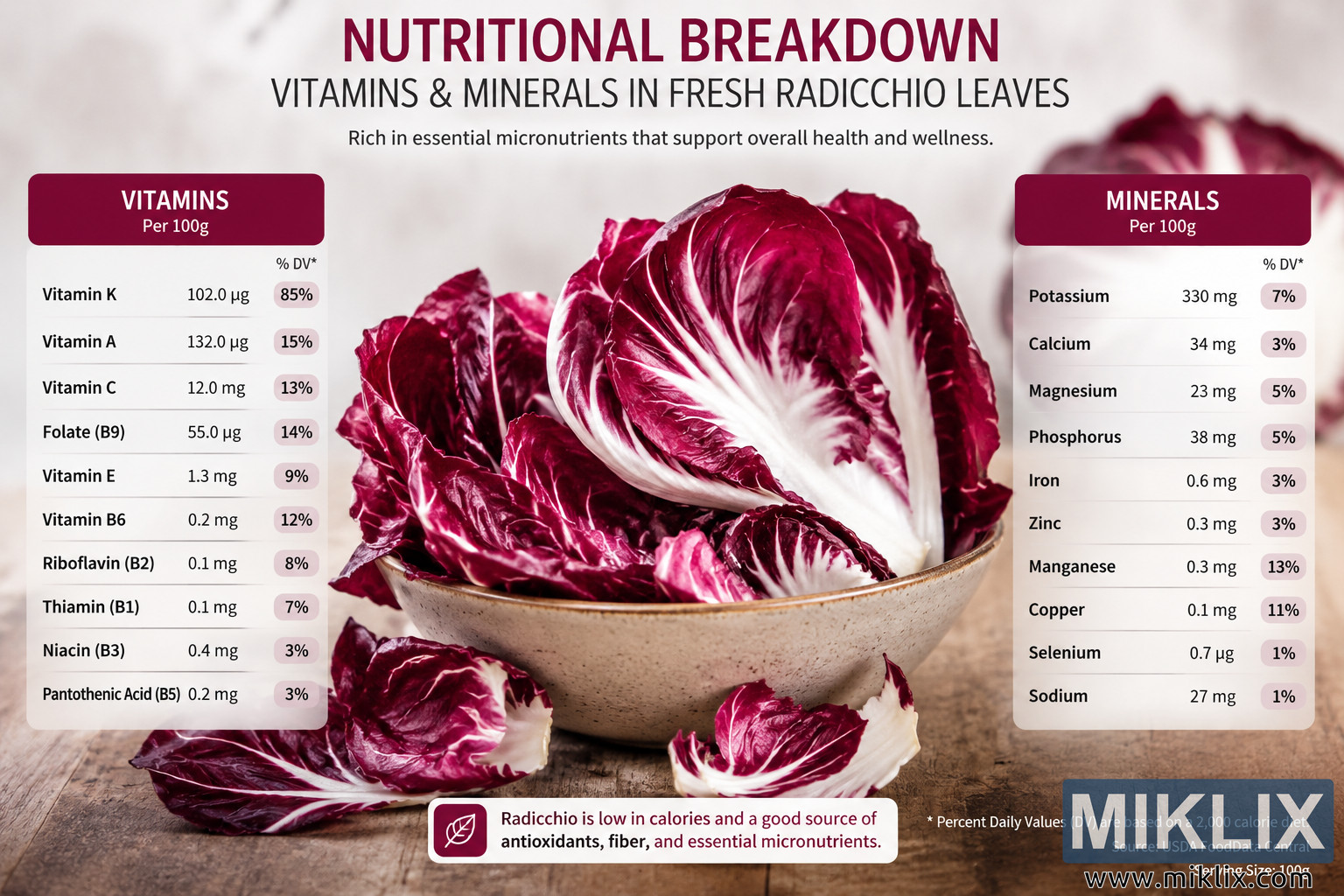
Explore an educational infographic featuring fresh radicchio leaves with a visual breakdown of vitamins, minerals, antioxidants, and nutritional information in a clean landscape layout combining realistic food photography and modern design.
Nutritional Breakdown of Vitamins and Minerals in Fresh Radicchio Leaves
Versioni disponibili di questa immagine
I file immagine disponibili per il download qui sotto sono meno compressi e ad alta risoluzione - e di conseguenza di qualità superiore - rispetto alle immagini incorporate negli articoli e nelle pagine di questo sito, che sono più ottimizzate per le dimensioni dei file al fine di ridurre il consumo di banda.
Taglia regolare (1,536 x 1,024)
Dimensione grande (3,072 x 2,048)
Dimensioni molto grandi (4,608 x 3,072)
Dimensione extra large (6,144 x 4,096)
Dimensioni comiche (1,048,576 x 699,051)
- Sto ancora caricando... ;-)
Descrizione dell'immagine
This image presents a clean, landscape-oriented nutritional infographic centered around fresh radicchio leaves. The overall composition combines food photography with a modern educational layout, creating a visually appealing presentation intended to highlight the nutritional value of radicchio. The background is softly blurred in warm neutral tones, drawing attention toward the main subject while maintaining an inviting, natural kitchen-like atmosphere. In the center foreground sits a ceramic bowl filled with vibrant fresh radicchio leaves. The leaves display their characteristic deep burgundy to reddish-purple coloration contrasted by bright white veins and ribs, producing a striking visual texture. Several loose leaves are arranged naturally around the bowl on a rustic wooden tabletop, reinforcing the impression of freshness and emphasizing the vegetable's crisp texture. The lighting is soft and diffused, creating gentle highlights on the glossy leaf surfaces while preserving fine details in the veins and curled leaf edges. Across the top of the composition is a prominent heading reading "Nutritional Breakdown" with a secondary subtitle indicating that the subject concerns vitamins and minerals found in fresh radicchio leaves. Beneath the heading appears a brief explanatory sentence introducing the nutritional theme and suggesting that the vegetable contains valuable micronutrients that support overall health and wellness. On the left side of the image is a vertically aligned information panel dedicated to vitamins. The panel is presented in a modern card-like style with rounded corners and a dark reddish header matching the color palette of the vegetable. Within the panel, multiple vitamins are listed alongside approximate quantities per 100 grams and corresponding daily value percentages. The entries include nutrients such as Vitamin K, Vitamin A, Vitamin C, Folate, Vitamin E, Vitamin B6, Riboflavin, Thiamin, Niacin, and Pantothenic Acid. The information is arranged in neatly aligned rows with numerical values positioned for easy comparison. On the opposite side of the composition is a matching information panel devoted to minerals. This panel mirrors the design language of the vitamin section, creating visual balance. It lists several minerals including Potassium, Calcium, Magnesium, Phosphorus, Iron, Zinc, Manganese, Copper, Selenium, and Sodium. Each mineral is accompanied by an approximate amount per 100 grams and a corresponding percentage of daily value. The symmetrical placement of the two information panels frames the central bowl of radicchio, making the food the focal point while simultaneously presenting nutritional information in a structured manner. Near the bottom of the image is an additional highlighted information box containing a concise statement emphasizing that radicchio is low in calories while providing antioxidants, dietary fiber, and essential micronutrients. Small decorative elements accompany this callout, visually separating it from the main nutritional tables. Fine-print reference text is positioned in the lower portion of the graphic, indicating that daily value percentages are based on a standard reference diet and that the nutritional values correspond to a serving size of 100 grams. Overall, the visual style blends realistic food photography with clean infographic design principles. The dominant colors consist of deep burgundy, crimson, white, beige, and warm wood tones, producing an elegant appearance while maintaining strong readability. The typography is modern and highly legible, with larger headings establishing hierarchy and smaller tabular text supporting detailed nutritional information. The composition is balanced and uncluttered, making it suitable for educational, nutritional, culinary, or wellness-related contexts. The image communicates freshness, healthy eating, and nutritional awareness through both its photographic presentation and its organized informational layout. Because the artwork is AI-generated, the displayed nutrient values, percentages, and other textual elements should be considered illustrative rather than authoritative nutritional data, even though they are presented in a realistic infographic format.
L'immagine è correlata a: Radicchio: The Bitter Leaf with Sweet Health Benefits