
Immagine: Allium Family Comparison: Shallots, Onions, and Garlic
Pubblicato:
Ultimo aggiornamento: 5 agosto 2026 alle ore 22:49:13 UTC
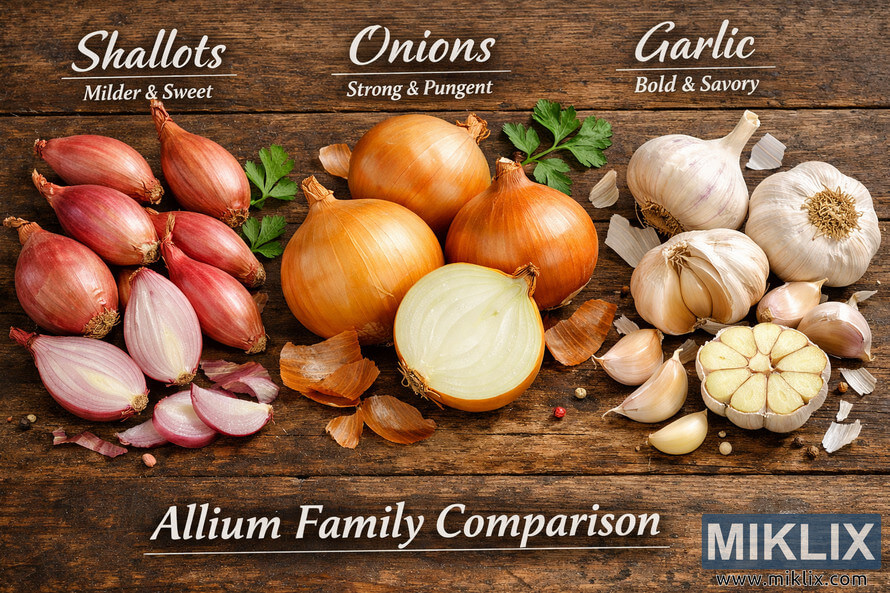
Explore a detailed visual comparison of shallots, onions, and garlic from the allium family. This high-resolution image highlights their distinct colors, textures, and culinary characteristics in a natural, rustic setting.
Allium Family Comparison: Shallots, Onions, and Garlic
Versioni disponibili di questa immagine
I file immagine disponibili per il download qui sotto sono meno compressi e ad alta risoluzione - e di conseguenza di qualità superiore - rispetto alle immagini incorporate negli articoli e nelle pagine di questo sito, che sono più ottimizzate per le dimensioni dei file al fine di ridurre il consumo di banda.
Taglia regolare (1,536 x 1,024)
Dimensione grande (3,072 x 2,048)
Dimensioni molto grandi (4,608 x 3,072)
Dimensione extra large (6,144 x 4,096)
Dimensioni comiche (1,048,576 x 699,051)
- Sto ancora caricando... ;-)
Descrizione dell'immagine
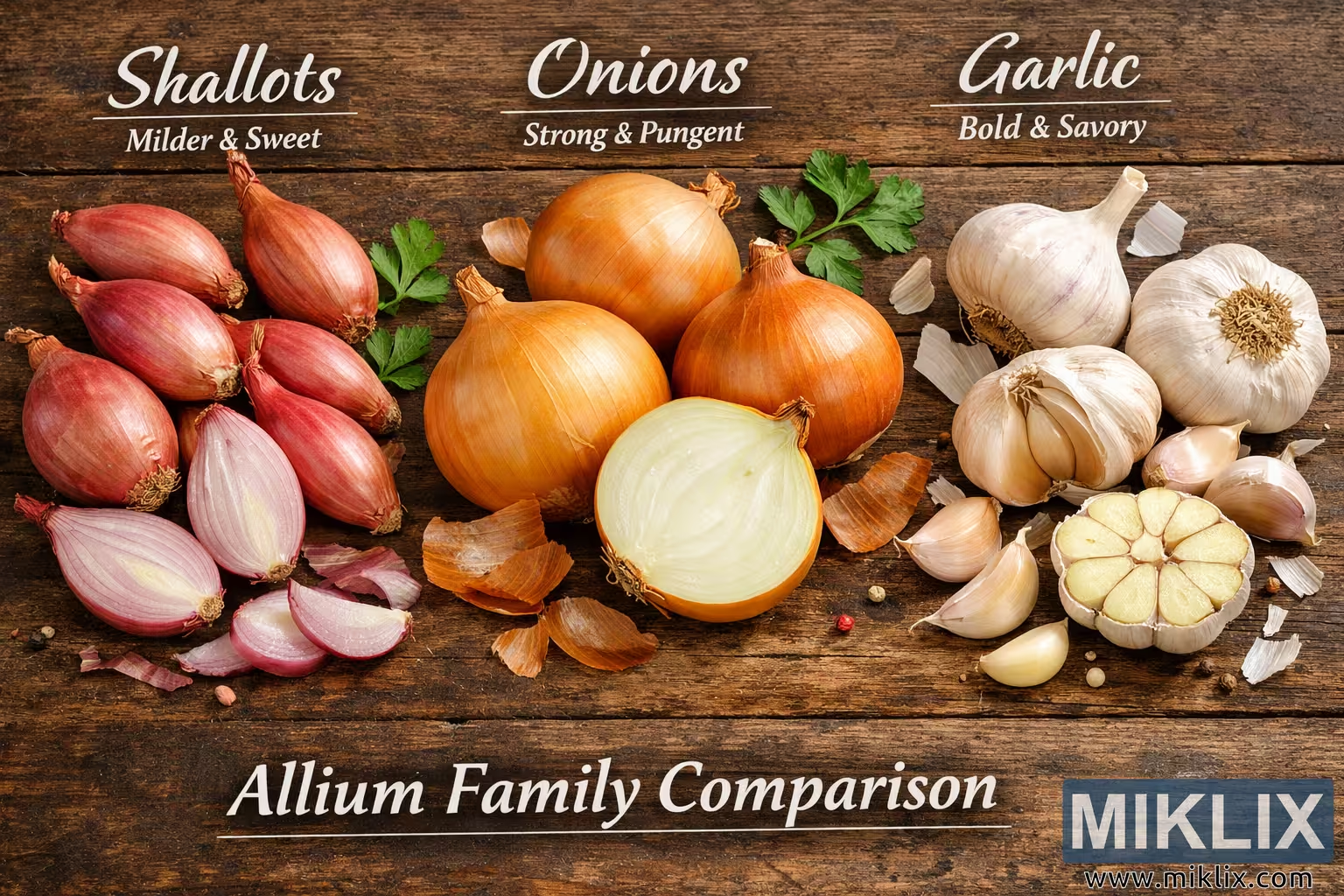
The image presents a meticulously composed, high-resolution landscape photograph that celebrates the diversity within the allium family—shallots, onions, and garlic. Arranged horizontally across a rustic wooden surface, each group occupies its own section, allowing viewers to appreciate the subtle yet significant differences among these closely related ingredients.
On the left side of the composition, the shallots form a compact cluster characterized by their small, elongated shape and reddish-pink hue. Their papery skins shimmer with tones of rose gold and copper, catching the light in a way that emphasizes their delicate texture. A few shallots are sliced open, revealing interiors of pale purple and white concentric layers that glisten slightly under the soft, natural lighting. Loose skins and thin slices are scattered nearby, adding a touch of organic realism to the arrangement. Above this section, elegant white script reads “Shallots,” accompanied by the phrase “Milder & Sweet” in smaller capital letters, reinforcing their reputation for a gentle, refined flavor profile.
In the center of the image, regular onions dominate the frame with their larger, round forms and golden-brown skins. The onions’ surfaces are smooth yet slightly textured, showing faint ridges and natural imperfections that convey authenticity. One onion is halved to expose its crisp, white interior, displaying the iconic concentric rings that symbolize the layered complexity of its flavor. The lighting here is slightly warmer, accentuating the amber tones of the skins and the creamy white of the flesh. Above this central group, bold white script declares “Onions,” with “Strong & Pungent” beneath it, capturing the essence of their robust aroma and sharp taste. Loose onion skins curl around the bulbs, and a few peppercorns are scattered across the wooden surface, adding depth and visual interest.
To the right, garlic completes the trio with its distinctive bulbous shape and off-white, papery skins. The garlic bulbs vary slightly in size, some whole and others separated into individual cloves. A halved bulb reveals tightly packed cloves arranged in a radial pattern, their smooth surfaces gleaming faintly. The cloves display subtle variations in color—from creamy white to faint lavender—hinting at the natural diversity found in garlic varieties. Above this section, the word “Garlic” appears in graceful script, followed by “Bold & Savory” in smaller text, emphasizing its intense flavor and aromatic potency.
Interspersed between the three groups are sprigs of fresh parsley, their vibrant green leaves providing a refreshing contrast to the warm, earthy tones of the alliums. The wooden surface beneath them bears visible grain patterns and small imperfections, evoking a sense of rustic authenticity. Tiny fragments of dried skins, peppercorns, and herbs are scattered throughout, creating a natural, lived-in aesthetic that enhances the realism of the scene.
At the bottom of the image, the phrase “Allium Family Comparison” is displayed in large, white, capitalized letters on a slightly darkened portion of the wooden background. This title anchors the composition and reinforces the educational purpose of the image. The overall lighting is soft and diffused, suggesting daylight filtering through a nearby window, which helps to highlight the textures and colors without creating harsh shadows.
The photograph’s composition is balanced and harmonious, with each section flowing naturally into the next. The shallots’ reddish tones transition smoothly into the golden hues of the onions, which then blend into the pale whites of the garlic. This gradient of color mirrors the progression of flavor intensity—from mild and sweet to strong and pungent to bold and savory—creating a visual metaphor for the culinary spectrum of the allium family.
The image serves not only as a visual comparison but also as an educational piece, illustrating how these ingredients differ in appearance, texture, and taste while belonging to the same botanical family. The attention to detail—from the delicate skins to the subtle lighting and natural arrangement—makes it both aesthetically pleasing and informative. It invites viewers to appreciate the beauty of everyday kitchen staples and to recognize the artistry inherent in nature’s design.
Overall, this high-resolution landscape photograph captures the essence of the allium family with precision and elegance. It transforms simple ingredients into a study of form, color, and flavor, offering a timeless visual representation of culinary diversity and natural harmony.
L'immagine è correlata a: Shallots: The Small Vegetable with Big Nutritional Benefits