
Immagine: Scientific Illustration of Antioxidant Molecules in Swiss Chard
Pubblicato:
Ultimo aggiornamento: 12 settembre 2026 alle ore 14:50:23 UTC
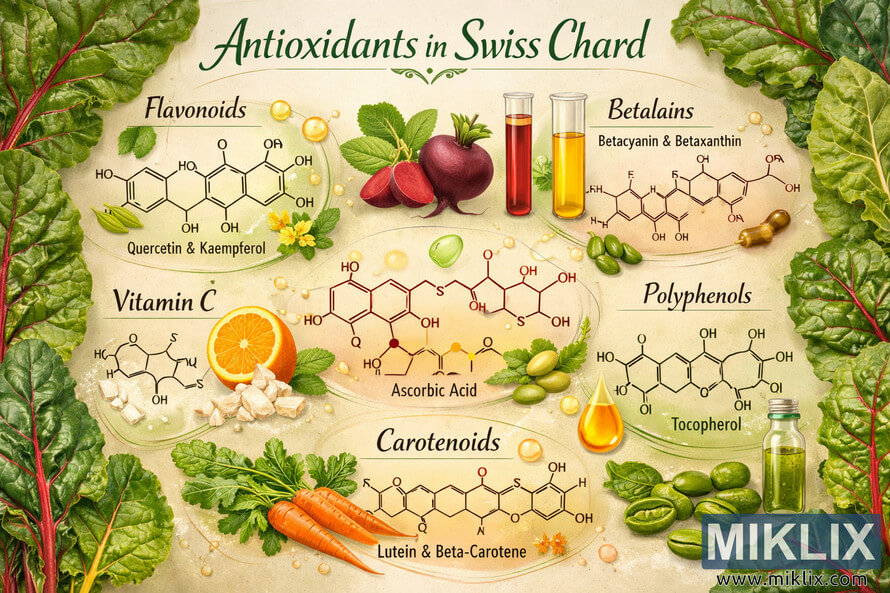
Educational illustration of antioxidant molecules in Swiss chard, featuring labeled sections for flavonoids, betalains, vitamins C and E, carotenoids, and polyphenols. Ideal for scientific and nutrition education.
Scientific Illustration of Antioxidant Molecules in Swiss Chard
Versioni disponibili di questa immagine
I file immagine disponibili per il download qui sotto sono meno compressi e ad alta risoluzione - e di conseguenza di qualità superiore - rispetto alle immagini incorporate negli articoli e nelle pagine di questo sito, che sono più ottimizzate per le dimensioni dei file al fine di ridurre il consumo di banda.
Taglia regolare (1,536 x 1,024)
Dimensione grande (3,072 x 2,048)
Dimensioni molto grandi (4,608 x 3,072)
Dimensione extra large (6,144 x 4,096)
Dimensioni comiche (1,048,576 x 699,051)
- Sto ancora caricando... ;-)
Descrizione dell'immagine
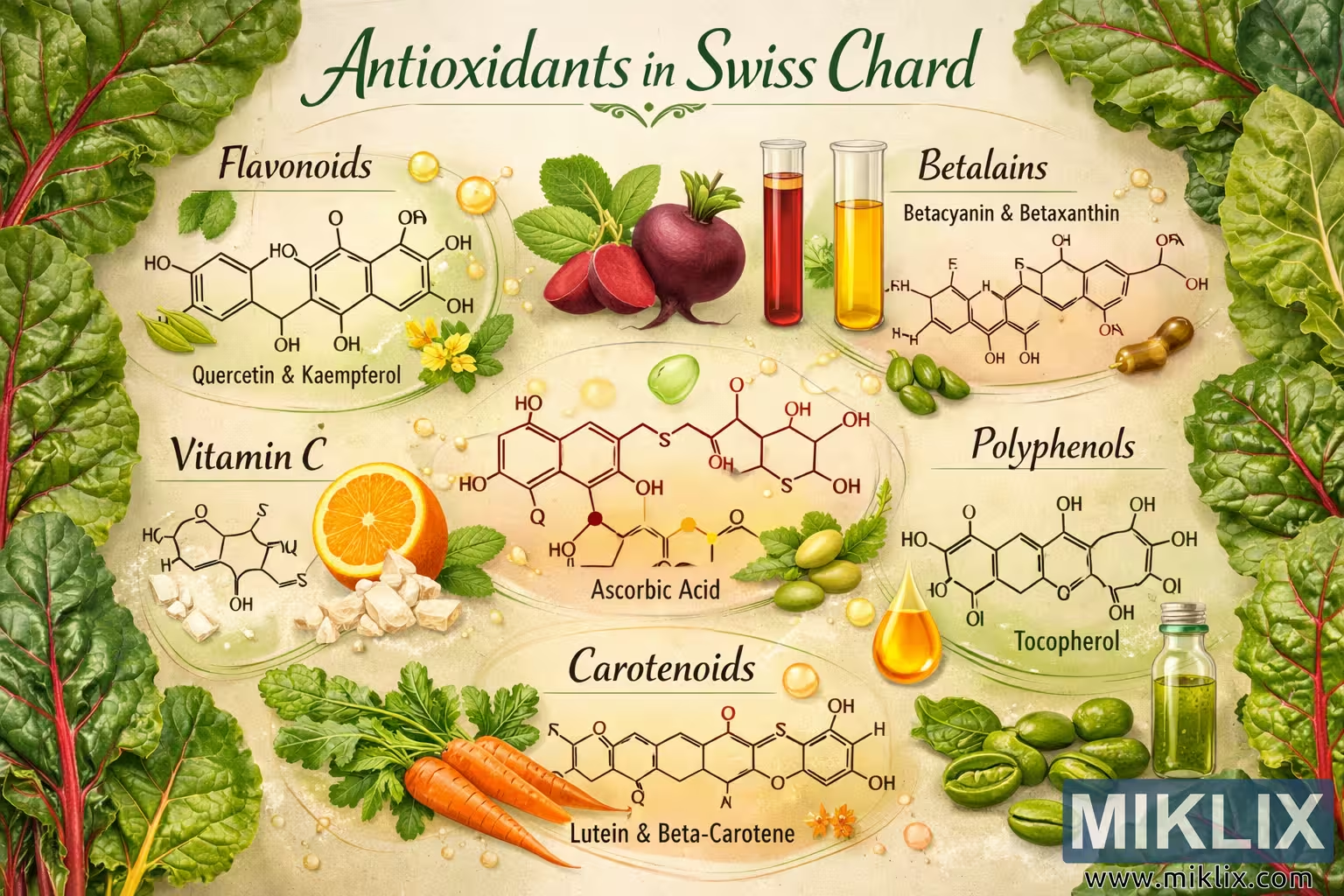
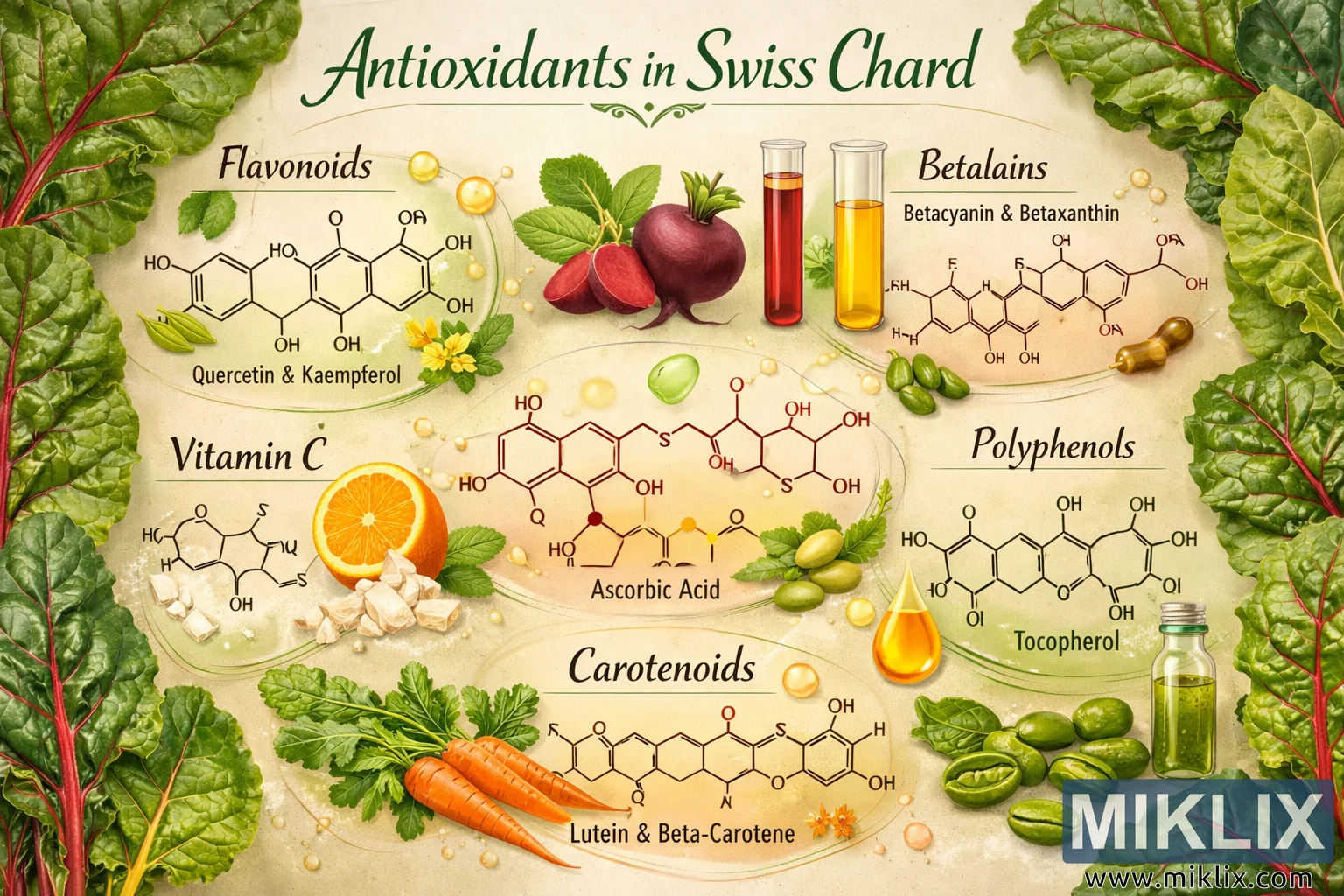
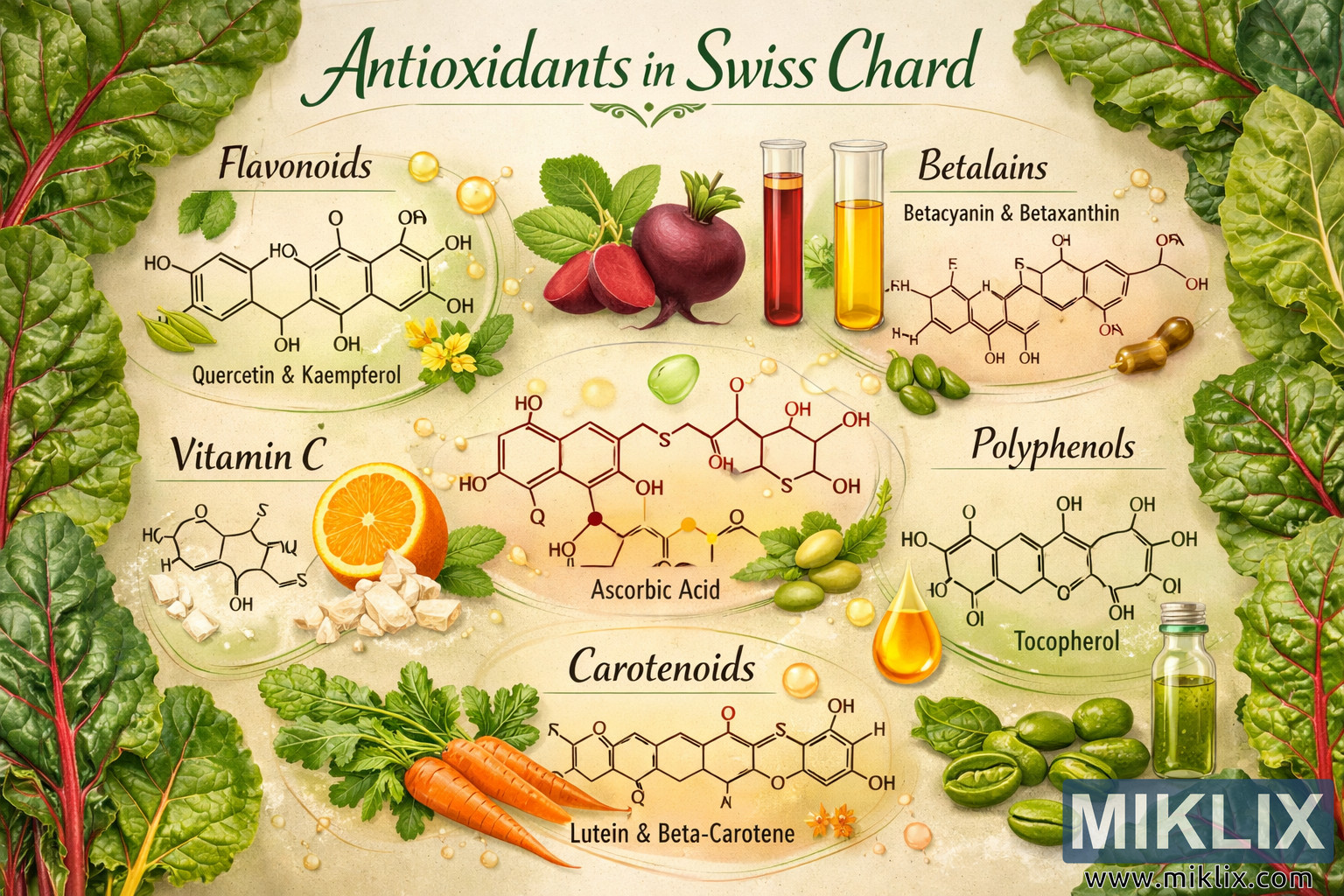
This educational scientific illustration presents a detailed visual overview of antioxidant molecules found in Swiss chard. The artwork is arranged in landscape orientation with a soft beige background that evokes the texture of natural parchment. On both sides, large Swiss chard leaves frame the composition, their deep green hues and colorful stems adding a botanical context. At the top, the title 'Antioxidants in Swiss Chard' appears in elegant green script with a decorative underline, setting a refined tone for the illustration.
The central area is divided into six labeled sections, each representing a distinct class of antioxidants. These sections are connected by faint glowing lines and small translucent bubbles, symbolizing molecular interactions and the dynamic nature of biochemical processes.
The first section, 'Flavonoids,' highlights Quercetin and Kaempferol. Their molecular structures are drawn with hexagonal rings and hydroxyl groups, surrounded by green leaves and a yellow flower to emphasize their plant origin. The clean, schematic style makes the chemistry accessible while maintaining scientific accuracy.
To the upper right, 'Betalains' features Betacyanin and Betaxanthin. Two test tubes—one red, one yellow—stand beside a beetroot illustration, representing the pigments responsible for red and yellow coloration in plants. The betalain molecular structure is shown nearby, labeled clearly to aid recognition.
In the lower-left section, 'Vitamin C' is represented by a sliced orange, crystalline ascorbic acid, and the molecular structure of ascorbic acid. The bright orange tones and geometric crystal shapes convey both the natural and chemical aspects of this water-soluble antioxidant.
On the lower-right, 'Vitamin E' focuses on Tocopherol. A molecular diagram of tocopherol is paired with a droplet of golden oil and green capsules, symbolizing its fat-soluble nature and common supplemental forms. The warm golden palette contrasts with the cooler greens of the surrounding leaves.
At the bottom center, 'Carotenoids' showcases Lutein and Beta-Carotene. Carrots and yellow flowers accompany the long-chain molecular structures, which are drawn horizontally to emphasize their conjugated double bonds. The orange and yellow hues reinforce their role in light absorption and coloration.
Finally, on the far right, 'Polyphenols' depicts Chlorogenic Acid. The molecular structure includes hexagonal rings with hydroxyl and carboxyl groups, accompanied by green coffee beans and a vial of green extract. The green tones tie this section visually to the Swiss chard leaves framing the image.
Throughout the illustration, the Swiss chard leaves act as a visual anchor, reminding viewers that these diverse molecules are naturally present in this vegetable. The glowing lines and bubbles unify the composition, suggesting biochemical connectivity. The lighting is even and balanced, ensuring clarity of text and molecular detail. The harmonious palette of greens, yellows, oranges, reds, and neutrals creates a visually appealing and scientifically informative image.
Overall, this illustration serves as a comprehensive educational resource, combining botanical art and molecular diagrams to explain the antioxidant diversity of Swiss chard. It is suitable for use in nutrition education, scientific communication, and classroom materials, offering a clear and engaging depiction of plant-based antioxidants.
L'immagine è correlata a: Swiss Chard: Why It Is One of the Healthiest Leafy Greens