
Immagine: Thyme in Food Preservation: A Natural Guardian of Flavor and Freshness
Pubblicato:
Ultimo aggiornamento: 13 settembre 2026 alle ore 17:32:06 UTC
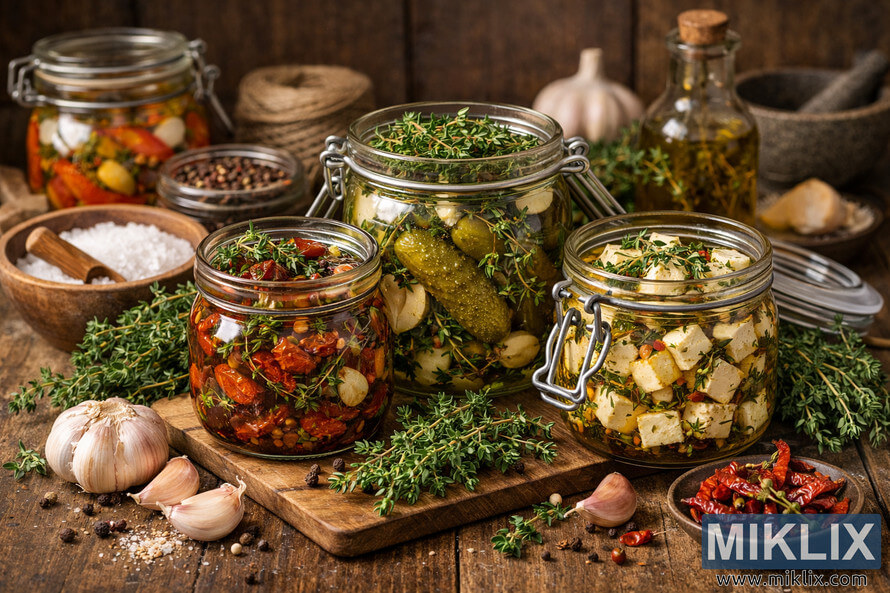
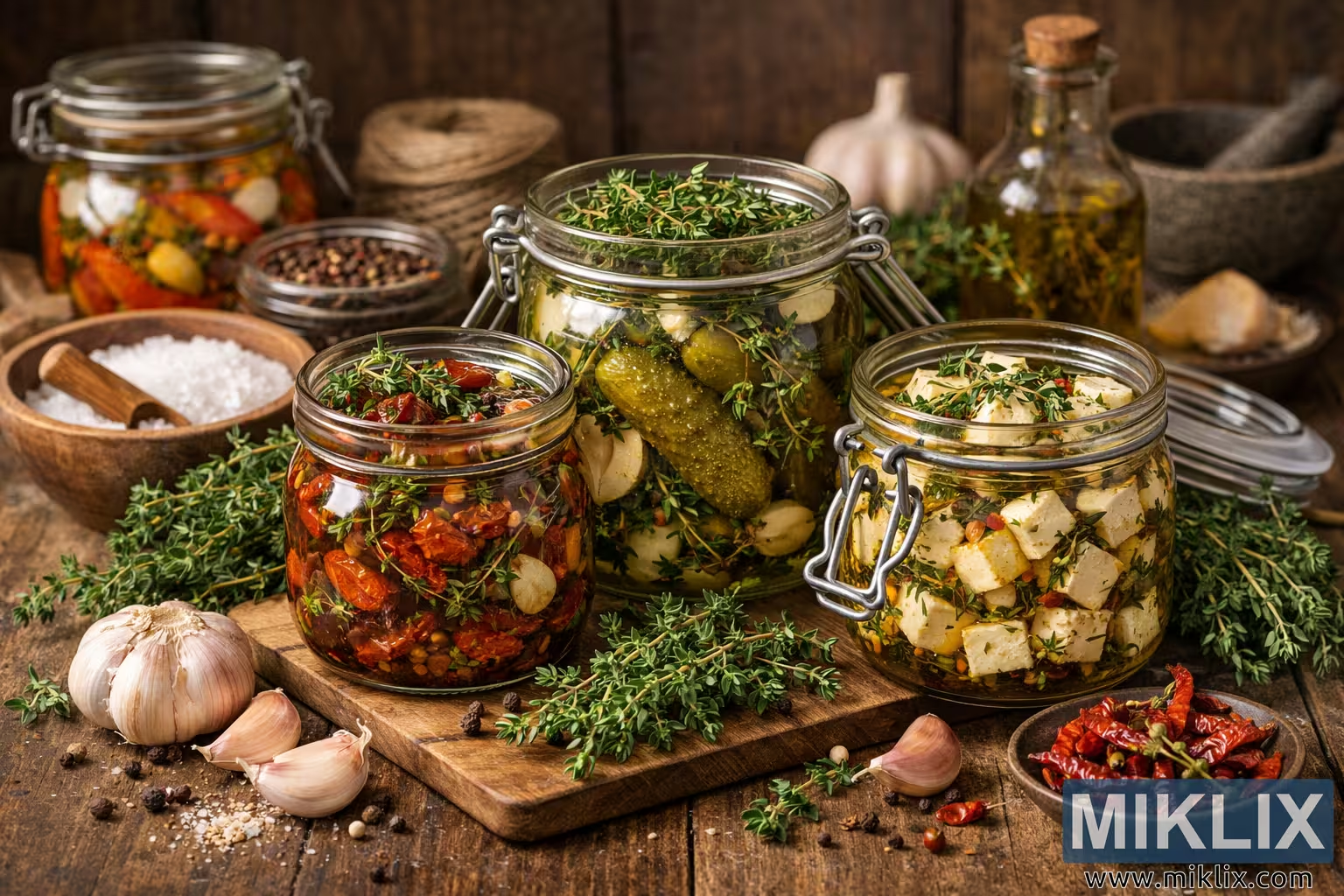
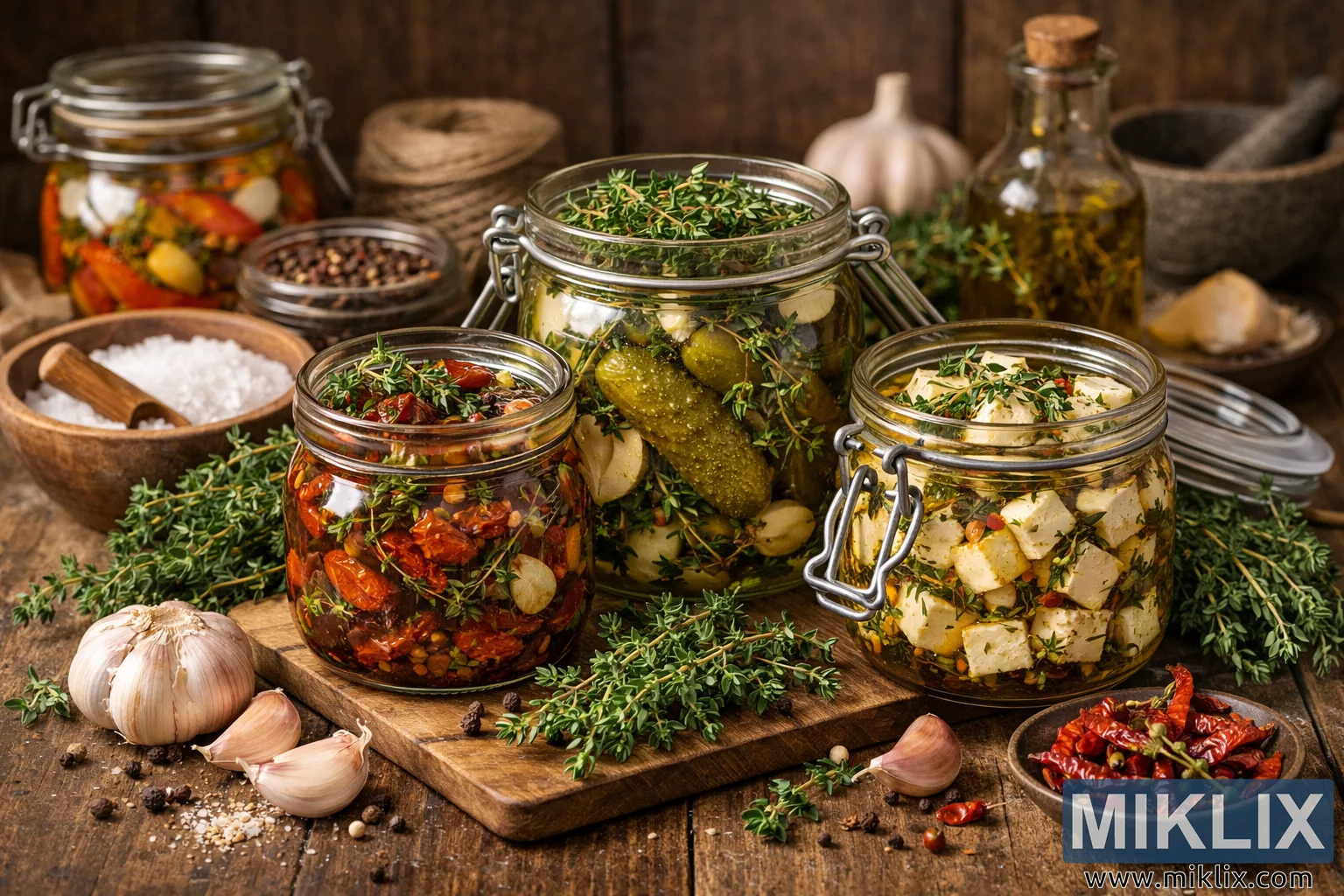
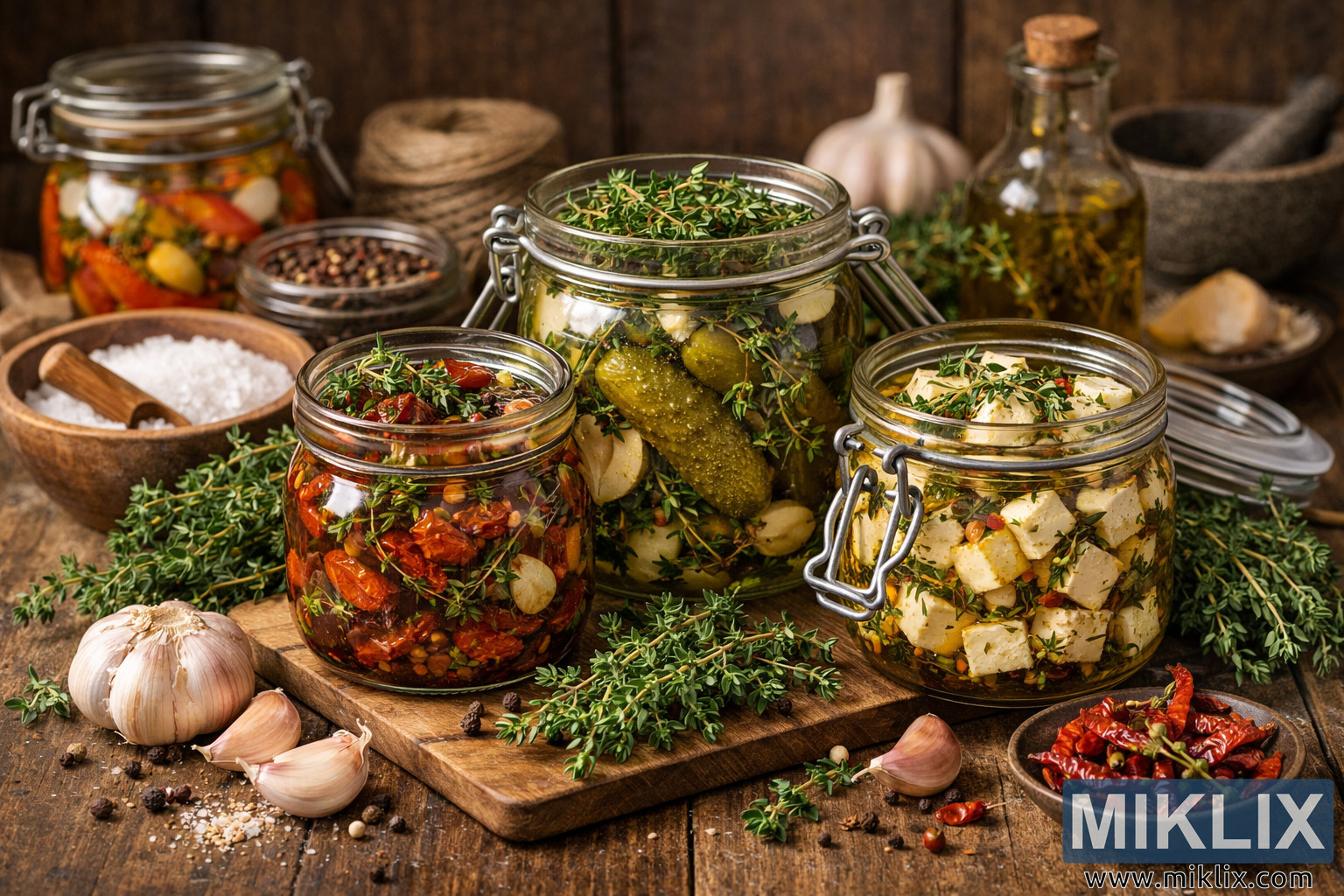
A detailed depiction of thyme used in food preservation, showcasing jars of sun-dried tomatoes, pickles, and marinated feta infused with thyme, garlic, and spices on a rustic wooden table with natural lighting.
Thyme in Food Preservation: A Natural Guardian of Flavor and Freshness
Versioni disponibili di questa immagine
I file immagine disponibili per il download qui sotto sono meno compressi e ad alta risoluzione - e di conseguenza di qualità superiore - rispetto alle immagini incorporate negli articoli e nelle pagine di questo sito, che sono più ottimizzate per le dimensioni dei file al fine di ridurre il consumo di banda.
Taglia regolare (1,536 x 1,024)
Dimensione grande (3,072 x 2,048)
Dimensioni molto grandi (4,608 x 3,072)
Dimensione extra large (6,144 x 4,096)
Dimensioni comiche (1,048,576 x 699,051)
- Sto ancora caricando... ;-)
Descrizione dell'immagine
The image presents a richly detailed still life composition centered around the theme of thyme as a natural preservative in food preservation. The scene unfolds on a rustic wooden table, its surface textured with age and use, evoking the warmth and authenticity of traditional kitchens. Three glass jars dominate the foreground, each meticulously arranged to highlight the diverse ways thyme enhances and protects food.
On the left, a jar brims with sun-dried tomatoes immersed in golden olive oil. The tomatoes, deep crimson and slightly wrinkled, are interspersed with sprigs of fresh thyme whose tiny leaves cling to the oil’s surface. Garlic cloves and peppercorns punctuate the mixture, their pale and dark tones contrasting beautifully against the red hues. The jar’s metal clasp and rubber seal gleam faintly under the soft light, suggesting both functionality and artisanal craftsmanship.
At the center, a larger jar of pickles commands attention. The cucumbers, vibrant green and slightly translucent, are submerged in a brine that glistens with suspended herbs and spices. Sprigs of thyme weave through the liquid, their delicate stems curling around garlic cloves and peppercorns. The interplay of textures—smooth cucumber skin, rough thyme stems, and glossy brine—creates a tactile richness that invites the viewer to imagine the crispness and tang of the preserved vegetables.
To the right, a jar of marinated feta cheese completes the trio. Cubes of creamy white feta float in olive oil infused with thyme, garlic, and red chili flakes. The oil refracts the light, creating golden highlights that dance across the jar’s surface. The thyme sprigs here appear slightly wilted, their essential oils released into the mixture, symbolizing the herb’s transformative power in preservation.
Surrounding these jars, the table is adorned with complementary elements that deepen the narrative. Fresh thyme sprigs are scattered casually, their green tones harmonizing with the preserved ingredients. A wooden bowl filled with coarse sea salt sits to the left, accompanied by a small bowl of peppercorns. A head of garlic, partially peeled, rests nearby, its papery skin curling naturally. In the lower right corner, a small dish holds dried red chili peppers, their wrinkled surfaces adding a touch of fiery color.
In the background, additional jars and bottles extend the story of preservation. A jar of mixed vegetables—red and yellow peppers, garlic, and herbs—adds a splash of color, while a bottle of golden oil infused with thyme glows warmly. An amber glass bottle stands beside them, its dark hue balancing the composition. Behind these, a garlic bulb, a spool of twine, and a stone mortar and pestle are visible, slightly blurred to evoke depth and context.
The lighting is soft and natural, streaming from the left side of the frame. It casts gentle shadows that emphasize the contours of the jars and the textures of the ingredients. The overall palette is warm and earthy, dominated by browns, greens, reds, and golds. This harmony of tones reinforces the organic and wholesome character of the scene.
The composition celebrates thyme not merely as an herb but as a symbol of preservation, tradition, and culinary artistry. Each element—from the glistening oil to the rustic wood—contributes to a sensory experience that transcends mere visual appeal. The viewer can almost smell the mingling aromas of thyme, garlic, and olive oil, and feel the quiet satisfaction of a well-stocked pantry.
Ultimately, the image captures the timeless relationship between nature and nourishment. Thyme, with its subtle fragrance and antimicrobial properties, stands as a guardian of flavor and freshness. The jars, carefully sealed and surrounded by the tools of preservation, embody the enduring human desire to savor the bounty of the earth long after harvest. This tableau is both a tribute to the art of food preservation and a meditation on the beauty of simplicity—where humble ingredients, guided by tradition and care, become lasting treasures.
L'immagine è correlata a: Thyme: The Fragrant Herb That Supports Better Health