
Immagine: Watermelon Nutrients: Vitamin and Mineral Density Chart
Pubblicato:
Ultimo aggiornamento: 16 agosto 2026 alle ore 19:08:36 UTC
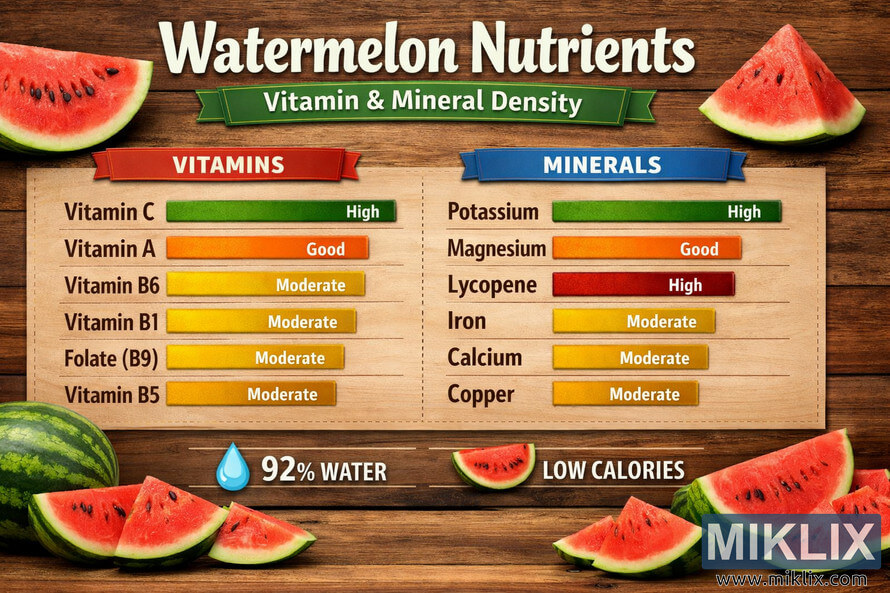
Explore the detailed nutrient composition of watermelon in this visual chart comparing vitamin and mineral density. Learn about its high water content, low calories, and rich supply of Vitamin C, Potassium, and Lycopene.
Watermelon Nutrients: Vitamin and Mineral Density Chart
Versioni disponibili di questa immagine
I file immagine disponibili per il download qui sotto sono meno compressi e ad alta risoluzione - e di conseguenza di qualità superiore - rispetto alle immagini incorporate negli articoli e nelle pagine di questo sito, che sono più ottimizzate per le dimensioni dei file al fine di ridurre il consumo di banda.
Taglia regolare (1,536 x 1,024)
Dimensione grande (3,072 x 2,048)
Dimensioni molto grandi (4,608 x 3,072)
Dimensione extra large (6,144 x 4,096)
Dimensioni comiche (1,048,576 x 699,051)
- Sto ancora caricando... ;-)
Descrizione dell'immagine
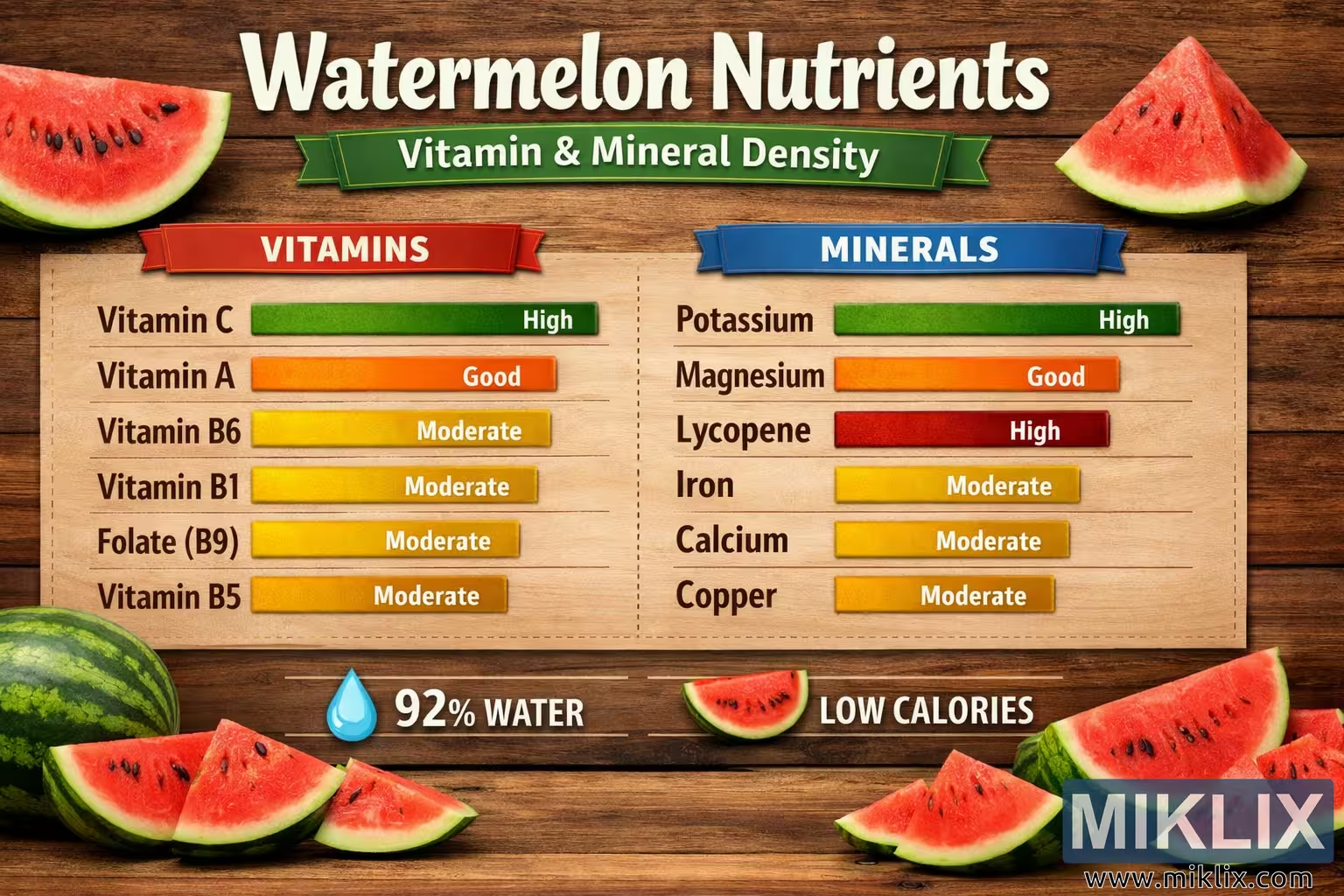
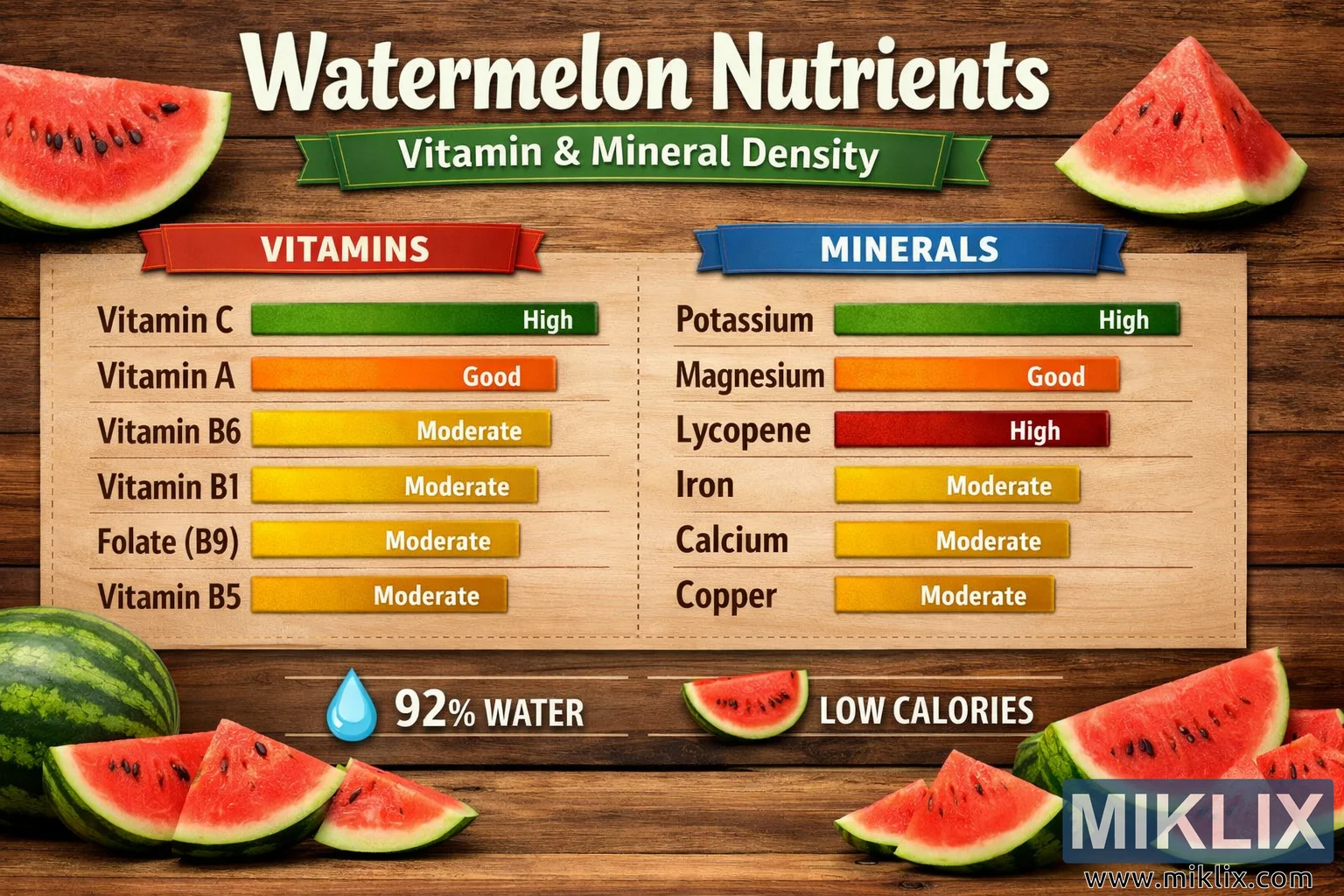
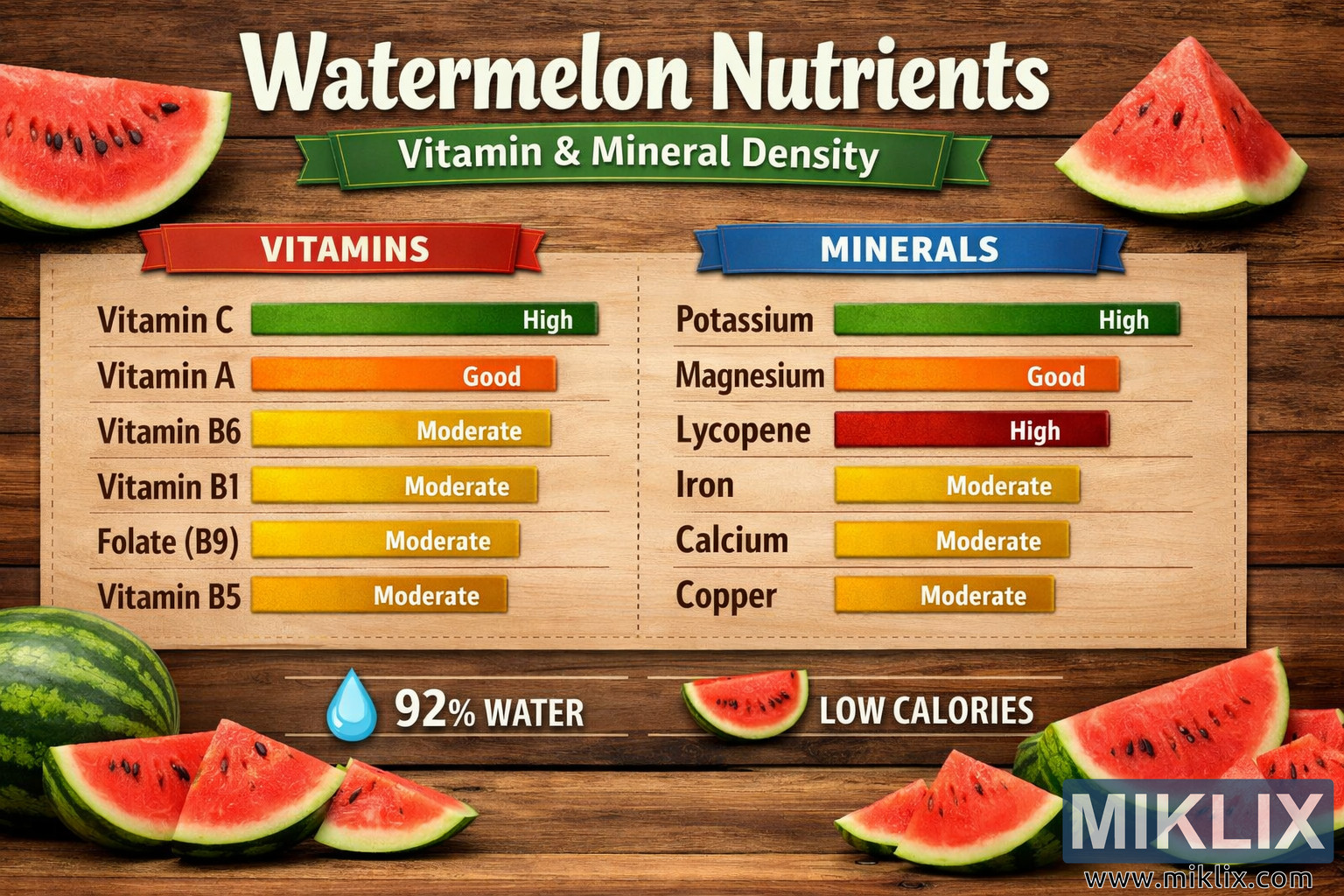
The image is a visually rich, landscape-oriented infographic titled "Watermelon Nutrients" that presents a comprehensive comparison of vitamins and minerals found in watermelon. The design is crafted to evoke freshness and clarity, combining vibrant reds, greens, and blues that mirror the natural colors of watermelon flesh and rind. The title appears prominently at the top in large, bold white and green letters, set against a textured wooden background that adds a rustic, organic feel. Flanking the title are two realistic depictions of watermelon slices: on the left, a large half of a watermelon showing its deep red interior dotted with black seeds and encased in a thick green rind; on the right, a triangular slice angled to highlight its juicy texture. Beneath the title, a green banner with white text reads "Vitamin & Mineral Density," serving as a subtitle that introduces the chart’s purpose.
The infographic is divided into two symmetrical sections below the header: one for vitamins and one for minerals. The left section, labeled "VITAMINS" in a red header with white text, contains a horizontal bar chart listing six key vitamins—Vitamin C, Vitamin A, Vitamin B6, Vitamin B1, Folate (B9), and Vitamin B5. Each nutrient is accompanied by a colored bar indicating its relative density in watermelon. Vitamin C stands out with a full green bar labeled "High," symbolizing watermelon’s strong antioxidant properties and immune support potential. Vitamin A follows with an orange bar labeled "Good," reflecting its contribution to eye health and skin maintenance. The remaining vitamins—B6, B1, Folate, and B5—are represented with yellow bars labeled "Moderate," suggesting moderate but beneficial levels that support metabolism and cellular function.
The right section, labeled "MINERALS" in a blue header with white text, mirrors the layout of the vitamin chart. It lists Potassium, Magnesium, Lycopene, Iron, Calcium, and Copper. Potassium and Lycopene are highlighted with full bars—green for Potassium and deep red for Lycopene—both labeled "High." Potassium is essential for hydration and muscle function, while Lycopene, a powerful antioxidant pigment, contributes to heart health and may help reduce oxidative stress. Magnesium is marked with an orange bar labeled "Good," indicating its supportive role in muscle and nerve function. Iron, Calcium, and Copper each have yellow bars labeled "Moderate," showing that watermelon provides trace amounts of these minerals that complement a balanced diet.
At the bottom of the infographic, two icons summarize watermelon’s defining nutritional traits. On the left, a blue water droplet icon is paired with the text "92% WATER," emphasizing the fruit’s exceptional hydration properties. On the right, a small watermelon slice icon accompanies the text "LOW CALORIES," underscoring its suitability for weight management and healthy snacking. These icons are simple yet effective, reinforcing the fruit’s dual identity as both refreshing and nutrient-rich.
The background of the entire chart is a warm wooden texture, evoking a natural kitchen or picnic setting. This choice of backdrop enhances the organic theme and contrasts beautifully with the vivid reds and greens of the watermelon imagery. At the very bottom, several watermelon visuals are arranged on a wooden surface: a whole watermelon, a halved one revealing its interior, and multiple wedges positioned to create a sense of abundance and freshness. The lighting is even and bright, ensuring that all text and graphical elements are crisp and legible.
Overall, the infographic achieves a balance between aesthetic appeal and educational clarity. It communicates the nutritional value of watermelon in a way that is both visually engaging and scientifically informative. The color-coded bars make it easy to compare nutrient densities at a glance, while the clean typography and structured layout guide the viewer’s eye naturally from top to bottom. The design avoids any branding or commercial references, focusing purely on factual and visual representation. The result is a high-resolution, landscape-format educational image that celebrates watermelon as a hydrating, low-calorie fruit packed with essential vitamins and minerals. Its composition, symmetry, and color harmony make it not only informative but also pleasing to look at, suitable for use in health education materials, food science presentations, or wellness campaigns.
L'immagine è correlata a: Watermelon: The Hydrating Superfruit You Should Eat More Often